Key takeaways:
- Graphic design services costs in 2026 vary widely — from $300 logos to $10,000+ advanced design projects.
- Pricing depends on complexity, designer expertise, tools, revisions, and geography.
- Freelancers, agencies, subscriptions, and in-house teams each offer different cost-benefit tradeoffs.
- Hidden costs like extra revisions, size variations, licensing, and rush fees can impact your final bill.
- You can reduce costs smartly with clear briefs, bundled deliverables, templates, and retainer models.
How much for graphic design services in 2026?
A quick social media post may cost around $15, while a freelance logo will range between $300 and $800. Design that calls for strategic work, like website UI/UX, could cost you around $1,000 to $6,000, while high-impact deliverables, such as investor pitch decks, can go beyond $10,000, especially when handled by agencies.
I know, at first glance, these numbers can feel all over the place.
But as you know, these variations in prices aren’t random. As mentioned, graphic design today covers a wide range of services, each requiring a different level of strategy, expertise, tools, and time.
A simple visual task and a brand-defining design project may both be called “graphic design,” but the thinking, effort, and business impact behind them are entirely different.
In this guide, we break down graphic design services cost in 2026 and explain what actually drives those numbers.
Graphic Design Services Cost in 2026 - A Quick Overview
Here’s a breakdown of standard design services and the cost ranges, and what those price levels typically represent in terms of work, deliverables, and value.
|
Design Service |
Price Range |
|
Logo Design: Freelancers, Independent Designers |
$300 – $800 |
|
Logo Design: Agencies, Branding Studios |
$800 – $2,500+ |
|
Website UI/UX Design |
$1,000 – $6,000 |
|
Social Media Design: Per Post |
$15 – $150 per post |
|
Social Media Design: Monthly Packages |
$300 – $1,500 per month |
|
Packaging Design: Freelancers |
$101 – $999 |
|
Packaging Design: Experienced Freelancers, Large Firms |
$1,000+ |
|
Packaging Design: Agencies |
$10,000+ |
|
Pitch Deck Design: Freelancers |
$500 – $1,500 |
|
Pitch Deck Design: Agencies |
$3,000 – $10,000 |
Logo Design Cost: Freelancers vs Agencies
Independent designers fall into the freelancer category, where the graphic design logo cost range starts around $300 to $800. Expect a solid, professional logo with 1–2 variations, standard file formats like PNG and JPG, and sometimes a vector file such as SVG or AI. This works well for small businesses or early-stage brands that just need a good-looking logo without diving into a deeper brand strategy.
On the other hand, agency or branding-focused design takes the process much further. These projects often begin around $800 and can go up to $2,500 or more, depending on the depth of work required. Logo design agencies spend time on research, concept exploration, and competitive analysis, and usually include multiple logo concepts, refined variations, color palettes, typography recommendations, and sometimes brand style guidelines. Because the work shapes the larger identity of the brand, not just a logo, the cost naturally scales with the complexity and the strategic thinking involved.
Website UI/UX Graphic Design Cost Per Project
Website design involves layout design, user experience thinking, sometimes prototyping, responsive behavior, navigation flows, and so much more. Accordingly, costs vary widely:
For simple websites or small business sites, using templates with light customization will cost less. However, a web design company charges more for more customized, full-featured websites, custom UI/UX design, brand alignment, multiple pages, etc. Expect the website UI/UX design cost to range from $1000 to $6000, depending on customization and the number of pages.
Social Media Graphic Design Cost Per Post & Monthly Packages
For one-off or simple post graphics, costs stay modest. Some freelance designers or platforms quote minimal fees per post. Additionally, in some agencies or subscription services, the per-post rates are lower due to volume.
If you require a recurring content schedule, multiple formats, variations for different platforms, templates, and a brand-consistent look, expect costs to rise. The most common range for social media post design is $15 to $150 per post. There are also monthly packages ranging from $300 to $1500.
Packaging Design Cost: Freelancers, Firms & Agencies
Designing packaging is more demanding than a flat graphic. It needs to consider printing constraints, dielines, branding, regulatory requirements (for some industries), and often multiple design elements (front label, side panels, back label, typography, etc.).
Expect freelance graphic design cost $101 to $999 for packaging design. But an experienced freelancer and larger firms will charge around $1000 or more. Mostly, businesses hire packaging design agencies when they need more advanced, high-quality designs. Agencies charge $10,000 or more for advanced packaging designs.
Pitch Deck & Presentation Design Cost
For pitch decks, investor decks, or high-stakes presentations, the work involves combining storytelling, data visualization, layout thinking, and branding. Such projects demand more than generic design skills because designers often invest time in research, structuring content, iterative feedback, visual hierarchy, and readability. Expect pitch deck design costs from freelancers to range from $500 to $1,500, and agency quotes to range from $ 3,000 to $10,000.
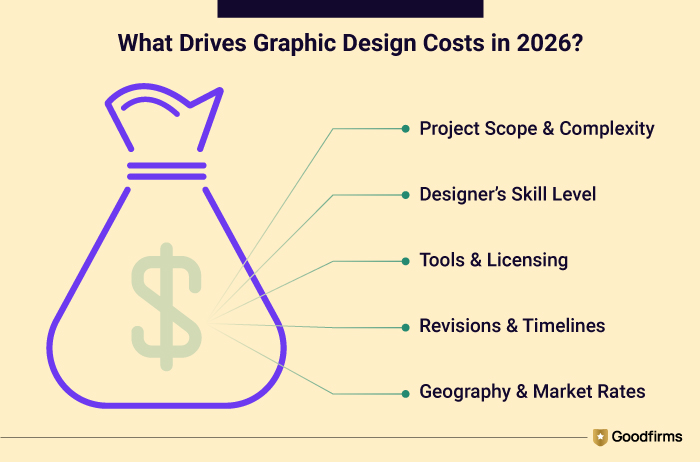
What Factors Really Drive Graphic Design Services Cost in 2026?
The reasons behind the varied graphic design costs are many. Let us understand them one by one.
1. The Scope and Complexity of Your Project
The truth is, not all design projects take the same amount of time or thinking. And that’s where a lot of the variation begins.
Some designs are simple. They don’t need deep research or heavy creative direction. Other requirements might require multiple concepts, exploration, testing, refinement, and a clear understanding of your brand story.
The more layers involved, the more effort a designer needs to put in. Scope and complexity are about the thought process required to get them right.
2. Designer’s Skill Level
A junior designer might be great at executing clear instructions, while a mid-level designer brings more refinement and problem-solving to the table. A senior designer, on the other hand, doesn’t just create visuals, but they help you shape the visual direction of your brand.
Skill level affects far more than technical ability. It influences how well a designer understands your audience, how quickly they identify what will or won’t work, and how confidently they can translate ideas into a coherent visual story.
3. Tools, Technology & Licensing Costs
Professional design isn’t cheap on the back end. Designers invest in:
- Adobe Creative Cloud
- Figma
- Premium fonts
- Stock illustrations
- AI tools
- Mockup libraries
These tools are expensive. And when a designer gives you licensed assets, that cost transfers into the pricing.
4. Revisions, Edits & Time Expectations
Revisions are a normal part of any design process, but they are also one of the biggest factors that shape timelines and overall effort.
The more revisions you expect and the quicker you need things delivered, the more effort the designer has to put in to meet those expectations. So, it is important to have clarity and a fixed number of revisions to get the designs on time.
5. Geography Matters
Designers charge based on the local cost of living. A designer in LA cannot charge the same as a designer in Manila because the cost of living is very different.
But high price doesn’t always equal high quality. Similarly, low price doesn’t always equal low quality.
You are paying for reliability, style match, industry and region specific understanding, same time zone, far more than location.
Graphic Design Services Cost by Geography
Design pricing shifts a lot depending on where the designer is located. Not because of quality differences but simply because the cost of living and market demand change from region to region. Here are the graphic design cost per hour by geography:
|
Location |
Average Hourly Rate |
| USA |
$27 |
|
Germany |
24,21 € |
| India |
$15 |
|
UAE |
94.18 AED |
|
Australia |
$ 36.94 |
Source: Ziprecruiter, Salaryexpert & Indeed
Industry-Specific Graphic Design Pricing
Design isn’t priced the same across industries. Some industries require more research, more compliance, or more visual sophistication. All of that impacts cost.
Ecommerce
Brands need:
- product creatives
- ad banners
- packaging
- social templates
High volume, moderate cost.
Tech & SaaS
Design here is more UI/UX-driven. Meaning strategic thinking comes first, visuals second for these UX design companies. Hence, the cost is hire.
Healthcare
This is a regulated industry. Healthcare web design companies have to make sure all the design they create must follow compliance. A lot of importance is given to visual clarity. All these factors contribute to a high cost, as it comes with a larger checklist.
Real Estate
This industry needs high-quality visuals 90% of the time. For them, the better the visuals, the higher the conversions. Creating visuals for real estate requires premium creative direction. That is why you need the best real estate web design companies to look after your requirements.
Fashion & Beauty
Fashion and beauty rely on brand guidelines to maintain aesthetics. It is extremely important to maintain visual consistency and mood. Very specific and out-of-the-box expectations can cost more.
Fintech
Fintech mostly has data-heavy layouts and charts. Correct data and correct way of representing that data is extremely important for brand trust. So the cost bar is naturally higher.
All these reasons discussed above is why two businesses asking for the “same design” end up with different quotes.
Different Pricing Models to Hire a Graphic Designer
Most people assume designers charge hourly or per project. But there are more ways.
-
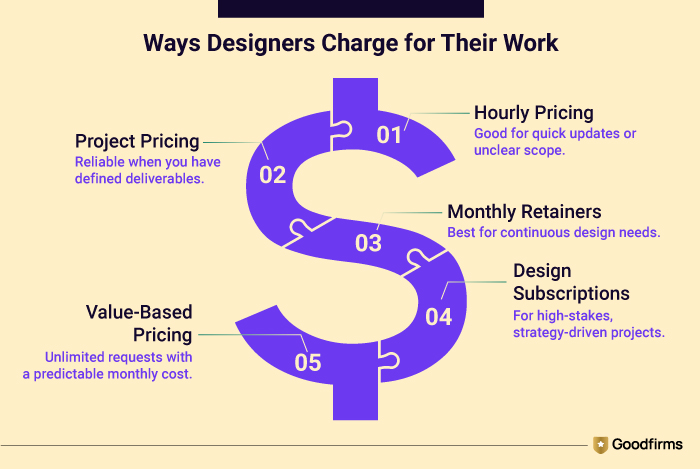
Hourly Pricing
Hourly pricing typically works best when the scope is not obvious or when you only need small tasks handled sporadically. Think of things like maintenance fixes, minor updates, or quick design adjustments. It offers flexibility, but it is not ideal for larger projects because you never really know what the final cost might be. That unpredictability can get stressful fast.
-
Project-Based Pricing
The most straightforward and predictable model for most businesses is project-based pricing. You get a fixed quote for a clearly defined scope, which makes budgeting a lot easier. It works well when your timeline is set, the deliverables are clear, and you know revisions will be limited. Everything feels more structured, and both sides know exactly what to expect.
-
Monthly Retainers
Monthly retainers are great when you have ongoing design needs and want someone who consistently understands your brand. You essentially get a part-time, on-demand designer who already knows your style, your audience, and how you like things delivered. It is steady, reliable, and far more efficient than jumping from designer to designer for every small task.
-
Design Subscriptions
With a flat monthly fee, you can request unlimited design tasks and usually get much faster turnarounds. This model works especially well for startups, founders, marketing teams, and brands that are into content marketing and need visuals created almost every day. The predictable pricing is a big win here.
-
Value-Based Pricing
Then there’s value-based pricing, a model usually reserved for high-impact projects where the designer isn’t just creating visuals but shaping a meaningful business outcome. You will see this approach in rebranding before funding rounds, campaign development for major product launches, investor pitch decks, and anything where the stakes are high. In these scenarios, you are paying for experience, judgment, and strategic thinking, not just time spent on a design file.
Deliverables You Should Always Get
This part saves you from frustration later. It is essential to have clarity on the formats you can expect when receiving your designs.
|
Design Type |
What Deliverables You Should Get |
Typical Formats Provided |
|
Logo Design |
Final logo + variations (color, mono, horizontal/vertical) + scalable files for print & digital |
PNG, JPG, SVG, AI, EPS, PDF |
|
Brand Identity |
Logo set, color palette, typography, brand usage guidelines, social/media templates |
PNG, SVG, AI, PDF brand guide, template files (Figma / Adobe / Canva) |
|
Social Media Graphics |
Ready-to-post visuals + optional editable templates |
PNG, JPG, MP4 (for motion), Canva/Figma/PSD templates |
|
Website/UI Design |
Page layouts, UI components, icons, responsive versions, developer-ready assets |
Figma/XD files, PNG/JPG previews, SVG icons, asset exports |
|
Packaging Design |
Print-ready artwork, dielines, front/back/side panel designs, color-corrected files |
AI, PDF (print-ready), EPS, TIFF (if required), dieline templates |
|
Pitch Decks / Presentations |
Editable slide deck, branded layouts, charts/graphics, export ready version |
PPTX, Google Slides, Keynote, PDF |
|
Print Materials (Flyers, Brochures, Posters) |
Print-ready files with bleed + digital versions |
PDF (print), PNG/JPG (digital), AI/PSD (source) |
|
Ads & Marketing Creatives |
Multiple size variations for different ad platforms |
PNG, JPG, GIF, MP4 (for animated ads) |
Hidden Costs Clients Often Forget
You know how home renovations always exceed the estimate? Graphic design services cost works the same way unless you plan for the extras. Here are the common scenarios:
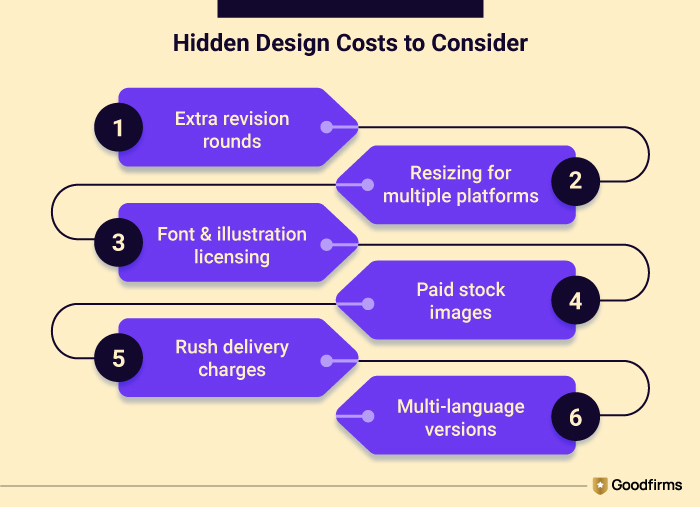
1. Revisions
Designers usually include 2–3 rounds. Beyond that, they can charge extra.
2. Multiple Sizes
One banner may become Facebook size → Instagram size → LinkedIn size → Web banner → Mobile banner. But each takes extra work. So, clarify your requirements beforehand.
3. Commercial Usage Rights
Some illustrations or fonts require separate licensing.
4. Stock Imagery
Premium stock sites charge per file.
5. Faster Delivery
Urgent graphic design jobs cost more. If you want designs on the same day or the next day, it will definitely cost more.
6. Multilingual Versions
Duplicating design into multiple languages adds time. Just knowing these helps you avoid surprise invoices.
How AI Changed Graphic Design Pricing
There is a misconception that AI has made design cheaper. But the reality is AI automated execution. It didn’t automate creativity, and it never can. Read more about the uses of AI in UX/UI Design in this research from Goodfirms.
-
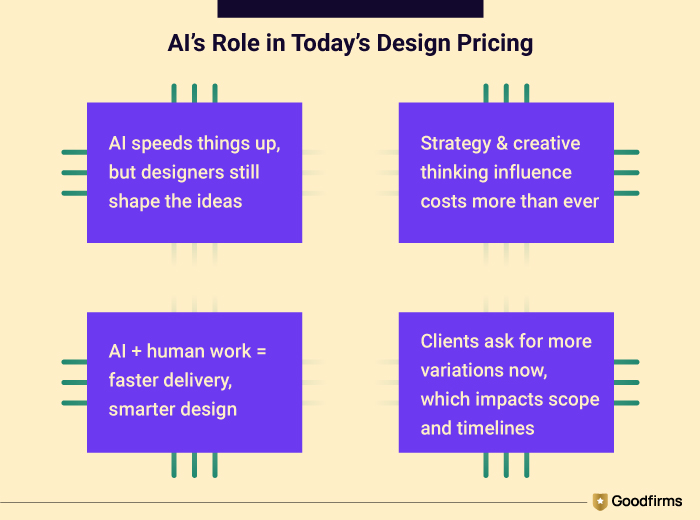
AI Makes Designers Faster, Not Replaceable
Designers now deliver more concepts quickly. However, their knowledge of designs and understanding of the industry are required to choose what best fits the brand.
-
Strategy Became the Core Offering
Designers now charge more for art direction, brand thinking, visual strategy, conceptual clarity, and more.
-
AI + Human Hybrid Output
Designers who combine AI speed + human judgment are in demand. The delivery is faster and so impacts pricing.
-
Businesses Expect More Variations
Clients have started to expect multiple options and faster edits after AI boomed. This impacts scope, timelines, and pricing structure if not clarified before partnering.
How to Reduce Graphic Design Services Costs Without Sacrificing Quality
You can save money smartly by eliminating inefficiencies, not by compromising the expertise of a designer.
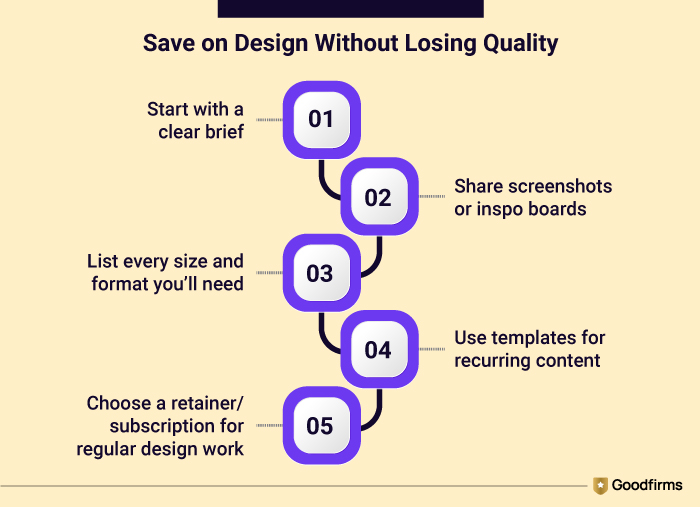
1. Prepare a Clear Brief
The more clarity you give, the less rework needed. If possible, include:
- examples
- colors
- references
- competitors
2. Share Visual Inspiration
If you have screenshots, Pinterest boards, Behance links, then share them with your designer. These give clarity to designers and speed up the process dramatically.
3. Bundle Your Deliverables
Instead of raising requirements randomly, share all the formats you need. Being upfront will help you get better pricing.
4. Choose Templates for Repetitive Work
Especially for social media, newsletters, or product shots.
5. Use Retainers or Subscriptions Model
If you need design often, this model brings predictability and value.
Freelancer Vs. Agency Vs. Subscription Vs. In-House: Which One Should You Choose?
There is no universal best option. Choose what fits best for your requirements.
Freelancers
Best for: Small or medium-sized tasks.
Pros: Affordable, flexible.
Cons: Limited bandwidth, quality varies.
Design Agencies
Best for: Large projects or strategic branding.
Pros: Full team, structured process, strong output.
Cons: Expensive for startups or small businesses.
In-House Designer
Best for: Brands with constant design work.
Pros: Always available, learns your brand deeply.
Cons: Salary + benefits + software costs.
Design Subscriptions
Best for: Startups, ecommerce brands, marketing teams.
Pros: Bulk tasks, predictable pricing, fast turnaround.
Cons: Some limitations on extremely complex work.
While choosing from the above model, think about whether you need:
- Uber
- Hire a driver
- Buying a car
- Using a monthly rental service
The model you choose will make sense depending on your needs.
Future of Graphic Design Pricing
The tech industry is under constant revolution, and after the AI surge, things are moving even faster. Here are the changes you can expect in the coming years.
- AI-assisted workflows become standard
- Designers become strategists, not just creators
- More niche specialists
- Subscription design becomes the default
- Value-based pricing grows
Don’t Just Pay for Design, Pay for Impact
Graphic design services cost is not an expense. It’s a brand investment. The price matters, yes. But the outcome matters more.
So instead of asking “What’s the cheapest option?” Ask “Which design approach creates the most impact for my brand?”
When you think this way, pricing becomes a lot easier to navigate and your design investments start paying long-term dividends.
FAQs
1. What is the average cost of hiring a graphic designer in 2026?
Most designers charge between $15 and $100 per hour, depending on skill level and location.
2. Are design subscriptions worth it?
If you need 10–20+ designs per month, absolutely. They offer fixed pricing and fast turnaround.
3. Why do agencies charge more than freelancers?
Agencies provide strategy, a full creative team, project management, quality control, and structured delivery. This is why agencies charge more.
4. Can AI replace human designers?
AI speeds up execution, but human designers still handle judgment, aesthetics, storytelling, and brand personality. So, the answer is no, AI supports human designers and does not replace them.
5. What’s the most economical design option for long-term needs?
Design retainers or subscriptions usually give the best value for ongoing monthly work.