


Load balancing software has the ability to distribute the network traffic across multiple servers and resources with advanced analytics to optimize server performance and run operations efficiently.
Las Vegas 13th March 2025–Most of the organizations with high volume of traffic are embracing load balancing software to keep up with the network performance, respond to the increasing public and private traffic, and distributing evenly across servers. Load balancing tools are crucial for organizations with large-scale web applications, data centers, cloud computing domains etc, to enhance scalability, optimize public and private traffic, provide a secured layer by distributing traffic across multiple servers, and mitigate risks associated with network failures.
Choosing the right load balancing software depends on various parameters like size of the organization, numbers of servers, volume of traffic, hardware-based, software-based, cloud-based, budget etc. Here to help service seekers find the perfect solution, Goodfirms has listed advanced load balancing software known for increasing the reliability of the network services and providing an optimal network experience for clients.
“Integrating load balancing software is now one of the most effective strategies gaining popularity to ensure optimal network performance and improve user experience,” says Goodfirms.
Here are a Few Load Balancing Software (Generated by Goodfirms)
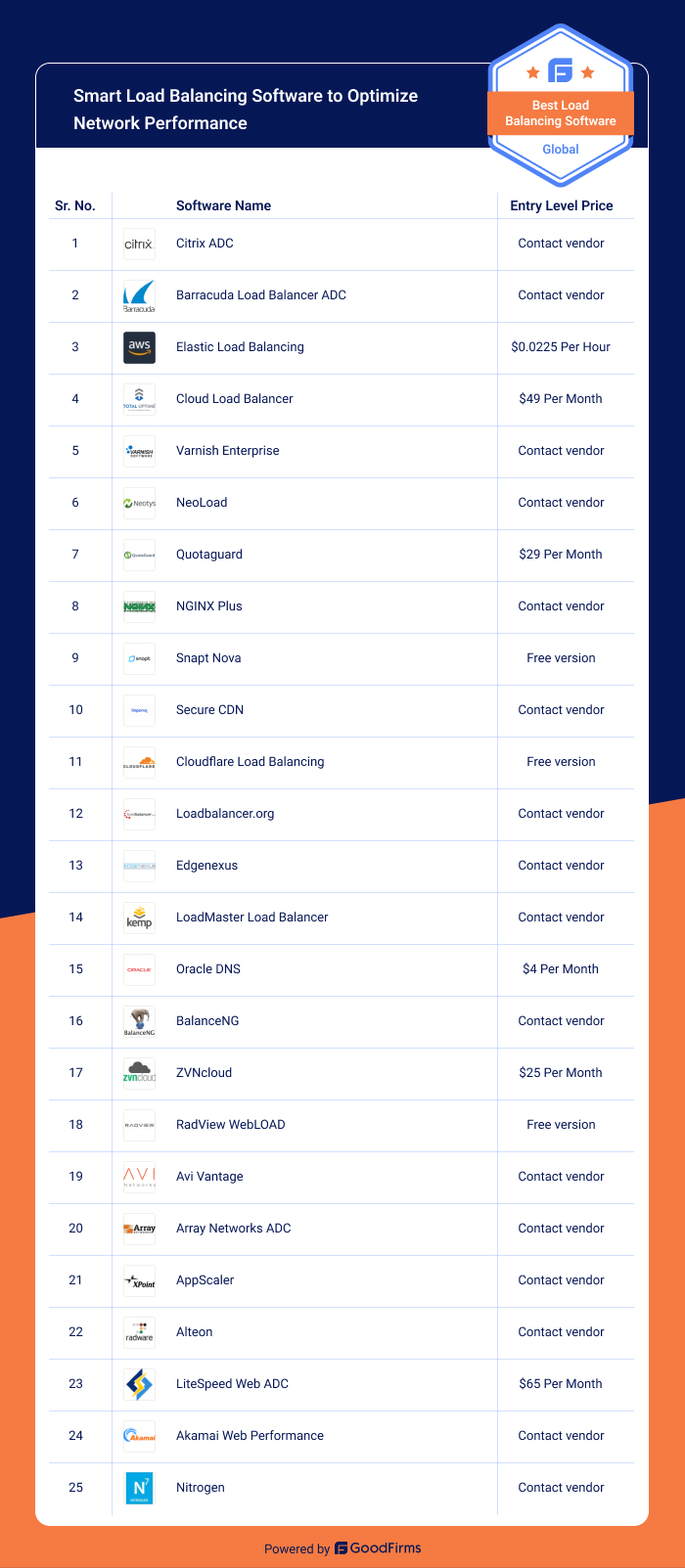
The list of load balancing software includes Citrix ADC, Barracuda Load Balancer ADC, Elastic Load Balancing, Cloud Load Balancer, Varnish Enterprise, NeoLoad, Quotaguard, NGINX Plus, Snapt Nova, Secure CDN, Cloudflare Load Balancing, Loadbalancer.org, Edgenexus, LoadMaster Load Balancer, Oracle DNS, BalanceNG, ZVNcloud, RadView WebLOAD, Avi Vantage, Array Networks ADC, AppScaler, Alteon, LiteSpeed Web ADC, Akamai Web Performance, Nitrogen; Interested businesses who would like to explore the list further can browse the category, easily filter and explore the top reviewed and rated load balancing software based on popular features, pricing models, devices supported, deployment and company size.