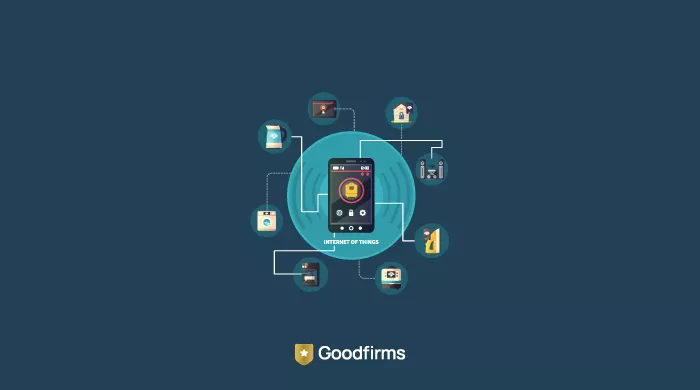
IoT Home Automation is on the rise.
Think of the times when maharajas of yesteryears didn't have to move a finger as they had servants at their beck and call. IoT smart automation devices are just like that.
While sitting in the office, you can remotely control your home lights, camera, and temperature and even lock your garage door via an app.
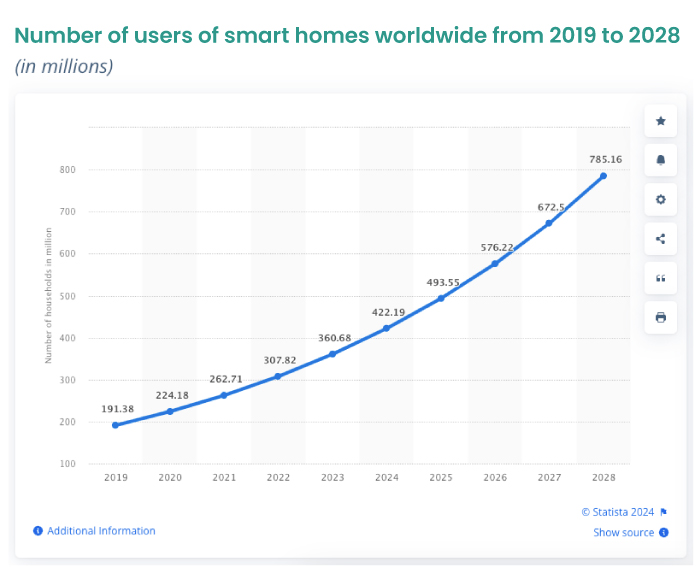
Not surprisingly, the demand for IoT home automation services is picking up. Statista reveals that the global number of Smart Homes is expected to increase by 424.5 million users between 2023 and 2028, almost a +117.69% rise. By 2028, nearly 785.16 million users will have IOT-based smart homes. In short, the demand for home automation IoT devices has constantly risen over the last few years.
In the U.S. alone, 30 million households are expected to add smart home technology soon. The products people are planning to add to their homes include connected cameras, video doorbells, connected light bulbs, smart locks, smart speakers, and more.
The rise in demand for smart home solutions in the European Union can partially be attributed to the ongoing Russia-Ukraine war, as household electricity prices have increased sharply since Russia suspended gas delivery to several European countries.
I guess the Russia-Ukraine war is just one thing. What are the other factors that are driving the demand for IoT Home Automation?
Let's dive into this comprehensive guide to explore the other factors driving the demand for IOT home automation, its advantages and disadvantages, and, more importantly, the 8 latest IoT home automation devices driving the smart home automation market and their costs. Let’s start with a brief on IoT home automation first.
What is IoT Home Automation
IoT Home Automation is a concept that consists of a well-connected home where appliances and devices are internet-connected, allowing remote control and monitoring using a smart home app, tablet, or voice commands. Home automation systems using IoT use consumer data to enable homeowners to perform automated actions such as controlling home temperature, thermostats, lighting, gardening, home security, and more.
8 Top IOT Home Automation Ideas and Their Cost
IOT-based home automation means using smart devices to transform your traditional home into a smart home.
Here are several examples of home automation using IoT technologies designed for smart homes and their cost per unit.
#1. Smart Lighting
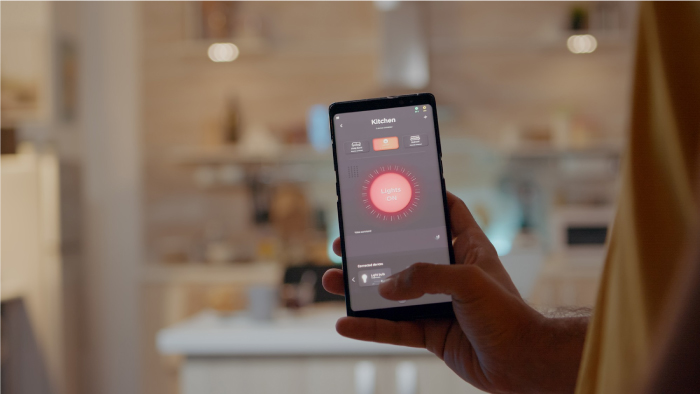
Picture this: It's dead of night, and you are thirsty. As you make your way towards the kitchen, the lights come on, guiding you to the fridge. No more stumbling over toys or any other stuff.
This is possible thanks to smart lights' built-in motion sensors, which detect any movement in their environment. This feature gives you a safe experience in dimly lit locations, especially at night.
This IoT-based home automation system can be controlled remotely through a mobile app or voice-assistant devices such as Amazon Alexa, Google Home, or Apple Home. You can operate it from the comfort of your bed, couch, or wherever you are, so you no longer have to turn the switches on and off.
Further, smart lights can also be programmed to mimic sunset or sunrise, as in they start with the least light before becoming brighter and cooler. In short, smart lighting can be set to any color, brightness, and temperature using an app, remote, or voice-controlled device.
They can also mimic your presence at home to deter thieves when you are not home.
Further, with smart home platforms like IFTTT (If This, Then That), you can set up automation, such as turning on the porch lights when the doorbell rings or when you enter the house and automatically shutting off the lights when the phone leaves the house.
How Much Does Smart Lightning Cost
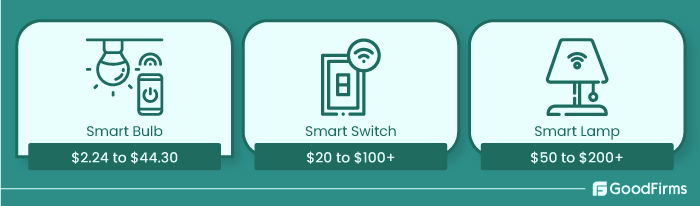
| Type | Cost (Unit Only) |
| Smart Bulb | $2.24 to $44.30 |
| Smart Switch | $20 to $100+ |
| Smart Lamp |
$50 to $200+ |
#2. Smart Thermostats Controlled HVAC Systems
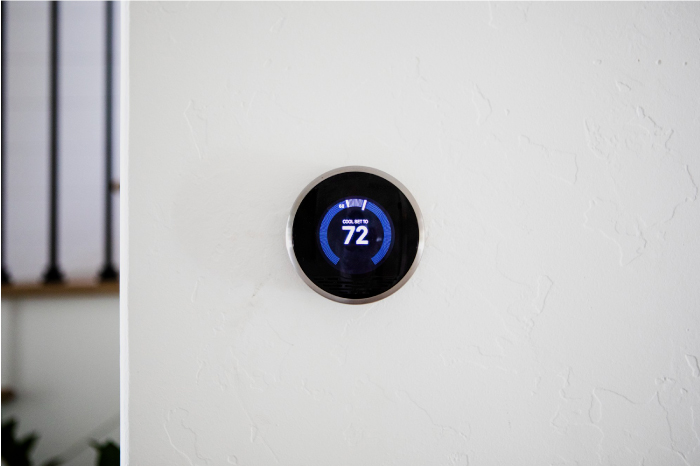
Just imagine you are returning home tired after a long day at work. As soon as you step on the threshold of your hallway, the house is already cool, and the temperature is precisely the same as you want, thanks to a smart thermostat. The thermostat has become familiar with your office routine and has adjusted the HVAC system, ensuring optimal comfort without any manual intervention.
Smart thermostats drive the efficiency of HVAC systems (Heating, Ventilation, and Air conditioning). The sensors and advanced algorithms in smart thermostats ensure:
Optimal comfort: The smart thermostat maintains consistent temperature all across rooms, ensuring optimal comfort.
Remote control: HVAC can be controlled remotely using a smartphone app or voice assistant.
Integrate with other smart devices: Smart thermostats can be connected to other smart devices like security systems and locks for automated control.
Gather Valuable Data: Smart thermostats gather data regarding an HVAC system’s performance and energy use to identify areas for improvement.
Reduce energy consumption: Smart thermostats learn about your heating and cooling preferences and adjust temperatures accordingly, reducing energy consumption.
Geofencing: Certain smart thermostats use GPS to detect when residents leave or return home, automatically adjusting the temperature to save energy.
In short, smart thermostats control HVAC systems efficiently, ensuring greater comfort, energy efficiency, and convenience. For the uninitiated, a higher-efficiency HVAC system can reduce a building’s carbon footprint, as buildings over 25,000 square feet are supposed to reduce their carbon footprint by 40% or face financial penalties by 2030.
How Much Do Thermostat, Smart Ceiling Fan, and AC Cost?
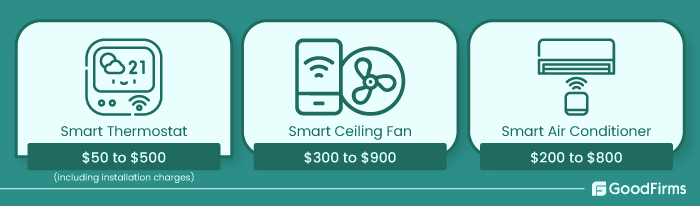
| Type | Cost (Unit Only) |
| Thermostat |
$50 to $500 (including installation charges) |
| Smart Ceiling Fan |
$300 to $900 |
| Smart Air Conditioner | $200 to $800 |
#3. Smart Home Security Systems
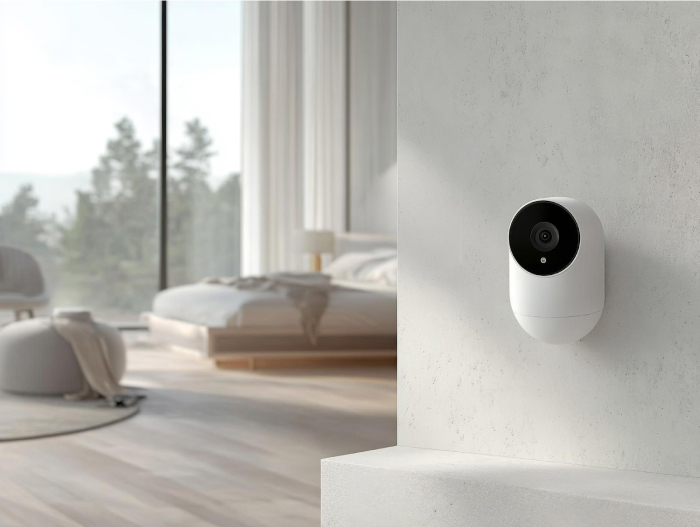
The integration of smart door locks, motion sensors, smart smoke detectors, and water leak detectors as part of your home security systems will ensure a secure and intelligent home environment that protects your family and property from various threats.
Smart Door Locks and Motion Sensors
Even if you are at the beach relaxing, enjoying the sun, sand, and waves, amidst all this merry-making, you receive a message on your smart home app that an unexpected motion has been detected in your living room. Immediately, you check the live feed on your security camera and find a stranger trying to peep in from the kitchen window.
You lock the doors remotely with a few taps on your phone at once. The thief, unable to find a way in, is forced to flee.
According to data, burglary accounts for almost 14% of all property crimes. IoT smart home devices such as smart door locks and motion sensors can actively help control such property crimes. Smart locks allow you to lock and unlock your home from anywhere via a smartphone app. Even voice assistants can help manage smart locks.
Motion sensors send smart alerts when an intruder attempts to enter the home. Such IoT-based home automation systems can also be used to manage ventilation and lighting.
Benefits that door locks and motion sensors bring to smart homes:
- Add to the overall home security
- Integrates easily with third-party security services.
Smart Smoke & Water Leak Detectors
Smart safety systems such as IOT smoke detectors, water leak detectors, and methane gas sensors can track water and gas leaks and alert users via mobile apps. Even windows with smart sensors will help track all house opening and closing activities.
How Much Does Smart Home Security Systems Cost?
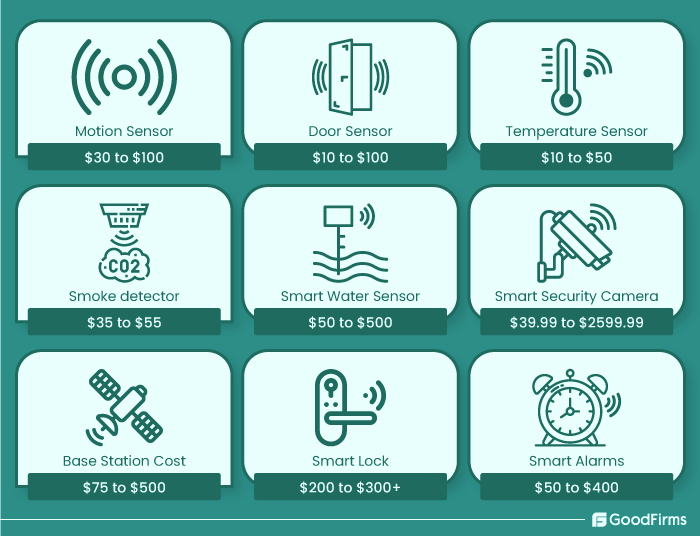
| Type | Cost (Unit Cost) |
| Motion Sensor |
$30 to $100 |
| Door Sensor | $10 to $100 |
| Temperature Sensor | $10 to $50 |
| Smoke detector | $35 to $55 |
| Smart Water Sensor | $50 to $500 |
| Smart Security Camera | $39.99 to $2599.99 |
| Base Station Cost | $75 to $500 |
| Smart Lock | $200 to $300+ |
| Smart Alarms | $50 to $400 |
#4. Smart Kitchen Appliances
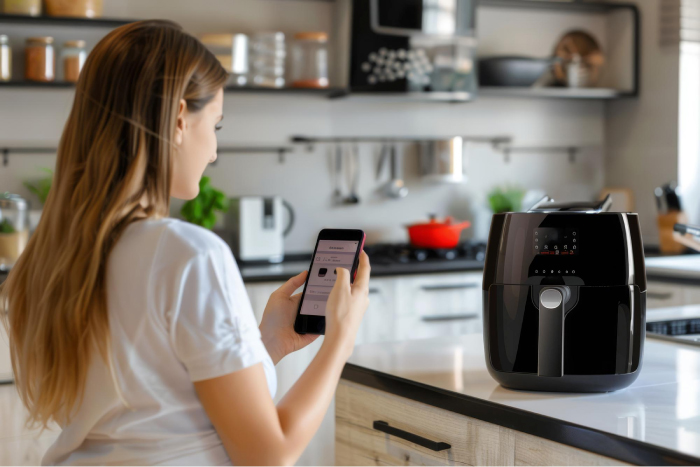
The kitchen once considered the most mundane space in the house, has become the focus of attention for IOT developers. Thanks to the IoT, ordinary kitchen appliances are transforming into intelligent machines that offer never-before convenience, efficiency, and control. Here's a brief overview of how this IoT-enabled magical machine redefines how we cook, eat, and manage our homes.
Refrigerators with Cameras: Smart fridges fitted with cameras keep you informed about their contents via smartphone apps. Even if you don't remember what's in the refrigerator while grocery shopping, you can update yourself by checking the smartphone app; you'll receive notifications if any of the essentials are running low. Such equipment not only minimizes food waste but also optimizes shopping trips.
Smart Ovens with Remote Control: Smart Ovens can be remotely controlled via smartphones. This means you can adjust settings, set timers, and even receive notifications when your cake is made and waiting to be served while you're busy at the petrol station.
Voice Control Integration: Multitasking in the kitchen becomes more manageable when your oven and coffee machine listen to your voice commands, leaving your hands free for other important tasks. For instance, using voice-control systems such as Alexa, you can brew coffee before you get up from bed or preheat food while working on your laptop.
Smart kitchen appliances offer convenience, efficiency, and control, which was unheard of before. Going down the line, as technology progresses, we can see further innovations that could take your kitchen experience to the next level.
How Much Does Smart Kitchen Appliances Cost?
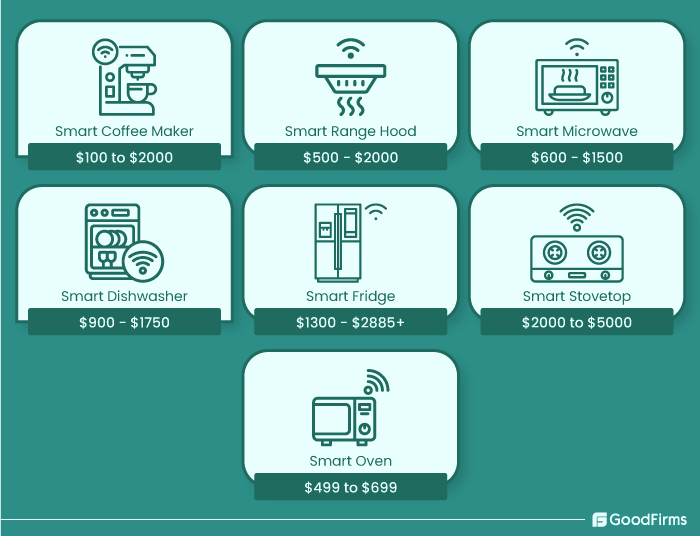
| Type | Cost (unit cost) |
| Smart Coffee Maker | $100 to $2,000 |
| Smart Range Hood | $500 - $2,000 |
| Smart Microwave | $600 - $1,500 |
| Smart Dishwasher | $900 - $1,750 |
| Smart Fridge | $1,300 - $2,885+ |
| Smart Stovetop | $2000 to $5,000 |
| Smart Oven | $499 to $699 |
#5. Smart Gardening Solutions
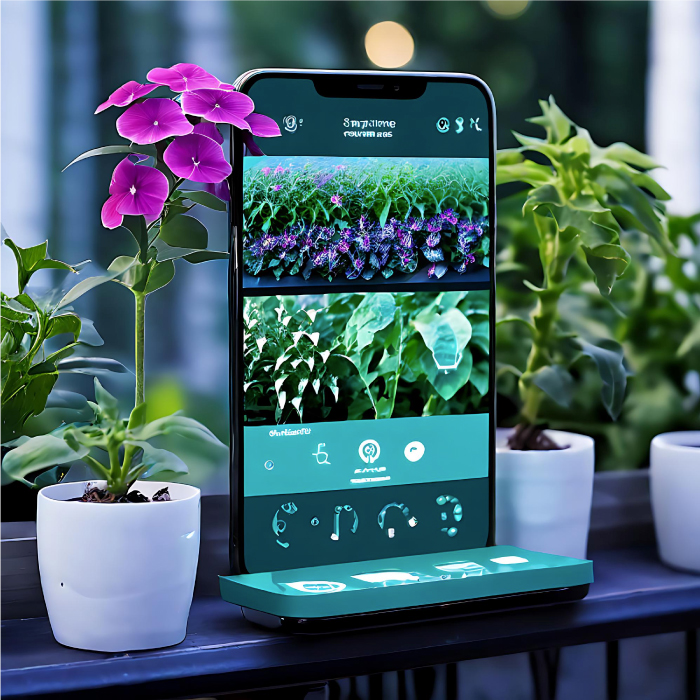
Traditional gardening is being replaced by smart gardening. With the internet and tech entering almost every sphere of our lives, IOT-based smart gardening solutions are entering our homes.
Advanced IoT tools, such as automated watering systems, robot-enabled lawnmowers, soil sensors, temperature sensors, and more, are some of the popular IOT home automation gardening solutions.
The best part is that these tools can be controlled using a mobile app. This means you can check on your plant’s health right from your living room.
The remote-controlled sprinkler is one exciting tool to try because it automatically increases/decreases water supply depending on the weather patterns data. The tool helps control the wastage of water and even soil humidity.
Several smart gadgets are being used in gardens, but the most valuable ones, which translate into popular ones, will revolutionize your gardening style.
Automated Lawn Mowers: An automated lawn mower helps you cut the grass on your lawn via a mobile app. Yes, you read that right. All that you need to do is decide on the grass length and the area that needs to be mowed on your mobile app and then turn the automated lawn mower on. That’s about it! The automated lawn mower will get working while you are busy making breakfast in the kitchen.
Smart Water Sprinkler: Forgot to water your lawn? No problem! The smart sprinkler attached to your water sprinkler system can be operated via your mobile app. The good part is that the sprinkler doesn’t just sprinkle water randomly but does it in a measured way, depending on the weather. More importantly, you can adjust the area that needs watering, such as how much water and when to water.
Soil Sensors: You don’t have to collect soil to analyze its quality now. Thanks to soil sensors, you can detect soil quality in terms of water and mineral content availability and sunlight exposure via a mobile app.
Smart Weather Sensors: The device updates you about the outside weather and its effect on plants. You can even check the air quality around the plants and get notifications about what your plants need now.
Grow Lights: In some U.S. States, plants don’t receive enough sunlight, which affects their photosynthesis process. These smart UV lights emit light that is considered equivalent to sunlight for plants. So it doesn’t matter whether it’s snowing outside; the smart UV lights ensure your plants are not deprived of sunlight.
If gardening is a hobby, then such tech tools can come in handy as you can operate them via apps, thus taking care of your plants at all times.
How Much Does Smart Gardening Solutions Cost? 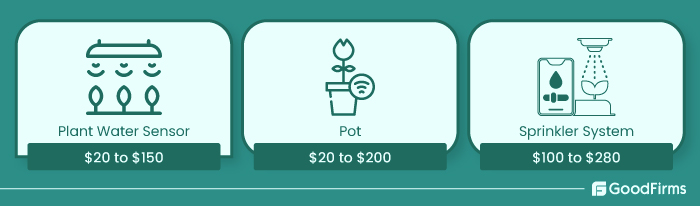
| Type | Cost (Unit Cost) |
| Plant Water Sensor | $20 to $150 |
| Pot | $20 $200 |
| Sprinkler System | $100 to $280 |
#6. Smart Home Entertainment Systems
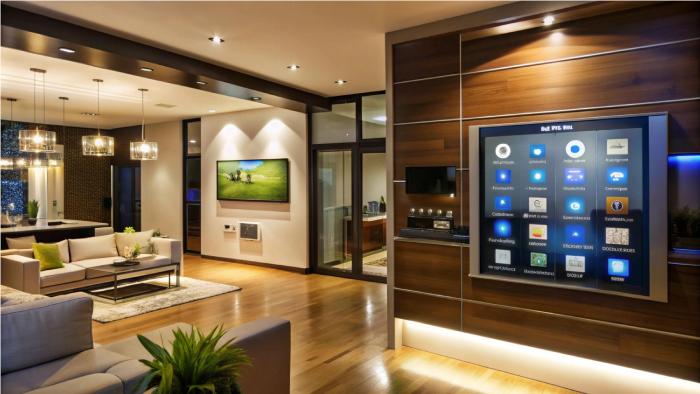
Smart Home Entertainment Systems comprises various devices offering immersive and connected entertainment experiences. Let’s explore some key IOT Home automation devices:
Smart Televisions: Smart televisions, with their in-built internet connectivity and advanced features, allow you to access different streaming services, browse the web, and connect with other smart devices. They offer a slew of features that enhance your TV viewing experience.
Streaming Devices: Streaming devices allow you to access online platforms like Amazon Prime and Netflix on non-smart TVs. These devices connect to your TV and have a user-friendly interface that lets you browse and stream popular movies, series, and other media content. Streaming devices are available in several forms, such as dongles, set-up boxes, and sticks.
Smart Speakers: Smart speakers or voice-activated speakers allow you to control home entertainment systems using voice commands and even stream music from popular audio streaming services such as Spotify and Apple Music. The smart speakers also offer daily weather updates, news briefs, and more.
Gaming Consoles: Gaming consolessuch as PlayStation and Xbox serve dual purposes. They allow you to play the latest video games while accessing streaming services, music apps, and more.
Home Theater Systems: Home theater systemscomprise speakers, an audio/video receiver, and a subwoofer, which allow users to enjoy a cinematic experience in the comfort of their homes.
Virtual Reality (VR) Systems: Virtual reality systems comprising VR headsets and accessories such as motion controllers and sensors help you explore virtual environments, play games, and even watch movies in a 360-degree immersive format that is considered immersive.
The interconnectedness of these devices allows you to control and enjoy your favorite content without any hiccups.
How Much Does Smart Entertainment Systems Cost?

| Type | Cost (Unit Cost) |
| Smart TV | $300 to $2000 |
| Smart Speaker | $20 to $500 |
#7. Smart Home Garages
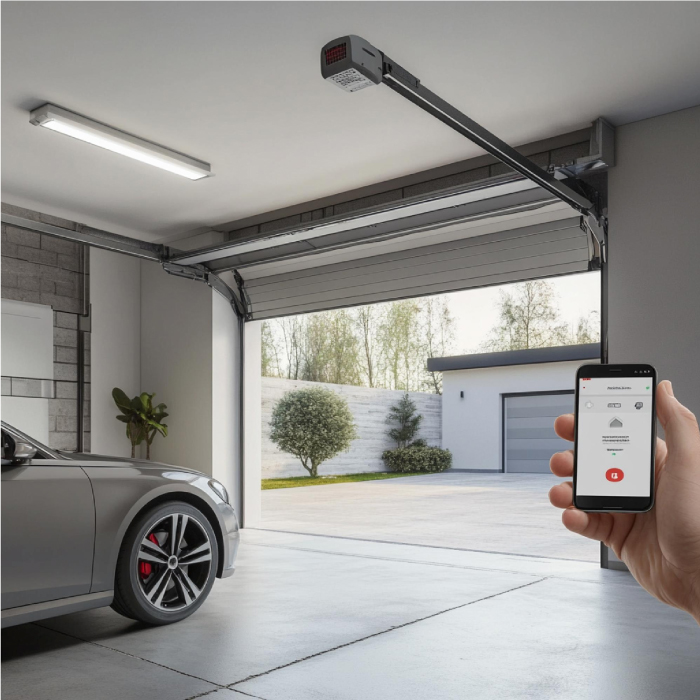
Several smart and IoT home automation technologies have become part of home garages thanks to Smart Home Garages. Here’s a list of some popular smart home garage technologies:
Smart Garage Door Openers: Now, using this device, you can close your garage door even if you are 10 miles away from your garage. Likewise, you can allow your friends to park even if you are not home by opening the garage door. But then, check whether the smart garage door opener is compatible with the existing door system before you go for it.
Smart Garage Door Sensors: Are you wondering if you have locked the garage door? The smart garage door sensor will help you know, as the device is programmed to send real-time notifications. This extra layer of security will ensure that your car remains under lock and key even if you are not around.
Smart Garage Cameras: Smart garage cameras can constantly monitor your garage. These cameras come loaded with motion detection sensors and night vision, which allows you to check in on your garage via phone or computer.
Smart Lighting Systems:
- The moment the garage door opens.
- The lights are on.
- When you are not around, the garage lights automatically turn off.
Yes, you can set your smart lighting systems to act the way you want, thus offering unmatched convenience and keeping your garage well-lit when needed.
Remotely controlling and monitoring your garages is easy with smart garage door openers, sensors, cameras, and lighting systems. As the IoT evolves, we can expect more home automation IoT technologies to enhance garage functionality and security.
#8. Smart Bedroom
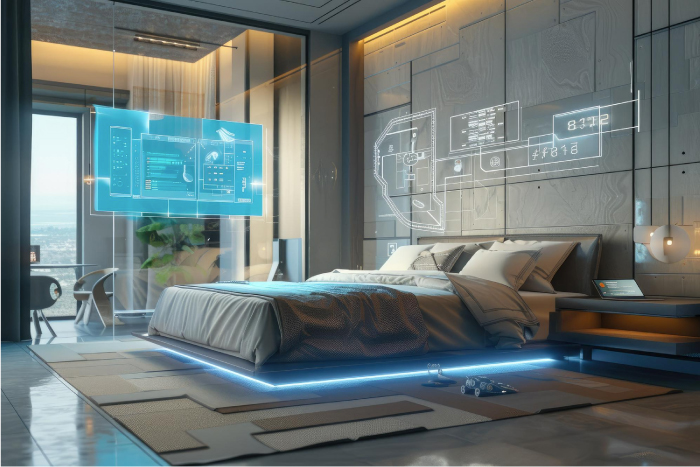
From smart beds to smart curtains and blinds, there are several ways to introduce IoT Home automation into your bedroom, and setting them up is no big deal. Here’s a breakdown of some of the most sought-after smart bedroom technologies.
Smart Bed: A smart bed completes a smart bedroom. Although this technology is just at its embryonic stage, it could be one of the most sought-after in the future, given the benefits it could add to your bedtime experience.
Smart beds can be easily linked to Alexa or Google Assistant, allowing you to control them using voice commands. Beds linked to apps can also help you track sleep, heart and respiratory rate, and temperature.
Smart Pillows: Different types of Smart Pillows are flooding the marketplace. Some have in-built electronic devices, some can be inserted outside your pre-existing pillows, and a few come with bedside controllers. No matter what smart pillow you choose, most are programmed to prevent snoring, track sleep, and help you wake up on time.
Smart Bedside Table Lamp: If you like to spend time in bed reading your favorite book or your kid is afraid of darkness, a smart bedside table lamp can be of great help. These applications of IoT in home automation come with sensors that help you switch them on and off.
Smart Curtain and Blinds: You are already on the bed, only to remember you forgot to draw your curtains. Take a chill pill! Smart curtains or blinds can be operated right from the comfort of your bed.
Not just your bedroom smart curtains, and blinds can be used in any room of your house and can be controlled using voice commands or your mobile app. The cherry on the cake is that you integrate it into the alarm clock and set custom timers to open and close whenever you want.
Smart Star Projector: Install a star projector and sleep under the stars, moon, and constellations. Both adults and children will love the ambiance. The good part is that the projector is already connected to Amazon Alexa and Google Home Support, so you don’t have to scratch your head thinking about how to connect.
Smart bedrooms are called smart not just because they are made of high-tech stuff but also because they offer more convenience and comfort than a traditional bedroom. So, if you think introducing tech stuff will elevate your sleeping experience, make your bedroom smart.
How Much Does Smart Bedroom Systems Cost? 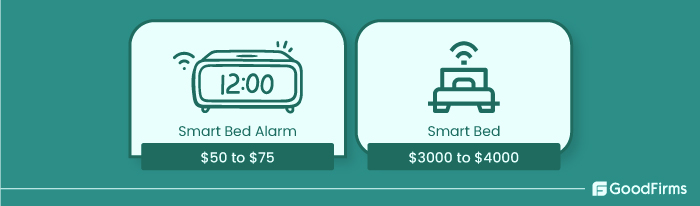
| Type | Cost (Unit Cost) |
| Smart Bed Alarm | $50 to $75 |
| Smart Bed | $3000 to $4000 |
Advantages and Disadvantages of Home Automation Using IoT
Home automation using IoT is not all pluses. There are several minus too. Let’s explore the minuses along with the pluses.
Advantages of IOT Home Automation
Super Convenience—Controlling IOT-based smart automation devices is super easy. With just a tap on your smartphone, you can turn on the lights, open the blinds, switch off the fan, check the fridge's contents, open the garage door, and so much more. If the smartphone app is unavailable, you can use Google Home or Alexa to do all the jobs.
Energy Savings—Smart thermostats can adjust the room temperature when you are not around, turn off the lights when not in use, and even monitor energy usage.
Security—Smart locks allow you to lock or unlock your doors even if you are away from home, give you security alerts in case of attempted burglary, and even monitor your home with security cameras.
Fun—Smart entertainment systems like TVs and music create immersive experiences. Smart appliances make cooking or baking more enjoyable.
Disadvantages of IOT Home Automation
Dependency—Home automation depends on technology. If there is no power in the house or an issue in the system, things may go haywire if you don’t have a backup plan in place and rely on IOT home automation for all home functions.
Data Hacking—Home automation means using smart devices that generously collect data about your home and habits. Unauthorized individuals can hack this data and use it for marketing purposes. So, it is essential to review the privacy policies and security measures of IOT home automation systems before using them for personal purposes.
High Costs—Home automation offers great convenience and comfort, but there’s a price for this comfort. Home automation IoT devices are priced on the higher side, and there are maintenance costs and subscription fees. So, before thinking of home automation, you need to consider the prices of home appliances.
Complex: Some home automation systems can be complex, and the features and settings could confuse and overwhelm you. So, it's important to choose a system that’s not difficult to operate and matches your comfort level.
Disrupts other Connected Devices: Smart devices are connected. If one device malfunctions, it could affect other connected devices. So, it’s crucial to plan beforehand for technical emergencies to avoid disruptions in your home automation experience.
Conclusion
IoT smart home automation is catching up, thanks to its convenience, efficiency, and accessibility. Installing smart home devices may prove expensive initially, but the gains outweigh the losses in the long run. IoT development companies in India can bundle various IoT home automation devices into convenient packages, making it easier for customers to design connected homes.