Key takeaways
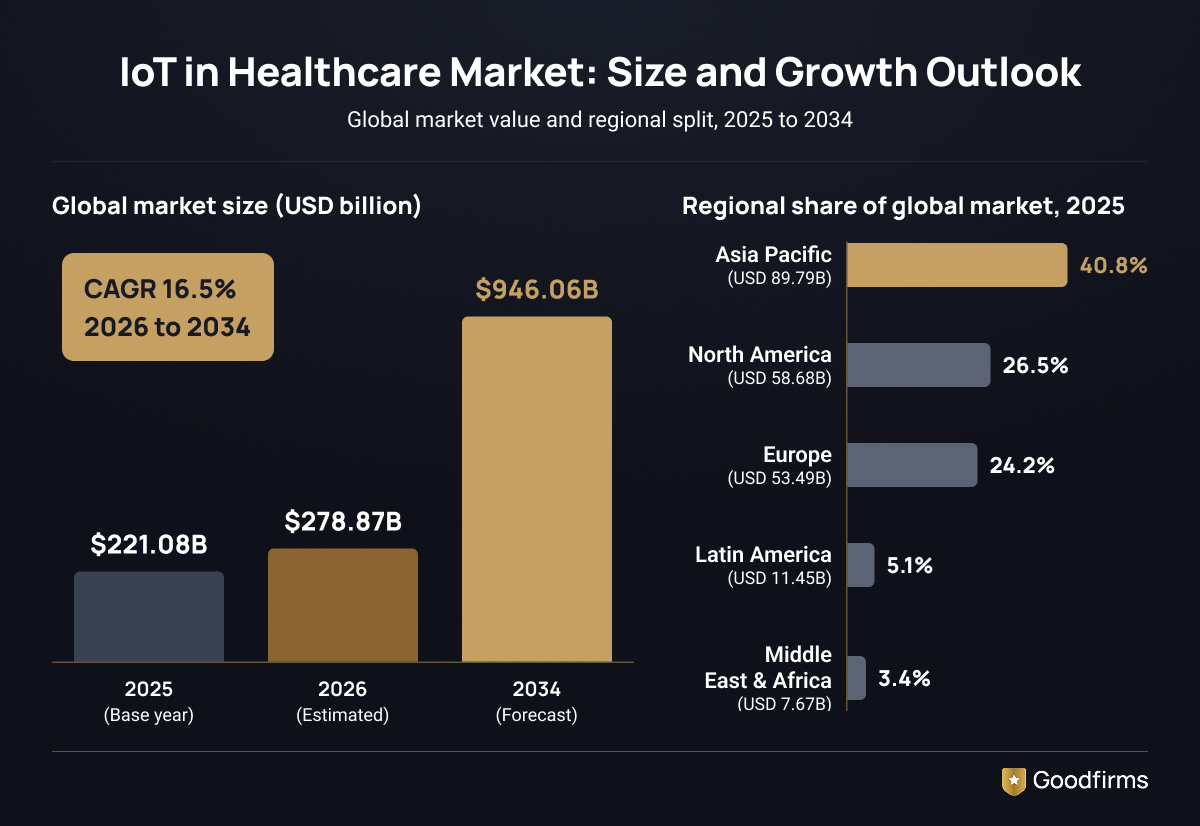
- The global IoT in healthcare market is valued at approximately USD 221.08 billion in 2025 to USD 278.87 billion in 2026.
- A 2025 review of 116 trials found that hospital service use decreased in 72% of the remote monitoring trials included.
- Connected devices let doctors track patients from home and catch changes in readings between visits.
- Hospitals also use IoT to track equipment, service machines before they fail, and manage resources.
- Data security, device compatibility, and rollout costs should be planned before adoption.
What if healthcare could fix problems before they turn into emergencies?
That is exactly what the Internet of Things (IoT) is helping healthcare providers do. Connected monitors can alert doctors when a patient’s vital signs change, while sensors can warn hospital staff when medical equipment is at risk of failing. With these capabilities, healthcare providers can detect potential problems earlier and take action before they become serious.
It is no surprise that more healthcare providers are investing in this technology. The global Internet of Things (IoT) in healthcare market is valued at approximately USD 221.08 billion in 2025 to USD 278.87 billion in 2026, with robust double-digit growth projected over the next decade.
However, adopting this technology comes with challenges, including data security and system integration. Now, let’s move forward to explore 9 different ways IoT is changing healthcare and the key factors healthcare providers should consider before investing in this technology.
Planning to build a connected healthcare solution? Explore the top healthcare IoT application development companies and find the right technology partner for your project.
What Is IoT in Healthcare?
Internet of Things (IoT) in healthcare refers to connected devices and sensors that collect and share health-related data over a network. These technologies help healthcare professionals monitor patients, track medical equipment, and access health information remotely.
For example, a connected blood pressure monitor can record readings and share them with an authorized healthcare professional. Similarly, wearable devices can track heart rate and oxygen levels, helping care teams identify changes that may need attention. For accurate results, you must consider wearable devices from leading wearable app development companies.
To be specific, the Internet of Medical Things (IoMT) refers to connected medical devices and healthcare-specific technologies. Beyond patient monitoring, IoT applications in healthcare also include medication management, equipment tracking, and smart hospital operations. Though their effectiveness depends on reliable data, secure connections, and appropriate clinical oversight.
What Are the Key Components of IoT in Healthcare?
A typical healthcare IoT system consists of four main components. Let’s move forward and look at them:
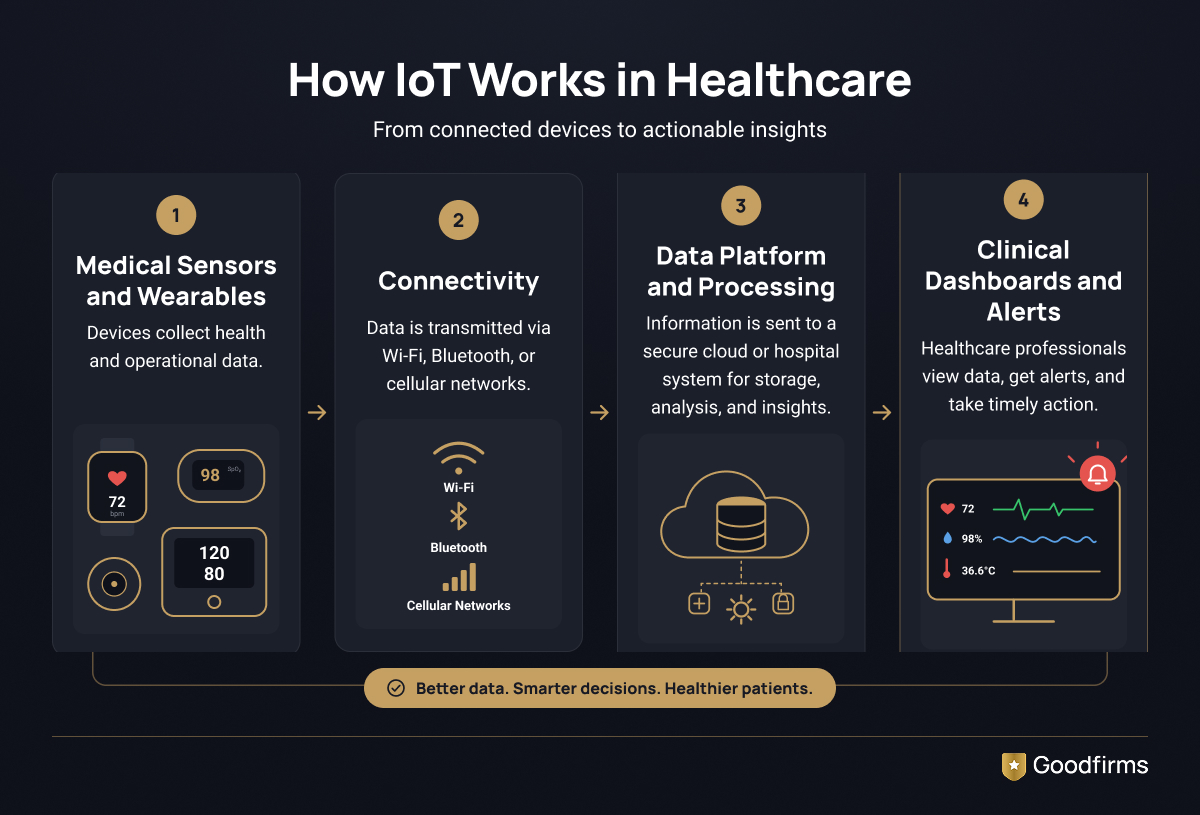
- Sensors and connected devices: Wearables, glucose monitors, temperature sensors, and others collect health or operational data.
- Connectivity: Wi-Fi, Bluetooth, cellular networks, or other communication technologies transfer information between devices and systems.
- Data processing and storage: Software platforms process incoming information, store records, and identify patterns or readings that may need attention.
- Applications and dashboards: Healthcare professionals use these interfaces to review information, receive alerts, and coordinate the next steps in patient care.
These components work together to turn device readings into information that healthcare teams can use. The exact setup depends on the application, the device, and the healthcare provider's requirements.
How Is IoT Transforming Healthcare?
IoT applications in healthcare are changing how hospitals monitor patients, manage medical equipment, and deliver care beyond clinical settings. However, connected devices collect health and operational data that healthcare professionals can use to make timely decisions. From wearable monitors to smart hospital systems, these technologies support a more connected approach to healthcare, although their effectiveness depends on reliable data, secure systems, and appropriate clinical oversight.
1. Remote Patient Monitoring
IoT remote patient monitoring allows healthcare professionals to track patients' health without requiring them to visit a hospital for every checkup. However, the demand for remote patient monitoring is continuously increasing, showing a rise in market value of $71.29 billion in 2026 and is even projected to reach $289.77 billion by 2034
Connected blood pressure monitors, glucose meters, pulse oximeters, and wearable heart monitors collect readings and transmit them to authorized care teams. This helps clinicians identify concerning changes and decide whether a patient needs further assessment.
Also, a 2025 systematic review published in npj Digital Medicine examined 116 randomized controlled trials and found that hospital service use decreased in 72% of the included trials involving device-based remote monitoring. However, results varied depending on the technology and care model.
2. Real-Time Patient Tracking and Safety
With the help of IoT, hospitals can use connected wristbands, location sensors, and real-time locating systems to track patients within their facilities. These IoT patient tracking systems can help staff locate patients, monitor movement, and coordinate transfers between departments.
For example, a hospital can use location-enabled wristbands to identify when a patient arrives in a diagnostic department or leaves a designated care area. In facilities supporting patients with dementia or mobility difficulties, configured alerts can help staff respond when someone enters a restricted area.
These systems can also improve visibility and coordination, but they must be designed to protect patient privacy and should complement, rather than replace, direct supervision and established safety procedures.
3. Early Detection of Health Changes
Connected medical devices can help identify changes in a patient's health before symptoms become severe. Wearables and monitoring sensors collect information such as heart rate, blood oxygen levels, body temperature, and glucose levels. When readings cross configured thresholds, the system can notify the patient or healthcare team.
For instance, a connected glucose monitor can alert a person with diabetes when their blood sugar levels move outside their target range. Similarly, continuous heart monitoring may identify irregular rhythms that warrant medical evaluation.
These IoT health monitoring applications provide useful information between appointments. However, an alert does not automatically indicate a serious condition, and normal readings cannot rule out every health problem. Clinical assessment remains essential.
4. Smart Medical Equipment and Asset Tracking
Hospitals depend on equipment such as infusion pumps, wheelchairs, portable monitors, and ventilators. When staff cannot locate these devices quickly, routine care may be delayed. IoT in medical equipment tracking uses technologies such as RFID tags, Bluetooth beacons, and connected sensors to help hospitals locate equipment and monitor its availability.
For example, staff can check a tracking dashboard to find an available infusion pump instead of searching multiple wards. Some systems can also record equipment movement and help teams identify underused assets.
This visibility can support better equipment utilization, reduce time spent searching for devices, and simplify inventory management. Hospitals still need accurate tracking records, clear equipment-handling procedures, and appropriate access controls.
5. Predictive Maintenance of Medical Devices
Medical equipment failures can interrupt treatment and create safety risks. Predictive maintenance uses sensor readings and equipment performance data to identify signs of possible failure before a device stops working.
For example, connected hospital equipment can report unusual temperatures, vibration levels, or operating patterns. Maintenance teams can review these signals, investigate potential faults, and schedule servicing before a minor issue becomes a larger problem.
Unlike a fixed maintenance schedule, this approach can help teams prioritize equipment based on its observed condition. However, predictive models cannot identify every failure, so routine inspections and manufacturer-recommended maintenance remain necessary. This application of healthcare IoT can support equipment reliability while helping hospitals plan maintenance resources more effectively.
6. Connected Medication Management
IoT-enabled medication systems can help patients follow prescribed schedules and help healthcare providers monitor certain aspects of medication use. Smart pill dispensers can provide reminders, while connected inhalers can record usage and share information with compatible applications.
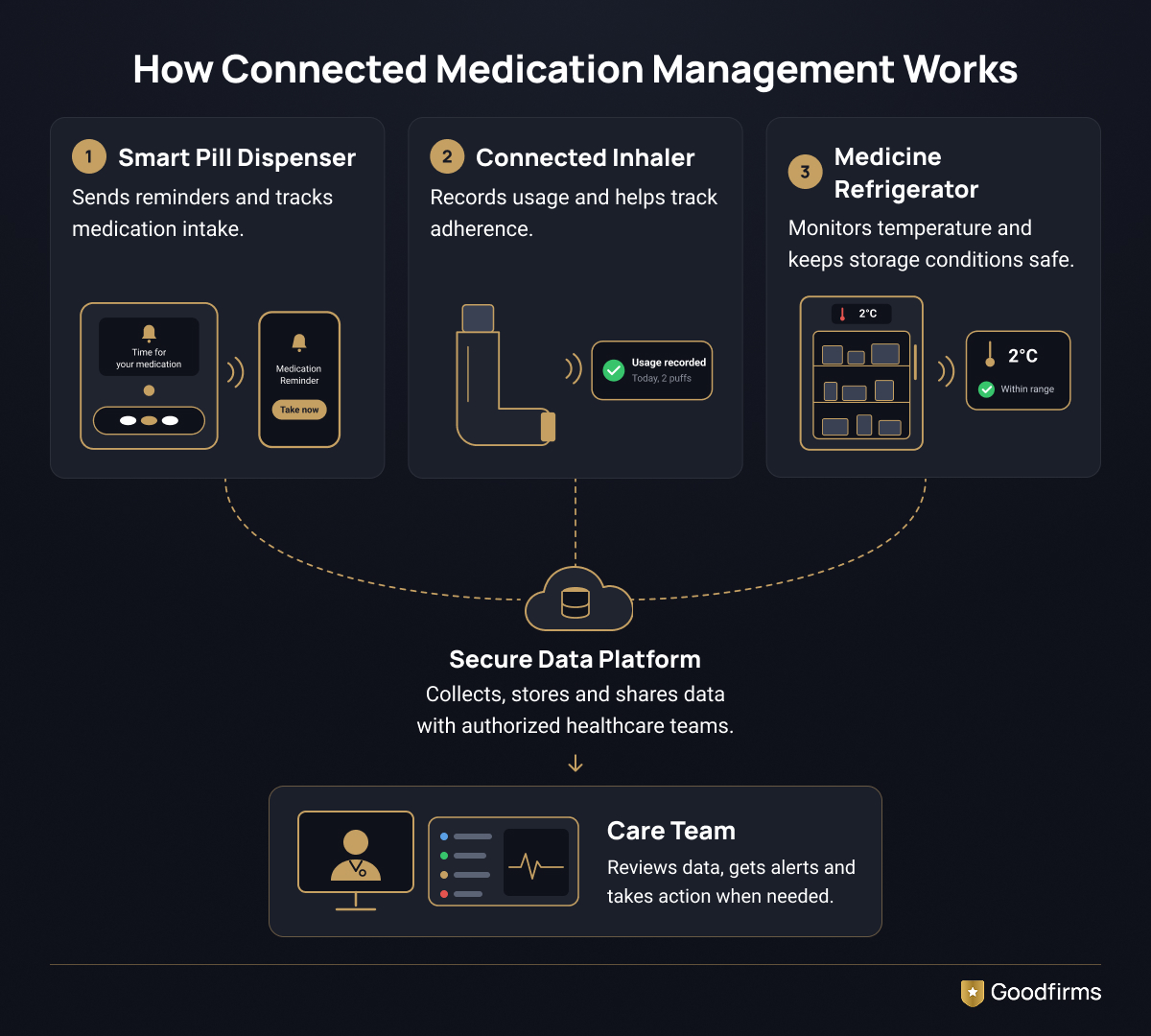
For instance, a patient managing a chronic respiratory condition may use a connected inhaler that records when doses are taken. Reviewing these records can help the care team discuss missed doses or changes in medication use with the patient.
Some connected systems also support medication storage monitoring, including temperature tracking for temperature-sensitive medicines. These technologies can improve visibility into medication routines, but recorded device activity does not always prove that a patient took the medicine correctly.
7. Personalized Treatment and Chronic Disease Management
Managing long-term conditions often requires more than occasional clinical visits. IoT devices can collect continuous data on activity, sleep, blood pressure, glucose levels, and other relevant health metrics. Healthcare professionals can use these records alongside medical history and clinical assessments to adjust care plans when appropriate.
For example, connected glucose monitors help people with diabetes understand how glucose levels change throughout the day. Similarly, connected cardiac devices can transmit information that helps clinicians assess certain heart conditions.
These IoT applications in healthcare support more individualized monitoring and follow-up. Still, treatment decisions should consider the patient's overall condition, preferences, and clinical evidence rather than relying on device readings alone.
8. Telehealth and Home-Based Healthcare
IoT extends telehealth beyond video consultations by allowing patients to share health measurements from home. Connected thermometers, blood pressure monitors, weighing scales, and other compatible devices can send readings to healthcare platforms before or after a virtual appointment.
For example, a clinician supporting a patient with heart failure may review weight trends and other symptoms to assess whether further evaluation is needed. This can make follow-up more convenient and reduce some unnecessary trips to healthcare facilities.
The World Health Organization recognizes that telemedicine can expand access to healthcare when appropriate safeguards are in place, while emphasizing that it should complement suitable in-person care rather than replace it in every situation.
9. Smart Hospital Environments and Resource Management
IoT can help hospitals coordinate building systems, monitor environmental conditions, and manage resources. Connected sensors can track temperature and humidity in storage areas, monitor air quality, and adjust lighting or ventilation according to predefined requirements. These capabilities are particularly useful in areas where environmental conditions affect patient comfort, equipment operation, or medicine storage.
Hospitals can also combine connected systems with operational dashboards to monitor selected resources and identify inefficiencies. For example, temperature sensors can alert staff when a medical refrigerator moves outside its permitted range.
By connecting these systems, hospitals can improve operational visibility and respond more quickly to certain issues. Healthcare organizations exploring such projects can also review IoT application development firms for relevant implementation expertise.
What Are the Challenges of IoT in Healthcare?
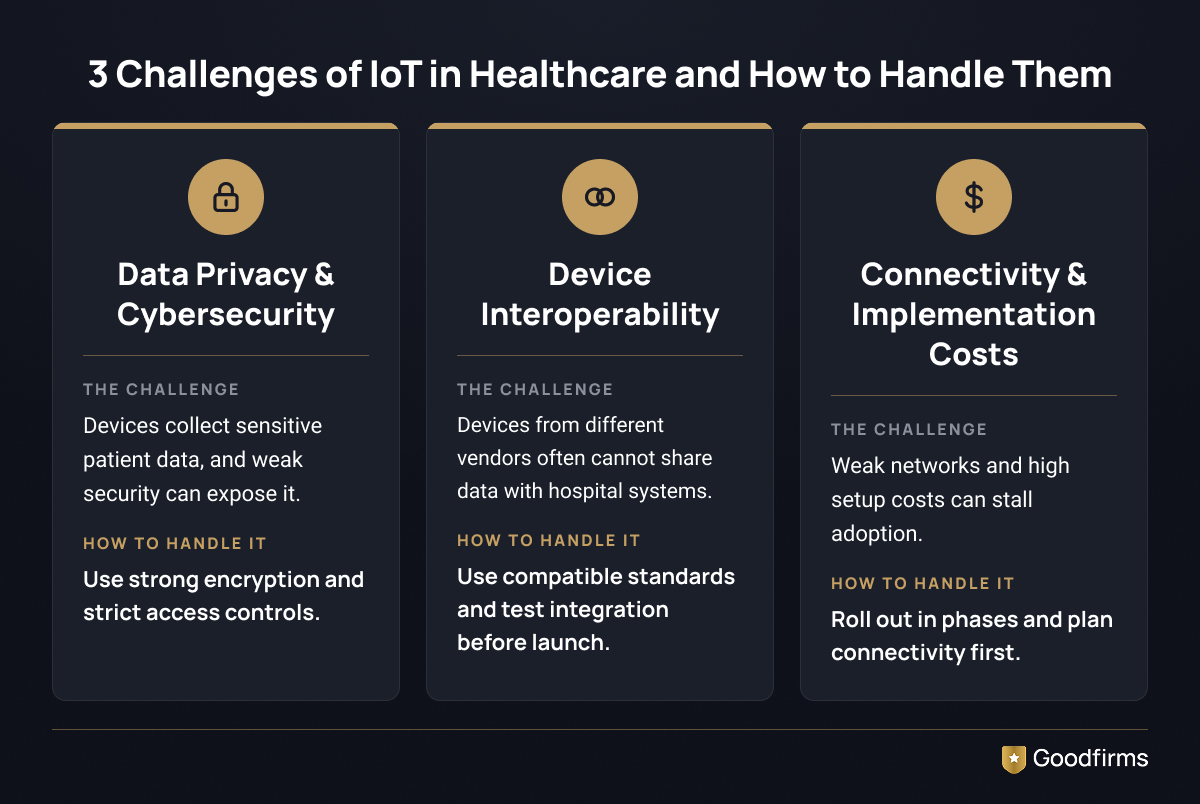
Although IoT in healthcare helps connect patients, medical devices, and hospital systems, implementing these technologies comes with challenges. Healthcare organizations must protect sensitive patient information, ensure devices work with existing systems, and manage the costs of deployment and maintenance.
1. Data Privacy and Cybersecurity
IoT healthcare devices collect sensitive information, including vital signs, medication records, and patient health data. If these devices or their connected platforms have security weaknesses, unauthorized users could access or misuse that information. Poorly secured devices may also expose healthcare networks to cyberattacks.
For this reason, healthcare organizations need strong encryption, access controls, regular software updates, and continuous security monitoring to reduce these risks. They must also follow applicable data protection requirements and establish clear policies for collecting, storing, and sharing patient information.
2. Device Interoperability and Integration
Healthcare facilities often use devices and software from different manufacturers. These systems may use incompatible data formats, communication protocols, or interfaces, making it difficult to share information across platforms.
For example, readings from a connected patient monitor may not automatically appear in a hospital's electronic health record system. Integrating these technologies requires compatible standards, careful testing, and coordination between device vendors and healthcare IT teams. Without proper integration, staff may need to transfer information manually, reducing efficiency and increasing the risk of errors.
3. Connectivity and Implementation Costs
IoT devices depend on reliable network connections to transmit data and deliver timely alerts. Weak connectivity, network outages, or limited infrastructure can interrupt monitoring, particularly in rural areas and home-care settings.
Implementation costs present another challenge. Healthcare organizations must budget for devices, network infrastructure, software integration, staff training, cybersecurity, and ongoing maintenance. Smaller facilities may struggle to manage these expenses alongside existing operational needs.
A phased rollout, reliable connectivity planning, and a clear assessment of clinical and operational requirements can help organizations manage costs while ensuring that connected systems remain dependable.
What Is the Future of IoT in Healthcare?
The future of IoT in healthcare will involve greater integration with artificial intelligence (AI), cloud computing, and digital health platforms. These technologies can help healthcare professionals interpret patient data and make more informed care decisions.
Connected wearables and remote monitoring devices may support more personalized care by tracking changes in patients' health between appointments. AI-powered systems could also help identify patterns that need medical attention.
Smart hospitals are likely to use IoT to improve equipment tracking, monitor environmental conditions, and manage resources more efficiently.
However, wider adoption will depend on stronger cybersecurity, better device interoperability, and reliable connectivity. Healthcare providers must ensure that these technologies protect patient data and deliver meaningful clinical benefits.
FAQs - IoT in Healthcare
1. Can IoT healthcare devices work without an internet connection?
Some IoT healthcare devices can collect and store data without an active internet connection and then synchronize it when connectivity is restored. However, remote monitoring dashboards and real-time alerts may not work during an outage. Healthcare providers should assess each device's offline capabilities and establish backup procedures for situations in which delayed data could affect patient care.
2. Are wearable health trackers accurate enough for medical decisions?
Wearable health trackers can help monitor trends in heart rate, physical activity, sleep, and other health measures. However, accuracy varies by device, sensor, and measurement. Consumer wearables should not automatically be treated as medical-grade equipment. Patients should discuss concerning readings with a healthcare professional rather than relying on a wearable alone to diagnose a condition.
3. What should hospitals consider before adopting IoT technology?
Hospitals should evaluate clinical needs, device reliability, compatibility with existing systems, data security, and total implementation costs. Staff training and ongoing technical support are equally important. Starting with a small pilot project can help healthcare organizations assess whether an IoT solution fits existing workflows and delivers measurable value before expanding its use.
4. Can IoT healthcare devices help patients in rural areas?
Yes, connected blood pressure monitors, glucose meters, and other remote monitoring devices can help patients share health readings with healthcare professionals without traveling for every routine check. However, the benefits depend on network availability, device affordability, digital literacy, and access to clinicians who can review the data and provide appropriate follow-up care.
5. What are some examples of IoT in healthcare?
Examples of IoT in healthcare include wearable fitness trackers, connected blood pressure monitors, continuous glucose monitors, smart medication dispensers, and remote patient monitoring systems. Hospitals also use connected devices to track medical equipment, monitor storage conditions, and manage resources. These technologies help healthcare professionals access relevant data and support patient care.
Final Words
IoT is changing healthcare by connecting patients, medical devices, and healthcare professionals. From remote patient monitoring to smart hospital management, these technologies help providers access timely information and improve daily operations.
However, successful implementation requires careful planning. Healthcare organizations must address data privacy, cybersecurity, device compatibility, and infrastructure costs before adopting connected solutions.
Businesses looking to implement these technologies can explore the top Internet of Things (IoT) companies to find suitable technology partners. With the right expertise and approach, healthcare providers can use IoT to deliver more connected, efficient, and patient-focused care.