Key takeaways
- Exceptional customer support isn't a back-office function for fintechs — it's the frontline competitive weapon that drives trust, retention, and revenue.
- BPO providers give fintechs instant access to pre-trained agents and scalable infrastructure, which can take 18–36 months to build and deliver to day one.
- Leading fintech BPO providers deliver genuine 24/7 omnichannel support across chat, email, phone, and in-app messaging, effortlessly spanning multiple time zones.
- Reputable fintech BPO partners maintain SOC 2, PCI-DSS, and ISO 27001 certified infrastructure, shielding companies from regulatory penalties that surged 417% in H1 2025.
- AI-powered chatbots resolve up to 78% of routine fintech queries without human intervention, slashing handle times and cost-per-interaction significantly.
- Strategic BPO partnerships convert fixed support costs into variable costs, delivering 30–60% operational savings while improving service quality simultaneously.
- Multilingual BPO providers eliminate the 12–18-month localization timeline, enabling fintechs to launch native-language support in multiple new markets at once.
- The right fintech BPO partner must demonstrate financial services expertise, verified compliance credentials, proven AI capability, and transparent pricing, all essential for long-term success.
- BPO-powered fintech customer support is the one competitive advantage that cannot be copied, especially in a market where features and pricing are constantly matched.
- For fintech leaders, the question is no longer whether to partner with a BPO; it's how to choose the right one for maximum growth impact.
You will all agree that the world of financial technology has changed significantly over the last decade. Whether it's digital payment apps, neobanks, robo-advisors, or insurtech platforms, fintech companies have completely transformed the way we manage our finances.
But growing fast comes with its own set of challenges, and one of the biggest is - keeping up with customer support that's always on, fully compliant, and actually strategic.
That’s exactly why so many fintech businesses depend on BPO services to improve their customer support processes. The best fintech customer support services don’t just answer tickets; they help companies scale smarter, cut unnecessary costs, and create delightful customer experiences, while staying on top of compliance, data security, and fraud prevention.
Yes, you heard it right - BPO services improve customer support for fintech companies to a great extent. But, how?
Discover the top BPO companies trusted by fintechs to improve customer support and scale globally.
In this article, we will learn why mastering customer support is so important for fintechs and how BPOs help them in doing that, along with some tips on how to find the right BPO services for fintech customer support success.
So, let’s quickly start with knowing why it is important for fintechs to master customer support.
Why Is It Important for Fintechs to Master Customer Support?
In an industry built on trust and real-time financial decisions, customer support isn't a back-office function — it's a frontline competitive weapon.
"At the end of the day, customer-centric fintech solutions are going to win." - Giles Sutherland — Fintech Strategist
Great customer support isn't optional. Here's why it's the must-have for fintechs.
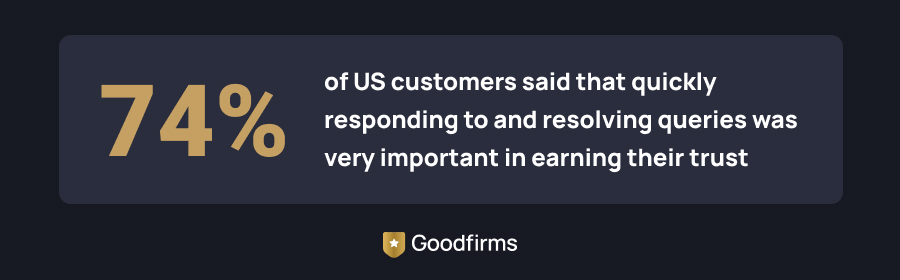
Trust Is the Fintech Product
Unlike traditional banks with physical branches, fintechs exist entirely in the digital space. When a payment fails or an account gets flagged, users have no physical place to walk in. Exceptional support is the only tangible proof that a fintech company truly has its customers' backs.
(Source: pwc.com)
Retention Depends on It
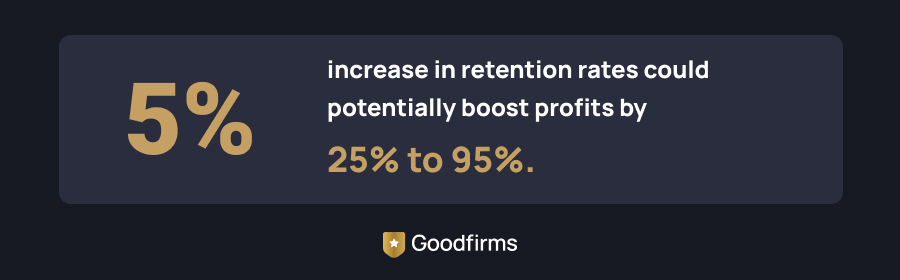
Acquiring a fintech customer is expensive. Losing one to a poor support experience is devastating. Studies consistently show that users who resolve issues quickly become loyal advocates, while a single frustrating interaction drives churn — often permanently.
(Source: hbr.org)
Compliance Makes It Non-Negotiable
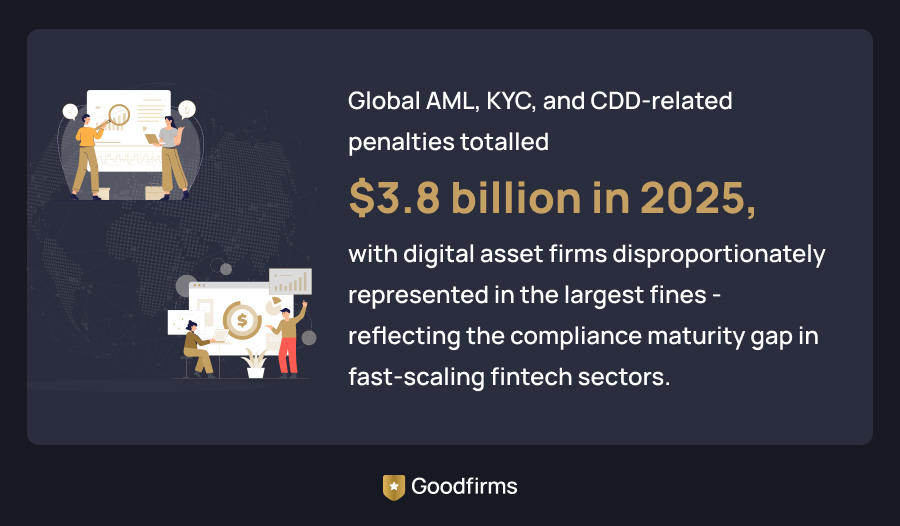
Fintech customer interactions are subject to strict regulatory oversight. Mishandled disputes, delayed fraud responses, or undocumented complaints don't just damage relationships; they attract regulatory penalties. Mastering support means mastering compliance simultaneously.
(Source: renascence.io)
Differentiation in a Crowded Market
Features get copied. Pricing gets matched. But consistently outstanding customer support is genuinely difficult to replicate. For fintechs competing in saturated segments like digital lending, payments, and neobanking, the quality of support is increasingly the deciding factor in why customers stay.
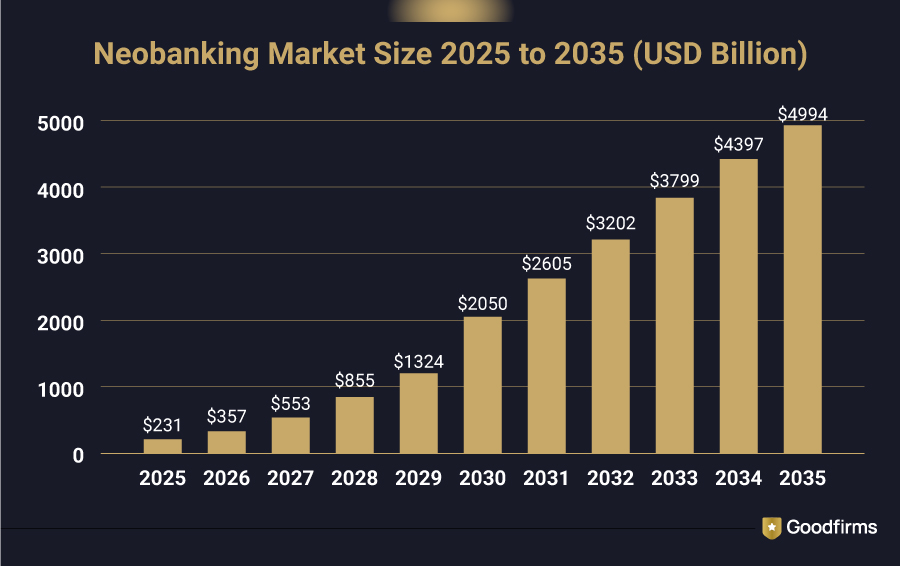
The global neobank market is estimated at approximately $230.55 billion in 2025, projected to grow at a CAGR of 40.29% through 2034, a market so competitive that customer experience has become the primary battlefield for differentiation.
(Source: Precedenceresearch.com)
Exceptional customer support is the difference between a fintech brand that thrives and one that fades. But building that support infrastructure in-house can prove to be expensive, slow, and complex.
Hence, mastering customer support is the goal. Trusting BPO for fintech customer support is how the smartest companies achieve that goal.
Why Smart Companies Trust BPOs for Fintech Customer Support?
As fintech companies scale rapidly into new markets and customer segments, their support operations must scale quickly too. BPO companies provide scalable infrastructure, multilingual service agents, AI-powered tools, and regulatory expertise, which enable fintech BPOs to provide exceptional customer support without the hustle required to hire and train at speed. This is why the smartest players in the industry don't build support from scratch; they partner smarter. Let’s have a look at these reasons in detail.
BPO Services for Fintech Are Scalable and Future-Proof
One of the most immediate benefits fintech companies gain from BPO partnerships is the ability to scale support operations rapidly and efficiently. Fintech platforms often experience unpredictable demand, such as a viral product launch, a new market entry, or a major regulatory update, which can flood support queues overnight. Traditional in-house teams struggle to absorb these surges without significant lag in hiring, onboarding, and training.
BPO customer support companies have pre-trained agents, established workflows, and mature technology infrastructure that can be deployed quickly. Whether a company needs to add 50 agents for a seasonal campaign or expand into a new language market, BPO firms offer elastic scalability that aligns with business growth curves rather than fighting against them.
Beyond headcount flexibility, BPO partners also bring operational maturity. They are experienced in providing customer support processes across dozens of clients. This means fintech companies benefit from best practices in ticketing, escalation workflows, quality monitoring, and agent coaching, all inherited from day one of the partnership. This immediately elevates the quality of customer interactions, reducing resolution times and improving first-contact resolution (FCR) rates, which are critical metrics in BPO financial services.
For early-stage and growth-stage fintech companies, especially, this level of operational infrastructure would take years to build in-house. BPO partnerships compress that timeline dramatically, allowing companies to focus internal resources on product development and innovation rather than support logistics.
Fintech BPOs Deliver 24/7 Omnichannel Support
Modern fintech users expect seamless, consistent support across every channel. Whether it is live chat, email, phone, in-app messaging, or social media, fintech customer service outsourcing can help you deliver round-the-clock support. A customer locked out of their digital wallet at 2 AM or disputing a fraudulent transaction on a Sunday afternoon will not wait until Monday morning. They expect a resolution now.
Fintech customer experience outsourcing through BPO providers addresses this need head-on. Leading BPO firms operate across multiple time zones, enabling genuine 24/7/365 support coverage without the burden of running night shifts or maintaining redundant infrastructure. For global companies operating across continents, this 24/7 customer support fintech model is not just preferable; it is mandatory.
Omnichannel capability is equally important. BPO providers invest heavily in unified customer experience platforms that integrate all support channels into a single view. Agents can see the full interaction history of a customer regardless of whether they previously reached out via chat, email, or phone, enabling contextual, personalized support rather than forcing users to repeat themselves across sessions.
This seamless experience directly impacts customer satisfaction scores (CSAT) and Net Promoter Scores (NPS), both of which are crucial indicators in the fintech sector where user trust and retention are directly tied to long-term revenue. According to industry research, customers who receive consistent omnichannel fintech support demonstrate significantly higher lifetime value than those who experience fragmented service journeys.
By leveraging BPO for fintech customer experience outsourcing, companies can ensure 24/7 omnichannel fintech support that today's consumers demand, without a massive investment.
BPO Services Keep Fintech Customer Support Compliant, Secure, and Audit-Ready
Compliance is perhaps the most unique challenge fintech companies face in customer support. Unlike traditional software companies, fintech firms operate under strict regulatory frameworks, which include GDPR, PCI-DSS, SOC 2, PSD2, AML regulations, and country-specific financial services laws. These regulations govern how customer data is handled, how transactions are monitored, and how disputes are resolved.
Any BPO customer support company specializing in fintech should be deeply embedded with compliance awareness. Customer service agents working in fintech BPOs must know what information they can and cannot access, how to handle sensitive financial data, when to escalate to compliance teams, and how to document interactions for potential audits. This regulatory overlay makes fintech support significantly more complex than standard customer service.
Reputable companies with experience in BPO financial services support are well-versed in these requirements. They invest in rigorous compliance training for their agents, maintain certified data infrastructure (SOC 2 Type II, ISO 27001, PCI-DSS compliant environments), and build audit-ready documentation into their operational processes from the ground up.
This means fintech companies gain a support partner that not only handles interactions efficiently but does so within a compliance framework that protects the company legally and reputationally. Regular compliance audits, data access controls, and encrypted communication channels are standard features of high-quality BPO financial services partnerships.
Data security is highly critical. Customers share their most sensitive information, like bank account details, tax identifiers, and transaction histories, with fintech platforms. BPO providers treat this data with the highest level of security discipline. Leading fintech BPOs maintain extremely secure architectures, strict access-based role controls, and comprehensive incident response plans that align with global regulatory expectations.
BPOs Integrate Latest Technology To Redefine Fintech Customer Support
The integration of the latest technologies, like AI and RPO, into customer support is rapidly transforming fintech businesses. AI-powered BPO solutions for fintech are no longer a futuristic concept; they are a current operational reality that is reshaping how support is delivered and measured.
At the frontline, conversational AI tools like chatbots and virtual assistants handle the high volume of routine, repetitive queries that would otherwise consume agent time. In fintech, these include balance inquiries, transaction status checks, account verification steps, password resets, and basic dispute initiation. By redirecting 30–50% of inbound queries to AI-powered self-service, BPO providers free human agents to focus on complex, high-stakes interactions where empathy, judgment, and expertise genuinely matter.
Behind the scenes, AI augments agent performance through real-time assistance. Intelligent agent assist tools surface relevant knowledge base articles, compliance guidelines, and suggested responses as agents are handling interactions, reducing average handle time (AHT) and improving response accuracy. This is particularly valuable in fintech, where agents must frequently reference regulatory language or product-specific terms.
Natural language processing (NLP) - a subset of AI also powers sentiment analysis tools that flag frustrated or at-risk customers in real time, enabling supervisors to intervene proactively before a situation escalates into a complaint or churn event. For fintech companies where a single negative viral experience can damage brand perception at scale, this kind of proactive intelligence is invaluable.
Robotic process automation (RPA) further enhances efficiency by automating backend tasks such as updating customer records, triggering verification workflows, or routing specialized requests to compliance teams; all without human intervention. The result is faster resolution, reduced error rates, and lower cost-per-interaction, all while maintaining the human oversight that financial services demand.
Strategic BPO Partnerships Lead to Cost Reduction in Fintech Customer Support
One of the most compelling drivers behind fintech companies adopting BPO services is the substantial cost advantage it delivers. Building and maintaining an in-house customer support operation is extraordinarily expensive, especially in high-cost markets like the United States, the United Kingdom, and Western Europe, where fintech companies are often headquartered.
Recruiting and retaining qualified support agents with financial services knowledge, investing in training programs that cover both product and compliance knowledge, building or licensing the technology infrastructure for multi-channel support, and managing the overhead of a growing support function all add up quickly. For a fast-scaling fintech company, these costs can easily consume a disproportionate share of the operating budget.
Cost reduction in fintech customer support through BPO partnerships is achieved through several mechanisms. First, BPO providers operate in geographically diverse delivery centers, including locations in India, the Philippines, Eastern Europe, and Latin America, where labor costs are significantly lower without any sacrifice in quality or English proficiency. These centers are staffed by agents who are specifically trained in financial services terminology and compliance requirements.
Second, the shared infrastructure model means fintech companies pay for capability without owning it outright. Technology platforms, training facilities, quality assurance frameworks, and workforce management systems are all shared across the BPO provider's client base, dramatically reducing the per-unit cost for any individual fintech client.
Third, and perhaps most strategically, BPO partnerships convert fixed support costs into variable costs. Rather than maintaining a fixed headcount regardless of demand fluctuations, fintech companies pay for the capacity they actually use. This flexibility is especially valuable for companies experiencing seasonal demand shifts, rapid geographic expansion, or product-driven growth spikes.
The financial impact is significant. Industry benchmarks suggest that fintech companies can reduce customer support operational costs by 30–60% through strategic BPO partnerships compared to equivalent in-house models, while simultaneously improving service quality metrics. This cost efficiency directly improves unit economics and accelerates the path to profitability, which is a critical consideration in today's highly competitive fintech investment environment.
Multilingual BPO Support Enables Global Fintech Expansion
As fintech companies pursue international growth strategies, the ability to deliver native-language customer support in every target market becomes a strategic imperative. A customer in Brazil, Germany, or Japan expects to interact with their financial platform in their own language, not in translated English approximations.
Multilingual BPO support for global fintech expansion addresses this challenge directly. Leading BPO providers maintain agent pools fluent in several languages. Whether it is about communicating in Spanish, Portuguese, French, Mandarin, Arabic, or Hindi, multilingual BPO support enables fintech companies to launch into new markets with localized support from day one rather than after months of in-house language hiring.
Language support is only part of the equation. Cultural fluency matters equally in financial services. Payment habits, attitudes toward financial disclosure, expectations of formality in banking interactions, and sensitivity around financial distress vary dramatically across cultures. Experienced BPO providers with regional delivery centers build culturally aware support teams that understand these nuances and communicate accordingly. This offers a level of sophistication that generic translation tools or offshore call centers without regional specialization simply cannot replicate.
For fintech companies pursuing aggressive geographic expansion, multilingual BPO partnerships offer a significant speed-to-market advantage. Rather than spending 12–18 months building localized support infrastructure market by market, companies can leverage an existing BPO network to launch support in multiple new geographies simultaneously.
Multilingual BPO support leads to accelerated international revenue generation, improved customer satisfaction in new markets, while eliminating the need of managing complex, geographically dispersed in-house teams.
So, yes, trusting BPOs is the smart move that every fintech should make. But not every BPO partner is built for fintech. Choosing the right fintech BPO partner makes all the difference.
Trusting the wrong BPO can be a costly mistake, and therefore, it becomes critical to know how to choose the right fintech BPO company.
How to Choose the Right Fintech BPO Company
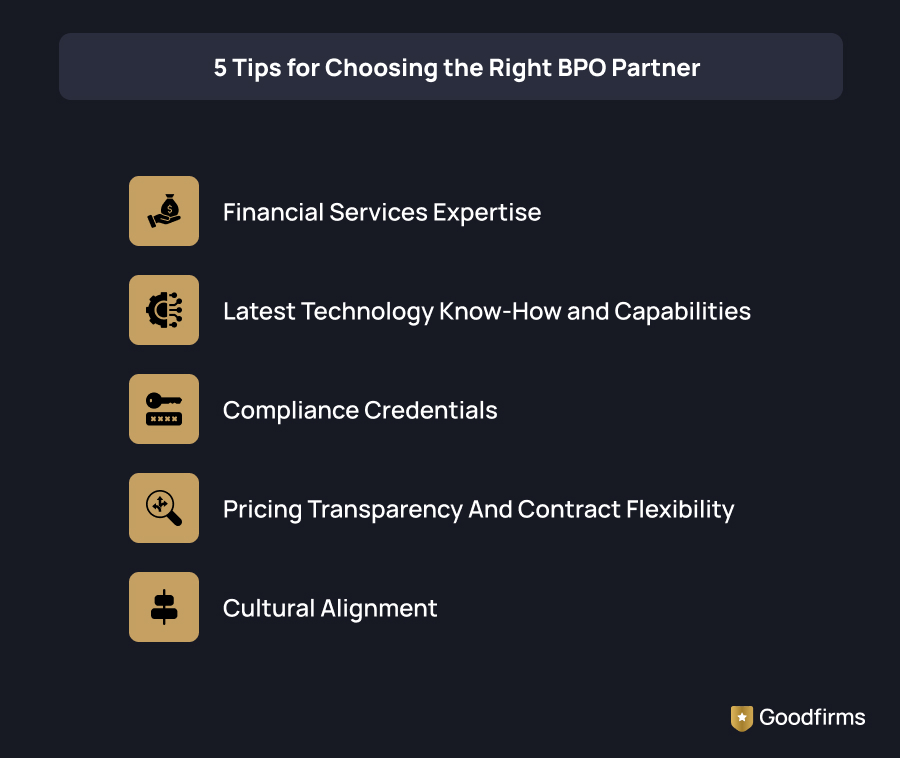
Not all BPO providers are created equal, and for fintech companies, selecting the wrong partner can be as damaging as not outsourcing at all. Choosing the right BPO partner for fintech customer support requires careful evaluation across several dimensions. So, here are the top 5 tips to consider.
Let's elaborate.
1. Evaluating BPO's Fintech Expertise
Expertise in providing financial services should be the foremost filter. A BPO provider with deep experience in banking, payments, lending, or insurance will already understand the regulatory landscape, the sensitivity of financial data, and the expectations of financially sophisticated customers. General-purpose BPOs often lack this sector-specific depth.
2. AI and Tech Capabilities to Look for in a Fintech BPO
The ideal partner should have proven expertise with CRM platforms, customer engagement tools, AI-assisted support systems, and the ability to integrate with the fintech company's own product infrastructure. Seamless data flow between the fintech platform and the BPO's support stack is essential for delivering contextual, efficient service.
3. Must-Have Compliance Certifications for Fintech BPO Partners
Compliance credentials must be verified rigorously. Look for SOC 2 Type II certification, PCI-DSS compliance, GDPR readiness, and any industry-specific accreditations relevant to the fintech company's markets. Request audit reports and references from existing financial services clients.
4. Pricing Transparency And Contract Flexibility
Transparency in pricing models and flexibility in contracts matter for fast-moving fintech companies. Avoid partners that lock you into rigid multi-year contracts without volume flexibility. The best BPO companies offer outcome-based pricing models where costs scale proportionally with business growth.
5. Cultural Alignment
Finally, cultural alignment should not be underestimated. The BPO provider's agents become the voice of the fintech brand for customers. Ensuring that the partner shares the company's values around customer empathy, transparency, and innovation is as important as any operational metric.
Final Verdict: The Right Fintech BPO Company Helps You Support Better and Scale Faster
The relationship between fintech companies and the best companies for customer service has evolved far beyond simple cost arbitrage. Today, strategic BPO partnerships are a core enabler of fintech customer support excellence, delivering the scale, compliance sophistication, omnichannel capability, AI integration, and multilingual reach that modern financial technology companies need to compete and grow.
As customer expectations continue to rise and fintech markets grow more competitive, companies that invest in high-quality BPO partnerships will be better positioned to retain customers, meet regulatory obligations, and scale without operational constraints. For fintech leaders, the question is no longer whether to partner with a BPO provider; it's how to choose and structure that partnership for maximum strategic impact.