Let's continue our journey of exploring the use of blockchain technology in various countries across the globe, which we started in Part 1 of this blog series. For starters, in the first part, we took a closer look at 3 top blockchain countries. In the second part, we will cover the remaining seven, along with blockchain developers' average salaries in these regions, use cases, and key regulators of blockchain technology in each of these countries.
Let's restart with Japan.
Blockchain Development in Japan
Japan is a forward-thinking player in the digital space, especially the Blockchain space. Japan's cabinet's recent approval of a bill allowing venture capital firms to invest in crypto assets and web3 startups has cemented its global positioning as one of the top Blockchain countries. The move has been welcomed by investors as it has inspired investor confidence and prompted businesses to explore Blockchain-based solutions.
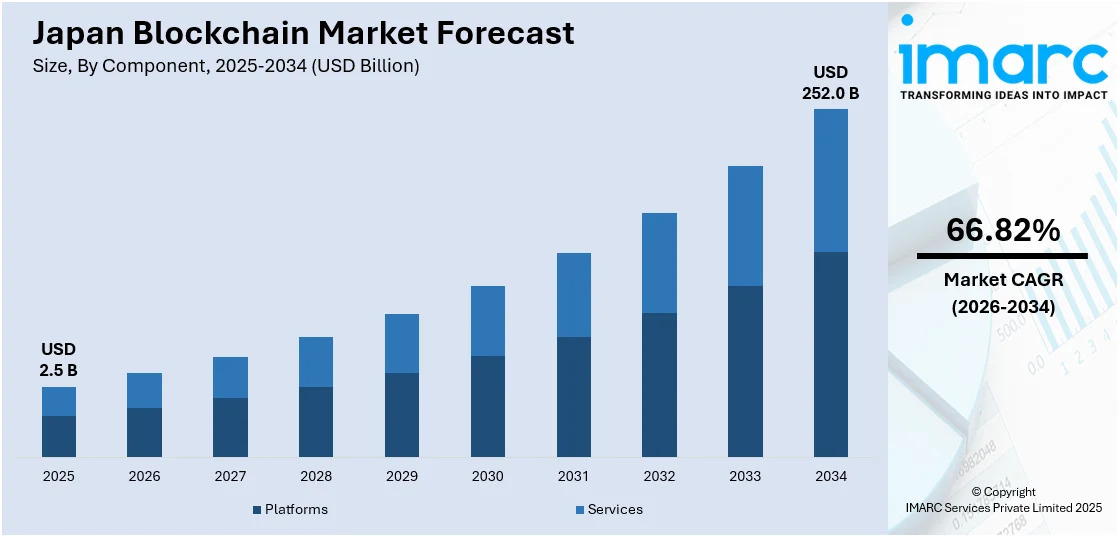
(Source: imarc)
Japan uses Blockchain in several sectors, including Finance, supply chain management, and healthcare. Financial institutions in the country have added Blockchain for secure and efficient transactions. With Blockchain sweeping the Japanese space, the Japan Exchange Group initiative has been on the global radar.
Case Studies: Successful Implementations of Blockchain in Real-world Applications in Japan
We will have a look at some of the use cases of blockchain technology in Japan. They include gaming and digital bonds.
Blockchain Gaming: Japan has always been known for its technological acumen and was once an unmatched player worldwide. At present, blockchain gaming is an ever-changing sector that reinvents gaming by creating immersive player-driven economies.
Japan's dominance of Blockchain gaming rests on four solid pillars: its unique cultural ethos, a foresightful government, the creativity of game developers, and the rapid development of the blockchain gaming ecosystem.
Japan has a rich history of games like Tamagotchi and Pokemon, which are based on character nurturing and align with the basic principles of blockchain gaming.
Japanese game developers are integral to the nation's gaming industry and are leading the Blockchain gaming revolution.
Digital Bonds: Nomura Research Institute (NRI) launched Japan's first blockchain-powered bond in March 2020. It was made possible through "ibet," an open-source blockchain platform developed by BOOSTRY.
This includes two bonds: digital asset bonds and digital bonds. NRI sold the first one directly to investors, while Nomura Securities took responsibility for the second bond.
The settlement process involves linking Ibet with the entitlement registry and fund settlement network. It has approval nodes, which are operated by financial institutions, tech companies, and issuers. User nodes are operated by investors and service providers.
Digital bonds offer several advantages. Investors can keep track of bondholders, which is difficult to do with traditional bonds.
It has an additional two-fold benefit. These bonds can be sold directly to individual investors, allowing issuers to develop stronger relationships with them. They offer investors non-monetary returns in the form of points that can be used at cafes.
Top Blockchain Development Companies in Japan
Goodfirms provides a list of the top Blockchain development companies in Japan. The list is well-researched and provides additional information like hourly rates, number of employees, year of establishment, and exact location. You also get a star rating out of 5 and reviews given by past clients.
EMURGO
EMURGO is a global blockchain technology firm based in Tokyo, Japan. It develops enterprise-grade applications, invests in startups and also provides blockchain education. It is also one of the founding entities of Cardano blockchain platform. It builds customized, enterprise-grade blockchain solutions.
Its industry focus is Financial & Payments, Gaming and Government.
Consensus Base
Consensus Base is the first blockchain tech company in Japan. The company provides advice, consulting and development services, and is headquartered in Tokyo. It also provides in-house training to clients, who do not know about blockchain technology. It was launched in 2015 and industry focus is on Advertising, Marketing, Business services, finance and payments.
Soramitsu
Soramitsu is based in Tokyo, Japan, and launched in 2008. Its hourly rates are less than $25 per hour.
Quoine
This company is reinventing banking and financial services around the revolutionary technology of Blockchain. Their mission is to revolutionize banking and financial services and bring them to the underbanked or unbanked.
In order to reach their goal, they are building financial platforms by making use of cutting-edge technologies.
NTT DATA
NTT DATA was launched in 1988 and has over 10,000 employees. It is based in Tokyo and has an hourly rate below $25 per hour. Industries served by the company include Automotive, Healthcare, Life Sciences, Retail, Energy, higher education, Manufacturing, Telecom, Financial services, and logistics.
Blockchain Developer Salary in Japan
Blockchain developer salaries in Japan have seen steady growth, driven by talent shortages and rising demand for specialized Web3 skills.
Recent compensation data shows that the average annual salary for a blockchain developer in Japan is around JPY 10.8 million.
Blockchain Regulations in Japan - Key Players
Japan is amongst the few blockchain countries, which have taken a giant stride towards regulating cryptocurrencies. In April 2017, Bitcoin and other virtual assets were recognized by Payment Services Act (PSA) as legitimate property.
Financial Services Agency
Under the PSA, all cryptocurrencies in Japan should be registered with the Financial Services Agency (FSA). This ensures that all crypto exchanges in Japan function in a transparent manner, which provides protection to investors.
Blockchain Development in Switzerland
Distributed Ledger Technology(DLT) and Blockchain have become quite popular in
Switzerland, especially in the financial services industry. Switzerland has a reputation as a business location and is also helping in adopting Blockchain technology.
In August 2021, Switzerland became the first country in the world to enact regulations for Blockchain technology. Lugano, a town in Switzerland, launched an incubator for blockchain startups. "Crypto Valley" is a hub for blockchain firms and startups, founded in the town of Zug. This hub has now spread to other cities of Germany like Geneva, Zurich, Ticino, Basel and Bern.
Case Studies: Successful Implementations of Blockchain in Real-world Applications in Switzerland
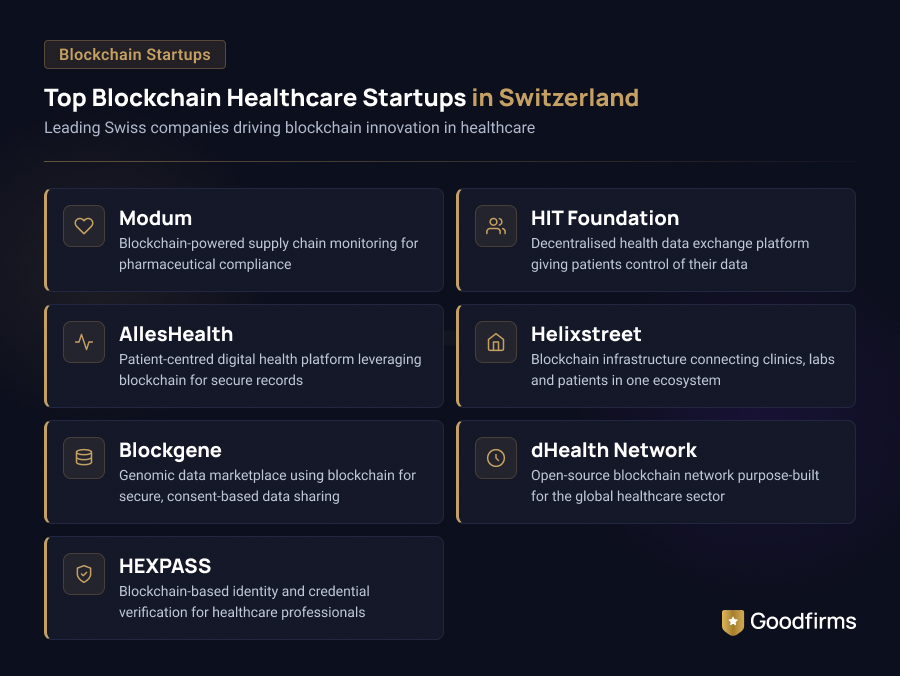
Switzerland is adopting blockchain technology in diverse sectors like healthcare, energy and supply chain. Let's have a close look at these use cases in Switzerland, which make it one of the top blockchain countries.
Healthcare: Swiss hospitals have conducted successful trials where medical device orders have been processed by Blockchain. Patient data is stored on blockchain networks, which is accessible only to authorized personnel.
Blockchain technology also provides interoperability between healthcare providers.
Energy: Blockchain technology enables efficient grid management by providing peer-to-peer energy transactions, reducing dependence on centralized energy providers.
Electric vehicles are connected to the grid using blockchain technology.
Supply Chain: This industry benefits from the capability of blockchain technology to provide unalterable transactions. Companies can easily track movement of goods, verify its authenticity, and increase transparency.
Top 5 Blockchain companies in Switzerland
Goodfirms provides a rundown of top blockchain development companies in Switzerland. The list provided makes it easy for you to find a blockchain developer who will be able to work on your blockchain requirement. The list has been curated after validated customer audits.
Radity GmbH
Radity GmbH was launched in 2008 in Zurich, Switzerland, with the motto, "You and us, together we will succeed." Their hourly rates for Blockchain Development range between $25 to $49 per hour. Services offered by the company include Software Development, Web Development, Mobile Development, UI/UX design, and Low code development.
Wecan Group
Wecan Groupis based in Geneva, Switzerland and was established in 2015. The company specializes in development of Blockchain applications, especially for banking institutions.
Blockchain Trust Solutions
BCTS is a Switzerland-based company offering Swiss blockchain infrastructure. They drive digital transformations in the product area and enable a sustainable expansion of the customer base. They create complete and immutable transaction histories that make data, information, values , and transactions transparent and reliably traceable.
iMi Blockchain
iMi is one of the leading distributed ledger technology firms in Switzerland. They also offer enterprise blockchain consulting, online or offline blockchain learning, and coding blocks. Their experts have great ideas and in-depth knowledge of industries like energy, government, consumer goods, healthcare & pharma, and more
Token Develop
Token Develop is based in Zug, Switzerland and was established in 2014. It is one of the pioneers in developing custom cryptocurrency exchange software. The hourly rates of the company range between $25 to $49 per hour.
Blockchain Developer Salary in Switzerland
Blockchain developer salaries in Switzerland remain among the highest in Europe, driven by strong demand for Web3 talent and the country’s mature fintech ecosystem.
Recent data from Glassdoor shows that the average annual salary for a blockchain developer in Switzerland is around CHF 99,000.
Blockchain Regulations in Switzerland - Key Players
Switzerland blockchain technology is regulated mostly by the Swiss Financial Market Supervisory Authority (FINMA). Let's have a close look.
Swiss Financial Market Supervisory Authority (FINMA)
FINMA is the main financial markets regulator, which publishes regulations and guidelines on virtual assets. It also grants corresponding authorization to companies to work legally.
FINMA has divided Crypto assets into several categories, which are payment tokens, utility tokens and asset tokens. For DeFi platforms, FINMA adheres to the principles of technological neutrality; same risks, same rules and substance over form.
Switzerland is creating a digital hub for crypto firms by framing new regulations to ensure safety and security.
Blockchain Development in Singapore
Cryptocurrency market in Singapore is expected to grow at 9.77% between 2024 and 2033. This will result in a market volume of USD 24,968 million in 2033. It is being used in different sectors such as Banking, cross-border payments, digital identity verification and finance.
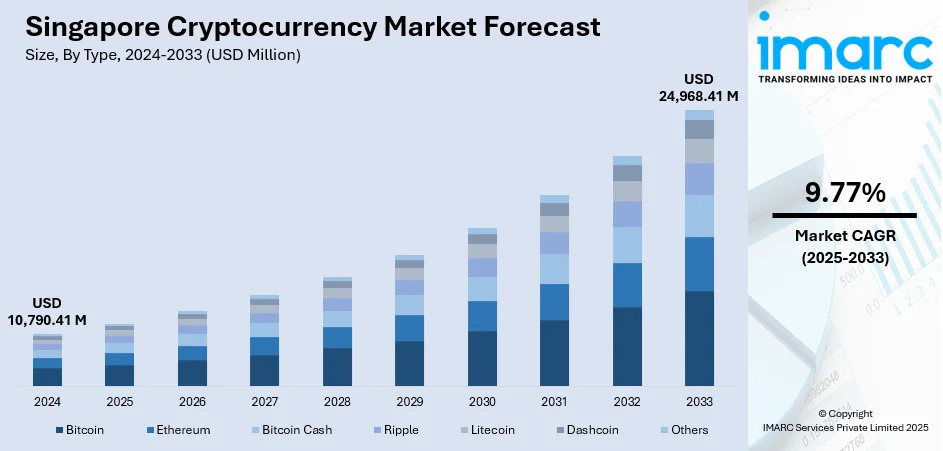
(Source: imarc)
Case Studies: Successful Implementations of Blockchain in Real-world Applications in Singapore
Singapore has been a pioneer in the adoption of blockchain technology and has therefore become one of the top blockchain countries. Here, we examine some of the use cases.
Supply Chain: Singapore has been using Blockchain technology to improve supply chain management in pharmaceutical, luxury goods, and food safety. This is done by integrating IoT devices and smart sensors with Blockchain.
With this technology, companies can track the movement of products and temperature conditions in real-time.
Identity Verification: Data privacy is an important issue these days as data thefts have become quite common. Traditional data storage systems are vulnerable to data thefts. Blockchain provides a solution to these problems by giving decentralized and tamper-proof systems. This technology is being used in Singapore in healthcare and government services.
Smart contracts: In Real estate transactions, there are multiple intermediaries and a lot of paperwork. Blockchain-based smart contracts offer a reliable alternative to this.
Singapore's real estate industry is using smart contracts for sales, rental payments and lease agreements. Smart contracts automatically get executed when certain conditions are met. It saves time, money and minimizes the risk of disputes arising due to unclear terms and conditions.
Top Blockchain Companies in Singapore
There is no need to browse the web to find top blockchain companies in Singapore. Goodfirms does this work of finding the top blockchain development companies in Singapore with client reviews and vital information.
Cubix
It is a US-based Blockchain technology company which operates in over 50 countries. It was established in 2008 and has hourly rates of less than $25/hr.
The firm specializes in the development of Blockchain supply chains, decentralization, e-wallet platforms, and more. The focus is equal on small, medium, and large businesses.
Twendee
Established in 2018, Twendee is a full-cycle IT development company specializing in cutting-edge blockchain & AI solutions. They have 100+ successful projects, have 98% client retention, and have maintained a 95% customer satisfaction rate. Twendee has hourly rates below $25/hr.
ChainTechSource
ChainTechSource is a leading blockchain and cryptocurrency business development firm, based in Singapore. It was established in 2019 and the hourly rates range between $25 to $49 per hour.
Their primary goal is to provide game-changing innovation in the areas of DeFi, NFT, exchange platforms, fundraising, Metaverse, AR/VR development, and marketing services.
The focus area of ChainTechSource is Gaming.
Blitz Mobile Apps
Blitz Mobile Apps is based in the USA and was established in 2008. They mostly focus on large businesses and the hourly rates range between $ 50 to $ 99 per hour. They work with wide range of industries.
Redot Global
Redot Global is a Singapore-headquartered digital solutions company with expert technical teams specializing in delivering AI/ML-powered development, blockchain, and Web3 applications. Their hourly rate range from $25 to $49 per hour.
Blockchain Developer Salary in Singapore
As per Glassdoor, the national average salary for Blockchain developers in Singapore is SGD 8000 per month.
Salaries can vary significantly based on skill sets, particularly for developers with expertise in Solidity, Ethereum, or enterprise blockchain frameworks, as well as prior experience in fintech or distributed systems.
Blockchain Regulations in Singapore - Key Players
There are two key players in Singapore's blockchain technology regulation. They are discussed below.
Government of Singapore
The Singapore government takes a practical approach in dealing with cryptocurrencies. Depending on its characteristics, cryptocurrency is treated as a regulated product, which can be classified as a capital markets product, e-money or Digital payment token(DPT) or an unregulated digital token.
Monetary Authority of Singapore (MAS)
MAS is the central bank of Singapore, has not issued or approved any cryptocurrency for
retail use. It has partnered with industry participants for a collaborative project called Project Ubin, which explores the use of Distributed Ledger Technology and Blockchain.
Blockchain Development in South Korea
South Korea government has been a leader in developing the investment environment to support the development of the blockchain technology ecosystem. In April 2020, Central Bank of Korea launched a central bank digital currency(CBDC) pilot program to explore the possibility of issuing digital currency.
Korean Universities and other research institutions conduct training programs and research on application of blockchain technology and its impact on the economy of the country.
South Korean public sector entities, both at the central and local levels, are exploring blockchain technology for public service delivery and digital economy development. As a result of these efforts by both the government and private sector, South Korea has emerged as one of the top blockchain countries.
Case Studies: Successful Implementations of Blockchain in Real-world Applications in South Korea
Blockchain technology has been growing in popularity in South Korea. Let's have a look at some of its use cases.
Fintech: TESSA (ARTBLOC) has built a marketplace platform, where one can purchase and sell fractionalized ownership interest in private artworks, which are investment-grade.
Kasa Korea is a blockchain real estate platform, which has been working on creating a blockchain platform to issue digital asset-backed securities.
Education: Edubloc platform in South Korea helps schools, colleges to collect and utilize data from institutes, village learning centers and academies. This platform enhances the reliability of students learning history information by making use of blockchain technology.
Ziktalk is a Blockchain based platform which helps in language learning and sharing, for foreign languages. It also helps students to find tutors and experts by making use of Ziktalk coins.
Health: ICONLOOP partnered with Jeju Special Self-Governing Province to launch an infectious disease prevention system, specifically to fight against COVID-19. It is a contact tracing system which is based on ICONLOOP's Decentralized Identity(DID) blockchain technology.
Medibloc has developed a blockchain-based platform that specializes in integrating and assembling patients' medical records in real-time.
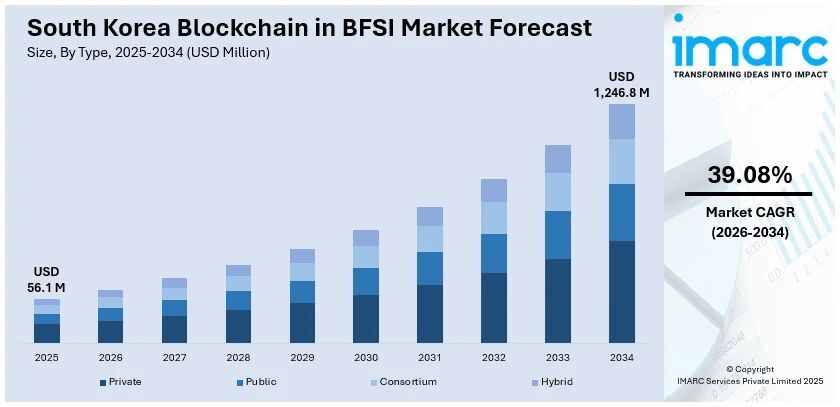
(Source: imarc)
Top Blockchain Companies in South Korea
Goodfirms provides you with a list of top Blockchain companies in South Korea with the aid of research. It helps you in finding the best blockchain development company for your subsequent task. The business advantages of blockchain technology are extraordinary.
Exyte
Founded in 2014, Exyte is a top blockchain development company in Busan, South Korea, with 22 000+ stars on GitHub and 50+ successfully completed projects. They charge between $50 and $99 per hour.
Hashed
Hashed is based in South Korea and San Francisco. The company has nurtured an ecosystem for blockchain industry growth. It has expedited global blockchain adoption via community building and strategic investment. Its focus area is cent percent on blockchain technology. The client focus is mostly on small businesses with industry focus of advertising, business services and financial services.
Blocko
Blocko is based in Seongnam, South Korea, and is a Samsung-backed commercial blockchain provider that was launched in 2014. It helps MNCs to design, deploy, and manage digital services on a secure distributed network. Blocko provides a stable and secure blockchain operating system and easy-to-use development platforms.
The company builds and supports AERGO, which is a new open-source enterprise blockchain solution, with cloud deployment capabilities and hybrid blockchain design.
HollaEx
Seoul-based HollaEx is a leading crypto development company with over a decade's worth of experience. They create customized, future-proofed technology to help guide businesses into the age of Web3 blockchain-driven services.
Creatip global
Creatip Global was launched in 2008 and is based in Seoul, South Korea. Blockchain technology is one of its service focuses. Other services provided by Creatip Global include Global Marketing, Branding, Performance, Creative Design, and media advertisement.
Creatip Global goes beyond the practice of simply linking international firms to the Korean market. The company has talented professionals who are fluent in multiple languages, which include Japanese, English, and Chinese. This allows working with clients belonging to different countries and regions.
Blockchain Developer Salary in South Korea
As per Glassdoor survey, the average base salary for a blockchain developer in Seoul is around PLN 181000 per year.
Overall, compensation varies based on experience, technical expertise (such as smart contracts or protocol development), and the scale of the organization.
Regulators of Blockchain in South Korea - Key Players
There are two main regulators of blockchain technology in South Korea, which are, The Bank of Korea and The Financial Services Commission(FSC). Let's have a look at each of them.
The Bank of Korea
In April 2020, the central bank of the country launched a pilot program on central bank digital currency(CBDC), to explore the possibility of issuing digital currency by 2021.
The Financial Services Commission (FSC)
FSC is the financial sector regulatory body in South Korea, which has created a Financial Innovation Bureau, that leads formulation of policy initiatives for blockchain technology. In 2019, FSC launched the first financial regulatory sandbox that selected financial service providers, which included those with blockchain applications.
Blockchain Development in Brazil
Brazil is one of the top blockchain countries, although its blockchain journey began with trading of crypto currencies, mostly Bitcoin. With blockchain technology regulators, Central Bank and CVM(Brazilian Securities and Exchange Commission), the country has been exploring this new technology.
This has been achieved by building a sustainable environment via sandboxes, labs and other initiatives. As a result, Blockchain technology is now being used in other sectors like agriculture, finance, public administration and logistics.
Largest banks in Brazil are joining hands with blockchain startups, big tech firms to enable cross-border payments and eliminate bottlenecks related to traditional banking systems. With the digital transformation strategy of Brazilian government, blockchain technology is expected to play a more important role in creating a digital economy.
Case Studies: Successful Implementations of Blockchain in Real-world Applications in Brazil
Blockchain technology has just made its presence felt in Brazil. At present, it is mostly used by the fintech industry.
Fintech: Over a decade ago, 44 % of Brazils population did not have access to Banking, in 2021 that number dropped to just 16%. A new Brazil Crypto Report states that a thriving fintech ecosystem has promoted adoption of crypto and digital assets. This rapid growth is due to combination of progressive regulation, innovation and maturing financial infrastructure.
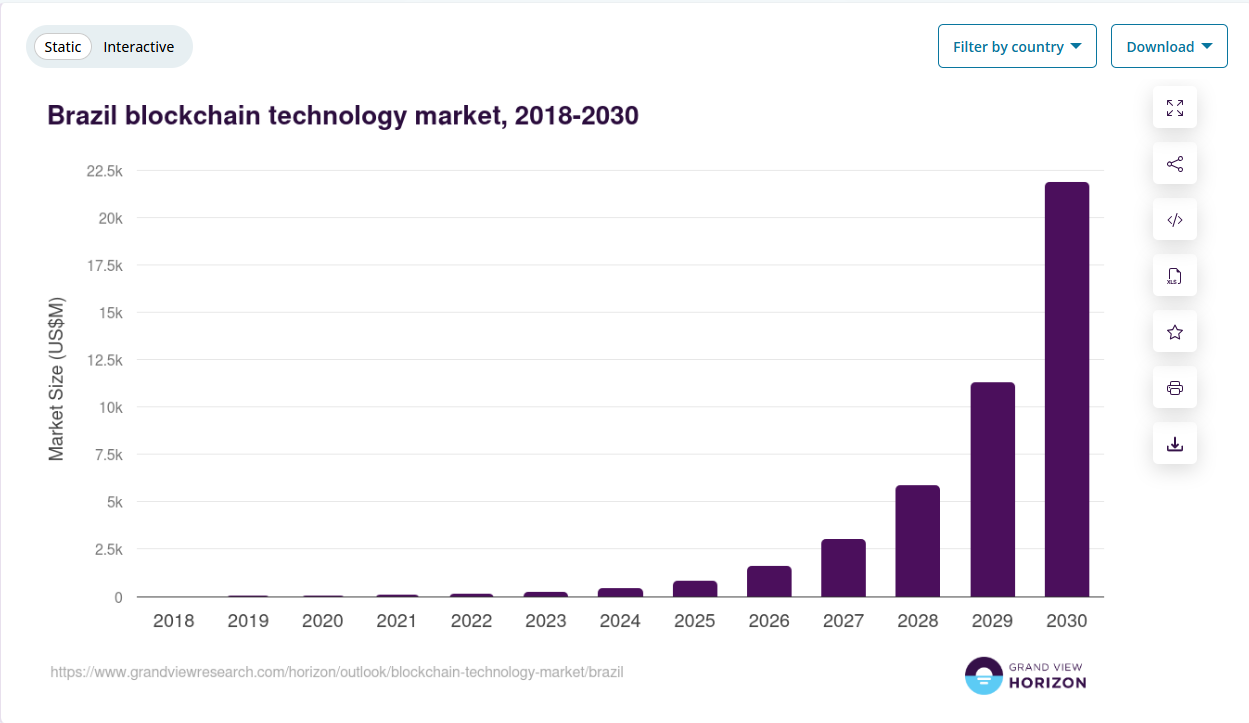
(Source: Grand View Horizon)
Top Blockchain Technology Companies in Brazil
Goodfirms has curated a list of the top blockchain technology companies operating in Brazil. This company will help you revolutionize your business by increasing efficiency through innovative blockchain solutions. Goodfirms also provides reliable data, which will help you segregate industry experts and make the best selection for your requirements.
Animvs Game Studio
Animvs Game Studio was launched in 2015 and is based in Curitiba, Brazil. The company specializes in building blockchain games with NFT's and cryptocurrencies, which aims at providing gameplay experience with fun and entertainment.
The company's focus area includes Game Development, Blockchain Technology, AR & VR development, mostly for art, entertainment and music.
Beeders
Beeder is based in Sao Paulo and was founded in 2013. The company helps its clients in harnessing the full potential of technology, computation, web services and applications. They have the expertise to take your business to the next level, does not matter whether you are a start up or an established player.
Beeders has an hourly rate for Blockchain technology of less than $25 per hour.
Bitshopp
Bitshopp is based in Sao Paulo, Brazil, and focuses on Blockchain technology and Web3. The company has an API with the necessary infrastructure to tokenize assets to fully utilize blockchain technology. It allows you to access resources such as tokens, smart contracts, DEFI, oracles, and interoperability bridges with external networks.
Bitshopp's API can also be used to build your own blockchain platform with high potential for automation and scalability.
BlockBR
BLOCKBR is based in Sao Paulo, Brazil and was established in 2021. It specializes in tokenization and investments in digital assets. The company bets on decentralization, speed, veracity and immutability of data to cut costs and ensure efficiency.
BLOCKBR strives to create new financial products for the market in a decentralized way.
WeDev Software
WeDev Tecnologia group was launched in 2012 in Santa Catarina, Brazil. The company's focus area includes IT services and blockchain technology. The company has expertise in bringing technological solutions with blockchain systems in areas of banking, payment systems and business automation.
Blockchain Developer Salary in Brazil
Recent data from Glassdoor shows that the estimated average base salary for a blockchain developer in São Paulo is around BRL 7000 per month. Blockchain developer salaries in Brazil are growing steadily, with São Paulo emerging as the primary tech and fintech hub driving demand.
Regulators of Blockchain Technology in Brazil - Key Players
Blockchain technology in Brazil is still finding its roots, and its regulation has just begun. Let's check how.
Government of Brazil
After years of discussion in the legislative branch, the Brazilian virtual assets legal framework was finally enacted and applied on June 20, 2023. The Brazilian Central Bank(BCB) was designated as the competent authority to regulate the services of virtual asset service providers.
Blockchain Development in Canada
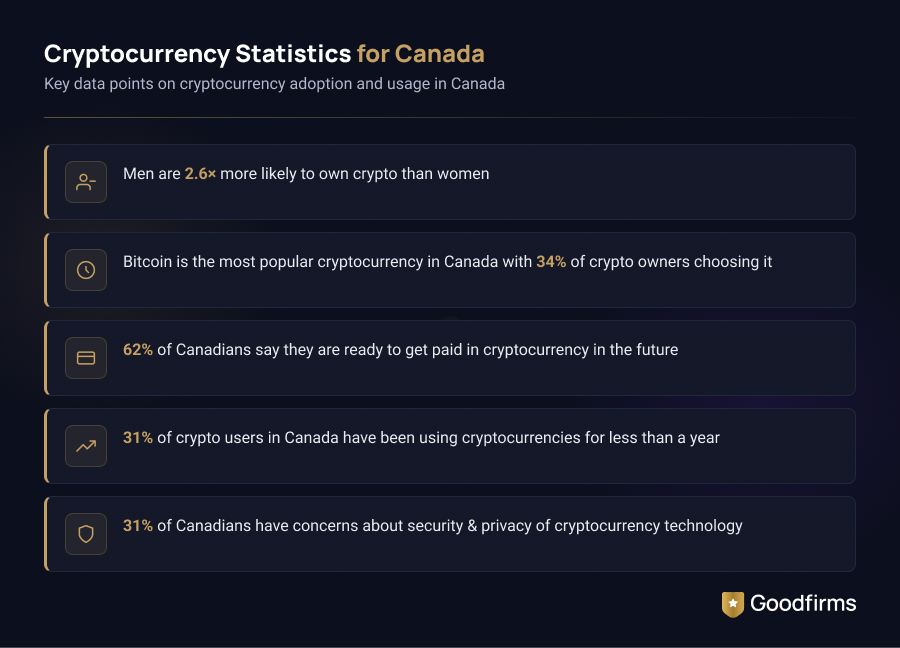
There has been an increase in both the interest and use of Blockchain in Canada year over year. In 2022, Blockchain and distributed ledger technology were considered niche technologies. Industry leaders have proven use cases in various sectors, increasing blockchain popularity in Canada and making it one of the top blockchain countries.
Canada has a blockchain consortium called the Canadian Blockchain Consortium, which aims to unite various Canadian blockchain business owners, adopters, developers, and those interested in harnessing its potential.
Case Studies: Successful Implementations of Blockchain in Real-world Applications in Canada
Canada has been using blockchain technology to augment its services. Let's examine two of the use cases.
Supply Chain Management: Walmart has always been a leader in Supply Chain Management. However, there has been a problem with the transportation industry for decades, which is vast data discrepancies in the invoice & payment for freight carriers. This resulted in costly settlements and payment delays.
Walmart Canada made use of blockchain technology called distributed-ledger technology to create an automated system to manage invoices and payments.
Cell phone Service: Karrier One Inc. uses blockchain technology to provide better mobile and internet services in Canada. The company has announced completion of financing of satellite connection to 10 terrestrial 4G nodes. The company says that it is a disruptive technology that can shake up the Canadian and global telecom market.
The company plans to offer wireless connections to millions across the world in under-served areas, including Canada.
Top Blockchain Companies in Canada
Goodfirms provides a comprehensive list of top blockchain companies in Canada. We have a look at top 5 of these blockchain companies in Canada.
Cubix
Cubix was launched in 2008 and has a presence in Toronto, Canada. It has over 250 employees who have expertise in providing customized, robust blockchain solutions to businesses across the globe. It specializes in blockchain supply chain, E-wallets platform and decentralization.
It's hourly rates for blockchain development are less than $25 per hour and industry focus is on mobile app development.
SDLC Corp
Founded in 2015, SDLC Corp is a software development company headquartered in San Francisco, California, with global delivery centers in the USA, UK, UAE, India, Australia, and Canada. SDLC Corp works with clients across multiple industries, including healthcare, gaming & iGaming, fintech, ecommerce, etc. The hourly rates are between $25 to $49 per hour.
NetSet Software Solutions
NetSet Software Solutions is an ISO 9001, ISO 27001, ISO 12207 certified and a leading provider of Blockchain, Web3.0, and Custom AI Development services. Their hourly charges range from $25 to $49 per hour. They deliver end-to-end, high-quality applications in Artificial Intelligence and Blockchain.
Blockchain Mind
Blockchain Mind is a Toronto-based Blockchain consulting firm providing security and infrastructure solutions for Cryptocurrencies and Distributed Ledger Technologies. Their hourly rates range from $25 to $49 per hour. They are good at white-label cryptocurrency exchange solutions, DeFi clone scripts, and major leading cryptocurrency exchange clone scripts.
Renesis Tech
Founded in 2017, Renesis Tech is a Mississauga, Canada based blockchain development company. They make it easy to remotely access the dedicated, world-class development teams. Renesis Tech charges around $25 to $49 per hour.
Blockchain Developer's Salary in Canada
Recent Glassdoor data shows that the average base salary for a blockchain developer in Canada is around CAD 88,000 per year.
Blockchain developer salaries in Canada remain strong, supported by growing demand across fintech, Web3 startups, and enterprise blockchain adoption.
Regulators of Blockchain Technology in Canada - Key Players
There are two major regulators of Blockchain technology in Canada. They include the Government of Canada and Canadian Securities Administrators (CSA).
Government of Canada
In 2014, Canada became the first blockchain country to frame laws addressing cryptocurrency by making amendments to the Proceeds of Crime and Terrorist Financing Act(PCA) to cover cryptocurrency dealings.
Canadian Securities Administrators (CSA)
In February 2023, CSA reaffirmed its view that value-referenced crypto assets, designed to maintain a stable value over time, may constitute securities/derivatives.
Blockchain Development in Nigeria
Blockchain technology has the potential for improving public services, bring opportunities for socioeconomic development in countries like Nigeria. With the support of Blockchain community in Nigeria, the government has separated blockchain technology from cryptocurrency, which has resulted in adoption of the National Blockchain Policy in May 2023.
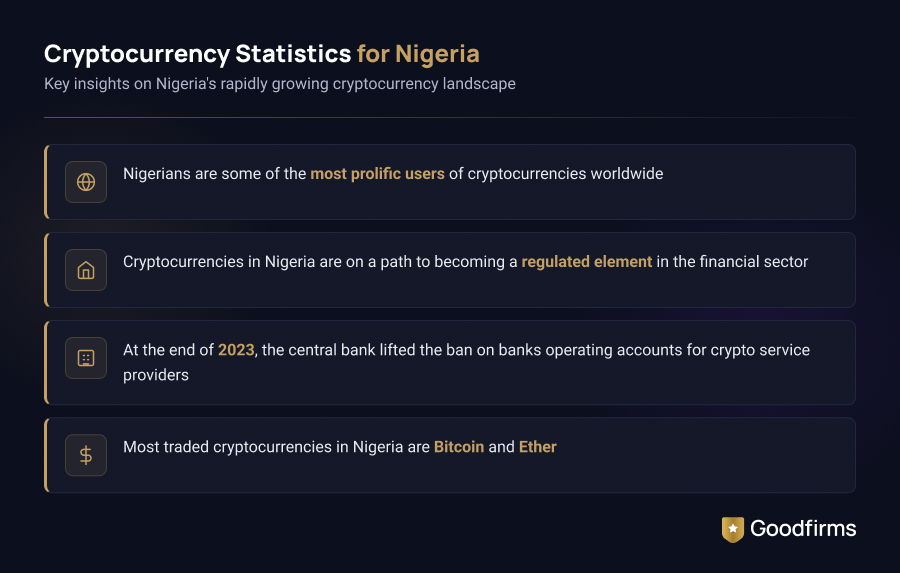
The National Blockchain Policy of Nigeria was drafted by National Informational Technology Development Agency (NITDA), Informational Technology regulator of Nigeria. A blockchain pilot project in Abuja has become a vital step for implementation of a national policy. This pilot project is contemplated for the Federal Capital Territory.
Case Studies: Successful Implementations of Blockchain in Real-world Applications in Nigeria
Nigeria is a developing country and blockchain technology has been aiding the country in its
development. It has emerged as one of the top blockchain countries. Let's have a look at two sectors where the technology is being used.
Healthcare: Blockchain technology establishes a standardized framework for data exchange by enabling secure sharing of patient records and other medical data. Blockchain can be used for recording each transaction and movement of drugs, combating counterfeit drugs, reducing supply chain errors.
Finance: Blockchain Technology offers robust security for financial transactions by forming an unalterable chain of blocks, which reduces the chances of fraud. People who lack access to traditional banking systems can make use of digital wallets and cryptocurrencies to store, send, and receive money.
Blockchain Developer Salary in Nigeria
The estimated total salary for a Blockchain developer in Abuja, Nigeria is NGN 2L per month according to Glassdoor. Along with this, the estimated additional pay is NGN 4K per month, which includes cash bonus, commission, tips, and profit sharing.
Blockchain Regulators in Nigeria - Key Players
Although blockchain technology adoption in Nigeria is not widespread, there are two regulators, who keep a watch.
Central Bank of Nigeria
In February 2021, Central Bank of Nigeria issued a circular restricting banks, financial institutions from operating accounts for cryptocurrency service providers due to terrorism financing and money laundering risks.
Securities and Exchange Commission(SEC)
In 2024, Securities and Exchange Commission of Nigeria issued regulations governing cryptocurrency exchanges in the country. It aims to enhance investor protection and market integrity by establishing compliance standards for crypto exchanges.
Wrapping Up…
So, this brings us to the end of Part 2 of the top blockchain countries blog series, where we have explored 7 countries including Japan, Switzerland, Canada, Singapore, South Korea, Brazil and Nigeria; which are leveraging blockchain technology to their advantage.
Although the adoption of blockchain technology in developing countries is still in its nascent stage, it will definitely attract more users in the near future due to its wide range of applications.