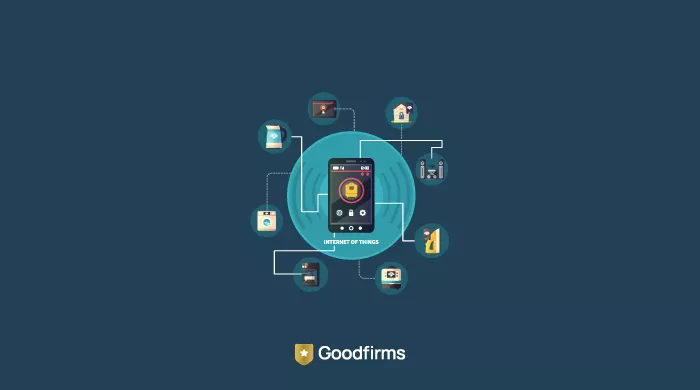
The Internet of Things has popped the buzz bubble and entered the mainstream of all leading business industries. We are already surrounded by 31 billion connected devices, helping us perform everyday tasks with added ease. Customer centricity is the foremost reason behind the success of the IoT. When devices track our activities on the go and know what action to take, there is less for us to worry about. And humans love that. IoT product development has thus expanded all over the world.
The Internet of Things essentially refers to two “kinds” of devices: those responsible for gathering and tracking data, such as sensors, and those that will perform some task based on what data is read, such as alarms, locks, and valve actuators. These devices contribute to a massive number of applications in industries and organizations.
However, the IoT is not the only technology bringing this significant change. We need to combine it with its other revolutionary siblings.
Here's how we are creating magic by combining the IoT with these cutting-edge trends:
1. The IoT and Blockchain
A great deal of hype ensues when we pronounce those names together. But, can we help it? These two technologies are causing ripples in the business world. While many top blockchain technology companies say the combination is already deadly, others believe the fact is yet to be proven.
While the IoT is, in essence, the merging of data-capturing devices into our everyday life, blockchain enables an encrypted and distributed filing system used to manage real-time records securely.
Put these two together, and you have a permanent, automated, and secure method to capture and store data from the many connected “smart” devices. IoT product development has begun revolving around blockchain as businesses look for ways to ensure data security in a world marred by notorious breaches. Software development companies that work on the IoT and Blockchain are trying to combine the pieces to create a real-time application that facilitates stringent data security.
Here are a few applications of combining the IoT with Blockchain technology -
- Install a system where multiple organizations can track activity in a supply chain.
- Machines will have the power to store factual data without any human intervention. Data encryption and the distributed nature of data will improve data security manifold.
- Smart contract facilities will allow agreements to be reinforced when certain conditions are met. This way, one party can be authorized to make a payment to another when the delivery of products and services is completed.
- Blockchain adds security to the otherwise lacking IoT technology. Since the data captured by sensors is often sensitive, blockchain will allow users to gain trust in the IoT product development company that brings blockchain into the picture.
2. The IoT and Big Data
The IoT's increasing constellation of devices brings us to the obvious technology: Big Data. Sensors capture data in real time, and because of this information's gigantic nature, it is necessary to process it on the go without having to store and capture the data in specific scenarios.
If it weren't for Big Data and Analytics, would we still be talking about the IoT wave and the numerous Big Data Analytics companies sailing in it? The critical basis of IoT's success depends on data and how it gets churned across the system.
Enter Big Data. The IoT and Big Data technologies are so intimately connected that it is hard to imagine them as separate entities. Both work towards a singular goal—transforming businesses and the lives of tomorrow.
Here's how organizations are leveraging the combined power of the IoT and Big Data:
- Enterprises capture enormous amounts of data about their products/services/customers, improving their decision-making and keeping data at the focal point of critical decisions.
- The IoT and Big Data can help businesses assess their parameters of success in far-off locales. As IoT captures information and Big Data churns it into valuable insights, business leaders can see their supply chain, end-to-end.
- Organizations will make real-time decisions about their logistics, pricing, sales, etc., when they get accurate information and turn it into actionable insights.
3. The IoT and Machine Learning
Machine-to-machine communication is the basis of IoT applications. IoT product development efforts need to accommodate the changing dynamics of any IoT system. IoT solutions can be anything but static. Thus, this brings us to the concern of imparting intelligence to machines so that they know when certain parameters have shifted.
The ability of any machine to alter the outcome of any operations based on specific factors is what we call machine intelligence. Machine Learning supports many formats for inducing knowledge into devices- this can be done locally, and knowledge can be transferred from one connected device to another.
Here are some cases where the IoT and ML come together to create magic:
- Businesses can save massively on their costs when they install Machine Learning solutions with their IoT applications. Industrial IoT can utilize ML to issue an alarm when a machine needs maintenance. This preventive measure will help reduce the risk of a breakdown.
- Through effective ML programs, organizations can predict their customers' experience inclinations and tailor their efforts accordingly. This is handy in the hospitality industry, where ML can help determine the temperatures you need when you enter the room, and IoT can create them.
- Through the combined application of IoT and ML, businesses can create their customers' buying behavior patterns based on their purchases and regulate their experiences.
4. The IoT and Artificial Intelligence
IoT and AI are two broad technologies that collide to create use cases in all industries globally. With the IoT's ability to capture data from several end devices and AI's ability to make these devices 'smart, ' we have a complete array of applications like those that top artificial intelligence companies are building today.
Here are some use cases of the added potential of the IoT and AI:
- Costly downtime can be prevented in industries by leveraging predictive maintenance, which allows service providers to learn about an anomaly in industrial equipment before it makes an expensive impact on the operations.
- Generating predictions about which tasks can be entirely automated in an enterprise can substantially improve operational efficiency.
- Products and services can be enhanced to meet the customers' rising expectations. By collecting user data that reveals their sentiments, companies can leverage AI to automate decisions and lead to faster improvements in deliverables.
5. The IoT and AR/VR
The confluence of the Internet of Things and AR/VR could create massive leaps in our view of the world and how we live it. According to top AR/VR development companies, both technologies strive to amalgamate the digital and the real world. While AR/VR can make the real world seem different in the digital realm, the IoT is about making real-world objects function according to digital calculations.
Here are some under-construction or under-testing applications of the IoT with AR/VR:
- Telepresence apps allow people to be present at distant locations, just as a telephone lets us talk to someone remotely.
- The combination of the IoT and VR can lead to the next level of video conferencing, where we can move freely while interacting with our mobile phone connections.
- Transportation networks can be monitored by placing sensors in cities, a giant step towards smart cities.
CONCLUSION
The IoT is transforming our lives—one app at a time. The top IoT development companies want to build the next big thing using IoT in combination with any of the technologies mentioned above. Businesses want to leverage solutions that improve their efficiency and productivity. At the crossroads of these technologies, we will find solutions to our most pressing industry and life challenges.