Key takeaways
- Brand Refresh: When you know your strategy is sound, but your visual identity or messaging seems archaic.
- Complete Rebrand: When your business model, audience, positioning, or purpose undergoes a significant shift.
- Key Risk: Over-refreshing can alienate loyal customers and erode emotional equity.
- Cost Reality: Refreshes usually range from $10,000 to $100,000; Rebrands start at $75,000 and can surpass $500,000.
- Decision Rule: Clarity or relevance issue - Refresh. Direction or perception issue - Rebrand.
To refresh or rebrand? Branding decisions are seldom straightforward.
When your website looks dated, you assume it’s time to rebrand.
When messaging stops resonating, you rebrand.
When competitors suddenly look sharper, you rebrand.
Right? Not quite.
Rebranding has become a common practice. Between 2020 and 2021, 70% of companies rebranded due to pandemic shifts and changing consumer needs. In fact, about 82% of marketers reported having worked on a rebranding project before, proof that companies undertake large-scale rebranding exercises.
But then, here’s the thing: Around 77% of rebranding efforts fail, often due to poor execution, lack of consumer trust, or incorrect name changes.
This raises an uncomfortable truth: Many businesses don’t need a full-scale reinvention—they need a brand refresh.
Understanding the difference between the two is critical. Both strategies can propel your brand forward, but, as mentioned, choosing the wrong path can prove costly, diluting customer trust and confusing.
Key Statistics:
- 70% of companies rebranded between 2020 and 2021. source:amraandelma
- Companies majorly rebrand every 7–10 years, and minor refreshes every 3–5 years.
- 74% of S&P 100 companies rebrand within their first seven years.
- Around 77% of rebranding efforts fail, often due to poor execution or lack of consumer trust. source: wifitalents
If your rebranding/refresh project requires expert help, explore verified branding agencies ranked by Goodfirms.
Brand Refresh vs. Rebrand: The Strategic Difference
- A brand refresh is a minor update in terms of how your brand looks and communicates.
- A rebrand is a complete brand turnaround in terms of how your brand is perceived and positioned.
The challenge lies in diagnosing the real problem—presentation or perception.
Brand Refresh vs. Rebrand — Strategic Difference
| Aspect | Brand Refresh | Rebrand |
| Goal | New look: visuals and messaging | Complete overhaul: brand identity, positioning, and perception |
| Scope | Minor tweaks: logo, color palette, typography, digital UX | Complete overhaul: strategy, messaging, visuals, possibly name |
| When | Audience, offerings, and positioning remain intact; visuals require an image makeover | The business model, audience, or strategic direction has changed |
| Cost | $10,000–$100,000 | $75,000–$500,000+ |
| Risk | Over-refreshing → alienates loyal customers | Poor execution → confusing identity, wasted investment |
Understanding the Difference Between a Brand Refresh and a Rebrand
The terms "brand refresh" and "rebrand" are often used interchangeably, but they are different like day and night. Brand refresh and rebrand have different implications for cost, risk, and business impact.
The terms "brand refresh" and "rebrand" are often used interchangeably, but they are different like day and night. Brand refresh and rebrand have different implications for cost, risk, and business impact.
What Is a Brand Refresh?
A brand refresh is about fine-tuning your brand slightly without altering its core identity, helping you retain what makes you well, you. This means no changes in the core mission, values, and the adulation you have garnered over the years. In short, a brand refresh means refining your brand just enough to make it look modern.
60 % consumers avoid outdated logos
Visual relevance matters more these days. A recent study revealed that around 60% of consumers are unlikely to engage with brands that look visually outdated. Which means brand refreshes are a strategic necessity and not a cosmetic indulgence. If you are planning a logo redesign this year, the “9 Things to Consider Before Changing Your Company’s Logo” blog could be of great help. Source: amraandelma
A brand refresh typically includes:
- Subtle logo refinements for a cleaner, modern feel
- Refreshing your color palette to reflect current design patterns
- Tweaking the typography so it reads better all across
- Sharpening the brand message so it tugs at customers' hearts
- Improving digital interfaces to make the experience smoother and intuitive
In short, it's all about evolution and not reinventing the wheel. It’s about keeping the heart of your brand and simultaneously making it ready for today.
And, if you think it’s a cosmetic indulgence, let me tell you, no, it’s not.
 |
"A brand refresh is the right approach when a brand has strong brand equity and recognition in the market but needs to evolve visually or strategically to better reflect its current positioning." — Ljubica Jovanova, Senior Director of Brand and Content Marketing, Bynder |
Strong Visual Identity Enhances Brand Recognition by Up to 80%
Different studies indicate that logos and visuals can boost brand recognition by up to 80%, reinforcing the fact that even a minor update can have an outsized impact when done rationally.
source: wifitalents
When to Refresh:
- Your visual identity feels inconsistent or outdated
- Your messaging needs a tonal update, not a strategic rewrite
- Your audience still understands and values what you offer
However, refreshes require restraint.
Because when ‘refresh’ is taken too seriously to the point that you make massive changes in color, design, and all aspects, then businesses risk drifting into accidental rebranding—often without realizing it.
(For a deeper look at how consistency drives this lift, see Goodfirms' blog on brand consistency in marketing — and why most brands get it wrong.)
Case Study: Vera Bradley — When a Refresh Goes Too Far
In 2024, quilt bags and accessory brand Vera Bradley swapped its signature florals and patterns that its customers had come to love over the years for plain bags in an effort to feel more chic and modern. However, this change alienated some long-time customers, resulting in a decline in sales.
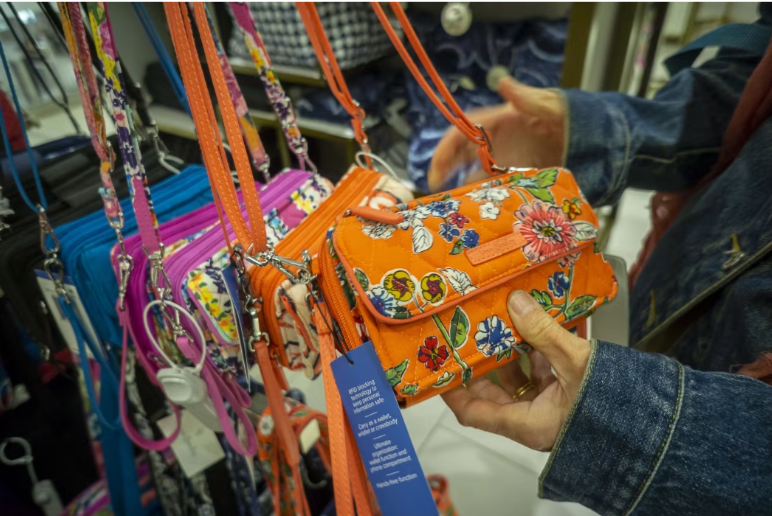
A shopper browses Vera Bradley’s signature quilted bags, reflecting the brand’s return to its colorful, whimsical roots
The company's subtle refresh infuriated its core customers.
“We buy Vera for specific looks and aesthetics. If I wanted plain, I’d just get them from Amazon,” said an Instagram post on its rebrand.
Another post read: “How did Vera just toss decades of loyal customers aside for this mess?”
The backlash from new and existing customers compelled the company to revert to its whimsical roots.
Lesson: Refreshes should never compromise emotional equity. Customers care more about familiarity and trust than keeping up with trends.
 |
"Brand is not what you say it is. It's what they say it is." |
Case Study: Apple — The Power of Iterative Refreshes
Apple’s brand evolution is not a classic rebrand story—it’s the gold standard in brand refreshes.
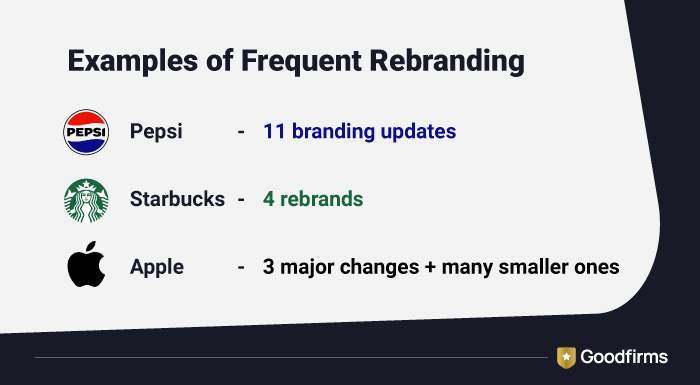
Apple has undergone three major branding shifts since its inception in 1976, backed by numerous smaller refreshes. Instead of reinventing itself repeatedly, Apple has focused on smaller refinements: simplifying its logo, modernizing typography, and bettering its product design while maintaining its core identity around innovation and simplicity.
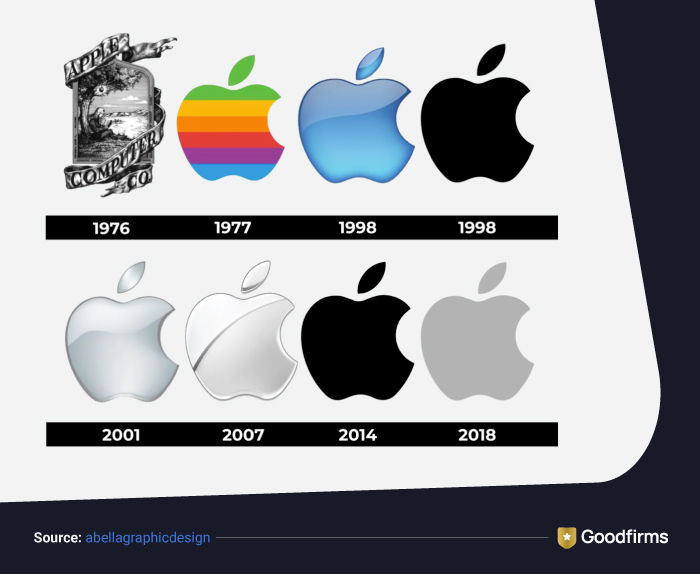
From the rainbow logo to the monochrome mark, each update signaled business maturity and product evolution, not a change in Apple's purpose
Lesson: Strategic refreshes compound brand equity instead of resetting it. Apple proves that consistency, not constant reinvention, builds iconic brands.
If a refresh can’t help your brand keep pace with its business evolution, it’s time for a full rebrand.
What Is a Rebrand?
A rebrand, on the other hand, means a complete overhaul. You don’t just tweak things; you are set on writing a new brand story. In other words, your strategy, messaging, visuals, and even your name may be up for change.
A rebranding is specifically required when your business has undertaken some bigger initiatives. For example, when you are entering newer markets, forming partnerships with other companies, or introducing new products or services. A rebranding ensures that your current brand messaging aligns with the new reality of who you are now.
With a rebranding, you are modernizing, bordering on reinventing. More importantly, your audience accepts the new look and feel of your reinvented brand, but it's not without cost.
Companies Usually Spend 5–10% of Their Marketing Budget on Rebranding
Because rebranding calls for strategic transformation, it requires serious investment. According to recent research studies, companies earmark 5–10% of their total marketing budget toward rebranding initiatives. Source: amraandelma
Rebrands are appropriate when:
- Your business model has changed.
- You’re entering new markets or targeting new audiences.
- Your brand has a new purpose or strategy in place.
- You need to repair your reputation or look different from competitors.
Over 70% of Consumers Verify Brand Credibility Based on Visual Identity
Visuals have a psychological effect on the customers. Studies show over 70% of consumers evaluate a company’s credibility based on its logo and visual identity, making rebrands powerful perception resets but only when they're executed correctly. Source: wifitalents
Case Study: Cheeky Panda
Cheeky Panda, a UK brand, is reputed for its bamboo-powered products. The company produces toilet paper, kitchen roll, facial tissues, wipes, and other products from bamboo pulp. The company has recently refreshed its brand identity and packaging design to reinforce its bamboo-first positioning.

Key changes included:
- Natural bamboo patterns emphasizing sustainability
- Mascot-led brand recognition
- Plastic-free packaging aligned with carbon-reduction goals
“This rebrand captures everything our customers love about Cheeky Panda and gives us the confidence to take the bamboo revolution further.” — Julie Chen, CEO & Co-founder
Lesson: Rebrands can be risky but effective when tied to strategic goals.
Case Study: Meta — Rebranding to Signal Strategic Reinvention
In 2021, Facebook rebranded as Meta to reflect a significant shift in its corporate direction - from being just a social media company to a metaverse-first organization.
Another reason is that the company sought to repair its reputation, which had suffered a significant blow due to the Cambridge Analytica Scandal. The jury is still out on whether the company was able to distance itself from the damage. Still, regardless, it was undoubtedly a significant step for the company in a different direction.
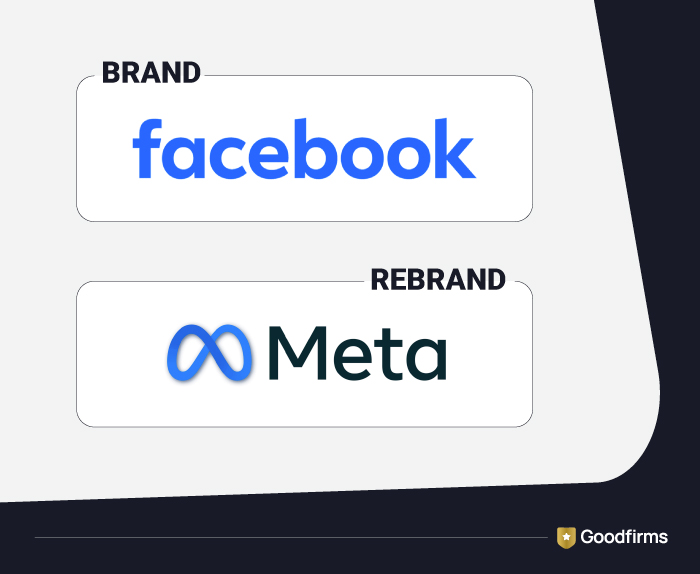
Facebook rebranded as Meta to reflect a significant shift in its corporate direction - from being just a social media company to a metaverse-first organization
The rebrand did not erase Facebook, Instagram, or WhatsApp. Instead, it redefined the parent brand’s role and future ambition.
Lesson: Rebrands are justified when the business direction changes.
Cost Expectations for Brand Refresh and Rebrand Projects
Cost is often swept under the carpet in branding discussions, yet decision-makers cannot avoid it.
Financial decisions depend on the scope and complexity of implementation.
Brand refreshes cost between $10,000 and $100,000 for small to medium-sized businesses. The fees include logo redesign, improvements in marketing materials, website refreshes, and trivial updates across touchpoints.
Rebranding starts at $75,000 for small companies but can go beyond $500,000 for large-scale enterprises. Enterprises' rebranding can cost a bomb because, among other things, it includes legal fees, trademark registration, and signage replacement.
|
Cost Category |
Brand Refresh | Complete Rebrand |
| Strategy & Research | $2,000 - $10,000 | $15,000 - $50,000 |
| Logo & Visual Identity | $3,000 - $15,000 | $10,000 - $75,000 |
| Marketing Materials | $5,000 - $25,000 | $20,000 - $100,000 |
| Website Development | $8,000 - $30,000 | $25,000 - $150,000 |
| Legal & Trademarks | $500 - $5,000 | $10,000 - $40,000 |
| Implementation | $3,000 - $15,000 | $20,000 - $100,000 |
source: ofspace
Brand Refresh vs. Rebrand — How to Decide What’s Right for Your Business
At this stage, most organizations have an idea, but they still can’t fully grasp it.
For them, the real question is: not how much change you want, but what problem you’re addressing.
But one thing was clear: Only brands with strong, consistent visual identities experience up to 62% higher customer engagement, reinforcing the importance of alignment over newness.
Brands with cohesive visual identities see up to 62% higher customer engagement
Alignment drives stronger interactions and loyalty.
Use this quick check before committing to the budget or timelines:
| Indicator | Action |
| Brand looks outdated | Refresh |
| Brand feels confusing | Rebrand |
| Same audience, same products | Refresh |
| New audience, new direction | Rebrand |
| Declining engagement | Refresh |
| Declining trust | Rebrand |
How to choose a branding agency for your refresh or rebrand?
Once you've decided which path to take, choosing the right agency partner is the next critical step. Here's what to look for:
For a brand refresh:
Look for agencies with a strong portfolio in visual identity updates — specifically logo refinements and design system work. Ask to see before/after examples and check whether existing brand equity was preserved.
For a full rebrand:
Prioritize agencies that lead with strategy, not design. Ask about their discovery and positioning process — a good rebrand agency interviews stakeholders and conducts market research before opening a design tool.
Key questions to ask any agency:
Have you worked with brands in my industry? · Can you share client references? · What does your handoff process look like? · Do you offer brand guidelines documentation?
Browse Goodfirms' verified listings of top branding agencies — filtered by industry, budget, and client reviews — to shortlist the right partner for your project.
Final Thoughts: Change With Intent, Not Impulse
Brand refreshes and rebrands both serve powerful purposes—but only when chosen intentionally. A refresh keeps you relevant without losing recognition. A rebrand resets perception when your business has fundamentally evolved.
The most successful brands don’t change often—but when they do, they change with clarity, conviction, and customer insight.
Before making the leap, ensure your decision is driven by strategy—not fatigue, fear, or fashion.
Brand Refresh vs Rebrand - FAQS
1. What is the difference between a brand refresh and a rebrand?
A brand refresh involves visual and messaging changes without changing the core identity. A rebrand is a complete brand overhaul that redefines positioning, perception, and, if required, the brand name.
2. When should a company choose a brand refresh instead of a rebrand?
Choose a brand refresh over a rebrand when the strategy, audience, and offerings resonate with the target audience and are serving their purpose; however, the visuals and messaging look dated and inconsistent.
3. When is a full rebrand necessary?
A full rebrand is imperative on two occasions: 1) When your business model, target audience, market positioning, or long-term strategy has changed completely. 2) When brand trust needs repair.
4. How much does a brand refresh cost compared to a rebrand?
Brand refreshes usually cost between $10,000 and $100,000, while rebrands typically start around $75,000 and can exceed $500,000, especially for large enterprises.
5. Why do so many rebranding efforts fail?
Many rebranding efforts fail due to poor execution, a lack of customer trust, an unclear strategy, and even unnecessary changes to name and brand identity.
6. Can a brand refresh harm brand equity?
Yes. Over-refreshing can turn away loyal customers and dilute brand equity.
7. How often should companies refresh or rebrand?
Most companies perform minor refreshes every 3 to 5 years and major rebrands every 7 to 10 years, depending on market conditions and business evolution.