Key takeaways
- The Decentralization Mandate: Shifting from centralized hubs to a multi-node, regionalized distribution model is the primary defense against geopolitical and supply chain volatility.
- The 48-Hour Conversion Threshold: Bridging the gap between the 70% average cart abandonment rate and the "Two-Day Delivery" consumer baseline.
- Vertical ROI: Leveraging automated storage and retrieval systems (AS/RS) and predictive AI to reduce labor overhead by 30% and triple fulfillment velocity.
- Regulatory Moats: Utilizing site-licensed 3PL partnerships to transform compliance from a bureaucratic bottleneck into a competitive market advantage.
- The Lean Scaling Model: Transitioning from one main hub operation to high-accountability, tech-first 3PL partnerships to ensure long-term scalability.
As we progress through 2026, the eCommerce landscape has reached a definitive tipping point. Fulfillment has transitioned from a tactical back-office function to a high-stakes strategic pivot, the primary differentiator for brands seeking to scale.
The New Fulfillment Playbook: Nine Strategies Redefining eCommerce Logistics
In this hyper-competitive environment, market leadership is no longer determined solely by brand equity or marketing expenditure. Instead, it is won by organizations that have mastered the "messy mechanics" of the final mile. Today’s consumers demand a level of precision and speed once reserved for industry titans. To maintain relevance, enterprises must re-engineer their logistics frameworks to meet the universal standard for accelerated, reliable delivery.
I. Strategic Localization: Mitigating Global Volatility
In 2026, global trade remains a moving target. Relying on a single, long-distance supply chain and logistics companies is no longer just an inefficient strategy; it is a critical vulnerability. Between fluctuating trade policies, regional instability, and unforeseen logistical bottlenecks, "single-node" inventory models represent a massive operational risk to modern management.
Establishing a Regionalized Moat
The most resilient brands are prioritizing a shift toward radical localization. By establishing domestic inventory "home bases" within target jurisdictions such as Canada, the United States, or the European Union, brands effectively insulate their customer experience from external shocks.
1. Operational Predictability: Localized inventory bypasses the customs delays and tariff spikes that can paralyze cross-border commerce overnight.
2. Market Dominance: Domestic eCommerce operations now account for over 65% of the total logistics market share, reflecting a broad industry pivot toward proximity.
3. Risk Hedging: In an era where shipping lanes can be disrupted within a week, having products pre-positioned in-country is the only viable method to ensure consistent service delivery.
The Macroeconomic Context: Data from 2025-2026
Reliable industry data indicates that brands utilizing localized "micro-fulfillment" centers saw a 22% reduction in total landed costs over the last fiscal year. This is attributed to the elimination of international "zone-skipping" fees and a significant reduction in the carbon footprint per parcel, a metric that is increasingly impacting corporate ESG ratings and consumer choice. For a business owner, this means higher margins and a more sustainable brand image that resonates with the modern, eco-conscious shopper.
II. The "Two-Day" Baseline: Optimizing the Conversion Funnel
Customer acquisition costs (CAC) continue to rise, yet the most significant leak in the sales funnel remains at the point of fulfillment. Current benchmarks in 2026 indicate an average online shopping cart abandonment rate of 70%, with nearly 50% of those shoppers citing high shipping costs or excessive lead times as the primary deterrent.
The Psychology of Speed and Trust
In 2026, 41% of consumers consider two-day shipping the absolute baseline for a positive brand interaction. A five-day delivery estimate is no longer an inconvenience; it is a deal-breaker. To resolve this, brands are adopting a multi-node strategy, distributing inventory across key geographical hubs to ensure comprehensive coverage.
Table 1: The Impact of Shipping Speed on Conversion (2026 Projections)
| Delivery Window | Cart Abandonment Rate | Customer Lifetime Value (LTV) |
|---|---|---|
| Same Day / 24-Hour | 12% | High (Repeat Buyers) |
| 2-Day (Standard) | 28% | Moderate |
| 5+ Days | 70% | Low (One-time buyers) |
This is fundamentally a margin-protection strategy. By leveraging regional hubs, brands eliminate the exorbitant costs associated with cross-country transit. Furthermore, it builds a redundant safety net: should one facility face a regional disruption, other nodes maintain the brand’s operational continuity.
III. The Vertical Revolution: Maximizing Asset Density
Industrial real estate prices in major urban and transit corridors have reached unprecedented levels in 2026. Since building "outward" is often cost-prohibitive, the industry has turned its focus "upward," prioritizing vertical density and technological integration.
AI-Driven Operational Excellence
Modern, high-density warehouses are no longer passive storage units; they are automated engines optimized by artificial intelligence.
Predictive Stocking: AI systems analyze real-time market trends from TikTok viral cycles to seasonal shifts to move high-velocity SKUs to the most accessible "golden zones" before shift commencement.
Throughput Acceleration: Modern automation is successfully reducing labor-related overhead by 30% while simultaneously increasing fulfillment speeds by up to 300%.
Capex Efficiency: For mid-market brands, the capital expenditure required to build such infrastructure, often exceeding $15M for a fully automated setup, is prohibitive. This has solidified 2026 as the year of the strategic 3PL partnership, allowing brands to access world-class technology on a variable-cost basis.
The Technical Edge: AS/RS and 2D Data Matrix
Automated Storage and Retrieval Systems (AS/RS) have moved from "experimental" to "essential." These systems allow for a 400% increase in storage capacity compared to traditional racking. Furthermore, the transition to 2D data matrix barcodes allows for more data density, including lot numbers and expiry dates, ensuring 99.9% order accuracy at a speed humans cannot match.
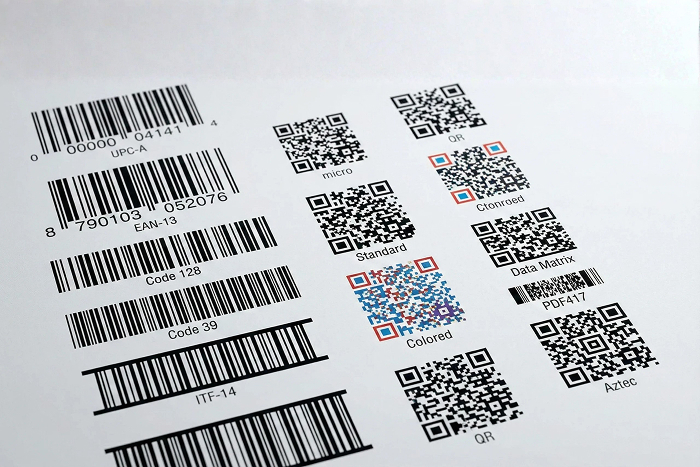
2D data matrix barcodes allow for more data density, including lot numbers and expiry dates, ensuring 99.9% order accuracy at a speed humans cannot match
IV. Regulatory Compliance: The Growing Global Red Tape
The expansion of eCommerce into sensitive categories, including health supplements, high-end skincare, and specialized nutrition, has brought a corresponding increase in regulatory scrutiny. In 2026, compliance is no longer a task to be deferred; it is a foundational requirement for market entry.
Leveraging Site-Licensed Facilities
Successful brands are increasingly migrating their operations to site-licensed facilities that adhere to Good Manufacturing Practices (GMP). Managing lot tracking, temperature-sensitive storage, and expiry protocols in-house is an invitation to legal and financial exposure.
1. Lot Control & Surgical Recalls: In 2026, the ability to execute a "surgical recall" (recalling only specific batches) is a financial necessity. Without digital lot tracking, a minor quality issue can result in a total inventory loss.
2. Climate Integrity: Biological skincare and advanced nutraceuticals require strict temperature mapping. Modern 3PLs use IoT sensors to provide real-time temperature logs, protecting the brand from "product spoilage" claims.
3. Documentation & Audits: Site-licensed partners maintain the rigorous audit trails required by agencies like the FDA or Health Canada, providing the brand with a "regulatory shield."
V. Strategic Workforce Management: The Human-Machine Collaboration
While automation is the headline of 2026, the human element in logistics has not vanished; it has evolved. Business owners must realize that the modern warehouse worker is more of a "technician" than a "picker."
Training for the Future
The most successful logistics providers are those that invest in upskilling their workforce to manage the AS/RS systems and AI interfaces. This collaboration ensures that when an automated system encounters an edge case, such as a damaged package or a custom labeling requirement, a skilled human can intervene without stopping the entire production line.
Reducing Turnover through Ergonomics
In a tight labor market, retention is key. Modern facilities utilize wearable technology and ergonomic workstations to reduce physical strain, leading to lower turnover rates and higher institutional knowledge. For the brand owner, this translates to consistent service quality and fewer errors during peak seasons.
VI. The Data-Driven Supply Chain: Real-Time Visibility
In the boardroom of 2026, data is the most valuable currency. Brands can no longer afford "black holes" in their supply chain where inventory is "in transit" but invisible.
The Power of Integrated OMS
Modern fulfillment requires a seamless flow of data between your e-commerce platform (Shopify, Magento, etc.) and the warehouse's Warehouse Management System (WMS).
Inventory Synchronization: Real-time updates prevent "overselling," a major driver of negative customer reviews.
Dynamic Routing: AI-driven OMS can decide which node an order should ship from based on stock levels, shipping costs, and delivery speed in real-time.
Customer Transparency: Providing the customer with real-time tracking from the moment a label is printed increases trust and reduces "Where is my order?" (WISMO) inquiries by up to 40%.
VII. Case Analysis: The Canadian Market Perspective
As a primary example of 2026 trends, the Canadian eCommerce sector underscores the need for a multi-node approach. Due to the vast distance between major population centers, brands operating out of a single hub in Toronto often face lead times of 5–7 days for West Coast customers.
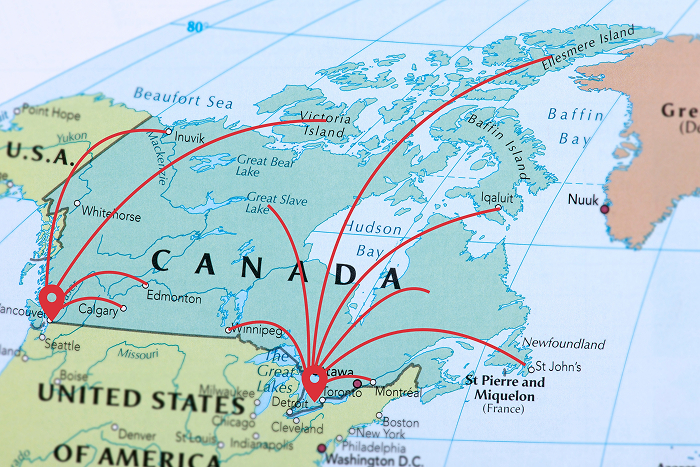
Canada is a vast country, presenting unique logistics complexities across its regions.
By partnering with a 3PL like InterFulfillment, which offers a strategic footprint across Canada, brands can achieve 90% "Two-Day" coverage of the Canadian population. This regionalization has been shown to reduce "last-mile" delivery costs by up to 35%, as parcels spend less time in expensive long-haul transit networks. This cost saving is often the difference between a profitable quarter and a loss for mid-sized retailers.
VIII. Sustainability as a Growth Driver
In 2026, sustainability is no longer just a marketing buzzword; it is a logistical requirement. Regulatory bodies and consumers alike are demanding transparency regarding the environmental impact of shipping.
Green Logistics Strategies
Packaging Optimization: AI can calculate the smallest possible box size for an order, reducing "void fill" waste and increasing vehicle density.
Carbon-Neutral Shipping: Many 3PLs now offer carbon-offsetting programs for every parcel shipped, allowing brands to carry a "Certified Carbon Neutral" badge.
Circular Economy Support: Modern fulfillment centers are increasingly equipped to handle "re-commerce," managing the complex returns and refurbishment processes that allow brands to resell returned items as "open-box" or "refurbished," recouping lost revenue.
IX. The Hybrid Partnership Model: Scaling with Agility
If 2026 has provided a definitive lesson for the e-commerce executive, it is that the centralized hub logistics model is obsolete. The most agile organizations are those that retain core strategy and product development in-house while outsourcing the operational complexity of fulfillment to specialized external partners and fulfillment companies.
Defining the 2026 Partner Standard
When evaluating a logistics partner, business owners should prioritize organizations that provide:
Technological Integration: Seamless API connectivity and real-time inventory visibility.
Agile Scalability: The capacity to manage exponential volume spikes without sacrificing accuracy.
Data Accountability: Advanced barcode scanning and 2D data matrix systems that ensure a near-zero error rate.
Decision Matrix: In-House vs. Strategic 3PL
| Factor | In-House Fulfillment | Strategic 3PL (InterFulfillment) |
|---|---|---|
| Initial Capital (CapEx) | $500k - $5M+ | $0 (Pay-as-you-go) |
| Regulatory Compliance | DIY / High Liability | Site-Licensed / Guaranteed |
| Scaling Flexibility | Fixed (limited by walls) | Elastic (scales with volume) |
| Labor Management | Direct Hiring / Training | Handled by Experts |
| Tech Stack | Legacy / Manual | AI-Driven / Automated |
Conclusion: Future-Proofing the Enterprise
As the global market becomes increasingly digital and competitive, a sound fulfillment strategy is the cornerstone of brand longevity. Investing in these frameworks—vertical density, multi-node distribution, and regulatory rigor—is the only way to ensure an organization remains standing when the next consumer shift occurs.
The objective remains constant: delivering the right product to the right person, at the right time, with absolute precision. In 2026, logistics is no longer a cost to be managed; it is a competitive advantage to be leveraged. Brands that treat fulfillment as a strategic asset will find themselves leading the market, while those treating it as an afterthought will be left behind by the speed of 2026.