What software development outsourcing actually means is partnering with external technical teams to build, maintain, or enhance digital products.
This can include full product development, team augmentation, dedicated development teams, project-based outsourcing, managed services, offshore/nearshore/onshore development, specific capabilities, and ongoing maintenance.
In the following sections, we will cover:
- Cost Reality for Startups
- Software Development Outsourcing Market Size
- Complete Software Development Outsourcing Decision Framework
- Making the Final Call in the Decision Framework
- What to Do Next
- Final Thoughts
The Cost Reality for Startups in 2026
Operating a startup has become significantly more expensive. Even a lean tech startup now faces monthly operational costs of around $45,000, with personnel expenses taking the biggest share.
Hiring skilled software developers in competitive markets often means paying experienced engineers roughly $150,000–$230,000 per year in total cost. This creates a tough situation for founders where they must build strong products with top talent while still keeping costs low and making their runway last longer.
So, outsourcing can be an excellent option in this situation. What founders really need is a clear framework to decide when outsourcing makes sense, how to structure it, what to look for in the right partner, and how to manage the relationship successfully.
The goal is not to say that outsourcing is always the best choice, but to help startups understand when it is the right choice and how to do it properly.
At MTechZilla, we’ve seen this decision up close. Since 2021, we’ve helped startups across the USA and Europe build and scale real products, from EV charging platforms to travel and hospitality systems, using modern stacks like React, Next.js, Node.js, and AWS. These experiences shape the practical framework shared in this guide.
The Software Development Outsourcing Market in 2026
After more than two decades of watching how software companies build and scale, one thing is clear: outsourcing is no longer a side option; it’s a core part of the industry.
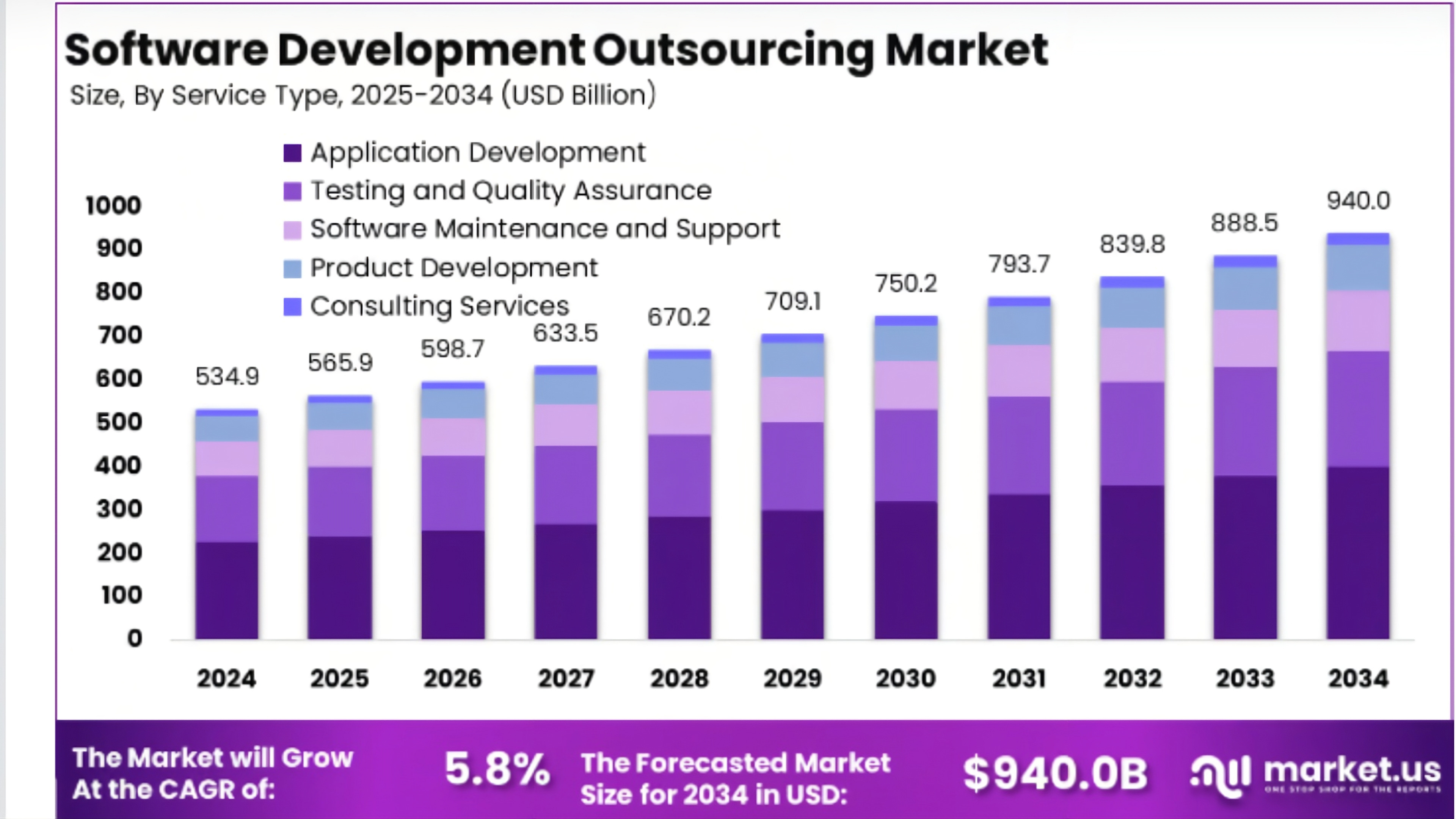
Data from Market.us proves the point: the global software development outsourcing market was valued at USD 534.9 billion in 2024 and is projected to reach around USD 940 billion by 2034, showing steady long-term growth driven by real business needs. (For insights on broader development trends that shape cost realities, read software development research key takeaways.)
Startups and enterprises alike are turning to external teams to handle talent shortages, ship products faster, manage costs, and access specialized skills that are difficult to build in-house. This level of adoption makes it clear that outsourcing has become a mainstream strategy for companies serious about scaling efficiently.
Software Development Outsourcing Decision Framework for Startups
This isn't a theoretical question. After working with dozens of startups and seeing some nail it while others burn cash on poor software outsourcing decisions, there are clear patterns for when this makes sense.
1. The Clock is Ticking, and You Need to Ship
Here's the reality: sometimes timing is everything. If you're racing to launch before a competitor, trying to hit a funding milestone, or have a narrow market window, you can't afford a 3-4 month hiring process.
Instead of spending 3–4 months recruiting and onboarding developers, startups can begin development within 1–2 weeks with pre-vetted teams. Outsourcing gives you experienced developers next week.
2. Specialized Technical Skills are Needed
Not every startup needs a full-time developer, ML engineer, or cloud architect. But sometimes, you need specialized skills that don’t justify hiring someone permanently.
The traditional way is to hire a full-time specialist and pay them while they spend part of their time on less important tasks. A smarter approach is to bring in specialists who have done this many times before. They can complete the work faster and with fewer mistakes.
Finding specialized talent can take months, which slows down your product development. That’s why many startups keep general developers in-house and outsource specialized work as needed.
For example, a US-based social services organization needed specialized expertise in building emergency accommodation systems, a niche requiring both technical skill and domain understanding. Rather than spending months finding specialists, they partnered with MTechZilla.
The platform now serves over 700 social service agencies, has facilitated 500,000+ safe accommodations, and manages 20,000+ shelter beds nationwide.
The key is matching the hire to the task: outsource one-time projects, but hire full-time if the work is essential for your ongoing product.
3. How to Make Your Funds Last
When you’re tracking your finances, every dollar counts. Spending less on salaries can give your startup more time to develop your product, reach customers, and grow revenue.
Hiring full-time specialists can be very costly. Outsourcing the right work allows you to save money and extend the life of your funds, giving your team time to focus on what matters most.
In a startup, time and money are critical resources. Making smart choices about hiring and outsourcing can be the difference between success and running out of funds.
4. Scaling Team Quickly for Peak Periods
Permanent hires are long-term commitments, but product development rarely moves in a straight line. There are times when you need extra hands and times when that same capacity sits idle.
Hiring full-time developers takes time, effort, and money. Recruiting, onboarding, and managing new employees can distract you from building your product. Scaling up for a launch or scaling down afterward can be risky, expensive, and affect your team’s morale.
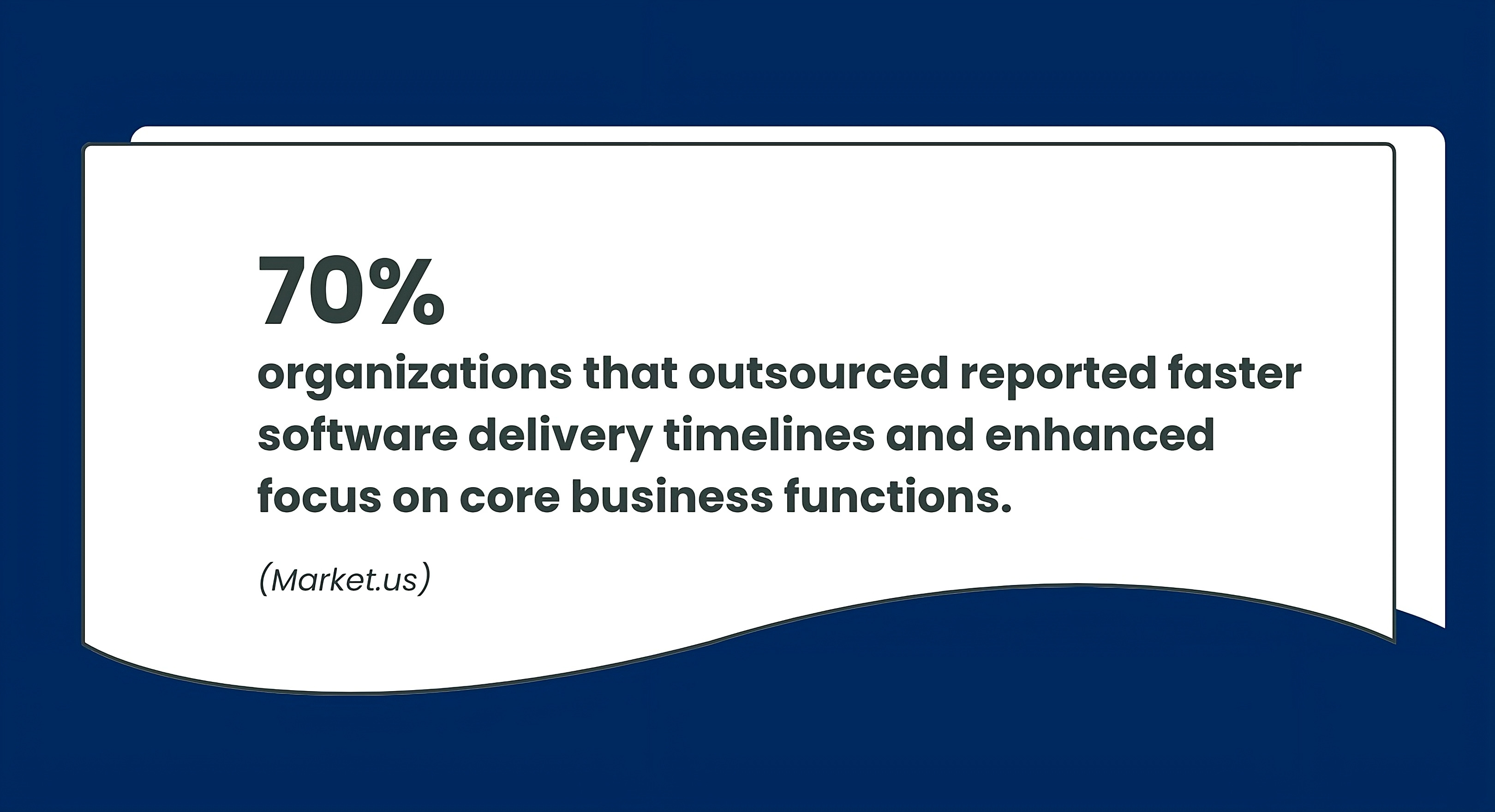
Outsourcing solves this. You can quickly add skilled developers when you need them and reduce the team when you do not. Contracts handle the transitions, so there is no severance, legal risk, or lost relationships. This model works because 64% of companies globally use it for exactly this reason.
When a European e-mobility startup needed to rapidly build their complete technology stack, including charging infrastructure, fleet tracking, and a mobile app, they partnered with MTechZilla.
Within months, they had a production-ready platform managing over 5,000 charging stations across multiple countries, processing thousands of daily transactions through Stripe Connect, and reducing operational overhead by 65%.
This flexibility lets founders focus on what matters most, such as shipping the product, engaging with customers, and growing the business without getting caught up in hiring cycles.
5. Focus on Core Business is Priority
As a founder, your time is limited. Your biggest value is not writing code. It is understanding the market, talking to customers, shaping the product, and building the business.
When you try to handle development yourself without a technical background, two things usually happen:
- Product decisions get delayed.
- Customer feedback and sales conversations take a back seat.
Outsourcing development allows you to stay focused on what actually moves the company forward: validating the idea, improving the product based on real users, building partnerships, and generating revenue.
Most successful founders use their time where it matters most and delegate the rest. Development is important, but your vision, customer insight, and business decisions are what truly define the startup’s success.
6. Testing New Product Ideas with Lower Risk
You often need to test new ideas, features, or platforms before fully committing to them.
Hiring full-time specialists for something that is still uncertain is risky. If the idea does not work, you are left with high costs and a team you no longer need.
Before you hire three mobile developers, maybe validate that mobile is actually where your users are.
A marketplace startup wanted to test mobile but wasn’t sure it would stick. Instead of permanent hires, they outsourced a three-month mobile prototype. They launched it, got data, and learned their users actually preferred the web.
Imagine if they'd hired a mobile team first. They'd be stuck with expensive specialists for the wrong platform or facing layoffs three months in.
For baseline website build costs, founders should definitely consult the website development cost survey, especially if the first version is web-based.
Situations That Require Extra Preparation
Not everything is a perfect fit. Here is where software development outsourcing gets tricky, and how to handle it anyway if you need to.
1. Very Early Stage (Pre-Product Vision)
Outsourcing can work well even at an early stage, as long as it is structured the right way.
At an early stage, requirements shift quickly after user conversations. When an external team is building while you are still figuring things out, you often end up paying to redo work. This slows you down and increases costs.
This usually shows up as:
- Features changing every week
- User feedback contradicting early assumptions
- Wireframes that seem fine until real development begins
- Difficulty explaining the product clearly
In this phase, a technical co-founder or early in-house developer is often a better fit because they can adapt quickly and think through the problem with you.
If you still outsource:
- Choose a partner that starts with a discovery phase before coding
- Work in short phases, not long contracts
- Expect changes and budget for iteration
- Look for teams with early-stage startup experience, not only mature products
You may not be ready if:
- You cannot clearly explain the problem you are solving
- Your target user is still unclear
- Your feature list changes constantly
- You have no basic wireframes or flows
2. Core Technology is Your Competitive Advantage
Most startups do not win because of their tech alone, but sometimes the technology really is the business.
If your product depends on a unique algorithm, special data processing, or a technical system that competitors could copy, that part should stay in-house. Giving full access to external teams in this case increases the risk of losing what makes you different.
At the same time, not everything is special.
Your admin panel, login system, payments, notifications, dashboards, and basic infrastructure are standard. These do not give you a competitive edge and can be safely outsourced.
A practical approach is hybrid:
Keep in-house:
- Core algorithms
- Unique data logic
- Domain-specific systems that took years to build
Outsource:
- Frontend and mobile apps
- Admin tools and dashboards
- Integrations and infrastructure
- Standard backend features
Protect your core by design:
- Use clear APIs so external teams only access what they need
- Keep core code in restricted repositories
- Separate your architecture so critical logic is isolated
A simple rule:
If someone could copy this and build a competitor, keep it internal.
If it is standard software work, outsource it.
This balance lets you move fast without risking what truly makes your product valuable
3. Limited Management Bandwidth
Outsourced teams are not fire and forget. They need regular time each week for writing clear specs, daily standups, reviewing work, making decisions, and giving feedback.
In practice, this often means:
- Being asked for clarifications during the week
- Reviewing features before they are finalized
- Providing direction for upcoming work
When this collaboration exists, outsourcing works smoothly and saves founders significant time on execution.
However, someone who understands the product vision does need to stay involved. This ensures the team builds the right thing, faster and with fewer revisions.
If your schedule is very tight, you can still make outsourcing work by:
- Hiring a product or technical manager to coordinate day to day
- Working with a part-time technical advisor
- Or starting when you can give a bit more attention
Think of outsourcing this way:
It removes the burden of building everything yourself, but leadership and product decisions always stay with the founder. When those two work together, outsourcing becomes a powerful advantage.
4. Highly Regulated or Security-Sensitive Products
If you are building in healthcare, fintech, or any product that handles sensitive user data, outsourcing can still work. It just needs more preparation.
In these products, small technical mistakes can turn into compliance issues, customer trust problems, or legal trouble. So the goal is not to avoid outsourcing, but to choose and manage partners carefully.
What this looks like in real founder life:
- You are asked by clients or investors about security standards
- Customers want to know where their data is stored
- Sales deals depend on compliance reports
- You worry about who can access production data
What to do before outsourcing:
- Ask for proof of security and compliance, not just promises
- Confirm where data will be stored and who can access it
- Make sure contracts clearly define data handling and responsibilities
- Choose teams that have already worked in your industry
Good mindset:
Outsource development, but keep control of security decisions, data access, and compliance ownership.
If a partner treats security as “we will figure it out later,” that is a risk. If they already have processes in place, outsourcing can be safe and effective even in regulated industries.
5. When Real-Time Collaboration is Important
Some stages of product building move very fast. Decisions change daily, designs evolve quickly, and problems need immediate discussion.
Outsourcing still works here, but how you structure collaboration matters.
You will feel this if:
- Your designer needs quick feedback to continue work
- Bugs block releases and need fast discussion
- Product decisions require multiple people to be aligned quickly
- You are iterating on the product every few days
To make this work with outsourcing:
- Choose teams with good time overlap when possible
- Set fixed daily hours when everyone is online
- Use short calls for blockers and complex topics
- Keep product decisions written and documented
- Use async tools for feedback, not long message threads
Practical structure that helps:
- Sync time for planning and reviews
- Async work for execution
- Clear ownership of decisions
- Weekly rhythm so everyone knows what is happening
If your product needs constant live collaboration every day, near-timezone teams work best. If collaboration is planned and structured, offshore teams can still perform very well.
The key is not location. It is how intentionally you design communication.
Making the Call: Your Outsourcing Decision Framework
After reading through scenarios and considerations, here's how to actually make this decision in the next 48 hours.
Answer honestly.
Is your product clear?
You should be able to:
- Explain it in 2–3 sentences
- Sketch main user flows
- Define what version 1 includes
If not, spend some time refining this first.
Do you have technical judgment?
You need someone who can:
- Review code and architecture
- Spot problems early
- Guide technical decisions
If not, bring in a technical advisor or fractional CTO before outsourcing.
Can you stay involved weekly?
Outsourcing still needs:
- Planning
- Reviews
- Decisions
- Regular feedback
If you cannot make time for this, assign a product or technical manager.
Can you afford it comfortably?
Make sure you have enough funds to:
- Cover outsourcing costs
- Handle delays or changes
- Keep operating for several months
If not, reduce the scope or secure more funding first. To make realistic budget decisions, founders should reference market benchmarks such as the custom software development cost survey to understand typical development pricing ranges before committing.
What to Do Next (If You are Ready)
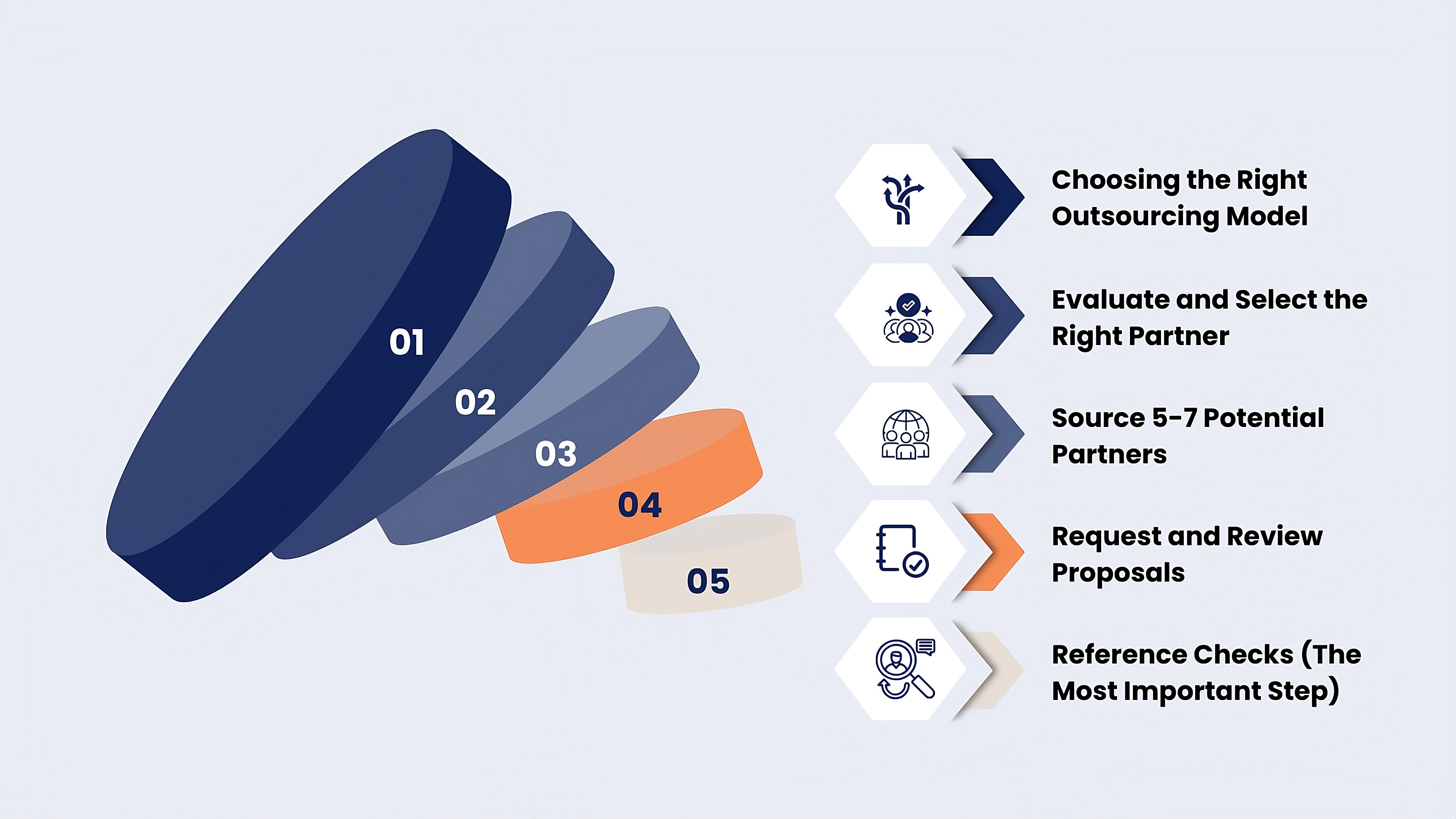
Step 1: Choosing the Right Outsourcing Model
- Staff Augmentation (Extending Your Team)
- Dedicated Development Team (Your Extended Team)
- Project-Based / Fixed Scope (Deliver a Specific Outcome)
- Managed Services (Hands-Off Operation)
Step 2: Evaluate and Select the Right Partner
Write down what you absolutely need from the best software development outsourcing company.
Technical requirements:
- Tech stack experience (React/Node/Python/whatever you're using)
- Platform expertise (web, mobile, cloud, AI/ML)
- Integration experience (Stripe, AWS, specific APIs you need)
Project requirements:
- Industry experience (fintech, healthcare, e-commerce)
- Company stage experience (pre-seed startups vs established companies)
- Team size capability (can they staff your needs?)
Operational requirements:
- Timezone overlap needed (4+ hours? Full overlap?)
- Communication language fluency
- Legal ability (can they sign your agreements, handle IP properly?)
Don't talk to partners who don't meet these basics. It wastes everyone's time.
Step 3: Source 5-7 Potential Partners
Where to find them:
- Referrals from other founders (best source - ask in founder groups)
- Clutch, GoodFirms, Upwork for established firms with reviews
- AngelList, Y Combinator network for startup-focused partners
- LinkedIn for targeted outreach to companies with relevant portfolios
Initial filter:
- Review their website portfolio - do they have relevant projects?
- Check client testimonials and case studies
- LinkedIn research - who are their team leads?
- Initial email responsiveness (if they're slow now, they'll be slow later)
Narrow to 3-4 for detailed conversations.
Step 4: Request and Review Proposals
A good proposal shows they understood your needs. It should include:
Must-haves in proposal:
- Detailed team composition (names, roles, experience levels)
- Week-by-week timeline with milestones
- Itemized cost breakdown
- Communication plan and tools
- Risk assessment and mitigation
- Sample deliverables or process examples
Step 5: Reference Checks (The Most Important Step)
Call at least 2-3 references for your top choice.
Ask:
- Was delivery on time and budget?
- How was communication?
- Would you hire them again?
This step alone prevents most bad decisions.
Final Thought
The framework above gives you a practical way to make outsourcing decisions systematically. The outcome depends on how honestly you answer the four questions and how carefully you follow the next steps.
If you feel uncertain at any point, even a single focused product development strategy session with an experienced product development team like the ones offered by MTechZilla can provide clarity.
These sessions can help you align on product direction, MVP priorities, technology choices, feasibility, risks, and budget considerations. A short, well-guided discussion often saves months of trial and error and gives you confidence to move forward. Making informed decisions early is what separates smooth execution from costly mistakes.