Key takeaways
- Artificial intelligence answer engines rely entirely on the structural foundations of traditional search engine optimization to find, parse, and reference brands.
- The modern consumer journey is highly comparative, making early visibility in zero-click artificial intelligence overviews vital for remaining in the consideration set.
- Advanced technical schema markup and deep semantic content structure have replaced simple keyword density as the primary drivers of digital discovery.
- Proving the return on investment in an artificial intelligence era requires specialized tracking tools that monitor prompt visibility and citation share of voice.
The digital marketing landscape is undergoing its most profound shift since the birth of the commercial internet. For over two decades, search engine optimization revolved around a simple, predictable contract: a user typed a query, a search engine displayed a list of links, and the user clicked through to a website. Today, that contract is being rewritten by artificial intelligence.
With the integration of Large Language Models into search environments, users are increasingly receiving comprehensive answers directly within the search interface. This phenomenon, often described as the zero-click revolution, means the answer now frequently arrives before the click ever happens. For businesses that rely on digital visibility to capture leads and drive revenue, this transition can appear daunting.
Traditional metrics like organic click-through rates are shifting, leaving many brands wondering how to adapt. However, the fundamental premise of online discovery remains unchanged: to be recommended, your brand must be found and trusted by the underlying systems generating these responses. At Ignite Digital, our perspective is clear: search engine optimization has not been replaced by artificial intelligence; rather, it has been weaponized by it.
Traditional optimization practices are now the absolute bedrock upon which artificial intelligence visibility is constructed. If an organization lacks a rigorous, modern search optimization framework, it will remain entirely invisible to the large language models that power the future of digital discovery.
As these advanced model networks grow more complex, they do not spontaneously invent information about businesses. Instead, they operate as highly sophisticated retrieval systems that scour the public web to synthesize answers. When a user asks a complex question, the machine must look for structured data, authoritative text, and clear entity relationships to build its response.
This means that the work digital marketers have done for years to structure websites, clean up crawl errors, and author authoritative content is now the exact database that these systems use to form their conclusions. Without a strong optimization strategy, your brand is effectively locked out of this repository, meaning you will never be factored into the answers provided to prospective customers.
Furthermore, this transformation alters the timeline of customer acquisition. In the past, a consumer might visit five different websites to gather information, compare features, and read about services. Today, the system performs that synthesis in a matter of seconds, delivering a unified overview that highlights two or three preferred options.
If your business is not one of those highlighted options, you are completely omitted from the consideration set before the user even has a chance to see your website. Therefore, visibility within these conversational summaries is the new battleground for digital market share, and the rules of engagement are dictated by foundational search mechanics. 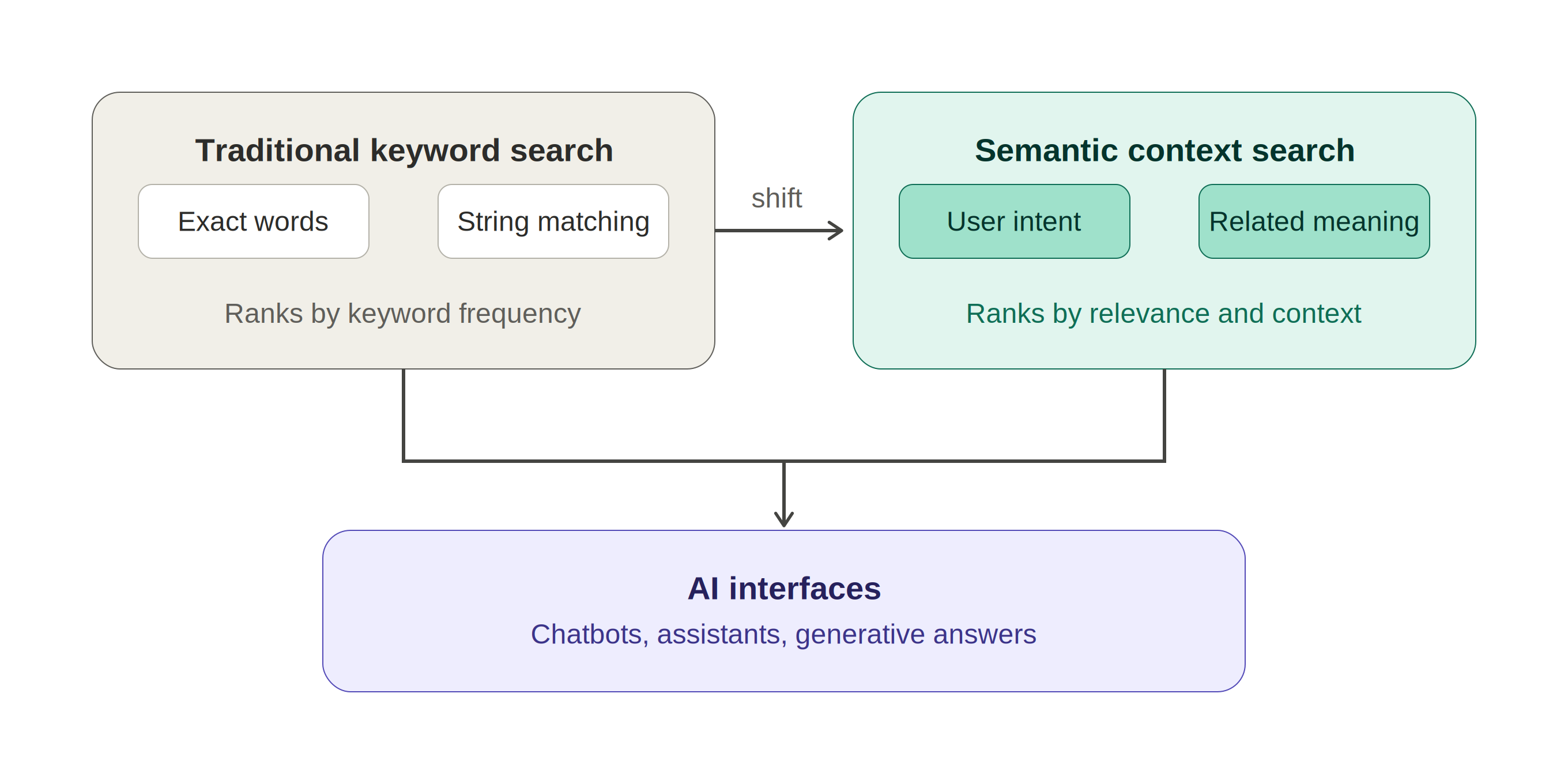
Understanding the Modern Consumer Journey and Vetting Process
To understand why search optimization is more vital than ever in an artificial intelligence world, one must examine how the modern consumer journey operates. Consumers do not make purchasing decisions in a vacuum. Whether a business is targeting medium-sized enterprises or large global brands, the modern buyer is highly sophisticated. Before making a final decision, users are actively more probable to compare multiple service offerings or product options online.
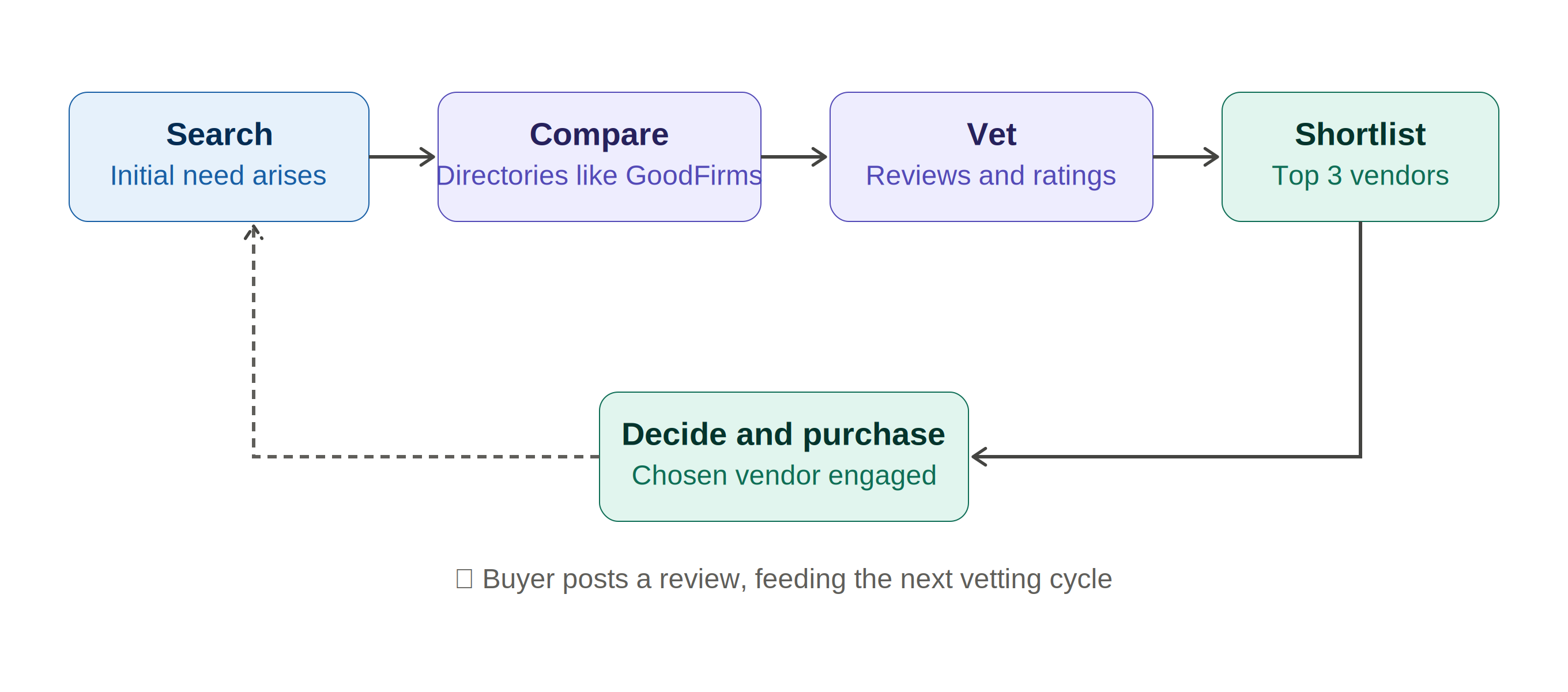
They start their research long before they ever engage with a sales representative or fill out a contact form. This research process is inherently multi-layered. A user might begin by asking an artificial intelligence chatbot for a comparative analysis of solutions within a specific vertical, such as financial management or commercial HVAC services. The chatbot synthesizes a response based on its training data and real-time web retrieval, presenting a curated selection of options. From there, the user validates those recommendations by looking at authoritative third-party platforms like GoodFirms to check peer reviews, project case studies, and corporate longevity.
This continuous loop of discovery, comparison, and third-party verification forms the modern vetting process. If your company fails to appear at the very first stage of this cycle, you are eliminated from the consideration set before the prospect even knows you exist. To win this journey, brands must ensure their digital presence is fully optimized for both artificial intelligence models and human evaluators.
This comparative behavior highlights a critical truth about modern online research: buyers are looking for consensus. They rarely rely on a single source of truth. When they use an interactive chatbot, they are looking for a summarized aggregation of the web's best opinions. If an enterprise software provider, for example, wants to attract medium-to-large brands, it must understand that these corporate buyers are performing rigorous due diligence. They look at corporate history, client testimonials, and industry standing.
Because the stakes are high, the research phase is extended, and the tendency to compare alternatives is magnified. An omnipresent digital footprint ensures that your brand appears at every single touchpoint of this extended journey, building familiarity and trust at each turn.
This reality is why Ignite Digital has built its service model around a holistic approach to online growth. Founded in 2008, our agency has spent over fifteen years navigating the evolution of search. We serve a wide net of industries, spanning far beyond simple niches into sectors like home services, finance, manufacturing, and enterprise technology.
We recognize that regardless of the industry, the core objective remains identical: businesses need to build their brand online, sell their products effectively, or capture high-value leads. By understanding the behavioral psychology of how users research and compare options online, we align our search engine optimization, paid advertisements, and web development efforts into a singular, unified engine designed to dominate both conversational search and traditional directories.
From Keyword Density to Semantic Context: What Actually Changes
Optimizing for artificial intelligence visibility requires a fundamental shift in how digital marketers approach content creation and technical structure. In the traditional paradigm, optimization often focused heavily on specific keyword frequencies and exact-match phrases designed to match rigid search algorithms.
In the age of generative answers, large language models do not merely scan for exact keyword strings; they interpret the broader semantic context, the relationships between entities, and the overall authoritativeness of the information presented. Consequently, the focus must shift from ranking for isolated keywords to ranking for complete contextual scenarios.
When a model attempts to answer a multi-layered or complex user query, it seeks out the most structured, unambiguous, and comprehensive data available on the web. This means that technical search optimization techniques, particularly structured data markup and schema, have become incredibly critical.
Schema markup provides an explicit map of your content for artificial intelligence crawlers, defining exactly what your business does, what products you offer, and how those elements relate to other concepts across the web. Without this deep technical infrastructure, an artificial intelligence crawler cannot accurately parse or reference your website, effectively excluding your brand from zero-click summaries.
To truly excel in this new landscape, businesses must rethink the architecture of their website content. It is no longer sufficient to write short, superficial articles that merely mention a product or service. Content must be deeply thorough, structured logically with hierarchical headings, and capable of answering complex, multi-turn questions.
When a user interacts with a conversational engine, their query is often conversational and full of sub-questions. For example, instead of searching for corporate tax accountant, a user might ask who are the best corporate tax accountants for mid-sized manufacturing firms with international supply chains. To be the answer to that query, your site must feature comprehensive content that addresses every layer of that specific scenario, organized in a way that machine learning models can easily ingest and summarize.
This structural clarity extends to technical health as well. Site speed, mobile responsiveness, and clean source code are not just user experience metrics; they are algorithmic prerequisites. If a crawler encounters broken links, slow response times, or messy scripts, it will prioritize alternative sources that present information cleanly. Technical search optimization serves as the language through which your website communicates with digital platforms.
By refining this language, you eliminate ambiguity and ensure that your brand is presented as the definitive authority in your space, ready to be cited as the primary answer.
To achieve true prominence within automated retrieval networks, organizations must implement a multi-layered content blueprint. This requires analyzing the specific touchpoints where algorithms gather their data.
Machine learning systems analyze lexical patterns and proximity structures to determine whether a text possesses genuine expert authority. This means that superficial thin pages are penalised, while deeply exhaustive thematic nodes are highly rewarded. Content creators must ensure that every single topic is mapped completely, leaving no unanswered structural questions that could cause a large language model to look elsewhere for validation.
Building Off-Site Consensus and AI Citations
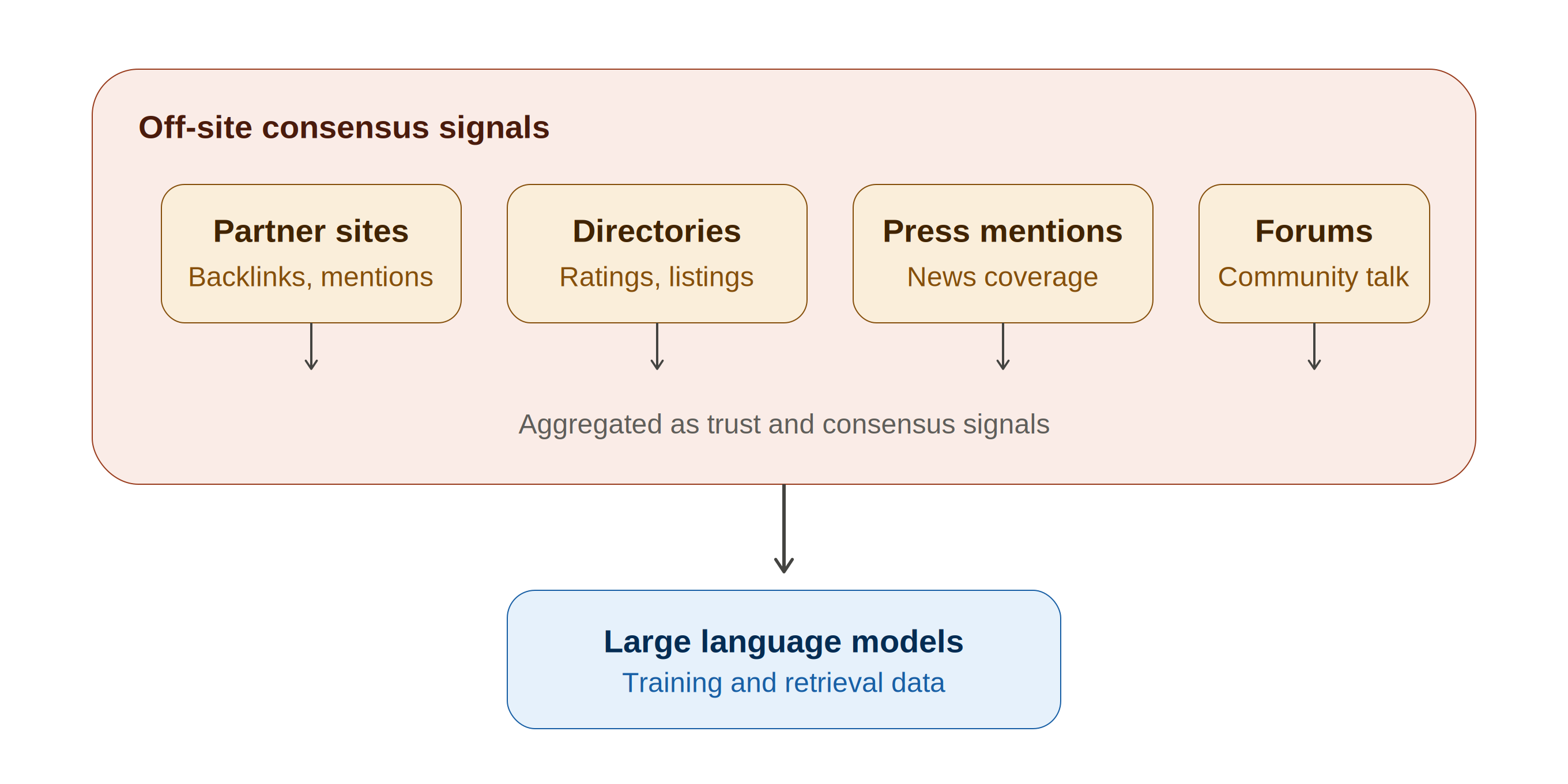
An artificial intelligence model does not formulate its recommendations based solely on what a company says about itself on its own website. Instead, it relies on a sophisticated web of off-site signals to build a consensus regarding which brands are truly authoritative. When an engine generates an overview response, it looks for external validation from trusted, high-authority entities across the internet to cross-reference and verify information.
This reality makes off-site authority building and strategic partnerships more critical than they have ever been. To secure references within artificial intelligence outputs, a business must possess a robust footprint across reputable directories, industry-specific publications, and trusted review platforms. For instance, when prospective clients vet an agency, their presence on platforms like GoodFirms serves as a powerful signal of industry authority.
Artificial intelligence models recognize these platforms as trusted repositories of consumer sentiment and corporate data. By cultivating a wide network of authoritative digital partners and maintaining a flawless reputation across third-party platforms, a company ensures that when an artificial intelligence model searches for external validation, it consistently encounters positive, aligning signals that justify referencing that specific brand.
At Ignite Digital, we have systematically developed a robust network of digital partners and industry platforms that actively reference our clients across the web. This network ensures that when an ecosystem of large language models reviews the digital space to determine which providers are legitimate, our clients receive powerful, authoritative endorsements from multiple independent directions.
This web of off-site consensus acts as a validation engine for the algorithms, providing the external proof needed to feature a brand within automated summaries and overviews. Without this external reinforcement, even the most well-optimized internal content can be passed over in favor of competitors who possess stronger external validation.
Furthermore, this off-site validation plays a dual role by simultaneously convincing the human buyer. When a corporate decision-maker reviews an artificial intelligence summary and sees a recommendation, their immediate next step is often to verify that recommendation on a trusted third-party directory.
Seeing consistent, long-standing positive reviews, detailed project breakdowns, and high industry rankings on a platform like GoodFirms removes the perceived risk of the transaction. It bridges the gap between algorithmic selection and human trust, ensuring that your digital marketing efforts are fully supported at every phase of the selection pipeline.
Proving ROI When the Traffic Signal Gets Murkier
One of the most significant challenges introduced by the rise of generative search is the apparent opacity of traditional performance metrics. For decades, digital agencies could demonstrate the value of their work by pointing directly to simple indicators like traffic increases, keyword rankings, and direct organic clicks.
As more users consume information directly within artificial intelligence interfaces without clicking through to the source website, these traditional traffic signals naturally become harder to track using standard analytics packages.
To bridge this gap and provide absolute clarity to our clients, Ignite Digital developed a proprietary tool called the AI Visibility Tool. This specialized platform allows companies to move past guesswork and directly monitor their performance within the generative ecosystem. The tool functions by tracking the specific conversational prompts that users are entering into major artificial intelligence engines and identifying exactly which prompts trigger a reference to our client's brand. Additionally, it highlights the precise external websites and landing pages from which the artificial intelligence model is drawing its reference citations. Finally, the tool provides direct, actionable recommendations on how to adjust content and technical strategies to systematically expand the brand's share of voice within these automated responses. By leveraging this technology, businesses can clearly see the tangible return on their voice search optimization investments, even in a world where the traditional click is no longer the sole measure of success.
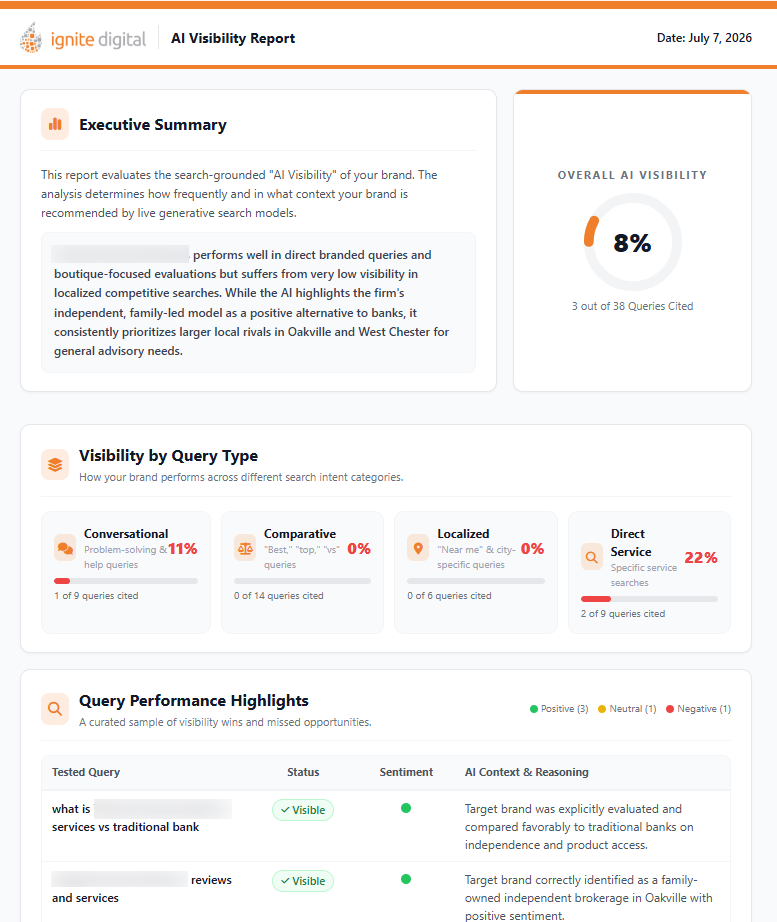
The utility of this tool cannot be overstated in an environment where traditional attribution models are failing. When a client asks how do we know our search optimization strategy is actually working if our direct organic clicks are flat, we can open the dashboard and show them the exact volume of conversational queries where their brand was featured as the primary recommendation. We can show them that they were cited in thousands of automated overviews, establishing a massive share of voice that traditional analytics completely fails to register. This level of insight transforms the reporting process from a collection of vague assumptions into a precise, data-driven strategy session.
By analyzing the specific recommendations provided by the AI Visibility Tool, our team can continuously refine a client's digital footprint. If the tool indicates that a competitor is being referenced more frequently for a particular set of enterprise prompts, it outlines the exact content gaps and structural differences that are causing the shift. This allows us to proactively update technical schema, expand existing resource guides, and deploy targeted paid campaigns to recapture that visibility. It turns the nebulous concept of artificial intelligence presence into a manageable, scalable, and highly predictable growth channel for businesses that refuse to be left behind.
Conclusion: Preparing Your Brand for the Future of Search
The evolution of search into an artificial intelligence-driven ecosystem does not represent the demise of search engine optimization; it represents its maturity. The core principles of providing high-quality, technically sound, and deeply authoritative content remain the primary mechanisms for achieving digital prominence.
As users continue to rely on automated interfaces to conduct their preliminary research and compare options, the brands that invest heavily in their foundational optimization will be the ones that the algorithms choose to trust. By integrating advanced technical schema, fostering strong external partnerships, and utilizing cutting-edge tracking tools, businesses can ensure they remain visible, authoritative, and preferred, long before the user ever makes their very first click.
As you look forward to the future of your brand's digital presence, consider the infrastructure you currently have in place. Are your web properties organized to be easily interpreted by advanced automated systems, or are you still relying on outdated strategies that focus solely on traditional search results? The landscape will continue to evolve, and the speed at which information is synthesized will only increase. Partnering with an experienced team that understands the intersection of search mechanics and machine learning is the definitive way to ensure your organization thrives in this new era.
Explore how you can elevate your digital strategy and secure your market position by visiting Ignite Digital to begin your journey toward comprehensive online dominance.
Also Read: How SEO Teams Can Thrive in the Age of AI Search.