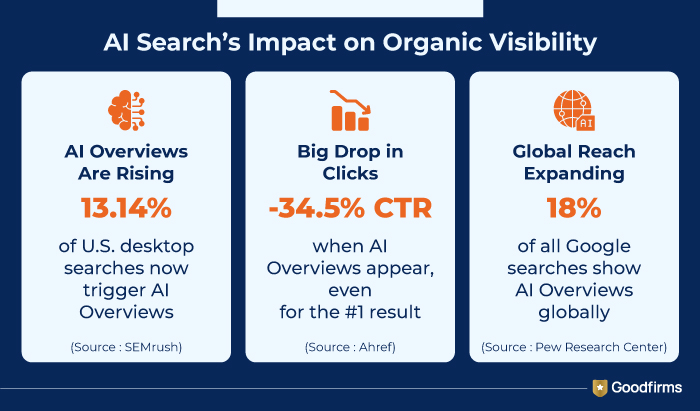
Over the past year, search has shifted in a way many SEO agencies didn’t expect. For example, in March 2025, SEMrush found that about 13.14% of U.S. desktop searches triggered what they call “AI Overviews”, summaries generated by Google that give users answers without needing to click through to a site.
When these AI Overviews appear, the click-through rate (CTR) for the first organic result drops by roughly 34.5%. That means even if you are ranking #1, you might be losing a third of your normal traffic.
And it’s not just clicks anymore. Analysis by the Pew Research Center shows that globally, about 18% of all Google searches include AI Overviews. This means nearly one in five searches may never lead directly to a website link.
So here’s the problem. If your team is still optimising only keyword rank, organic clicks, and the “top ten list,” then you are missing the boat. Search has become less about finding your website and more about being found by the AI that summarises for users.
And this change means SEO isn’t just about getting to page one. It is about being the page the AI picks, the brand the system trusts, the content the machine can easily surface.
The rules have changed. And if your team adapts early, you will be the ones ahead when the next wave of AI search features rolls in.
What’s Really Changing in Search Right Now
SEO has always changed. Be it keyword stuffing or snippets, every wave reshaped the game. But AI search? It’s different.
Now, search engines like Google use generative AI to build answers on the fly. These AI summaries blend insights from multiple sources. The credit still matters, but only to the few pages AI decides to trust.
That means ranking alone isn’t enough. You need to be citable. AI must recognize your content as a reliable source. Three big shifts stand out right now:
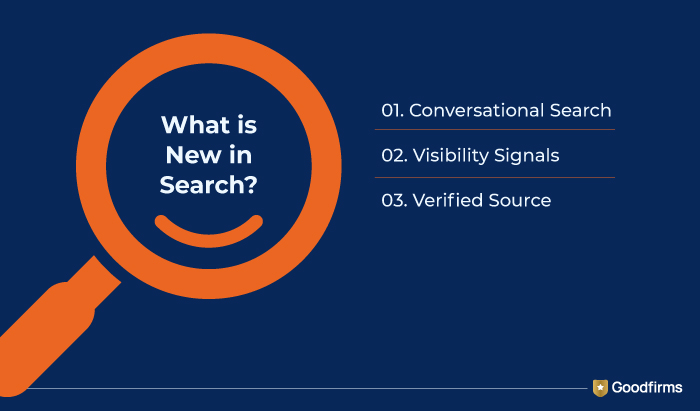
1. Conversational Search
User types longer questions and follow-ups. Instead of “best CRM software,” they ask “what’s the best CRM for small teams that use Gmail?” to which AI responds with direct advice and not just links.
2. Visibility Signals
Structured data and consistent formatting help AI understand your content. It’s no longer about stuffing keywords. It’s about clarity and authority.
3. Verified Source
AI systems reward content that looks credible. Verified authors, sources, and transparency make a real difference. Also, having consistent data across all social media platforms builds trust.
SEO teams can’t play the same old keyword game. They need to optimize for human readers and AI systems that explain things to humans.
What SEO Teams Should Stop Doing
Before we talk about what to do, let’s pause on what not to.
- Stop using AI just for content quantity. Flooding the web with bland AI text won’t help. Search engines already know how to filter it out.
- Stop optimizing only for clicks. AI results don’t always send traffic. But they still influence brand trust. Think visibility beyond clicks.
- Stop ignoring technical structure. If your pages are messy or lack proper schema, AI crawlers will skip them. Clean technical SEO matters more than ever.
What Today’s SEO Teams Should Really Focus On
The new goal for business is to be discoverable, citable, and deeply useful. Old SEO was about visibility. The new SEO is about validation. If you want AI systems to pull from your content when they answer users, the focus shifts:
- From keyword ranks to AI citations
- From traffic numbers to trust and authority
- From page count to real usefulness
Every team needs to measure success differently now. Track mentions, citations, and how often your brand appears in AI answers.
The Core Pillars of AI-Ready SEO
Here’s how modern SEO teams can thrive in this new environment. These are the core areas to focus on if you want your brand to be picked up by AI-driven results.
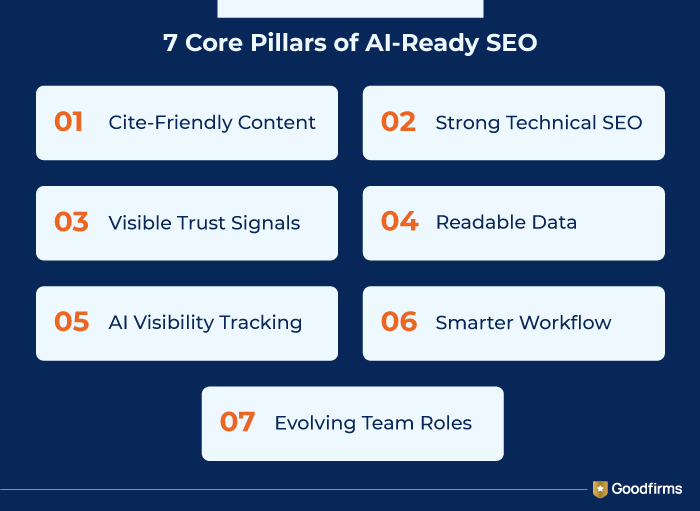
Pillar 1: Create Content That’s Easy to Cite
AI systems don’t pick vague articles. They pick clear, well-structured answers. So, start each page with a short summary that answers the user’s question directly. Keep it under 80 words. Follow it up with a deeper explanation and examples.
Add clear headers. Use factual data and labeled lists. That makes your content easier to scan and extract.
And yes, FAQs still matter. A clean Q&A section can boost your chance of being quoted inside AI summaries.
Every page should have at least one section that can stand on its own if AI decides to show it. Read more on how to master content creation for higher rankings.
Pillar 2: Strengthen Technical Foundations
No one likes technical SEO talk, but it’s the backbone here. AI crawlers rely on structure. They read your site through schema, sitemaps, and clean code. If your metadata is inconsistent or your pages load slowly, your visibility will drop in search and AI results.
Make sure your site uses structured data like “FAQ,” “HowTo,” or “Product.” Keep your sitemaps fresh. Check crawlability often.
Google’s AI systems favor pages that load quickly and display well on mobile. So, if your site feels heavy or lags on mobile, fix that first.
Pillar 3: Build Trust Signals Everywhere
AI analyzes author bios, expert quotes, and links to credible sources, all of which serve as trust indicators. Add real names to your content. Show credentials where possible.
Update pages regularly. Old data hurts trust. Add a small “Last updated” note to every key page. This helps both people and AI know your content is fresh and reliable.
Pillar 4: Make Your Data Easy to Read
AI systems love clean data. If your content is locked in fancy visuals or messy layouts, it gets ignored. So publish data in a form that machines can use. That means APIs, structured tables, and downloadable resources.
If your brand does research or runs surveys, publish the raw data too. A small CSV or JSON file can do wonders for your authority.
Add labeled charts and graphs with alt text. Keep titles clear. When AI scrapes information, these details help it read context better.
This approach does two things. It increases your chances of being cited. And it makes your content genuinely helpful for people who want to dig deeper.
Read more: How to Get AI Systems to Cite You, Not Just Rank You
Pillar 5: Track AI Visibility
Traditional SEO dashboards can no longer accurately reflect what is truly happening. You might hold a top rank, yet see less traffic. The reason is simple. AI Overviews may summarize your content without sending users to your site. So, it’s time to add new metrics.
Start tracking:
- Where your content gets quoted or cited in AI responses.
- How your brand appears in chat-based search results.
- How AI mentions affect conversions and leads.
You can do this manually or with tools that analyze generative search visibility. If you spot your content in AI summaries, celebrate that win. It means the system trusts you enough to feature your work.
And if you don’t see it yet, it just means there’s room to make your answers sharper and more structured.
Pillar 6: Build a Smarter Workflow
AI-focused SEO isn’t only about content. It’s about process. Instead of listing only target keywords, map out question clusters. What’s the main question users ask? What follow-ups come next?
That’s how AI thinks, and that’s how your team should write. While creating content, start with a short “extractable” paragraph. Then expand into the full piece. Review everything for accuracy, clarity, and structure before publishing.
Once live, check that your pages use the right schema. Make sure they are indexable and fast. Then, every month or two, refresh your top-performing pages. Keep them updated so AI keeps trusting them.
Pillar 7: Redefine Roles in the SEO Team
Old SEO teams focused on writers and link builders. The new era needs more mix. You will need someone who watches how AI systems mention your brand. A technical expert who handles schema and APIs.
An editor who checks credibility and fact accuracy.
And yes, you still need good writers. Writers who can keep content simple but credible. People who can explain a concept in one clean paragraph. This mix of skills builds a stronger presence across both traditional and AI-driven search.
12-Step Action Checklist
If you are wondering where to start, use this as your practical playbook. Each step helps your team adapt to how AI now reads, ranks, and cites your content.
1. Add a clear summary block on every key page
AI models love direct answers. Use short summaries or key takeaways near the top. They are easier for AI systems to quote or extract.
2. Use structured data for FAQs, How-Tos, and Products
Structured data helps both Google and AI assistants understand your pages faster. Check with Schema.org or Lumar.
3. Check your sitemap and fix crawl issues
A broken sitemap or blocked URLs still kill visibility, even in AI search. Use Google Search Console to check for crawl errors on a monthly basis.
4. Create short Q&A sections for your top queries
AnswerPeople and AlsoAsked can show what users are asking. Create short, fact-based Q&As to match them. AI tools often pull from these sections.
5. Improve core web vitals and mobile speed
Fast, stable pages keep users and algorithms happy. You can’t rank well if people bounce before reading.
6. Add author bios and credentials
E-E-A-T still matters. Search engines want to know who’s behind the content. Link bios to real profiles when possible.
7. Update outdated stats and references
Freshness helps AI models trust your content. Update dates, data, and screenshots at least every quarter.
8. Track AI citations for priority keywords
Tools like Surfer SEO and Semrush Sensor now show when your content appears in AI Overviews. Keep a monthly record to monitor visibility.
9. Test content versions for “extractability”
Paste your page into tools like Perplexity or ChatGPT and see what text it quotes back. If it doesn’t surface your answer, simplify or restructure your copy.
10. Create or share datasets in your niche
AI systems prefer citing data-rich, original content. Even a small dataset — like “2025 User Survey on App Retention” — can boost credibility.
11. Watch chatbots for brand mentions
Run periodic searches in AI platforms (like Gemini, ChatGPT, or Perplexity) to see if your brand is cited. This helps you gauge off-page visibility beyond Google.
12. Train your writers to write for people and AI
No jargon walls. No keyword stuffing. Use clear logic and natural flow so both readers and machines can understand you.
Each of these steps sounds simple, but together they form a powerful foundation. They help you stay visible, trustworthy, and adaptable.
Common Mistakes SEO Teams Still Make
Even with all the new tools and talk about AI search, a lot of teams are still stuck in old habits. Here are the most common ones that hold them back.
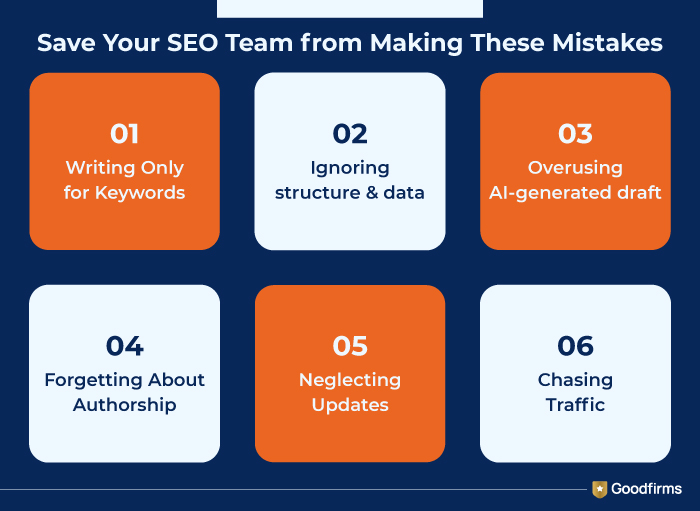
1. Writing Only for Keywords
Many teams still start with a keyword list and stop there. But AI doesn’t care about exact-match phrases. It cares about how well your content answers a question. If your content feels robotic or stuffed, it gets ignored.
2. Ignoring structure and data
Some SEO teams focus on words but skip the structure. No schema. No proper headers. No clean metadata. That’s a big mistake because AI models need organized information to understand and reuse your content.
3. Overusing AI-generated draft
AI tools can help, but only if you edit their work. Many brands push out unedited AI text that feels generic or inaccurate. That hurts both user trust and search credibility. Always review and fact-check before publishing.
4. Forgetting About Authorship
Search engines now look at who wrote the content. Pages without real names or expertise signals feel less trustworthy. Add author bios and update credentials. Let readers know there’s a real person behind the words.
5. Neglecting Updates
Outdated stats or examples tell AI your content isn’t current. Regular refreshes demonstrate that your content is up-to-date and well-maintained.
6. Chasing Traffic
This might be the biggest one. Many SEO teams still obsess over clicks and volume. But in the AI era, the true goal is credibility. When your brand becomes a trusted source, traffic follows naturally.
How to Measure Real Impact
Page visits still matter. But they aren’t the full story.
- Start tracking new kinds of metrics.
- See how often your content appears in AI summaries.
- Measure engagement for users who come through those citations.
- Watch brand searches grow. That’s proof that your content built trust.
And don’t forget user feedback. If people keep finding you credible, AI will too.
Stay Ethical and Transparent
AI-driven SEO can tempt shortcuts. Avoid mass AI content that adds no real value. Always cite your sources and verify any claims you make.
Be open about how you use AI in your content process. That honesty builds long-term credibility both with readers and search systems.
What’s Next for SEO Teams
This shift is still unfolding. The search will continue to evolve as AI learns. Teams that build trust, structure, and clarity will stay visible. The rest will fade into the background of AI noise.
So treat this change as a new opportunity, not a threat. Rethink your process. Refresh your strategy.
And make your content something both people and machines love to quote.
FAQs
1. How is AI changing the way SEO works?
AI is shifting SEO from keyword ranking to intent and authority. Search systems like Google’s AI Overviews or Perplexity now pull summarized answers directly from trusted content. That means SEO teams must focus on clarity, structured data, and credibility — not just keyword density.
2. What are AI Overviews, and why do they matter for SEO?
AI Overviews are short summaries that Google shows at the top of search results. They give users answers without needing to click links. Optimizing for them means writing clear, factual content that AI systems can easily quote.
3. Can AI replace traditional SEO?
No. AI changes the tactics, not the need for SEO. You still need a human-led strategy to identify user intent, ensure quality, and maintain brand trust. AI tools can automate certain aspects of the job, but the creative and strategic aspects remain human.
4. How can SEO teams make content more “AI-friendly”?
Focus on simple, factual answers near the top of your content. Use schema markup for structure. Keep stats current. Add author names and bios. These small things help AI engines understand and trust your content more easily.
5. How should SEO success be measured in the AI era?
Don’t just look at keyword rankings or organic clicks. Track new signals AI citations, visibility in AI Overviews, zero-click mentions, and brand references in chat-based search tools. These show whether AI systems are picking up your content.