Can an influencer with no life experiences still influence your buying decisions?
Turns out, yes.
AI influencers are quietly taking over social media feeds and 77% of brands already report better campaign performance when AI is used in influencer campaigns. They look human, post daily, and work with major brands. In some cases, influencers boost your marketing ROI and engagement than real creators.
Sounds interesting? Then this blog is for you. We will understand how top influencer marketing agencies work today. But before that, let's understand the basics.
What are AI Influencers?
AI influencers are digitally created personalities designed using artificial intelligence, computer graphics, and automation tools. They behave like social media influencers, posting content, engaging with followers, and promoting products, but they aren’t real humans.
Instead, they’re built. These AI-generated influencers can look fully human, stylized, animated, or even intentionally futuristic. Some have detailed backstories, opinions, personalities, and posting styles that stay consistent across all social platforms. In short, they are virtual creators designed to influence real audiences.
And this isn’t a niche trend anymore. The global virtual influencer market was valued at USD 6.06 billion in 2024 and is projected to reach USD 45.88 billion by 2030, growing at a CAGR of 40.8%. That kind of growth explains why brands across industries are actively investing in AI influencers.
Where are AI Influencers Used Today?
AI influencers aren’t limited to one industry or one platform. They are being used anywhere branding and storytelling matter.
Here’s where they are most commonly used right now.
- Instagram marketing and brand campaigns
- Product launches and brand ambassadors
- Content at scale (without creator burnout)
- Affiliate marketing and social commerce
Types of AI Influencers
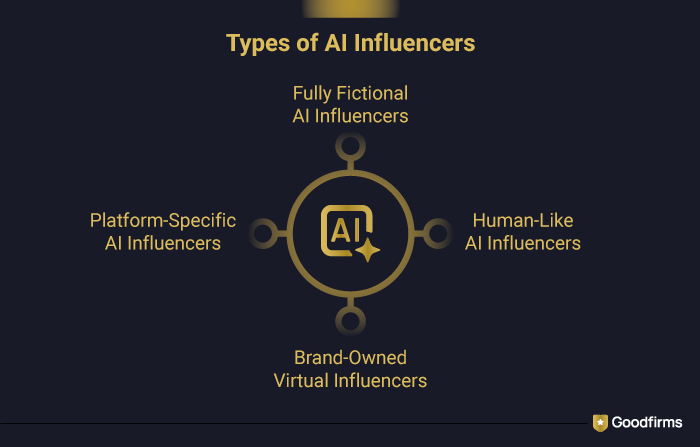
Not all AI influencers are created the same. Some are designed to feel almost human. Others are clearly fictional. And a few are built purely to represent a brand, not a personality.
Understanding the types of AI influencers helps brands and creators decide how to use them effectively.
1. Fully Fictional AI Influencers
These are the most recognizable AI-generated influencers. They don’t represent a real person. Instead, they are created from scratch with a fictional identity, personality, and story. Everything about them, from their appearance to their opinions, is carefully planned.
2. Human-Like AI Influencers
These are designed to look extremely realistic. At first glance, most people can’t tell they are AI-generated. Brands use them when they want the familiarity of a human face without the unpredictability of a real person.
3. Brand-Owned Virtual Influencers
These AI influencers exist purely to represent a brand. They don’t chase fame. They don’t build drama. They are there to deliver the message.
4. Platform-Specific AI Influencers
These AI influencers are built keeping a single social platform in mind.
Benefits of AI Influencers for Brands and Creators
So why are brands investing time and money into AI influencers instead of just working with humans?
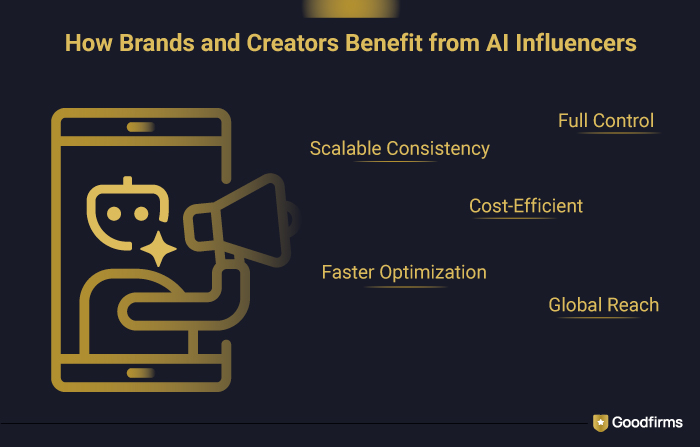
1. Full Creative Control
With AI influencers, brands control everything.
Tone.
Timing.
Visual style.
Messaging.
There’s no risk of off-brand posts, unexpected controversies, or last-minute cancellations. For companies that care deeply about brand consistency, this alone is a major win.
2. Consistency at Scale
One of the biggest challenges with influencer marketing is consistency. AI influencers don’t burn out. They don’t miss posting schedules.
This makes them ideal for brands that want daily content and long-running campaigns.
3. Cost Efficiency Over Time
While building an AI influencer may require upfront investment, the long-term costs are often lower.
This is especially appealing for startups and D2C brands exploring how to make money with AI influencers without burning their marketing budget.
4. Faster Experimentation and Optimization
AI influencers allow brands to test faster. All without waiting for a creator’s availability.
This data-driven approach helps brands understand what works, which is why many of the top AI influencers today are backed by strong performance analytics.
5. Global and Multilingual Reach
AI influencers can speak multiple languages, adapt cultural references, and localize content easily.
That makes them powerful for global brands looking to scale without managing dozens of regional creators.
Top AI Influencers You Might Be Following
Here are the top influencers you have seen in your feed or are already following.
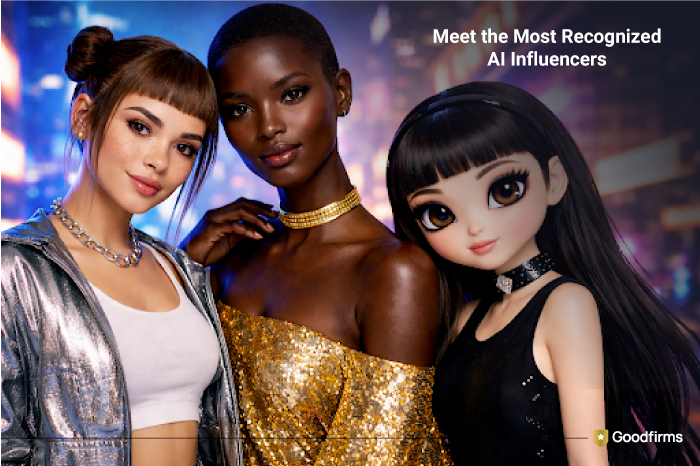
1. Lil Miquela
Lil Miquela looks human. Sounds human. Posts like a human. But she’s completely AI-generated.
She’s worked with luxury brands, fashion labels, global campaigns, and has 2.3 million followers on Instagram. She’s one of the strongest examples of how far AI influencers on Instagram can go.
If you are interested in learning more about Instagram influencer marketing, you can read this blog as it describes everything from benefits to cost.
2. Shudu
Shudu is often described as the world’s first digital supermodel and has 238K followers on Instagram.
High-fashion visuals. Clean aesthetics. Minimal captions. She fits perfectly into luxury branding.
3. Noonoouri
One thing that makes Noonoouri different from others is that she doesn’t try to look real. And that’s the point.
She collaborates with fashion and beauty brands and connects especially well with younger audiences with 480K followers on Instagram.
Noonoouri is a good reminder that AI influencers don’t always need hyper-realism to perform. Her audience still loves her for the content she shares.
List can go on. Most of these AI influencers are present on X/LinkedIn as well. However, there presence is less prominent on those platforms. These platforms might pick up in the upcoming future.
How are AI Influencers Created?
Let us understand what it takes to create an AI influencer.
Step 1: Define the influencer before you build it
You need clarity on:
- Personality (friendly, bold, educational, sarcastic, polished)
- Niche (fashion, tech, marketing, fitness, lifestyle)
- Target audience
- Platform focus (Instagram, X, LinkedIn)
Step 2: Create the visual identity
This includes:
- Face and body style
- Fashion preferences
- Color palette
- Pose and expression consistency
Either your AI influencer is hyper-realistic or animated.
Step 3: Decide how content will be created
You need a system for captions, posts, comments, storylines, etc. Most AI influencers today use a mix of AI-assisted writing, human editing, pre-approved brand tone guidelines, and more. This keeps content natural and avoids robotic repetition.
Step 4: Choose the right platform strategy
Influencers behave differently depending on the platform. Finalize the platform first as it will help you narrow down on the topics and the type of content.
Step 5: Automate
Yes, AI influencers can be automated. But fully hands-off accounts miss the spark. And so human intervention is a must. The balance of manual and automation is what makes AI influencers sustainable instead of gimmicky.
Top AI Influencer Generators and Tools
Let’s clear something up first. There is no single button that says Create AI influencer → Go viral
In reality, brands and creators use a combination of tools to build, manage, and scale AI influencers. The right setup depends on how realistic you want the influencer to look and how much control you need.
Here are some of the most commonly used AI influencer generators.
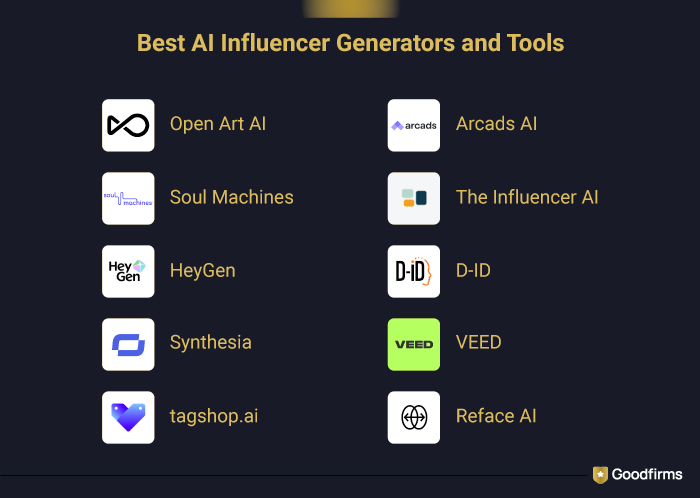
1. Open Art AI
2. Soul Machines
3. HeyGen
4. Synthesia
5. tagshop.ai
6. Arcads AI
7. The Influencer AI
8. D-ID
9. VEED
10. Reface AI
How Do AI Influencers Make Money?
People see AI influencers everywhere and the first real question kicks in. How do AI influencers make money? Let’s break it down.
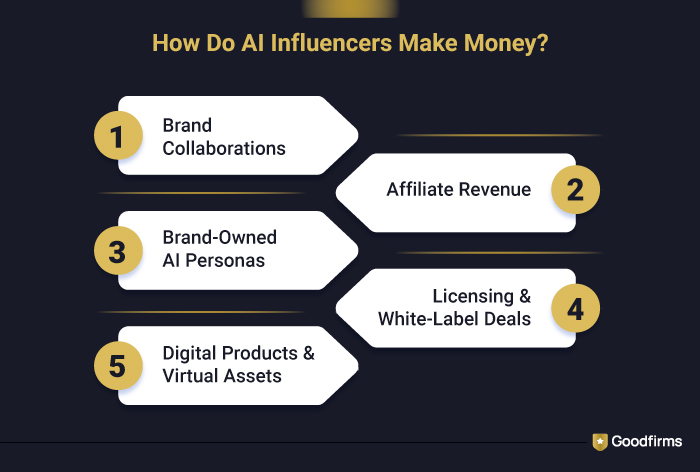
1. Sponsored Brand Collaborations
This is the most common revenue stream. Brands pay AI influencers to promote their products or services.
From the brand’s perspective, this is appealing. They get predictable content, full creative control, and zero risk of influencer drama.
2. Affiliate Marketing
Affiliate marketing works especially well for AI influencers because their content is structured and repeatable.
Each post includes a trackable link or affiliate link. They earn commission on every sale.
This is often the starting point for creators exploring how to make money with AI influencers without waiting for big brand deals.
3. Brand-Owned AI Influencers
Not all AI influencers are meant to earn directly. Many are built to increase brand awareness and support product launches to drive traffic and conversions.
This model is especially popular with ecommerce and SaaS companies using AI influencers as long-term digital ambassadors.
4. Licensing and White-Label Use
Some AI influencers are licensed. One company creates the AI influencer and other brands pay to use that persona in campaigns.
This works well for agencies, creative studios, and marketing teams building AI assets at scale. It is a very profitable way of monetization.
5. Digital Products and Virtual Assets
Some AI influencers sell digital merchandise, virtual fashion, and exclusive content. This model works best when the AI influencer has a strong personality and loyal following.
How Much Do AI Influencers Make?
Smaller or newer AI influencers usually make around $500 to $2,000 per month. These earning is mostly through affiliate links and small brand deals.
Mid-level AI influencers can earn $5,000 to $20,000+ a month. While top AI influencers bring in tens of thousands per sponsored post.
In some cases, they earn millions annually through long-term partnerships.
Like human creators, income depends on niche, engagement, and how well the influencer is positioned.
Limitations, Controversies, and Criticisms of AI Influencers
Let’s talk about the uncomfortable parts where many AI influencer projects fail.
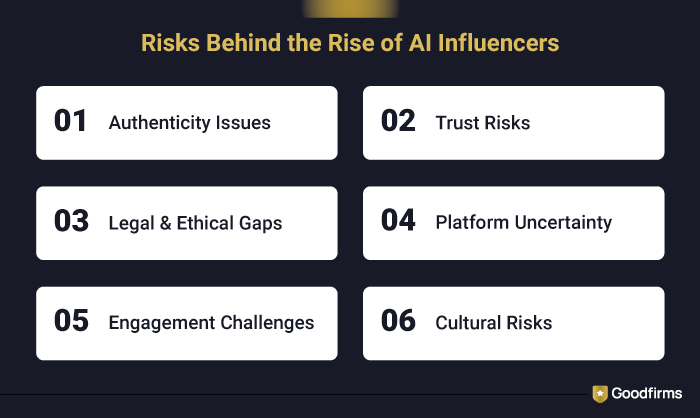
1. Authenticity Still Matters
This is the biggest criticism. People follow influencers when they feel connected. But,
- AI influencers don’t have real lives.
- They don’t feel emotions.
- They don’t experience failure.
And audiences know that.
That’s why some users feel disconnected once they realize an influencer is AI-generated.
2. Trust Can Break Quickly
Trust is fragile. If people feel tricked into believing an AI influencer was human, backlash follows when reality comes out. Comments will turn negative and slowly credibility drops.
3. Ethical and Legal Gray Areas
Honesty, transparency and authenticity is very much important from ethics and legal point of view. Disclosing the reality is a must to build trust of your followers.
4. Platform Rules are Still Catching Up
Social platforms weren’t built for AI influencers originally. Rules around disclosure are still evolving. An AI influencer that performs well today could face restrictions tomorrow if platforms tighten guidelines. This uncertainty is something brands often underestimate.
5. Engagement Isn’t Guaranteed
Plenty of AI-generated influencers fail because of weak content and strategy. When the content is repetitive and the personality is not well thought off, output will not convert as expected.
6. Cultural and Social Sensitivity Risks
AI influencers operate at scale. That means more risk for mistakes.
A poorly generated post, or a misinterpreted visual can quickly create backlash across regions and cultures.
The Future of AI Influencers
So, are AI influencers just another trend?
Short answer. No.
But they are evolving fast.
What we’re seeing now is only the early version. AI influencers will become more specialized in future.
The next wave won’t be about being everywhere. It’ll be about being useful. Brands will own more AI influencers. Right now, many AI influencers feel like creators. That will change.
More brands will build their own AI influencers instead of renting attention from others. These influencers will be seen on their websites, apps, social media, Ads, etc.
FAQs
What are AI influencers?
AI influencers are digitally created personalities designed using artificial intelligence and visual generation tools. They act like social media influencers by posting content, engaging audiences, and promoting brands, without being real humans.
How do AI influencers make money?
AI influencers make money through sponsored posts, affiliate marketing, brand licensing, brand-owned campaigns, etc., where they act as long-term ambassadors.
How much money do AI influencers make?
Earnings vary widely. Smaller AI influencers may earn a few hundred dollars per month, while top AI influencers can generate tens of thousands per month through brand partnerships and licensing deals.
Where are AI influencers used the most?
AI influencers are most commonly used on Instagram, X (Twitter), and LinkedIn. Instagram remains the strongest platform due to its visual-first nature.
Are AI influencers legal?
Yes, but legality depends on how they’re created and used. Issues like consent, likeness rights, disclosure, and sponsored content rules must be handled carefully.
Are AI influencers a trend or here to stay?
AI influencers are here to stay, but only those built with purpose, transparency, and value will last long-term.