AI is no longer a trend; it is an integral part of the Middle East's retail ecosystem.
Whether it is a smart mall in Dubai or an omnichannel retail chain in Saudi Arabia, AI is powering the retail market with super efficiency and customer engagement, ultimately driving unprecedented growth.
AI and its subsets, like Machine Learning, Natural Language Processing, deep learning, Generative AI, and more, have become deeply woven threads in the fabric of retail technology.
Backed by skilled AI developers, retailers in the Middle East are introducing immersive virtual try-ons, intelligent chatbots, personalized recommendations, and many other innovations that are contributing to incredible shopping experiences.
According to a recent report, 76% of large retailers in the Middle East have already integrated AI to streamline operations and enhance customer experiences.
The adoption rate of AI in retail in the UAE and the Middle East is on a higher side because retailers in these regions are benefiting in terms of reduced operational friction and improved customer insights, which is enabling them to build resilient, future-ready business models.
Therefore, in this rapidly evolving retail landscape, driven by highly tech-savvy consumers, it is imperative for businesses to understand how AI in retail is shaping the Middle East.
So, what are we waiting for? Let’s have a look at these 10 most prominent game-changing ways AI in retail is shaping the Middle East and preparing it for fierce global competition.
#1 Hyper-Personalization is Enhancing Customer Experiences
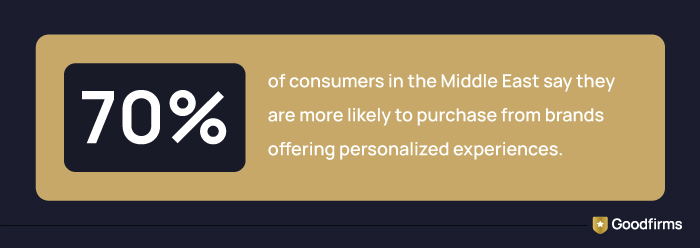
AI models have the capability to analyze data from buyers’ browsing behaviors, omnichannel interactions, and purchase history to personalize content, recommendations, and offers for each store visitor on a real-time basis. Be it product discovery, recommendations, prices, or loyalty rewards, all aspects of the store are personalized as per the individual’s location and preferences. In the Middle East’s rapidly changing retail landscape, this hyper-personalization powered by AI is not only impacting clicks and short-term conversions but also improving customer lifetime value (CLV), which can drive long-term success for retail stores.
(Source: Research And Markets)
#2 Conversational Commerce in Local Languages is Improving Communication
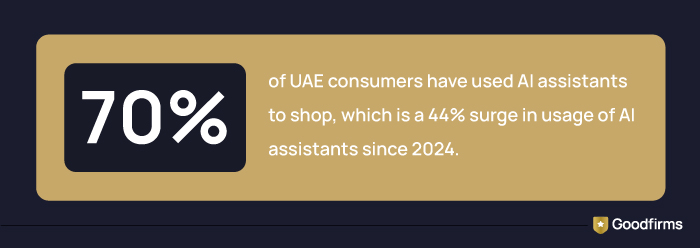
Whether it is Arabic in the UAE, Khaleeji in the Gulf, or Levantine in Egyptian variants, chatbots, Generative AI agents, and voice assistants are being trained for communicating in local languages prevailing in the Middle East. The top Generative AI companies are helping retailers to adopt AI, empowering them to improve communication that leads to better customer engagement, driving considerable business outcomes. Using AI assistants to provide localized language support is enabling retailers in the Middle East to deliver 24/7 multilingual support that reflects cultural and linguistic nuances, reduce workload on human agents, and strengthen customer loyalty.
(Source: Middle East AI News)
#3 Advanced Demand Forecasting and Inventory Optimization is Boosting Efficiency
In the Middle East, cultural events like Eid, Ramadan, White Friday Sales, and other local festivals can dramatically shift customer behavior. Besides these festivals, there are other market trends and factors, such as digital adoption, social media influence, price sensitivity, brand reputation, and more. This makes it highly imperative for businesses to forecast brand in advance and optimize inventory accordingly. AI-driven inventory optimization and demand forecasting can provide real-time data on factors like competitor pricing, latest trends, social impact, and more, helping you make the right decisions and avoid costly stockouts and overstock situations.

(Source: Logistics Middle East)
#4 AI-Powered Frictionless Shopping
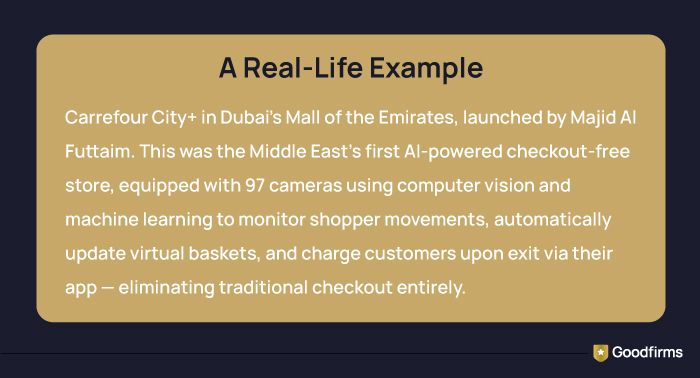
Retailers in the Middle East are deploying AI-powered computer vision and sensors to enable checkout-free shopping experiences in their stores. Combining several cameras, in-store sensors, and advanced AI solutions enables stores to identify the products that shoppers add to their cart and trigger automatic payments without the hassle of managing traditional checkout counters. This helps stores in reducing queues and allows shoppers to save time and gain a frictionless shopping experience.
#5 Dynamic Pricing Models Strengthen Competitive Advantage
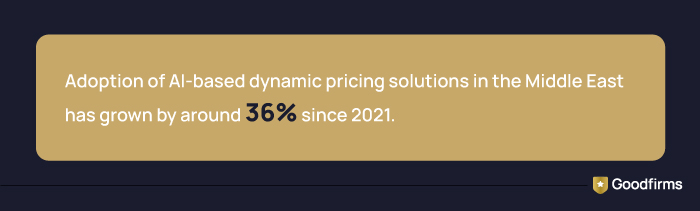
AI algorithms are being used by retailers in the Middle East to continuously monitor real-time market demand, competitor pricing fluctuations, inventory levels, seasonal impacts on sales, and localized consumer behaviour to tweak product prices. This helps them to respond promptly to demand and pricing fluctuations during festival seasons, or any other change in market conditions, and buyers’ preferences. AI-powered dynamic pricing models are replacing traditional static pricing methods, gradually becoming a core competitive strategy for Middle East retailers.
(Source: Industry Research)
#6 Visual Search & Social Commerce Integration Redefine Product Discovery
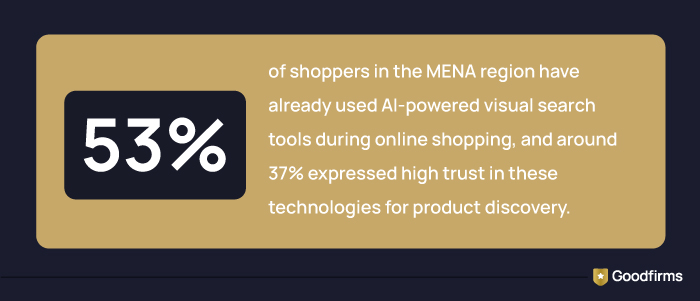
Online retailers in the Middle East are integrating AI-enabled visual search tools that enable consumers to upload images to discover exact or similar products instantly. This helps in improving customer experiences, leading to accelerated sales. Also, social commerce integration in online shopping is rapidly transforming the way consumers in the Middle East are looking for products and making purchases. With the popularity of Instagram and Snapchat, retailers are benefiting from social media integration to a great extent.
(Source: Consultancy-me.com)
#7 Smart Logistics & Last-Mile Optimization Accelerate Order Fulfillment Performance
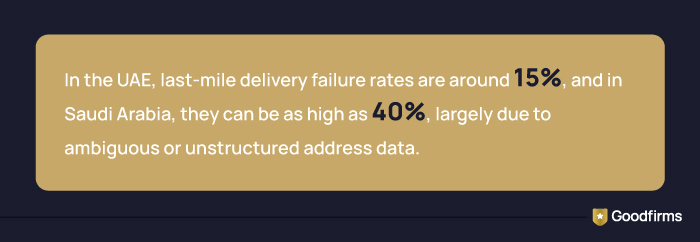
Smart logistics has become highly imperative for eCommerce businesses in the Middle East, as this region is facing challenges like failed deliveries and route planning issues due to unstructured addresses. Last-mile delivery is a central strategic challenge that Middle East retailers need to overcome, as it costs them up to half of their total logistics expenses. AI-powered logistics technologies backed by machine learning, advanced routing algorithms, and real-time tracking are helping retailers in the Middle East to optimize last-mile deliveries, reduce transit times, and reduce operational costs.
(Source: Logistics Middle East)
#8 Operational Efficiency & Supply Chain AI Mitigate Risks
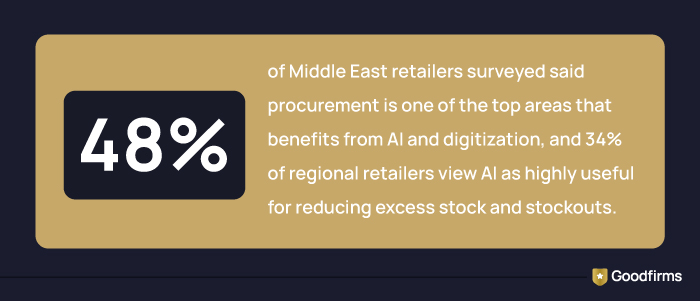
For Middle Eastern retailers, AI-powered solutions are helping them to overcome the challenges relating to their operations and supply chain. Especially when the competition is getting fierce in the retail industry around the globe, AI is being adopted by successful giants in this industry for inventory management, procurement and fulfillment, supply chain planning, shelf replenishment, and everything in between that requires making quick product deliveries happen and delight customers. Operations and supply chain management in retail were traditionally manual processes that were highly prone to errors. With the use of AI, retailers in the Middle East are now able to improve efficiencies and perform flawless deliveries to their customers.
(Source: Arabian Business)
#9 Fraud Detection & Security Support Trust-Driven Sales
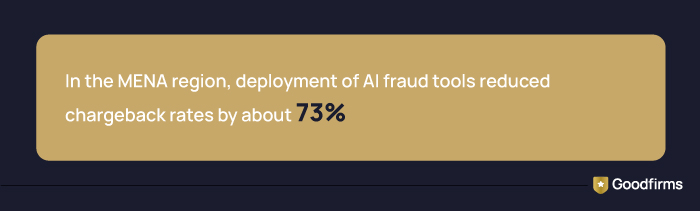
As the use of AI increases to enhance every facet of retail like operations, marketing, customer service, inventory management, etc., so do opportunities for fraudsters accelerate. This makes it critical for retailers in the Middle East to adopt AI for fraud detection & security. In the retail industry, it is highly critical to protect customers’ credentials to prevent chargeback abuse and transaction laundering. Traditional tools are not sufficient to prevent advanced fraud tactics that are exploiting the Middle Eastern retail market's profits. Therefore, it has become imperative to use AI-powered security tools to secure customer details and collect payments without any risk.
(Source: Cleeng)
#10 Sustainability & Waste Reduction Elevate Brand Image
Middle Eastern retailers are not only using AI to improve profits but also to achieve their sustainability goals, like reducing carbon footprints across supply chains and operations, reducing waste, and optimizing resource utilization. AI tools for predictive analytics, forecasting demands, and smart distribution support responsible consumption, which helps retail businesses in the Middle East to achieve their sustainability goals along with profitability goals. In the Middle East, AI is becoming a strategic sustainability enabler, helping retailers reduce waste, cut emissions, and improve overall supply-chain efficiency — all while meeting rising consumer expectations for sustainability and supporting national development goals around environmental responsibility.
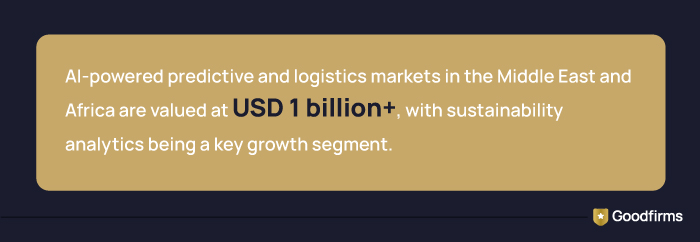
(Source: Grand View Research)
Conclusion: Is AI in Retail Middle East Driving Success for eCommerce Businesses?
AI in Retail Middle East is no longer a future implementation. It is a current growth driver that is shaping the success of eCommerce businesses across the region. From hyper-personalized shopping journeys and dynamic pricing to smart logistics, fraud prevention, and sustainability initiatives, the best retail & eCommerce AI companies are enabling businesses to operate faster, smarter, and at greater scale. In highly competitive markets like the UAE and Saudi Arabia, where consumers expect speed, relevance, and seamless digital experiences, AI has become essential rather than optional.
Be it a retail business in the UAE or any other region of the Middle East, AI is empowering them in terms of smart decision-making when it comes to anticipating demand, reducing waste, optimizing pricing, and delivering highly personalized customer experiences. As AI adoption in the Middle East continues to mature, retailers that invest strategically in AI capabilities will be better positioned to differentiate, scale sustainably, and win long-term customer loyalty. AI is not just driving eCommerce success in the UAE and the entire Middle East; it is also redefining the next era of retail competitiveness in these regions.