Building AI-powered workflows is easy. Making them work in production is not.
The data proves it. While over 90% of global companies plan to increase AI investment, most fail to generate meaningful returns. The gap isn’t because of weak models or lack of platforms. It’s because teams aren’t equipped to turn automation into something reliable, scalable and accountable.
AI workflow automation only delivers value when built by engineers who understand systems, trade-offs and business constraints. More than just prompts and demos.
This guide is about exactly that:
- Why AI-first software engineers matter more than AI tools.
- What actually separates strong candidates from inflated profiles.
- Where to hire when automation is business-critical.
But first, let’s define what we mean by workflow automation.
What Workflow Automation Actually Is (And What It Isn’t)
Workflow automation is not using ChatGPT to write emails or summarizing tickets faster.
In real organizations, it means embedding intelligence into processes so decisions, routing, predictions and actions happen with minimal manual intervention (and improve over time).
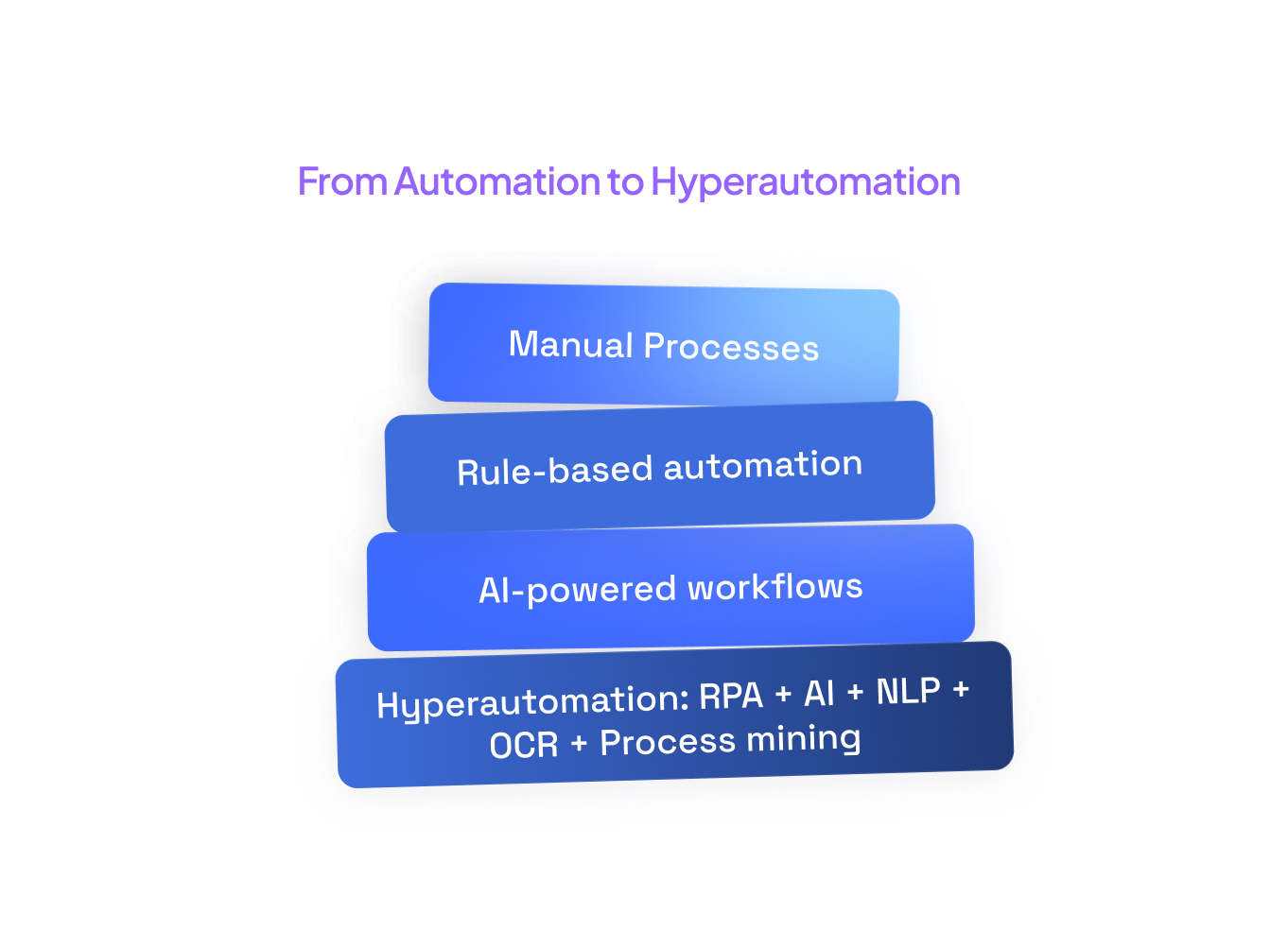
Unlike traditional automation based on static rules, AI-driven workflows adapt. They learn from historical data, handle ambiguity and integrate across multiple systems that were never designed to talk to each other.
Let’s see a few examples:
| Finance Teams | Using anomaly detection to flag irregular transactions before audits catch them. |
| Customer Support | Routing tickets by intent and sentiment, not keywords. |
| HR Workflows | Automating accounts creation, compliance validation and onboarding steps. |
| Recruitment Pipelines | Sourcing and ranking candidates across platforms in seconds. |
| Supply Chains | Forecasting demand in a dynamic way instead of relying on fixed planning cycles. |
The benefits are clear. You not only reduce processing times but also minimize human error by leveraging AI models that detect anomalies invisible to manual review. At the same time, automation allows employees to focus on higher-value, creative and strategic work.
This is part of a broader trend most companies are already experiencing. Even if they don’t call it by name.
Hyperautomation: Why It’s Becoming the New Normal
Hyperautomation is what happens when automation stops being a side project and becomes an operating model.
Instead of optimizing individual tasks, hyperautomation connects workflows across departments using a mix of technologies:
- Robotic Process Automation (RPA).
- Artificial Intelligence & Machine Learning.
- Natural Language Processing (NLP).
- Optical Character Recognition (OCR).
- Process & Task Mining.
- Low-code/No-code Platforms.
- Decision Orchestration.
On paper, it sounds elegant. In reality, it’s messy.
The first time hyperautomation touches legacy systems, unclear data ownership or conflicting KPIs, things break. That’s normal. What matters is whether the team building it knows how to diagnose, iterate and stabilize those systems.
That’s why hyperautomation is more about people. Companies adopting it successfully hire engineers who can design end-to-end workflows, monitor them in production and evolve them without introducing risk.
Why AI-First Software Engineers Make the Difference
Buying AI tools without the right engineers is like buying a race car without a driver. The horsepower is there. Control isn’t.
AI-first engineers differ from traditional software engineers in one critical way: they treat AI as part of the system, not an add-on.
They understand:
- Where AI should make decisions and where it shouldn’t.
- How to evaluate model output instead of trusting it blindly.
- How automation affects compliance, security and reliability.
- When speed creates risk instead of value.
According to a recent report by the AI Workforce Consortium, most technical roles now require some level of AI fluency. Yet there’s a clear shortage of engineers who can work responsibly with LLMs, automation pipelines and AI-enabled systems.
Companies that ignore this reality just move slower and accumulate operational and reputational risk.
.jpg)
BEON.tech Case Study: AI-First Engineering in Practice
One of BEON.tech’s healthtech clients shows what this looks like when done well.
The company partnered with a cross-functional team of 14+ AI-first engineers working across techs like PHP and Node.js. AI was embedded into the software development lifecycle.
Tools like Cursor and Claude supported planning, implementation and iteration. Engineers were responsible for reviewing decisions, validation logic and maintaining consistency across the product.
In just two months, the team built and shipped the first version of a drag-and-drop website builder. To be precise, comparable in scope to launching a no-code platform from scratch.
The results were concrete:
- 30,000+ production code changes in 60 days.
- 40% increase in engineering velocity.
- More predictable delivery and less backlog spillover.
The takeaway is simple: AI amplified strong engineering practices.
What to Look For When Hiring AI-First Engineers
Strong candidates show patterns beyond tools and buzzwords.
- System-Level Thinking. They understand how individual components impact the whole workflow. That is: performance, reliability, compliance, user impact.
- Production Experience. Demos don’t count. Look for engineers who’ve owned systems after launch, handled failures, and improved automation over real constraints.
- Technical Range. AI skills matter, but so do cloud infrastructure, data pipelines and architectural trade-offs. Specialists who can’t collaborate across layers slow teams down.
- Clear Communication. The best engineers can explain trade-offs to non-technical stakeholders and push back when automation doesn’t make sense.
- Learning Discipline. AI evolves fast. Engineers who don’t continuously update how they work become liabilities quickly.
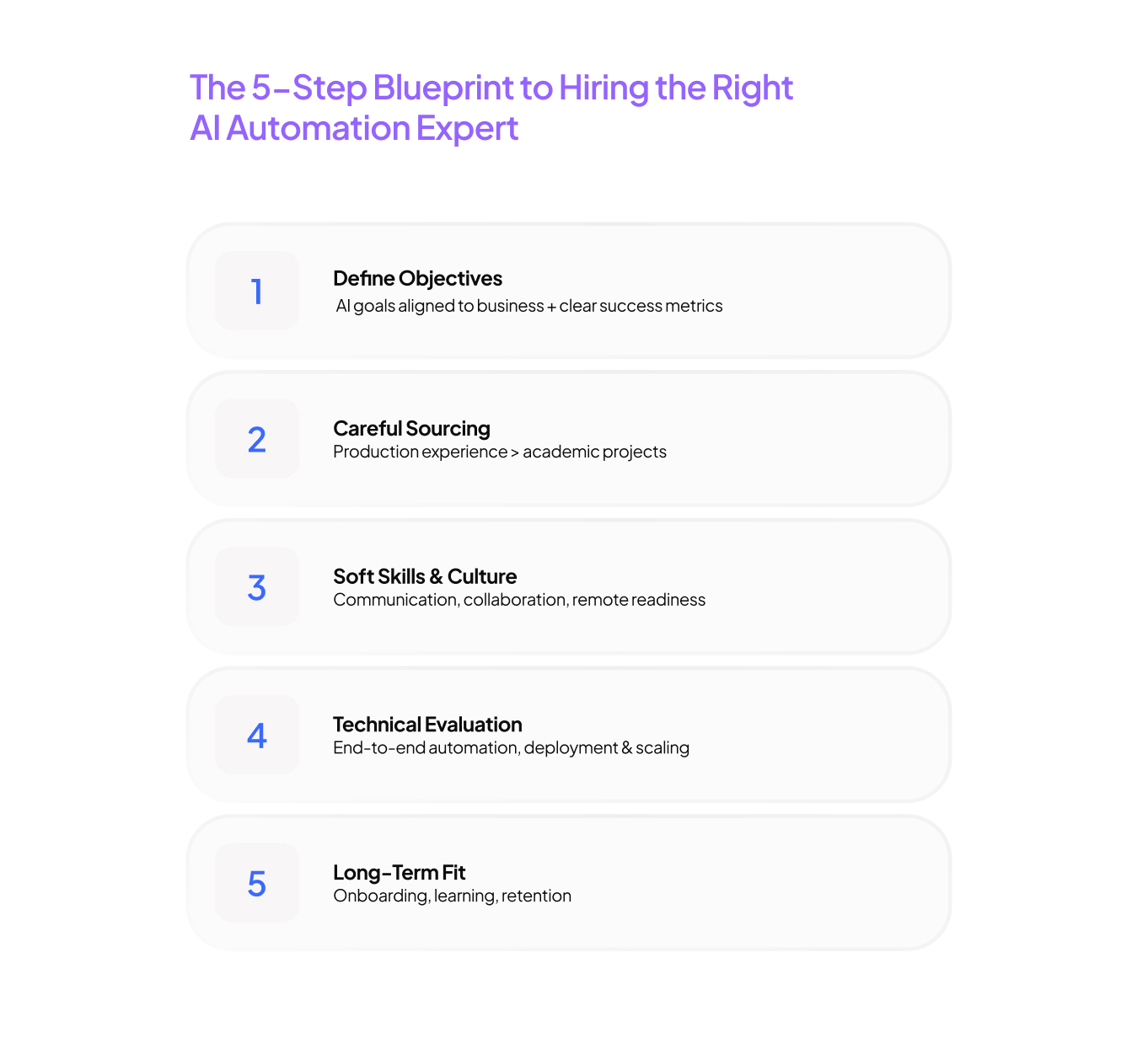
Five Practical Steps to Hire the Right AI Engineers
Step #1. Define Where AI Actually Helps
Start with workflows, not roles. Identify processes where automation reduces work, cost or latency.
Be explicit about responsibilities:
- AI Engineers build and deploy automation pipelines.
- Data Scientists focus on experimentation and modeling.
- ML Engineers optimize and scale models.
Clarity here prevents expensive mis-hires.
Step #2. Source With Skepticism
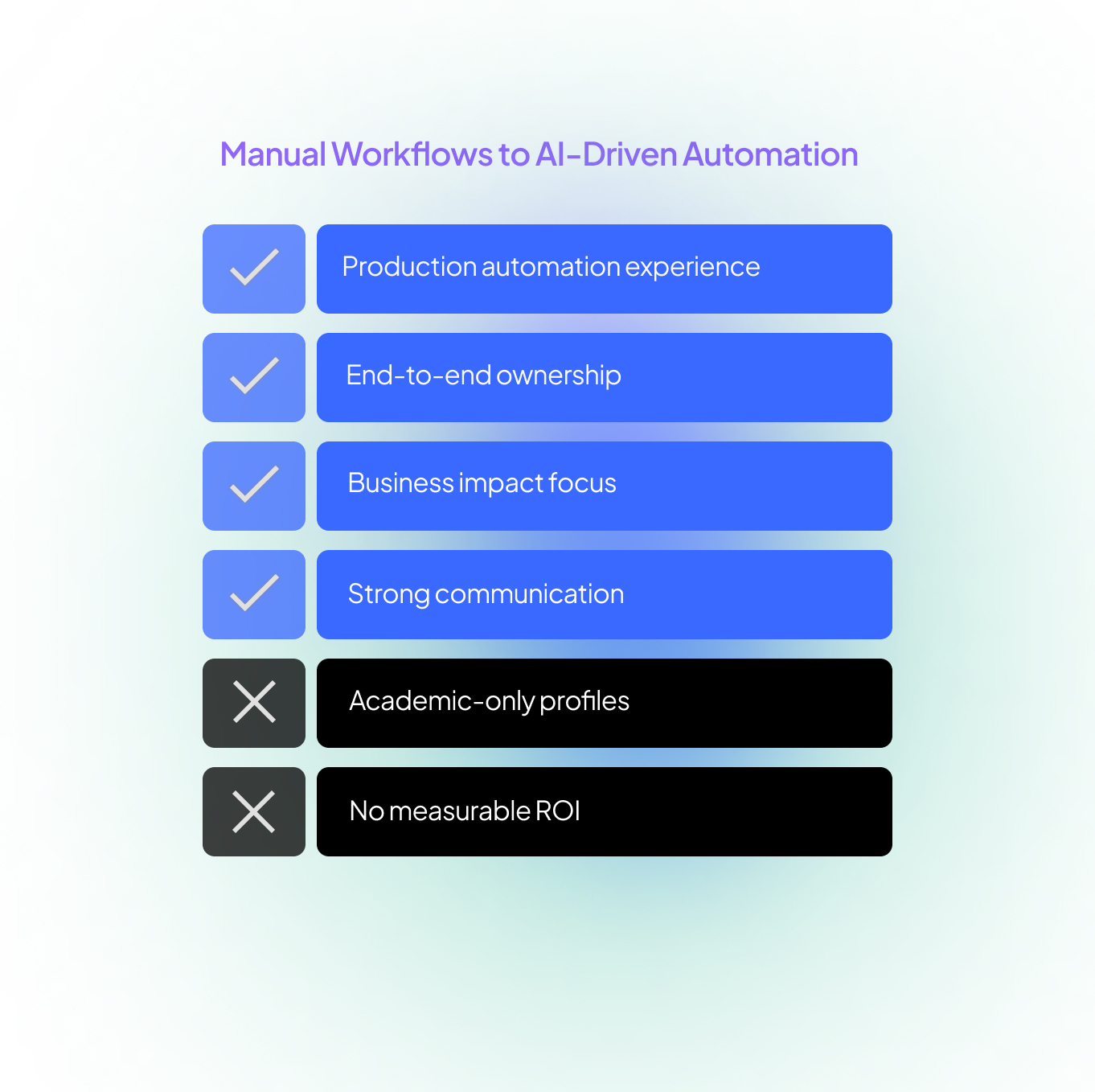
Prioritize candidates with production deployments and measurable outcomes. Certifications help, but impact matters more.
Red flags include academic-only portfolios, vague metrics or automation that never left the pilot phase.
Step #3. Assess Soft Skills and Cultural Fit
Automation forces trade-offs. Strong candidates can articulate them.
Assess how engineers explain decisions, adapt to feedback and collaborate asynchronously. This is especially important in distributed teams.
LATAM engineers, especially those working in nearshore models, often operate in US time zones and are accustomed to agile delivery in cross-border settings, giving them a cultural and logistical edge for global teams.
Step #4. Evaluate Technical Expertise
Don’t stop at theory. The best evaluations test applied skills: integrations, pipeline deployment, monitoring and scaling. Use workflow challenges that mirror your real bottlenecks, for example, auto-routing support tickets with NLP or building a demand forecast pipeline with noisy supply chain data.
Coding tests should verify not only correctness but also reproducibility and system thinking. Pair interviews with work samples to ensure candidates can execute end-to-end, not just theorize..
Step #5. Set Up for Long-Term Success
Hiring doesn’t stop with a contract. Clear onboarding, mentorship and 30/60/90 plans are key.
For nearshore teams, ensure compliance, payroll clarity and benefits through EOR or trusted staffing partners.
Retention is built through feedback, growth paths and realistic expectations.
Where to Find AI-First Engineers (And When Each Option Works)
The search for AI-first engineers today offers executives a range of choices, each with its own trade-offs. Here are the most common ones:
- Freelance platforms & professional networks
- Staff augmentation agencies
- Marketplaces
- Referral programs
- Webinars & meetups
Let’s dive in.
Freelance Platforms & Networks: Fast, Cheap & Risky
Freelance platforms like Upwork and professional networks like LinkedIn promise speed and a large talent pool, but they also come with big risks, like:
- Unvetted profiles.
- Portfolios may not have production experience.
- Reliability can be inconsistent.
It’s a gamble you can’t afford when automating critical workflows.
Staff Augmentation Agencies: More Expensive, More Reliable
A more reliable path is staff augmentation partners, companies that connect pre-vetted candidates with enterprises that need hires.
This is particularly good for those looking for nearshoring prospects in LATAM with its time-zone alignment, cultural affinity and bilingual populations. This will give you the means to scale fast while still meeting your standards.
You can choose between long-term partnerships (where they handle the whole talent experience) or direct hiring. However, these services can be pricey if you’re on a tight budget.
Marketplaces: Useful for Benchmarking Providers
Now, if you want to see the broader market, there are marketplaces that allow you to explore and benchmark different providers by specialization and track record. These include:
- Websites and phone numbers
- Engagement models
- Technologies
- Pricing
- Portfolios
Still, due diligence is required: not every vendor advertising automation expertise can operate at enterprise scale or integrate across complex workflows.
Referral programs: Best for Deep Team Integration
Do you want to handle it internally? Don’t worry. It’s not 100% necessary to hire an external consultant to find the best AI talent. Referral programs are an increasingly popular option among companies and for good reason.
Referral programs are where you offer your employees a bonus if they refer an ideal candidate who gets hired. This not only engages your employees but also gets your top performers to vouch for someone they trust completely. Sure, you’ll still need a solid HR team to evaluate talent accurately but you already have that vote of confidence from the person who recommended them.
Webinars & Meetups: Great for Building Future Pipelines
AI-first engineers often show up through webinars or meetups organized by your company itself. And in a world where AI engineering is the hottest topic around, sharing professional knowledge ends up being a real magnet for enthusiasts.
If you have a marketing team willing to focus their campaigns on finding the talent you need, these types of meetings can connect you with seriously promising candidates. Just keep in mind – this mainly works if you’re looking for semi-senior talent. When you’re looking for seniors, you need to roll up your sleeves and get strategic with your sourcing game.
Ultimately, you’ll find yourself needing to balance speed, quality and reliability. When automating critical workflows, the safe bet is rarely the fastest option. Don’t be afraid to invest in vetted, long-term talent with the technical and cultural alignment to deliver results.
Conclusion
As you can see, AI workflow automation is no longer optional. But success isn’t guaranteed.
The difference between stalled initiatives and measurable impact usually comes down to hiring. Teams that treat AI talent as a long-term investment, prioritize system thinking and hire with skepticism outperform those chasing shortcuts.
Tools matter. Engineers matter more.
The companies that win with AI are the ones building teams that can make automation work when things get complex, messy and real.