Key takeaways
- Agencies can outsource to expand their SEO capacity without needing to hire every specialist in-house. White-label SEO allows agencies to keep their client relationships while delivering services under their own brand.
- You can outsource technical SEO, content, local SEO, research, reporting, and other well-defined scope tasks. Partners should be selected based on their expertise, clear reporting, communication, adaptability, and ethical standards.
- Quality review and realistic expectations remain the agency’s responsibility.
For many digital marketing agencies, SEO work starts with a few familiar tasks: improving page content, checking technical issues, researching keywords, and keeping an eye on results. As the client list grows, though, the work becomes harder to manage. One campaign may need a technical review, another may need new location pages, while a third requires content planning and regular reporting. Covering all of that takes time and people with different skills.
Hiring a team to handle every part of SEO is one route, but it is a big step—especially when the amount of work changes from month to month. Some agencies choose to work with outside specialists instead. That gives them another source of delivery support while their own staff continue to look after clients, shape strategy, and bring in new business. With a white-label arrangement, the work can also be delivered under the agency’s name.
The important part is how the arrangement is managed. Passing tasks to another company without a clear brief or review process can create more work, not less. Agencies need to know what they are handing over, what stays in-house, and how the finished work will be checked before it reaches a client.
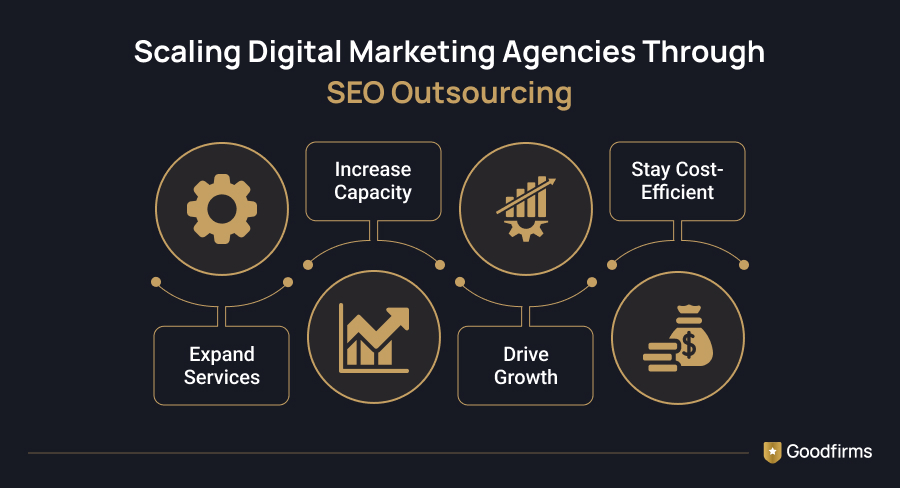
Why Agencies Consider SEO Outsourcing
SEO is not one job with one skill set. A campaign can involve site checks, keyword and competitor research, content updates, local search, link-related work, analytics, and planning. A small agency may not have enough ongoing work to keep a specialist in every area busy full-time. At the same time, relying on one person to cover everything can stretch that person too thin.
An outside team can fill some of those gaps. An agency might ask for help with a technical audit, outsource content production, or arrange support for the day-to-day work on several campaigns. The arrangement can be narrow or broad; it depends on what the agency already does well and where it needs extra hands. It also gives the business room to test demand before adding permanent roles.
There is a practical benefit for agency owners, too. When specialists handle agreed production tasks, the internal team may have more time for client conversations, planning, sales, and checking whether the work is moving in the right direction. Outsourcing does not mean stepping away from the campaign. The agency still needs to guide the work and stay accountable for what the client receives. Agencies exploring external support can compare SEO agencies on Goodfirms to shortlist potential delivery partners.
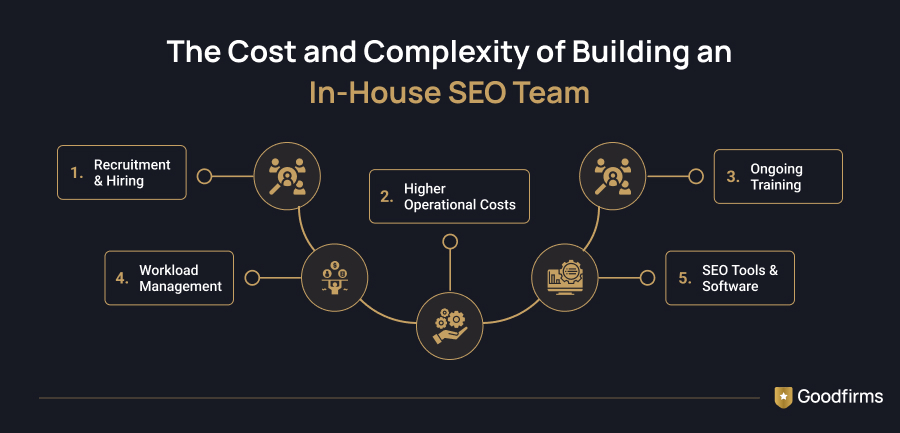
The cost of an in-house SEO team is more than just the monthly payroll. And the time it takes to find people, interview them, onboard them, and help them stay current with their skills. Agencies also need to think about SEO software, management time, internal processes, and cover when someone is away. If clients need different kinds of support, the team may need more than one specialist.
For an agency with steady demand, hiring can make good sense. Having people close to the business can make collaboration easier and give the agency direct control over day-to-day work. The calculation is less straightforward when projects come and go, a new service is still being tested, or specialist help is only needed for a few hours at a time.
Working with an external provider is another option to weigh up. Compare the actual services included with the cost of employing and managing people internally. Look beyond the headline price: ask about the quality checks, turnaround times, communication, data handling, and what happens when the workload changes. The right choice is the one that fits the agency’s work and commitments to clients.
What Is White-Label SEO?
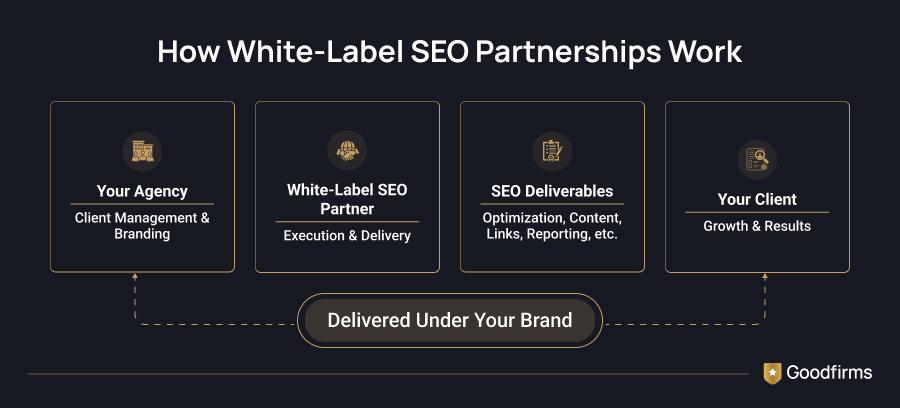
White-label SEO is a setup where one company carries out agreed SEO work and another company offers that service to its clients under its own brand. The agency usually remains the main point of contact. It manages the relationship, agrees on priorities, explains the work, and discusses results with the client. The delivery partner is behind the scenes doing what it was meant to do.
For agencies, this can be a way to provide a wider SEO service without having to hire for every production role. It works best when the provider has a good process for getting briefs, doing the work, handling revisions, and making reports. Still, the agency should review the work and ensure it fits with the client’s goals and brand.
Agencies that are considering such a model can look at the scope of SEO white-label services available and see if the delivery approach fits their clients’ needs, their service positioning, and their internal processes. The agency must have a clear definition of the partner relationship, including what is being delivered, how work is reviewed, and how client communication is handled.
Which SEO Tasks Can Agencies Outsource?
There is no single outsourcing model that suits every agency. Some keep strategy and client communication in-house but bring in help for delivery. Others ask a partner to support most of the ongoing campaign. Before deciding, list the tasks your team can handle confidently and the areas where extra expertise or capacity would make a difference.
Technical SEO: A technical audit can help you identify issues with crawling, indexation, site structure, internal links, page speed, mobile usability, redirects, and more. Be clear about who is expected to make the changes. Recommendations and implementation are different pieces of work, particularly if the provider does not have access to the client’s website. For specialist support, explore technical SEO agencies and check whether their scope includes implementation as well as recommendations.
On-page optimization: Support may include reviewing page titles, meta descriptions, headings, internal links, and the way information is arranged on important pages. The agency should make sure suggested changes suit the page and the client’s voice rather than applying the same template everywhere.
Content planning and production: An external team may prepare topic ideas, briefs, article drafts, landing-page copy, or updates to existing pages. Someone who understands the client’s business should review the material before it goes live. That check helps catch factual gaps and keeps the writing from sounding generic.
Off-page SEO: Agencies can outsource backlink reviews, outreach support and digital PR related tasks. They should ask where the links come from and what methods they use. Don't fall for bulk link packages, vague networks or guaranties that a certain number of links will get you rankings.
Local SEO: Local campaign work might include location page suggestions, profile optimization, citation consistency, review strategy advice, and local content. If you serve regional businesses, you might want a specialist for a particular city, such as a Kelowna SEO company that understands how people in that market search. Agencies managing location-based campaigns can compare local SEO companies for relevant market experience.
Reporting and analysis: A provider can monitor the data from your campaigns and provide you with regular updatess. The agency should decide which measures matter to the client—such as leads, inquiries, organic visits, or visibility—and explain what the numbers do and do not show.
How White-Label SEO Partnerships Work
A useful partnership starts with a proper brief. The agency explains the client’s goals, the agreed work, deadlines, access requirements, and any brand or industry considerations. The provider completes the assigned tasks and sends the work back for review. The agency will review it, communicate any relevant updates to the client, and agree on changes or next steps.
In practice, the process usually goes like this: the agency onboards the client and prepares the brief; the partner does the agreed work; the agency reviews the deliverables and prepares branded reporting; the client receives the update, and additional work is planned as required. The exact steps may differ, but there has to be a clear owner for every handoff.
It helps to agree on a regular way to communicate, a shared place to track tasks, and a route for raising urgent issues. The agency and provider should also settle who speaks to the client, how revisions are handled, how login details are protected, and how changes in priority are approved. A good white-label arrangement should fit into the agency’s existing way of working—not leave the team chasing updates across separate systems.
How to Choose an SEO Outsourcing Partner
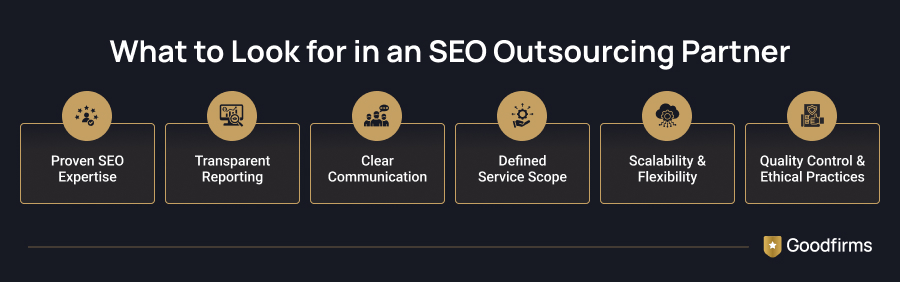
A low quote can look attractive, but price alone says very little about how a provider will handle your clients’ work. Before signing up, ask how the team works, who will be responsible for delivery, how progress is reported, and what support is available when something needs attention.
Relevant experience: Ask about the types of SEO work the provider handles and how it approaches technical, content, local, and off-page projects. Examples and process explanations can be useful, provided confidential client information is protected.
Clear reporting: A useful report should tell you what was worked on, what was found, what has changed, and what the next steps are. A long list of numbers is not enough if no one explains why those numbers matter to the campaign.
Communication: Find out who your day-to-day contact will be, how quickly questions are usually answered, and how urgent problems are escalated. This matters even more when the provider is working behind your agency’s brand.
A written scope: Set out the deliverables, deadlines, revision process, access needed, and anything that is not included. A short written agreement can prevent a lot of confusion later.
Room to adjust: Client workloads rarely stay exactly the same. Ask whether the provider can handle a smaller month, a busy period, or a change in the mix of services without making promises it cannot keep.
Ethical work & quality checks: Ask them how they check deliverables and what link building or content practices they don’t follow. Be wary of spam, keyword stuffing, fake reports and any promises of guarantyd rankings. There is no authority over search engines or competitors’ behaviors. Honest conversations around uncertainty are important.
7 SEO Outsourcing Mistakes You Should Avoid
It is a common mistake to choose a provider simply based on price. Very low fees may not cover the cost of experienced specialists, careful reviews, or responsive account support. Check what is actually included before comparing quotes.
Another problem is starting work with a loose brief. If no one has agreed on deliverables, deadlines, revision limits, or access, both sides may have different ideas about what was promised. Put the basics in writing before a campaign begins.
Agencies should also avoid treating outsourced work as work that no longer needs supervision. The client hired the agency, so the agency remains responsible for checking accuracy, relevance, and whether the work matches the agreed plan.
It is just as important to keep expectations realistic. SEO progress depends on many factors, including the site’s starting point, competition, resources, and changes in search. A partner should be willing to discuss those factors rather than promise a fixed ranking or traffic result.
Finally, do not let communication become an afterthought. Decide who owns each update and how the agency will get answers when a deadline or client request changes. A simple, reliable routine is usually better than a complicated process no one follows.
Building a Scalable Agency Service Model
Agencies do not have to outsource everything at once. A sensible starting point may be one service or a small group of tasks. That gives the team a chance to see how the provider handles briefs, deadlines, revisions, and quality before relying on the arrangement for more client work.
As the relationship develops, document the steps that work: what information is needed at onboarding, how tasks are assigned, when deliverables are reviewed, and how reports are prepared. Repeatable processes make it easier to manage several campaigns and reduce the number of decisions that have to be made from scratch.
The aim is not to hand over the agency’s judgement. Keep strategy, client relationships, and accountability close to your own team, and use outside specialists where they add useful capacity or knowledge. With clear roles and a partner that fits the business, agencies can broaden their SEO offering without immediately creating a full internal department.
Conclusion
For an agency looking to offer more SEO services, building a full in-house department is not the only path. Outsourcing can provide access to specialist skills and extra delivery capacity, while a white-label arrangement allows the agency to keep the client relationship and present the service under its own name.
The arrangement still needs active management. Choose a provider carefully, agree on the work in writing, review what comes back, and keep communication open. Done thoughtfully, outsourcing can help an agency respond to client needs while keeping its internal team focused on the parts of the business where it adds the most value.