"Be fearful when others are greedy and be greedy when others are fearful."
-Warren Buffet
Between the pandemic and the looming recession, the world has been fluctuating between economic highs and lows. The news of mass layoffs and hiring freezes are doing no good to soothe the minds of the already cautious public. So what should businesses do in such times where consumer spending is curbing instead of stabilizing?
Switch to Ecommerce!
Long gone are the days where retailers solely relied on brick and mortar stores for sales and revenue. As per Statista, the retail ecommerce sales reached a whopping $5.2 trillion U.S dollars in 2021. Ecommerce has been around for a while now and the booming industry really picked up pace and peaked during and post pandemic when everyone had to rely on online retail services for their every requirement.
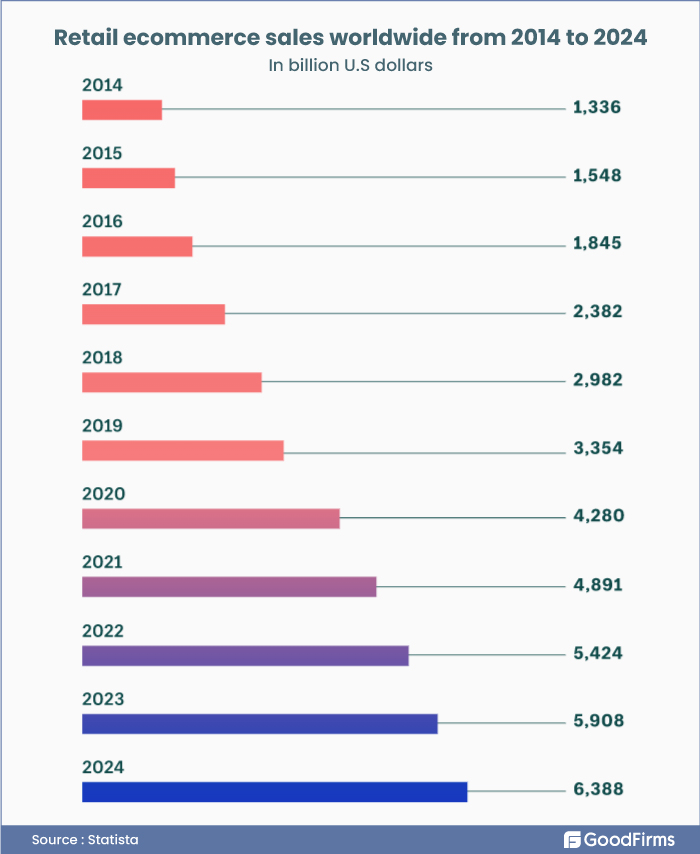
Throughout the years, Ecommerce has proven its mettle by making buying and selling more convenient, reliable, and affordable for all classes, B2B, B2C, or C2C, and slowly permeated into the daily lives of the general population.
Ecommerce development companies have helped many businesses globally to successfully navigate the dark days of the pandemic by helping them create and host their business on the best ecommerce platforms as per their business and budgetary requirements; but as the restrictions have eased, there seems to be a shift in the digital and commercial market, like more product categories are added, quicker deliveries being promised, along with a change in consumer spending behavior across different economies.
Impact of the Pandemic on the Ecommerce Industry
People loved to surf various ecommerce sites, download shopping apps, and indulge in online retail therapy even before the pandemic hit. However, with strict lockdowns and mass panic amidst the pandemic, the public was forced to change their buying behavior. Necessities took priority, digital payment soared to life, and ecommerce boomed.
This change in consumer behavior lasted for quite a while even as lockdown restrictions eased but by then people grew habitual of the convenience of shopping online for all their needs and wants.
There were some new product verticals added to retail ecommerce by business owners due to popular demand such as fresh grocery delivery service which accelerated in growth by 3-5 years in north america as per report by analysts at McKinsey.
Prior to the pandemic, the public understandably had a stigma against buying grocery online due to certain unreliable and trust factors such as freshness of the produce, and high home delivery fees, but the pandemic altered this losing trajectory into a 3 fold market penetration by the end of 2020.
Other new categories that became popular amongst consumers during the pandemic were recreational items that complemented their recreational activities such as gym equipment, board games, etc.
Irrespective of the boom the ecommerce sector witnessed during the pandemic, the fact is, the impending recession threats are giving this industry some sleepless nights. Thus far it seems like the IT industry is bearing the brunt of it with news of mass layoffs feeding into the fear of using your money sparingly.
The Change In Consumer Spending Pattern
There are a lot of factors that play an active role in the sags and surge of an industry. Consumer mindset and behavior being one of the most significant factors affecting the ecommerce industry, it is essential that entrepreneurs take time to understand how external factors and force majeure has affected the spending patterns of the public.
This way ecommerce business owners will be better prepared for devising their marketing, financial, and other business strategies regarding the upcoming recession. Learning to forecast the changing consumer behavior amidst situations of crisis can help them keep their ecommerce business afloat during difficult times.
Different retail houses, data analysts, and government agencies conducted surveys and census reports on the changing behaviour of the public as post-pandemic consumers and forecasted whether the behaviour shall continue or see a decline once conditions are improved.
The graph below shows the interpretation of consumer behaviour during a crisis situation and sheds light on how people with different mindsets set their priorities, preferences and desires differently. This may bring significant insights for business owners.
|
Consumer Behaviour |
|||
|
Mindset |
Priorities |
Preferences |
Desires |
|
The Cautious |
Will act flexibly depending on the day to day situation. |
Comfort level will vary as per local news and data. Craves consistent lifestyle. |
Monitors the pandemic situation closely and desires to live a balanced life of safety and allowed behavior. |
|
The Concerned |
Prioritizes safety amidst unpredictable environment |
Minimize risk behavior and social interactions. Will prefer staying at home. |
High desire for personal safety that will dictate behavior. Will revert to safety practices. |
|
The Comfortable |
Will prioritize returning to normalcy, pre-covid era. |
Socially active, will prefer being lenient on restrictions. |
High desire for pre-pandemic behavior and lifestyle. |
(Source: Nielsen)
Tips to Recession Proof Your Ecommerce Business:
So far we have covered the impact of the pandemic and the change in the consumer spending pattern post pandemic. This raises the question about how the recession might affect other industries and public spending? Will the news of another supposed financial crisis negatively affect the changed spending pattern of the post pandemic public?
If yes, then what are the smartest ways in which you can safeguard your online business against such turbulence?
Now it’s time to learn how ecommerce business owners can brace themselves against the negative effects of an economic downturn. As a budding ecommerce entrepreneur, you can even dream about growing your ecommerce business by hiring from top magento development companies as it is the most used ecommerce platform in the world.
The potential is unlimited if you are ready to bear the risks. Here are some tips that can help you recession proof your ecommerce business.

1. Cutting Overhead Cost
One of the perks of having an ecommerce business is dealing with lower overhead costs than a brick and mortar store; but in a state of looming financial hard times, you still need to reassess your existing overhead costs. It is crucial to reduce any expenses that don’t directly contribute to the growth, sales, or revenue of your business. Conduct an expense audit to see what all expenses can be cut from the spending budget to stay lean.
You can reassess the operational efficiency of your business functions and automate tasks that don’t necessarily require human labour. Not only that you can also automate your recurring tasks to improve functional efficiency of your business.
2. Don’t Skimp Out On Marketing
Be strategic with your marketing money, don’t skip out on advertisement. Spending differently does not necessarily mean less. As Harvard Business Review suggested during the last recession: “Take a scalpel rather than a cleaver to the marketing budget.” It is crucial to remember that people don’t totally stop spending money during a recession, they simply limit it. You can allocate your marketing resources to the best-selling products to keep promoting your selling strength.
Invest in analytics tools that help you understand how consumers interact with your ecommerce app/website and interpret their behavioral patterns accordingly. Customer loyalty has dropped considerably during the pandemic with a plethora of ecommerce apps and options available to them for every single product. This is why it is important to maintain your presence in front of the consumers eyes on social media and other online platforms to keep them coming back to you, as the famous saying goes out of sight, out of mind. The top shopify development companies can help you set up your marketing and advertising plugins easily for promoting your business on different online mediums.
3. Switch Ecommerce platforms
Let’s take a leaf from the success story of Uplift desk to realize that as an entrepreneur with a vision, you can always choose to shift to a different ecommerce platform if you are not getting desired results from your current one.
Jon Paulsen, a certified ergonomist, created uplift desks with the vision to alleviate the painful side-effects of sitting for long periods while working or studying. He launched his product on the ecommerce platform of Yahoo but very soon he was able to realize that the platform didn’t meet the company’s expectations regarding performance, scalability, and affordability. It was time to switch to a more vendor friendly platform that could provide more diverse features and allow product customization options for their customers. So they shifted to Bigcommerce.
You can also host your ecommerce business on this platform by outsourcing the development part to the best bigcommerce development companies in the industry.
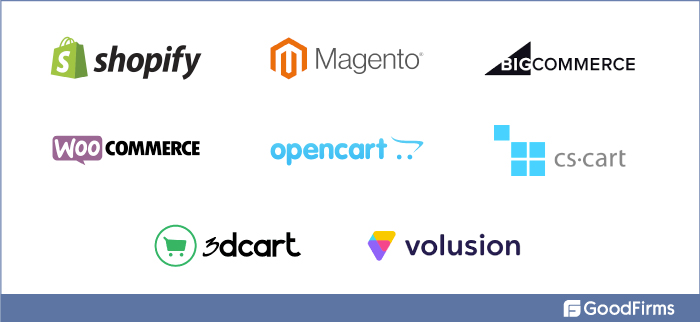
Similarly you can optimize both cost and features of your ecommerce business by making the decision to switch to a different ecommerce platform. Below are the top ecommerce platforms that you can consider to run your online business.
|
Ecommerce Platforms |
Top Companies |
|
The Economist, Red Bull |
|
|
Jaguar Land Rover, Nike |
|
|
Sony, Uplift Desk |
|
|
Etsy, Walmart |
|
|
Investopedia, Red Hat |
|
|
Fundraising for a cause, Ray Biotech |
|
|
Paypal, Upwork |
|
|
California State University, Blackfriars Group |
4. Work on Customer Feedback
Amazon prime is the world’s largest online retailer with approximately 160 million users in 2022. How do they do this? By implementing behavioral analytics tools for their customers and keeping their ads targeted and relevant. Customization and personalization paired with relevant deals and offers can never go wrong. You need to study and understand your customers for this.
Listening to customer feedback will only help you improve your business and products to lure even more customers. As mentioned above, customer loyalty really took a hit during the pandemic as more and more people sought after better deals than sticking with their previous brands.
In times such as a recession, consumers are expected to behave similarly and go after lower prices and better customer service. By making the customer feel valued you can tip the opinion in your favor and earn their repeat business as well as word of mouth marketing. Remember that every dip the economy sees has to have a corresponding peak too and customer friendly behavior will always go a long way.
5. Pay Attention To Underperforming Products
Clear out products that are not selling well and sitting on shelves for a longer time, it will only increase your overhead cost. It is advisable to modify your selling strategy to accommodate seasonal products or trending products as they tend to sell out faster.
You can create urgency to buy by implementing various call-to-action pop ups such as,” Last piece” or “Stock running out soon”, so that customers are more inclined to buy the product now than delay the purchase. Appeal to the buying impulse of consumers by suggesting similar or complementary products at better rates. It is a form of upselling that often helps underperforming products sell out faster.
You can also implement better product placing strategies to make the product more visible to the consumers.
6. Optimize Your Pricing Strategy
Very recently, in light of the recession news, Jeff Bezos, Founder and owner of Amazon, made a statement suggesting that people should avoid buying unnecessary products like TV or Fridge this holiday season and save that money instead. Pricing is indeed one of the most significant factors during recession that businesses need to plan about.

Since consumer spending tends to decline during recession times, as a retail business owner you need to work on finding new methods of appeal to the public. Discounts, deals work well generally but since sales are lean during an economic downturn, you need to be smart about such incentives. You apply the strategy of pricing products with the ending figure of 9 or 8 as that signals a better price to the consumer psyche than the rounded number. This way you can still have profits without chopping down prices too much.
7. Leverage Your Brand Name
Making your brand stand out from the competition takes priority in the competitive downturn of the economy. Leverage your best-selling products and highlight your positive reviews for better visibility so that customers that visit your website can feel that you are a reliable brand with authentic products.
Social media platforms are a great way to market your brand and attract the attention of the customers. Promote your good deeds so that customers find value in spending their money on your products. Reinforcing a positive brand image during difficult times can strengthen your brand’s emotional appeal to customers.
Wrapping up
The layoffs from big brands and IT companies is what made the fear of a potential recession much more real for many people. Ecommerce right now can easily be named as the smartest solution for retailers to keep in touch with their customers as well as market their product to the right audience for better results.
A change in spending habits is to be expected as the market becomes more volatile and debt interest is raised but what business owners need to remember is that the economic market follows a curve and after a steep downturn, there will surely be an upturn. When it comes to riding out an economic downturn, you want to leverage your strengths and commit to playing the long game. That way, when the economy does recover, your online business will be well positioned for sustainable growth.
Remember that you will never be ready to face a crisis, you can only be well prepared.