The world has never seen anything remotely like this…a whopping 78% of global companies use AI.
Yes, you read that right, 78% globally. Artificial intelligence companies are leaving no sector untouched, whether you like it or not.
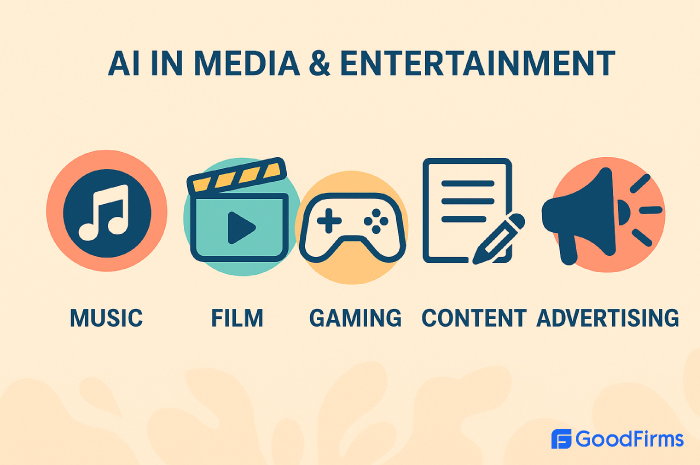
It turns out that AI in the media and entertainment industry is no exception, especially when we speak of films, music, gaming, advertising, and content creation.
I know what you are probably thinking: “ Isn’t AI a double-edged sword, given the skepticism surrounding it?” Well, yes, but like any technology, AI has pros and cons, and when you weigh the benefits, the pros outweigh the cons.
So, yes, we are here to talk about how the media and entertainment space is milking AI to their advantage, speeding the creative process, and delivering output far more spectacular than humans could have ever imagined or delivered if they were stuck with their traditional methods.
Now, let’s look at the applications of AI in media and entertainment, including Film, Music, Games, Content, and Advertising.
AI in Music: How AI is Upending this Industry
AI traditionally uses data to identify patterns and generate results. Likewise, AI music is all about scrutinizing colossal amounts of existing compositions, mixing and matching them, and finally giving them a fresh spin, making them sound very different from the original.
I hear you saying, “But don’t they lack the emotional depth of original compositions?”
Yes, come to think of it! Because nothing can take the place of timeless classics, specifically those of yesteryear.That said, guess what? It doesn’t make rational sense to stop this tech whose time has come. The media and entertainment industry has to embrace the AI wave because Human + AI collaboration is the future. Those who fear experimenting with it may lose out to their competitors in the long run. However, it should never be AI or humans; magic can only happen when they work together.
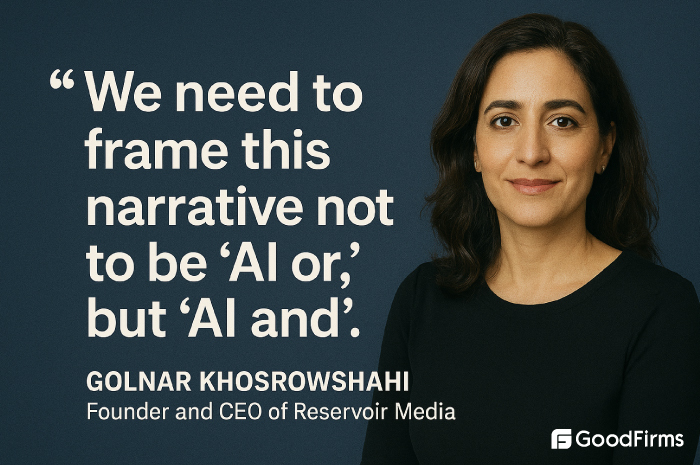
As Golnar Khosrowshahi ’97, founder and CEO of Reservoir Media, rightly points out, “We need to frame this narrative not to be ‘AI or’, but ‘AI and. Human plus AI is a more powerful creative engine because of the efficiencies that can be enabled, because of the knowledge we can have about music, how we can develop and understand sounds, how we can understand blending cultures and creating new sounds. That is, in effect, what happens in the music business day in and day out.”
In short, the future is about leveraging AI as a collaborative partner. It’s about combining human imagination with AI power to redefine music like never before. Here I have listed 5 ways AI is upending the music industry.
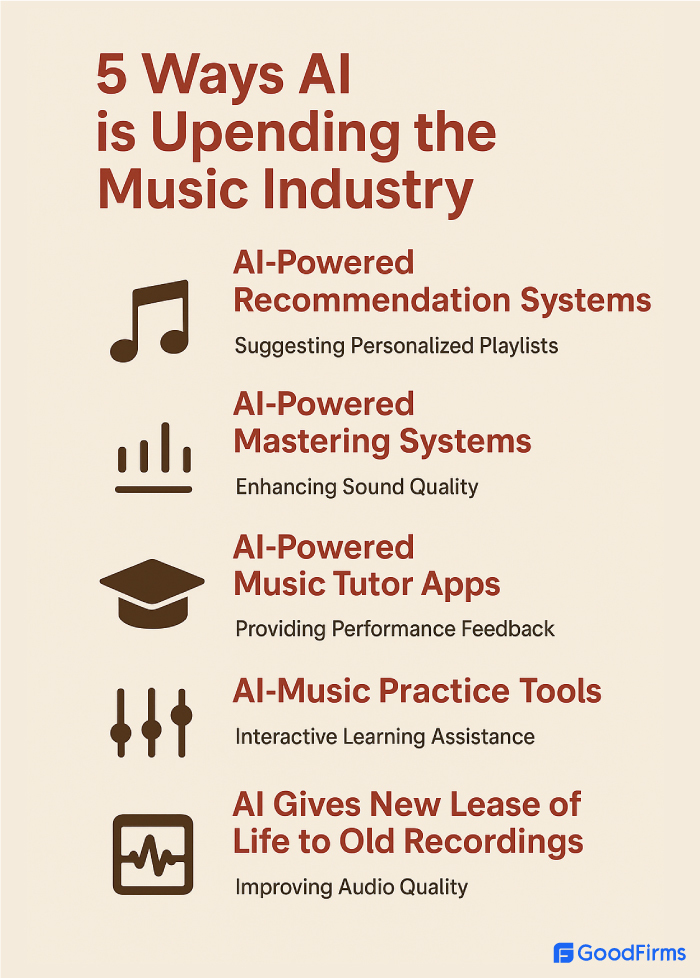
AI-Powered Music Recommendation Systems
As we know, the traditional music recommendation systemsprovide suggestions by linking to users’ past listening history. It has nothing to do with the emotional aspect that makes music such a deeply personal experience. Contrarily, AI-powered music recommendation systems not only examine user activity but also detect patterns and correlations to conjure hyper-personalized playlists tailored to users' musical preferences, tempo, mood, and even the time of the day.
AI-Powered Mastering Systems
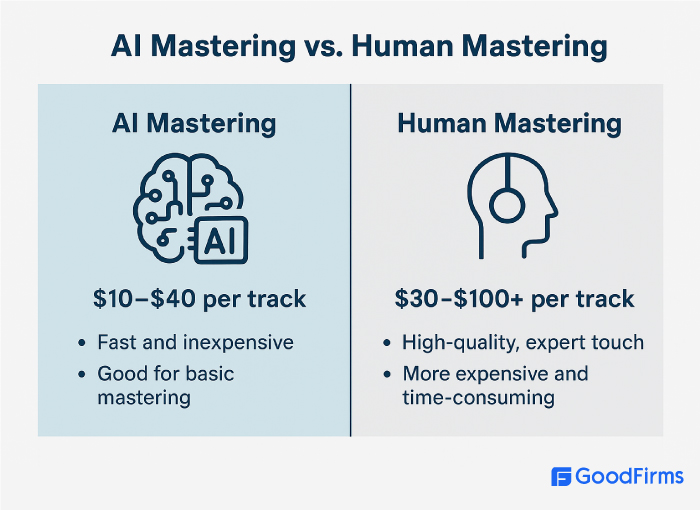
Mastering music is considered a dark art. You need the skill and intuition to produce a polished final product. Traditionally, musicians took the help of professional mastering engineers to get their compositions right. These mastering engineers provide limited revisions, might take a week to deliver results, and are expensive. They charge anywhere between $30 and $100 per track, depending on their level of expertise.
No more! AI-powered mastering systems like LANDR enable endless tweaking, and that too without costing much. It quickly delivers a highly polished song that meets modern loudness standards without compromising clarity, EQ, and dynamic processing. Likewise, AI music generators like Apple's Mastering Assistant and iZotope's Ozone analyze tracks and suggest custom EQ curves to align your music with genre or style norms.
In addition to recommendations and mastering systems, there are AI-powered music tutor apps to make learning music effortless.
AI-powered Music Tutor Apps
Music education is no longer reserved for the elite. Thanks to AI-powered music tutor apps that help students with performance reviews, error detection, and provide suggestions in real-time.
Some top AI music tutor apps include:
Simply (Piano, Guitar) - The music app teaches beginners how to play the piano or guitar by first listening to them play on a real instrument and then offering them instant, interactive feedback.
Yousician (Guitar, Piano, Bass, Singing, Ukulele)—Yousician is a mobile-based platform for playing music that offers interactive lessons and immediate feedback for guitar, piano, bass, ukulele, and singing.
ArtMaster’s Artie: Artie is an all-around music tutor who listens and interacts like a human mentor. It evaluates finger strength, rhythm, and elements that require work. Additionally, it also offers clear explanations and personalized practice exercises right off the bat.
For beginners, the experience almost resembles learning from a real teacher; however, it won’t fully replace a human tutor. Besides tutor apps, you can keep practicing music with AI music practice tools.
AI Music Practice Tools
AI Practice tools like Chordie AI (formerly Chord AI) allow newbies to play their favourite songs without even knowing their musical preferences. After recognizing the chords, it offers real-time feedback to users, making the learning experience interactive, engaging, and personalized for every individual.
Another powerful tool, Hyperwrite’s Musician Practice Scheduler, helps music learners create personalized practice schedules based on their time, skill level, and focus areas. This helps them generate a structured plan to maximize their practice sessions. Caveat: These practice toolslack the depth and personal interaction of traditional teaching.
AI Gives New Lease of Life to Old Recordings
AI can bring back to life old recordings by cancelling out the background noise, improving clarity, and, if necessary, reconstructing lost parts of the songs.
For example, in Now and Then by the Beatles, an advanced machine-learning-based audio restoration technology called MAL (machine-assisted learning) was instrumental in extracting Lennon’s voice from the cassette demo.
iZotope, the AI music software, helps with noise reduction, eliminates distortion, de-clicks, and performs spectral repair. It’s a popular software tool for audio restoration tasks.
Key takeaway: AI in music is about creating high-quality, affordable music that musicians of all levels can experiment with. This is what makes AI tools so, so valuable in music, not to mention films.
AI in Films - AI Developers are Rubbing Shoulders with Actors and Executives
Merely two years ago, actors and writers in the U.S. raised red flags against Artificial Intelligence and even shut down Hollywood because of its threat. Hollywood has always depicted AI as a villain. Think of The Terminator, where the U.S. military used AI to destroy all humans on Earth.
Now, AI developers are rubbing shoulders with actors and executives. And why not? The technology has been showing demonstrable efficacy in the film industry, so much so that two AI-based films were honoured at the Oscars.
The best part? The pioneering tech frees up funds that could be used for costumes, set decorations, camera packages, or other creative placements.
AI in Hollywood is "inevitable." - Bryn Mooser, the co-founder of Moonvalley, created the AI generator tool Marey using footage with filmmakers consent and even paying for it.
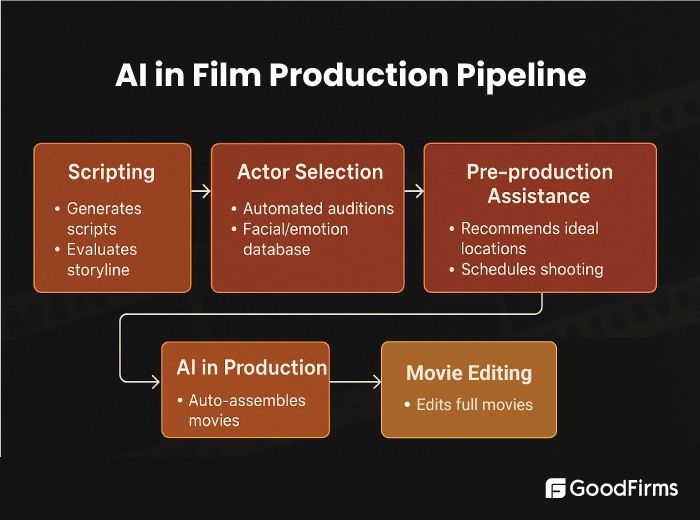
Currently, AI is being used in the film industry for diverse tasks, including scripting, pre-production, predicting the film’s success, selecting actors, editing, and creating music. Let me shed some light on how AI is used in film production.
AI in Script Writing
Scripting is one of the most critical aspects of movie-making, as it can completely kill or build a movie. This is where AI can act as a safety net, as its algos can run through tons of scripts and conjure a unique script in minutes. This speeds up the process of script writing without compromising on quality.
Further, the technology evaluates the script on different parameters, such as the storyline, whether the concept has enough substance, whether it would emotionally connect with the audience, and if not, it even recommends suggestions, ensuring the end result resonates with the audience. Once the script is done, it even helps finalize the actors.
AI in Selection of Actors
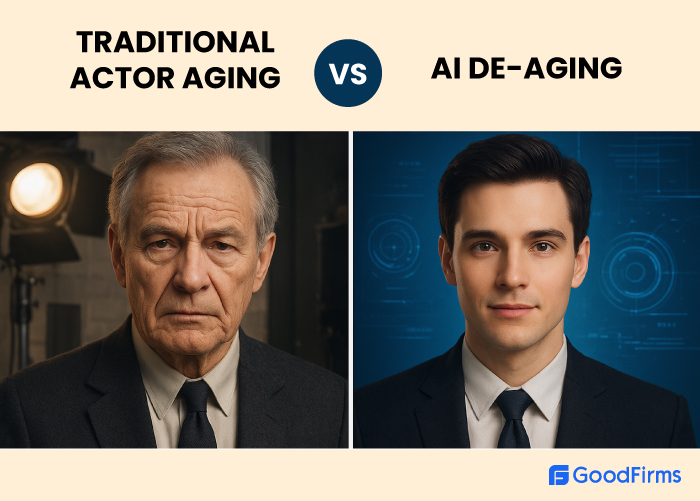
AI solutions can also perform actor auditions automatically using an actor database, along with their facial feature descriptions in several emotions. Using this database and facial description, the algo can easily swap the digital face of the actor onto a body double without losing the original performer's expressions and, if required, even de-age actors if the role demands it. Additionally, AI can create fictional supervillains such as Thanos for Avengers: Infinity War, which was designed using machine learning. Besides scripting and actor selection, AI can help makers find the perfect location for their film shoot.
AI in Assisting Pre-production
AI systems are also good at analyzing the locations you may have described in the screenplays and thereafter recommend sites perfect for the film scene, saving resources in location scouting. Plus, it arranges shooting schedules according to actors' availability, thus saving time and improving efficiency.
AI in Movie Production
Artificial intelligence can now own movies. Ross Goodwin, a creative technologist who wears many hats, has programmed a tool called Benjamin AI to write screenplays. Benjamin AI’s first film production, “Zone Out,” was assembled in just 48 hours using data from old films and footage of professional actors.
Sure, the movie is not likely to win any awards, but it’s still a massive leap in video automation using AI.
AI in Editing Movies
Trailers can be generated in a jiffy with movie editors. AI systems can identify high-action, emotional movie scenes that enable editors to create catchy trailers. For instance, the IBM Watson program was used to create the first AI trailer for the science fiction film Morgan.
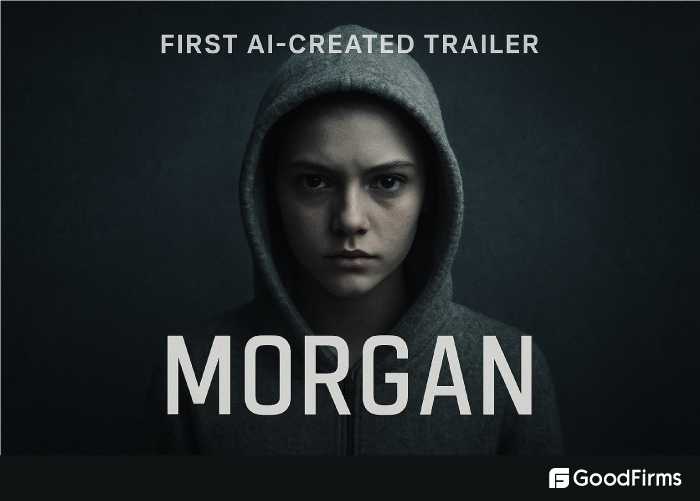
AI video editing tools can also help with editing full-length movies.
AI in Advertising and Promotion
Film studios use AI to analyze factors such as the target audience and the actor's popularity while planning campaigns for specific locations. For instance, 20th Century Fox created a Merlin Video neural network to forecast the success of promotional videos. The film studios also used IBM's supercomputer to create an advertising clip for Morgan.
Key takeaway: Technology has touched every aspect of the movie-making process, thanks to breakthroughs in 4K and 3D movie technology, AI editing and recording, and AI-based screenplays that have simplified it.
Gaming is yet another creative sphere where AI usage is booming.
AI in Gaming is Enabling Game Developers Up their Creative Game
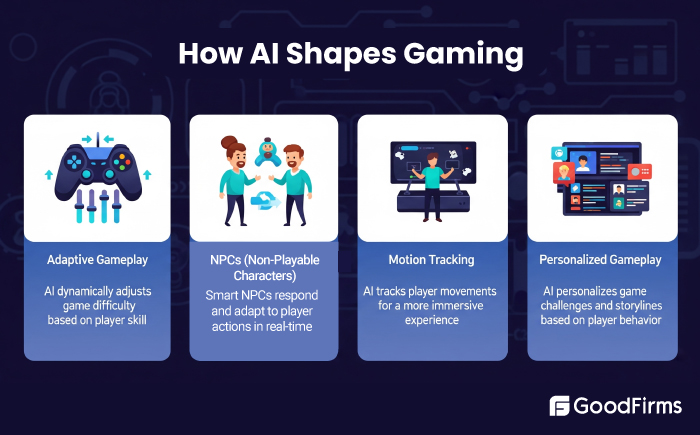
Game development firms leveraging AI are revolutionizing games from A to Z, from how they are developed and played to how they are experienced. From adaptive gameplay to responsive non-player characters, AI makes game experiences more personalized and real. AI technology is also used in game design, testing, and content generation. This reduces human effort, enabling game developers to up their creative game.
AI in Making Real-Time Changes in Game Environment
What makes VR games integrated with AI interesting is their ability to change the environment in a fraction of a second to match the player's mood and actions. Even in AR games, AI identifies real environments and makes changes on the fly to resemble them.
Long story short, AI-powered content generates dynamic landscapes for AR and VR games that guarantee a different gaming experience every single time.
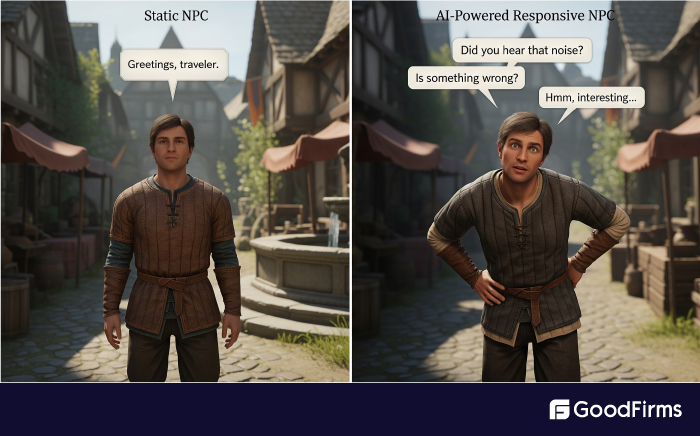
AI for Smarter Non-Player Characters(NPCs) and Avatars
With AI, NPCs become more innovative and responsive. AI enables NPCs to understand a player in and out regarding their actions, voice commands, and, more than anything, gameplay decisions so that they can respond on the go. Further, AI can create responsive AR characters for AR games that respond to real-life situations, improving the game experience.
Additionally, AI-powered avatars can emulate human facial expressions and emotions, making them look real.
AI in Refined Motion Tracking and Interaction
AI improves eye tracking, hand tracking, and body movement, enabling players to interact with virtual environments more effectively. AI also improves speech recognition in VR, empowering players to communicate with virtual characters via natural language processing.
AI in Predictive and Personalized Gameplay
In addition to motion tracking and interaction, AI can offer personalized recommendations and puzzles to specific players. Depending on your progress, responsiveness, and abilities, it can even make changes on the fly.
AI can even add to the excitement levels of a game by leveraging advanced interactive objects based on user interactions.
AI in Film & Video Game Soundtracks
AI can take video games to the next level by adding real-time effects and music. Moreover, dynamic soundtracks can be effortlessly created in real time to match the player's actions, mood shifts, and real-time events, making the gaming world feel more alive.
AI-driven scoring tools like Jukedeck (owned by TikTok) can generate adaptive music that evolves with changes in in-game events.
Opusmodus breaks down complex arrangements to build soundscapes for interactive storytelling.
For indie developers, such tools save time and budget, enabling them to create customized soundtracks without hiring experts.
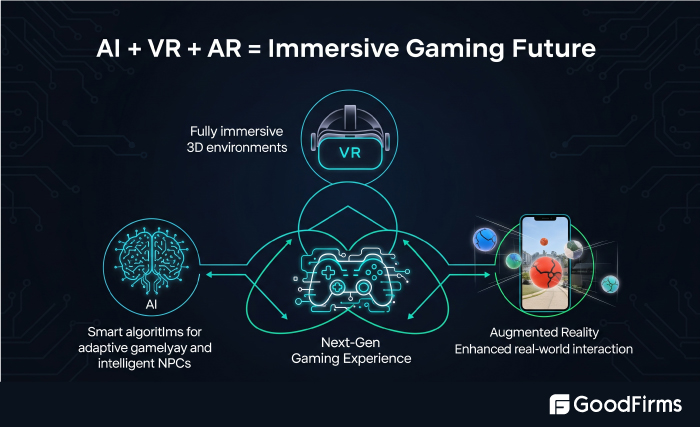
Key takeaway: With AI integrated with gaming, VR, and AR, gaming is becoming more interactive, intelligent, and immersive, offering players unlimited interaction and realism. The trio of AI, VR, and AR is shaping the future of gaming, making virtual worlds seem real.
Yet another creative space AI is leaving a deep impact on is the content creation space.
AI in Content Creation will Be Highly Resourceful for Small Businesses
Experts once predicted that by 2030, 90% of online content would be AI content. But by the looks of it, we don’t have to wait until 2030, as ALMOST every piece of content seems to be AI-generated. Small and Medium businesses with limited resources are trying to make the most of these AI content generation tools.
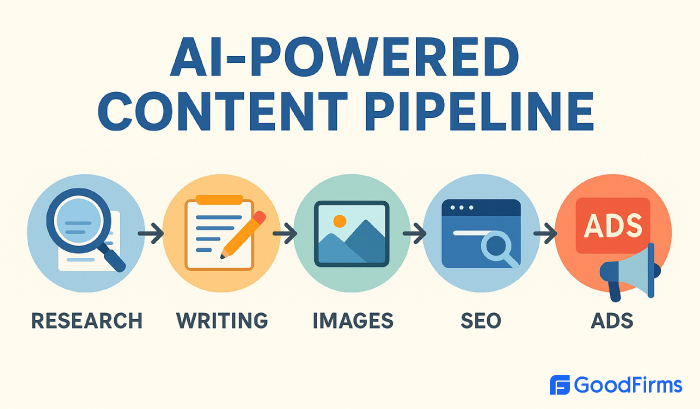
AI in Content Research and Blogging
AI uses complex machine learning algorithms to write one word after another, using previous word sequences or the next image, depending on the words used in previous photos.
This is how AI content tools generate long-form and short-form content in impeccable style, and, more importantly, optimize it for search engines. Such quick content generation comes in handy for small businesses working with fewer resources and wishing to take on large firms head-on with their content strategy.
In short, teams that deal with massive content and data use AI content tools.
AI in Image Creation
AI-based image generators are growing in popularity among businesses with limited resources. Content teams can generate images on the fly without scouting for relevant images in libraries, saving them considerable time.
AI in Email Marketing
Email marketing is still the leading method for generating leads and reaching out to existing customers. But then, random emailing won’t cut it.
AI can help you optimize email campaigns by ensuring emails are delivered at the right time, improving open rates. Some AI tools further personalize emails with subject lines, product suggestions, and more.
AI in Social Media
Content creation for blogs is one thing. AI tools are also good at scripting short, snappy titles for social media ad campaigns and targeting particular audiences. Some tools also offer influencer marketing discovery and tracking to find relevant industry influencers for brands.
Key takeaway: Using AI in content creation will give small businesses a competitive edge. From blogs, images, and emails to social media, AI empowers start-ups and small businesses to scale faster, cut costs, and handle competition with cool heads.
After music, films, games, and content, AI is making its mark in the advertising world.
AI in Advertising to Run Cost-effective, Hyper-Personalized Campaigns
61.4% of marketers are using AI in their marketing strategies, which vouches for its effectiveness in running ad campaigns. 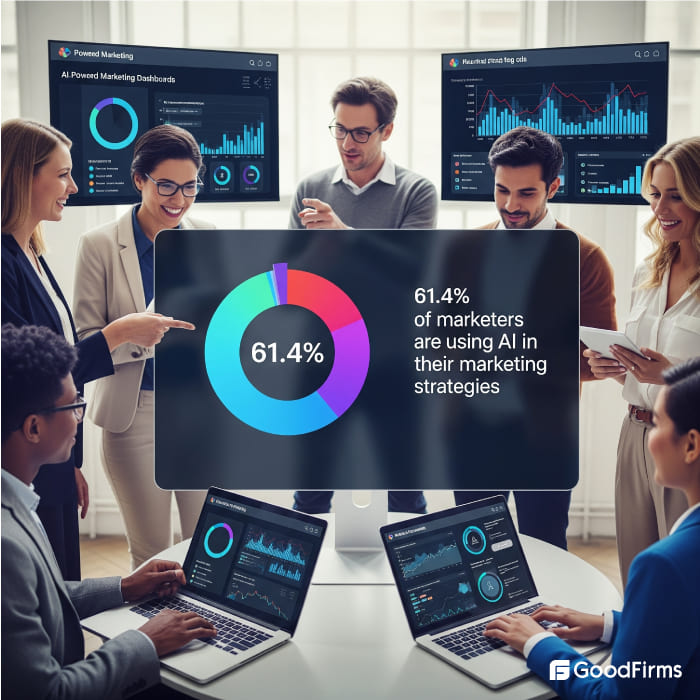
This means better marketing results for less money for small businesses working on tight budgets. It works for customers, too, as they can see more ads that resonate with them.
AI in Dynamic Content Creation
The use of AI in advertising is no different from how it’s used in content generation. Generative AI software can use relevant prompts to create personalized content for ad copies tailored to diverse groups, ensuring their best performance and overall user experience.
AI in Predictive Analyses
Predictive analytics companies can help with customer segmentation techniques, using machine learning and deep learning, to forecast the audience that will ideally relate to your ads.
By helping advertisers nail down the buyer persona and their taste, advertising professionals can apply precise efforts, improve the efficiency of online advertising campaigns, and allocate ad budgets efficiently.
AI in Voice Search Optimization
With voice-activated devices rising in popularity, optimizing ads for voice search has become a prerequisite. AI voice recognition solutions, powered with natural language processing and machine learning, can analyze how people use voice search versus the traditional method of typing queries.
The analysis helps you optimize the ad copy and keywords that match voice search queries, ensuring your brand stays visible in this rapidly evolving space.
AI in Real-Time Bidding
Real-time bidding uses AI to automate the process of buying and placing ads in online auctions. The process of buying and placing ads happens in seconds as and when users load apps and web pages.
AI systems evaluate the ROI of ad impressions and make bids, helping advertisers pay a minimal amount for the most effective ad placements. The AI-powered real-time bidding helps optimize ad spends and performance, giving advertisers an edge in the competitive online space.
AI in Sentiment Analysis
AI is a real deal when it comes to analyzing online conversations and feedback to understand public emotions about your brand, products, and services.
The insight enables businesses to tweak their advertising strategies in real time, address concerns, take advantage of positive trends, and ensure a strong brand message. Sentiment analysis ensures that your advertising efforts align with your audience's mood.
By applying AI-driven strategies, businesses can create more successful campaigns that align with audience tastes and drive results.
Key takeaway:AI marketing companies enable brands to run cost-efficient, highly personalized campaigns using predictive analytics, voice recognition, and real-time bidding to boost engagement and maximize ROI.
Key Challenges of Using AI in Media and Entertainment
Several key challenges AI in Media and Entertainment industry has to be tackled so as to ensure its fair and unbiased use. Let’s look at seven challenges that needs the immediate attention of media and entertainment houses.
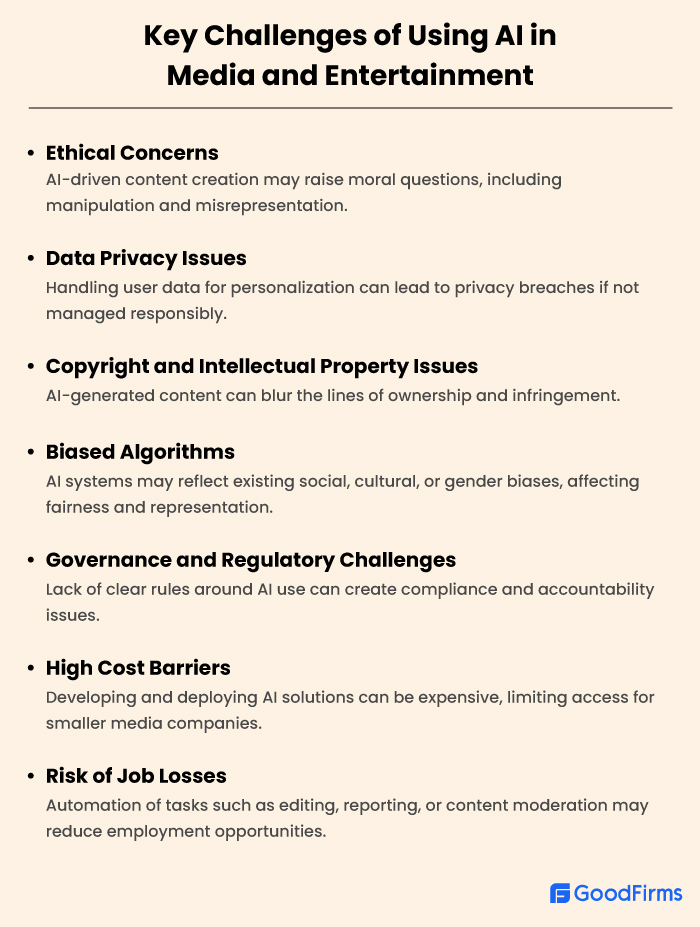
1. Ethical Concerns
AI can generate fake content that looks real. Simply put, fake news articles and manipulated videos can be generated quickly, harming society at large.
AI systems are known to pick up sensational news to boost engagement rather than taking up accurate and non-biased news. This means that media outlets that use AI for news generation can face credibility issues going forward.
2. Data Privacy Issues
AI in media needs massive data to power personalized recommendations. This data is most often sourced from user behavior. So far, so good! The issue arises when this personal data is collected and used by companies in an unethical manner, leading to privacy and security issues.
Given the boom in AI usage, it’s more important than ever for AI systems to adhere to data protection laws. Implementing General Data Protection Laws like the ones followed in Europe is sure to help. Also, Media houses should be open about how they collect, store, and use data and the security measures they are implementing to protect it. Caring two hoots for data privacy can result in loss of customer trust and legal penalties.
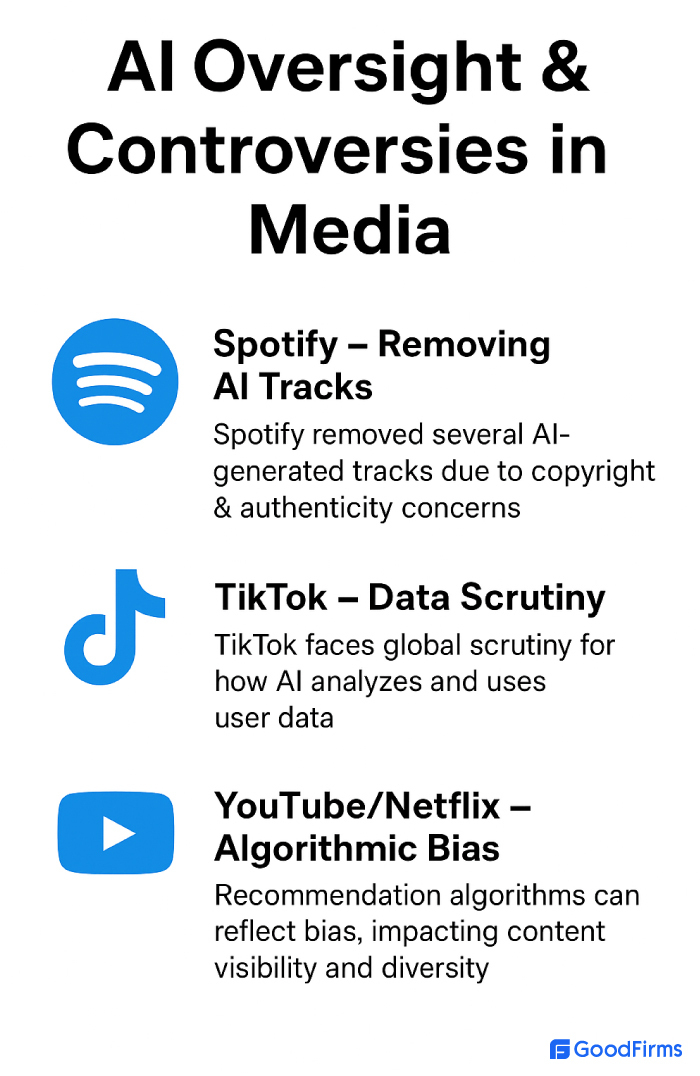
Example: TikTok was questioned about its data collection modus operandi for its recommendation algorithms, as authorities were suspicious about its data collection work.
Despite AI’s politically correct positioning as a collaborator rather than a replacer, huge job losses in creative fields are on the way. This means media houses need to seriously consider upskilling and reskilling their existing workforce by training in these new technologies.
3. Copyright Issues
As I've mentioned time and again, AI functions on data generated by users. Fortunately or unfortunately, it hasn’t produced its own data so far. When you use data from others, copyright issues naturally arise. Writers whose works have been stolen by AI have already raised concerns and filed court cases.
Example: In 2023, Spotify was forced to remove tons and tons of AI-generated tracks from its platform after Universal Music raised copyright violations concerns.
The point is that media organizations must anticipate legal complexities and lay down clear guidelines when it comes to ownership of AI-generated content. They need to tackle issues such as credit, compensation, and protection of creative work.
4. Biased Algorithms
AI alone can’t generate content, let alone biased results. It generates biased results only when biased data is fed into it. In the media industry, such biased data feeding can result in discriminatory content recommendations. Gender biases and cultural stereotypes are inadvertently reinforcing prejudices.
Example: Recommendation algorithms used in platforms such as YouTube and Netflix have been scrutinized for sidelining small-time creators and boosting mainstream players.
Addressing bias in AI calls for minute attention to the data used in training. Media organizations should monitor algorithmic outcomes continually to ensure AI systems are fair and inclusive, advocating diverse perspectives and avoiding stereotypes.
5. Governance and Regulations
AI’s growth has been unprecedented, catching the media industry off guard. No clear guidelines exist, which could result in media companies facing reputational and legal risks.
Example: The European Union has an AI act; however, Hollywood and Asian entertainment hubs still lack clear guidelines, causing regulatory uncertainty.
It’s more important now than ever for media organizations, governments, and industry bodies to have a clear set of comprehensive regulations and guidelines to ensure the ethical use of AI.
6. Cost Barriers
Though AI has democratized the music and entertainment arena, advanced AI solutions are high-cost, so smaller studios and independent creators can’t think of large-scale film production or real-time gaming environments.
Example: Large studios like Disney and Netflix extensively leverage AI for visual effects and audience insights, which may seem unaffordable to indie filmmakers.
7. Risk of Job Losses
AI integration has resulted in job losses in many industries, and the risk is even higher in the media and entertainment industry, specifically when it comes to jobs related to content creation, data analysis, and even sound engineers.
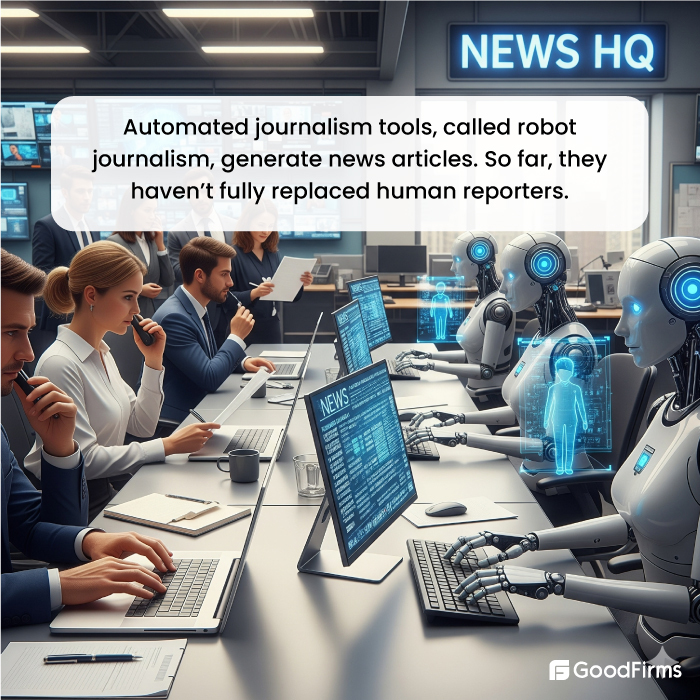
Example: Automated journalism tools, called robot journalism, generate news articles. By far, they haven’t fully replaced human reporters. AI mastering services like LANDR can take the place of sound engineers, as they can create highly polished music pieces that match modern standards, without pinching media houses’ pockets.
Increased Use of AI in Media and Entertainment will be the Default in the Coming Years
AI is not going away. So, creative artists shouldn’t consider it a threat; instead, they should work hand-in-hand with media companies and wholeheartedly explore diverse AI tools to take their creative process to the next level. Be it in music, films, content creation, gaming, or advertising, content generators should keep their skepticism aside and maximize the use of these tools. AI tools such as GPT and DALL-E will help you conjure more engaging stories and visuals to gain an edge over your competition.
Then, there is the Metaverse, which is coming up big. It will enable audiences to interact with media in a completely new way and set the stage for AI to be the chief driving force in interactive entertainment. The competition is already using it, and if you want to stay ahead of them, you'd better embrace AI without any second thoughts. But then remember, don’t substitute humans with AI. Would like to conclude with Khosrowshahi’s quote, it’s not AI or but AI and.”
A few practical ways media and entertainment businesses can start experimenting with AI responsibly:
Take Small Steps: Experiment with AI tools in one area, such as music mastering, editing, or personalized recommendations, before scaling up.
Value Ethics: Have crystal-clear guidelines on data use and copyright ownership.
Upskill: Empower existing teams to use AI tools more effectively, not replace them.
Collaborate with AI: Position AI as a collaborative tool to humans, not as a substitute.
Measure Impact: Track ROI, audience engagement, and creative quality to ensure AI builds and dilutes your impact.
The future of media and entertainment is for those who can combine AI and Human work. So, instead of sitting back and watching the world harness the power of AI, it’s time to explore, experiment, and lead responsibly.
FAQs on AI in Media and Entertainment
1. What is AI in media and entertainment?
AI in media and entertainment involves using AI in music, films, gaming, content, and advertising to speed up, make the creative process smarter, and personalize it.
2. How is AI Transforming Music?
AI is upending the music industry in five ways through AI-powered recommendation systems, mastering systems, tutor apps, practice tools, and audio restoration, which enable musicians of all levels to create quality music and engage audiences with hyper-personalized experiences.
3. How does AI help in filmmaking?
AI is well-equipped to handle A-Z in filmmaking, right from scripting, actor selection, location scouting, pre-production, editing, trailer creation, and audience prediction. AI is armed with all sorts of tools to accelerate the filmmaking process at reduced costs.
4. What role does AI play in gaming?
AI empowers players with adaptive gameplay, responsive NPCs, motion tracking, and dynamic soundtracks in real time, creating immersive environments and personalized gaming experiences in VR, AR, and traditional games.
5. Can AI replace human creativity? No. AI is not a substitute for human creativity; it's a machine that lacks emotional depth and intuition. For the best results, humans and AI should work together.
6. Is AI in content creation replacing writers?
No doubt AI creates SEO-optimized blogs, images, emails, and social media posts, but it lacks a human touch. Human intervention is essential for creativity, context, and nuance.
7. Can small businesses benefit from AI in media?
Yes, small businesses can use AI tools at lower costs for content creation, email campaigns, ad personalization, and even music production.
8. What’s the future of AI in media and entertainment?
AI will continue to boost human creativity, streamline production workflows, and provide personalized, immersive experiences in music, films, gaming, content advertising, and the Metaverse.