Key takeaways
- Healthcare BPO in 2026 is no longer just a cost-cutting strategy — it is a full-scale competitive advantage for modern healthcare organizations.
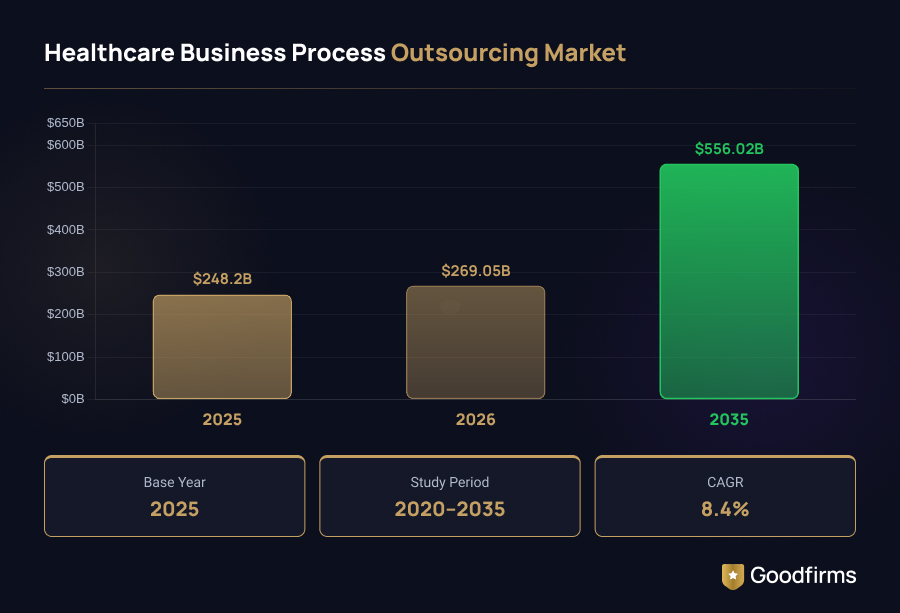
- The global healthcare BPO market is projected to grow from USD 248.2 billion in 2025 to USD 556.02 billion by 2035.
- Outsourcing medical coding and billing services reduces processing errors, accelerates reimbursements, and frees clinical staff to focus on patient care.
- The medical billing outsourcing market is set to more than double from USD 20.31 billion in 2026 to USD 50.47 billion by 2034 at a CAGR of 12.05%.
- Healthcare BPO companies can deliver cost savings of up to 28%, according to a Deloitte report.
- 69% of physicians spend excessive after-hours time on clinical documentation, making medical transcription outsourcing a critical burnout-reduction strategy.
- The healthcare sector recorded the highest average data breach cost globally in 2025 at USD 7.42 million per incident, making data security a top BPO priority.
- AI-powered denial management systems dramatically reduce first-pass claim rejection rates, protecting healthcare organizations from unnecessary revenue losses.
- Missed appointments cost the U.S. healthcare system approximately USD 150 billion annually — a gap that outsourced patient scheduling directly addresses.
- Healthcare AI is growing at a CAGR of 19.10%, making continuous technology investment non-negotiable for healthcare BPO companies.
- BPO workflows saved healthcare providers an estimated 184 million labor hours globally in 2024, driving measurable workflow efficiency gains.
- The most resilient healthcare organizations treat BPO not as a vendor relationship, but as a long-term strategic partnership built on talent, technology, and trust.
Healthcare BPO services are rapidly reshaping how the modern healthcare industry operates and scales. In 2026, availing healthcare business process outsourcing services is no longer just a cost-cutting strategy. It is a competitive advantage.
At its core, healthcare BPO involves delegating non-clinical operations to specialized third-party providers, freeing up healthcare organizations to focus entirely on what matters most: patient care. From medical coding and claims processing to specialized medical billing services, healthcare IT infrastructure, finance, accounting, revenue cycle management, and supply chain logistics, modern healthcare BPO companies handle the operational backbone so providers don't have to.
Ready to streamline your operations? The best healthcare BPO companies are just a click away. Compare services, read verified reviews, and connect with the right outsourcing partner today.
What makes healthcare BPO uniquely powerful is its precision. Unlike generic outsourcing, healthcare-focused BPO partners bring deep domain expertise in compliance, HIPAA regulations, and industry-specific workflows — making them far more effective than in-house teams stretched thin across non-core functions.
The post-COVID era acted as a massive accelerant. Overwhelmed health systems, staffing shortages, and skyrocketing administrative demands forced healthcare leaders to rethink their operating models — and outsourcing emerged as the most scalable solution. The result? A booming global healthcare BPO market is showing no signs of slowing down.
From USD 248.2 billion in 2025 to a staggering USD 556.02 billion by 2035 — the Global Healthcare BPO Market is not just growing, it's transforming, with steady milestones of USD 269.05 billion in 2026 and USD 291.65 billion in 2027 marking the pace of that acceleration.
This research guide by Goodfirms breaks down everything you need to know about healthcare business process outsourcing services, enabling you to make strategic decisions and lead the industry.
Whether you're a healthcare executive evaluating outsourcing options or a decision-maker looking to streamline operations, this is your definitive resource to make your healthcare organization highly efficient, revenue-generating, and successful.
So, let’s quickly learn more about top healthcare BPO services and how these services are benefiting the healthcare industry in 2026.
Key Healthcare BPO Services Transforming the Industry
Behind every successful healthcare provider is a powerhouse of backend operations. From medical coding and billing and claims processing to data collection and medical transcription services, healthcare BPO firms handle the administrative heavy lifting. Let's have a look at primary and secondary healthcare BPO services, enabling businesses to eliminate bottlenecks, accelerate reimbursements, maintain cleaner records, and dedicate more time to patient care, which is highly important in this industry.
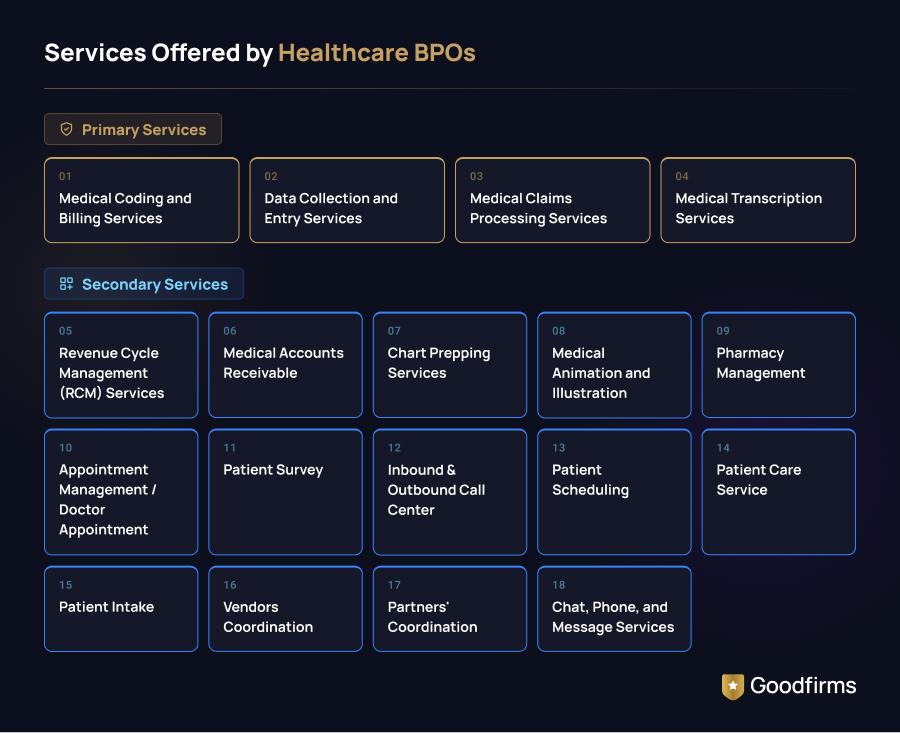
Let’s have a look at these primary and secondary healthcare business process outsourcing services in detail.
Primary Healthcare BPO Services Explained
Primary healthcare BPO services form the operational foundation that keeps healthcare organizations running accurately, efficiently, and compliantly. From coding and billing to data entry, claims processing, and medical transcription — here's a detailed look at the core primary services reshaping healthcare administration in 2026.
Medical Coding and Billing Services
Every day, hospitals and medical professionals must deal with medical information requiring intricate classification and billing. Healthcare providers may encounter serious mistakes and processing delays, whereas outsourcing medical coding and billing services takes away all the load.
Professionals at healthcare BPO companies have the appropriate education and training to carry out their duties accurately and efficiently. As a result, healthcare facilities can concentrate on their core competencies, such as better patient care, treatment, and research.
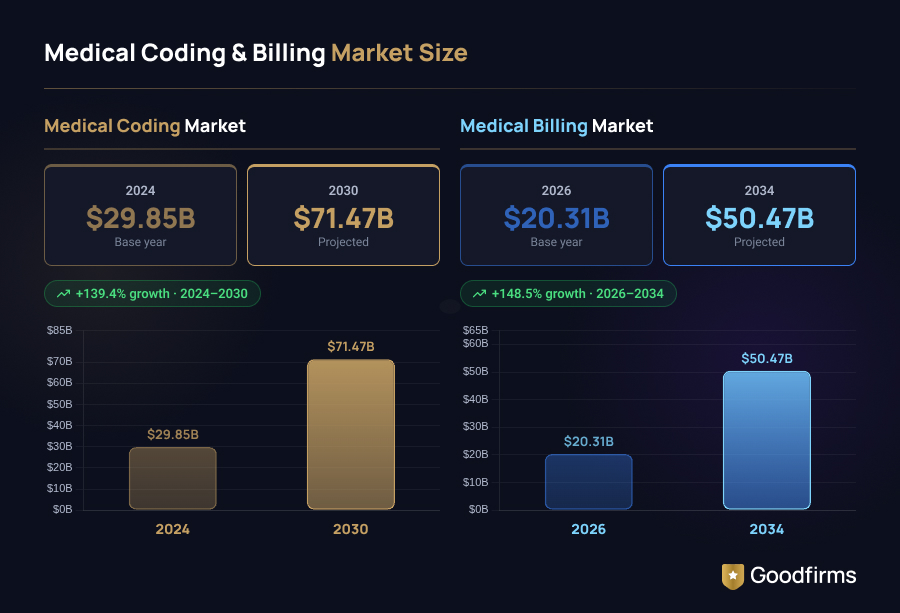
This is the reason why the global medical coding and billing outsourcing market is on a powerful growth trajectory — with the medical coding segment valued at USD 39.85 billion in 2024 and projected to hit USD 71.47 billion by 2030 (CAGR of 10.22%), while the medical billing outsourcing market is set to more than double from USD 20.31 billion in 2026 to USD 50.47 billion by 2034 (CAGR of 12.05%) — signaling an industry that shows no signs of slowing down.
Data Collection and Entry Services
Every day, healthcare companies interact with several patients and deal with several customer data points. Organizations need a fluid chain of processes to collect these data (insurance information, prescriptions written by doctors, historical health records, and patient health information) and save them in the proper formats.
This bulk data can be accurately entered by healthcare BPO specialists, freeing the internal staff to work on more difficult decision-making responsibilities. BPO companies help healthcare organizations maintain good patient services through scheduling solutions.
According to Technavio, leading data entry outsourcing providers now guarantee a data entry accuracy rate of 99.9%, a turnaround time of 24 hours, and an error resolution time of just 4 hours — making outsourced data entry a highly reliable and scalable solution for healthcare organizations.
Medical Claims Processing Services
Processing patient insurance claims is another non-core healthcare task that is frequently outsourced. Patients' insurance companies' legitimate medical claims must be efficiently managed. Maintaining accuracy and timeliness can be difficult when several claims must be processed daily.
The demand for claims processing services, driven mainly by doctors' offices and other healthcare providers, will continue to rise. The number of medical visits will rise even more. As a result, there will be an increase in the number of patient insurance claims in the coming years.
As per IBIS World, the medical claims processing industry has been growing at a CAGR of 2.5%, reaching $5.7 billion, with labor shortages and rising operational costs continuing to push more healthcare providers toward outsourcing claims management to third-party specialists.
Medical Transcription Services
Transcribing one's notes is a task that takes healthcare professionals a lot of time and effort. Patients must be taken care of carefully by surgeons, doctors, general practitioners, nurses, and other medical personnel. However, many of them are slowed down by administrative duties and other paperwork, which limits their time with patients and causes medical burnout.
As per the 2025 Physician Sentiment Survey (PSS), 69% of physicians report spending too much time after-hours on clinical documentation, and 62% identify excessive documentation requirements as their leading cause of burnout.
Moreover, it's more complicated than it seems to transcribe medical records. Even though it may appear easy to convert audio files into text forms, if someone is unfamiliar with medical jargon, it may be challenging to understand what the doctor stated. It is better to outsource this task to experienced medical transcriptionists because it can be highly time-consuming and intensive.
Goodfirms' Insights: Healthcare organizations should prioritize outsourcing primary functions like medical coding and claims processing first, as these form the revenue and compliance backbone of any healthcare operation, and errors here carry the highest financial and clinical consequences.
While primary healthcare BPO services like medical coding and billing, claims processing, data collection and entry, and medical transcription form the operational backbone of any healthcare organization, they are only part of the larger outsourcing ecosystem. To build a truly efficient, patient-centric healthcare system, organizations must also look beyond these core functions. This is where secondary healthcare BPO services come into play.
Secondary Healthcare BPO Services Explained
Secondary healthcare BPO services extend far beyond administrative support, covering every critical touchpoint from patient scheduling and care coordination to revenue management and vendor oversight. Here's a closer look at the key secondary healthcare BPO services transforming how modern healthcare organizations operate.
Revenue Cycle Management (RCM) Services
The hospital's or medical practice's effectiveness is significantly impacted by RCM. Daily operations have become time-consuming for healthcare operators due to the rising expense of RCM advice and the rules and regulations that keep changing frequently. Hospitals can profit from higher client happiness, better claim filing, and better returns by outsourcing their healthcare and utilizing specialized revenue cycle analytics services.
Medical Accounts Receivable
To collect unpaid/underpaid claims, healthcare institutions might use the assistance of healthcare BPO businesses to identify patient accounts that need to be followed up on. They offer a variety of hospital revenue cycle outsourcing solutions, which can aid in improving operational effectiveness. Additionally, they can create regular reports that can be used to manage cash flow better and boost profitability.
Chart Prepping Services
By outsourcing chart preparation services, healthcare organizations can eliminate the time-consuming task of physician data input and more effectively manage the time and schedule of the doctors, allowing them to spend more time treating patients.
Payment Posting
Rejected claims, patient late payments, or not billing a patient at all might eventually result in significant losses for a medical business. Outsourcing the payment posting procedure impacts a variety of other office operations and can significantly affect patient happiness, productivity, and overall financial performance.
Medical Animation and Illustration
Medical animation services can be outsourced for various purposes, including instructing medical professionals and students, teaching patients, outlining various treatment options, and promoting surgical equipment.
Pharmacy Management
Healthcare BPO Companies try to combine people skills and experience with the latest technology to provide the best pharmacy services. In addition to comprehending and dominating the pharmacy sector that hospitals dominate, they also work to control expenses while upholding the highest quality standards. They streamline and make the processes user-friendly, guaranteeing that they create an extremely professional internal and external environment.
Appointment Management/Doctor Appointment
To achieve excellent patient experience management, Healthcare BPO companies provide patients with timely and practical physician appointment scheduling services. Patient appointment management systems will also manage physician calendars to guarantee effective management of available appointment times for maximum efficiency.
Patient Survey
Best companies for customer services have a pre-established data framework of the post-care patients to which they can survey and gather information. It enables them to collect useful feedback through patient surveys and enhance healthcare customer services for better outcomes.
Inbound & Outbound Call Center:
Healthcare organizations can reduce their staff costs by partnering with a call center service company, as they have professional executives who are highly qualified and trained to handle all types of calls from patients. It is expensive to hire and train staff internally on call center procedures. Outsourcing the call center process can guarantee quality staff at lower rates.
Patient Scheduling
Outsourcing patient appointment scheduling to a healthcare outsourcing company is an efficient approach to handling non-core duties. A team of professionals will work with healthcare organizations to plan appointments and handle appointment confirmation and rescheduling. Importantly, specialists will manage this administrative duty, freeing staff to focus on the core tasks.
Patient Care Service
Patients want quick scheduling and managing appointments online, receive care electronically through telehealth, and other technology-driven healthcare services, which can be provided through an outsourcing company.
Patient Intake
The impact of cancellations can be reduced by maintaining an active patient intake list. As the day goes on, open slots can be used to fill any necessary same-day appointments. Patients who want an earlier appointment can arrange one by receiving notifications when such slots become available.
Vendors Coordination
Outsourcing vendor management services gives healthcare organizations support for vendor administrative management, allowing them to rest easy knowing that the many suppliers and vendors they use are managed consistently, effectively, and efficiently by the BPO company.
Partners' Coordination
Healthcare BPO companies operate and conduct activities per the healthcare partners' requirements and decisions, such as social care and health promotions on behalf of medical facilities.
Chat, Phone, and Message Services
Healthcare companies can partner with healthcare BPO for chat services to help their patients call, email, or text to schedule appointments whenever convenient, using live web chat forums and instant messaging software.
Goodfirms' Insights: Healthcare organizations unlocking the greatest operational value are those treating patient scheduling, RCM, vendor coordination, and care communication not as isolated functions, but as an interconnected ecosystem that collectively drives superior patient experiences and financial performance.
Secondary healthcare BPO services collectively create a seamless, end-to-end operational framework that strengthens every layer of a healthcare organization — from patient interaction to revenue management. And when both primary and secondary BPO services work in tandem, the benefits for healthcare organizations are profound, measurable, and far-reaching. Let’s have a look at the key benefits of outsourcing healthcare business process outsourcing services.
Key Benefits of Outsourcing Healthcare Business Process Services
Outsourcing healthcare business processes delivers far more than just cost savings — it's a strategic decision that transforms the way healthcare organizations operate, compete, and care. From improved patient experiences and workflow efficiency to enhanced data security and increased revenue, here are the top 14 benefits of outsourcing to a healthcare BPO company.
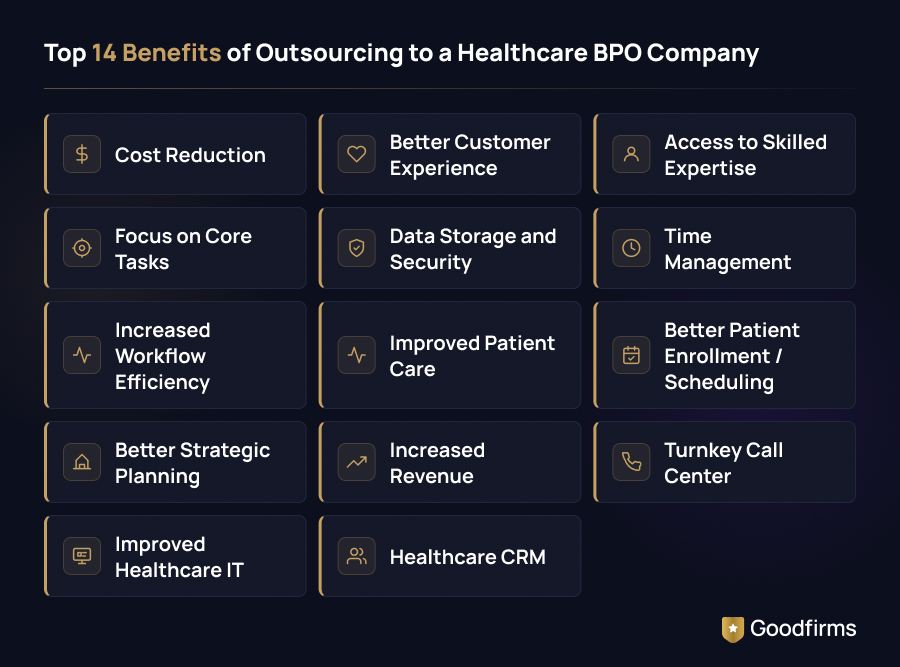
Let’s have a look at these top 14 healthcare BPO advantages in detail.
Cost Reduction
Outsourcing non-core healthcare functions is one of the most effective ways to significantly cut operational costs. By eliminating expenses tied to hiring, training, and maintaining an in-house workforce, healthcare organizations can redirect those savings toward improving patient care, upgrading infrastructure, and driving long-term growth.
A report by Deloitte said that health care organizations can achieve cost savings of up to 28% by outsourcing their services.
Better Customer Experience
In an industry where patient trust is everything, experience matters. Outsourcing administrative and support functions gives internal healthcare staff the bandwidth to focus entirely on what patients need most — compassionate, attentive, and high-quality care.
As per Dialog Health, an overwhelming 92% of individuals stated that having a good patient experience is extremely or very important to them.
Access to Skilled Expertise
Healthcare BPO companies bring to the table a ready pool of highly trained professionals equipped with the latest tools, technologies, and domain knowledge. From complex medical coding to compliance management, outsourcing ensures that specialized tasks are handled by experts — reducing errors, improving turnaround times, and removing unnecessary pressure from in-house teams.
According to the 2024 Revenue Cycle Management Survey, workforce issues that include costs, shortages, and retention rank among the top three stressors for revenue cycle departments, pushing more providers toward outsourcing for access to skilled professionals.
Focus on Core Tasks
When healthcare organizations stop getting bogged down by administrative work, they get back to doing what they do best — delivering exceptional patient care. Outsourcing non-core functions eliminates operational distractions, sharpens organizational focus, and ultimately elevates the overall standard of healthcare services.
As per Yosihealth Physicians spend an estimated 30–50% of their time on non-clinical tasks such as patient documentation, coding, and insurance-related activities — time that directly detracts from patient care and increases stress levels.
Data Storage and Security
Patient data is among the most sensitive information in existence — and protecting it is non-negotiable. Healthcare BPO companies offer secure, multi-site cloud storage solutions with robust data protection protocols, ensuring that critical records including patient histories, prescriptions, invoices, and inventory data are not only safe but instantly recoverable when needed.
According to securiti, The healthcare sector led IBM's league table for breach costs in 2025, with an average of $7.42 million per incident in the United States — more than any other sector — highlighting why secure, outsourced data management is no longer optional.
Time Management
Time is one of the most valuable — and most wasted — resources in healthcare. By delegating repetitive, time-consuming tasks like data entry, billing, and processing to BPO specialists, healthcare professionals can reclaim hours that are far better spent on patient interaction, clinical decision-making, and strategic priorities.
According to the National Library of Medicine, Administrative work consumes one-sixth of U.S. physicians' working hours and lowers their career satisfaction.
Increased Workflow Efficiency
Healthcare BPO partners bring automation software and streamlined processes that dramatically improve the speed and accuracy of day-to-day operations. The result is a leaner, faster, and more productive workflow — one where healthcare facilities consistently deliver top-notch outcomes without stretching their internal resources thin.
As per Market Growth Reports, BPO workflows handled over 2.1 billion tasks globally in 2024, saving healthcare providers an estimated 184 million labor hours — a clear testament to the workflow efficiency gains delivered by outsourcing.
Improved Patient Care
At the heart of every healthcare BPO engagement is a simple but powerful outcome — better patient care. When administrative burdens are lifted from doctors, nurses, and clinical staff, they can dedicate their full attention to what truly matters: diagnosing, treating, and improving the lives of their patients.
As per Forbes, 60–70% of patients will return to the same provider for their next visit after receiving quality care, Whereas 30–40% of them may switch providers.
Better Patient Enrollment/Scheduling
Efficient appointment scheduling is more than a convenience — it's a direct driver of patient trust and revenue cycle performance. Healthcare BPO firms bring structured, professional scheduling systems that minimize no-shows, streamline confirmations and rescheduling, and ensure every available appointment slot is optimized for both patient satisfaction and operational productivity.
As per the Medical Transportation Coalition, missed appointments cost the U.S. healthcare system roughly $150 billion annually.
Better Strategic Planning
When managers, doctors, and administrative staff are freed from the weight of non-core tasks, they can think bigger and plan smarter. Outsourcing creates the organizational clarity needed to set purposeful goals, build efficient workflows, and drive measurable improvements in overall healthcare performance.
According to Auxis, healthcare organizations typically achieve 30–50% labor cost savings, plus an additional 15–30% efficiency gains from standardized workflows, automation, and scale — freeing leadership to focus resources on higher-value strategic priorities.
Increased Revenue
Outsourcing isn't just a cost-saving strategy — it's a revenue-growth strategy. By accessing skilled labor and advanced infrastructure at lower costs, healthcare organizations can significantly improve their profit margins, reduce revenue leakage, and reinvest savings into high-impact areas that directly fuel growth.
As per Market Research Future, healthcare outsourcing can help organizations save 30–60% of costs, directly contributing to improved profit margins and increased revenue, making it one of the most financially impactful decisions a healthcare organization can make.
Turnkey Call Center
A well-managed call center is a direct reflection of a healthcare organization's commitment to patient service. Outsourcing call center operations drastically reduces hold times, improves resolution rates, and ensures patients always have access to professional support — whether for appointment scheduling, billing queries, FAQs, or claims assistance.
According to Black Book of Global Healthcare Information Technology, approximately 36% of healthcare organizations now outsource some or all of their call center operations — a 12% increase from just five years ago.
Improved Healthcare IT
From electronic health records and data security to EHR server management and scalable digital infrastructure, outsourced IT solutions give healthcare organizations access to cutting-edge technology without the burden of maintaining it in-house. The result is a more secure, efficient, and future-ready healthcare operation.
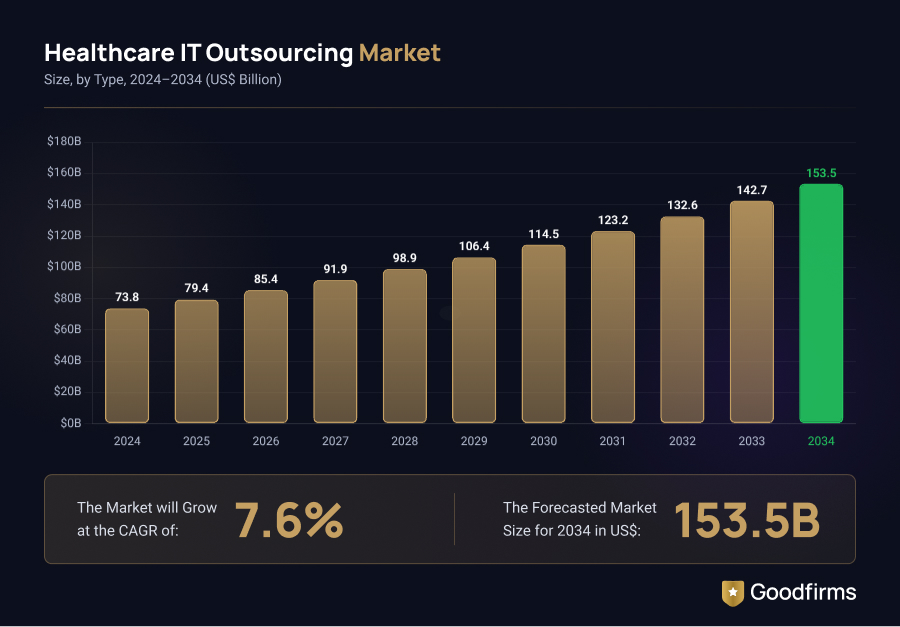
As per Market.us, the global healthcare IT outsourcing market is projected to grow from USD 73.8 billion in 2024 to USD 153.3 billion by 2034 at a CAGR of 7.6% — driven by EHR scale, interoperability targets, rising cyber incidents, workforce shortages, and the growing need for AI-powered digital infrastructure across healthcare systems.
Healthcare CRM
A powerful CRM platform transforms how healthcare providers manage relationships — not just with patients, but with doctors, hospitals, labs, and pharmacies. From appointment reminders and missed medication alerts to health suggestions and wellness event notifications, outsourced healthcare CRM solutions create a more connected, personalized, and proactive patient experience.
As per Mordor Intelligence, Organizations involved in value-based care contracts are 36% more likely to invest in advanced patient-engagement software that ties clinical, financial, and behavioral data into a single record — making outsourced healthcare CRM platforms an essential tool for providers navigating the shift toward outcome-driven care.
Hence, the benefits of outsourcing healthcare business processes are clear — but what's fueling this unprecedented surge in adoption of healthcare BPO services? Several powerful factors are converging to make healthcare business process outsourcing not just an option, but an operational necessity for modern healthcare organizations worldwide.
Goodfirms' Insights: Healthcare organizations should view BPO not as a vendor relationship, but as a strategic partnership — one that simultaneously reduces costs, strengthens data security, elevates patient care, and unlocks the operational bandwidth needed to drive sustainable, long-term growth.
Factors Contributing to the Rise of Healthcare BPO
With the increase in the number of hospital admissions worldwide, there is also a huge demand for efficient healthcare services. Embedding digitalization in healthcare operations drives superior outcomes, value realization, and streamlined operations. Such an initiative helps healthcare companies sustain and work efficiently in the future.
Black Book of Global Healthcare Information Technology says that - With 55% of hospitals and 79% of physician organizations expected to lose money, outsourcing has emerged as a critical solution — with promises of double-digit cost savings estimated between 27% and 64% — while simultaneously allowing administrators to focus on patient outcomes and long-term sustainability.
Intelligent automation enables productivity gains and transactional accuracy. It also contributes to cost savings. Healthcare business process outsourcing (BPO) companies offer such facilities to healthcare operators. The market is growing and is likely to grow further in the coming years.
Minimized Errors
Healthcare organizations can suffer financial losses and reputational damage if errors are frequent. Most healthcare organizations fall behind other data management and billing rules, leading to incorrect billing and fines. Staying updated requires time and effort, which can be achieved by outsourcing. A team of professionals with expertise in this field can complete these tasks perfectly and reduce the scope of committing errors.
Low Operating Cost
Healthcare organizations do not need to spend extra money on software installation or training for unrelated tasks because a professional service provider takes care of all those things. Additionally, the staff of outsourcing firms is ready to handle all menial duties and has access to the most recent equipment and technology to complete tasks. A team of experts can help lower operating costs by reducing the need for infrastructure and training.
Delegation of Non-Core Work
The main advantage of working with an outsourcing firm is that it allows healthcare organizations to delegate non-core tasks and concentrate solely on their core business operations. In the healthcare industry, their main priority is to enhance the quality of care to patients, which not only enhances the reputation of their firm but also encourages patients to return whenever they experience a health issue, ultimately increasing the trust factor.
Provide Valuable Data Insights
When healthcare organizations outsource data management services, they get data regarding the areas to be upgraded and need rectification. With these data insights, healthcare practitioners can determine what routine and administrative modifications are required.
Additionally, the information provides a detailed picture of the patient's medical background so that the healthcare provider can choose which region needs extra care and attention. The data overview will also make recommendations regarding which processes should be abandoned and which need more attention and care.
Healthcare BPO Companies Reduce the Chances of Delays
Medical claims must be paid promptly for healthcare facilities to function efficiently, but if payments are delayed, the medical billing team will have an increased burden due to denied claims, which will put additional strain on them. Payment delays are most frequently caused by denied claims, which can be caused by several things, including overworked employees, which can lead to a high rate of billing or coding errors, or having to train new doctors or staff regularly. Outsourcing these tasks to healthcare BPO companies reduces the chances of delayed claim processing and faster payments.
Healthcare BPO Firms Consist of Qualified Staff
Access to more substantial talent resources is another benefit of outsourcing. Healthcare organizations can only access a small percentage of skilled workers by hiring locally. Outsourcing allows them to access more qualified and experienced people worldwide.
Faster Services and Exceptional Patient Experiences: Patients are more interested in quick delivery and high-quality services. A BPO company consistently provides exceptional patient care and supports high patient loyalty and retention.
Goodfirms' Insights: The most resilient healthcare organizations are those that strategically embrace outsourcing not as a cost-cutting measure but as a long-term operational model. The ideal healthcare BPO company is the one that combines qualified global talent, intelligent automation, and delegated non-core workflows to deliver faster services, fewer errors, and superior patient experiences.
Precisely, the rise of healthcare BPO is backed by strong market forces — but sustainable growth demands more than just opportunity. Below are the challenges that healthcare BPO companies face.
Challenges that Healthcare BPO Companies Face
From safeguarding sensitive patient data and managing claim rejections to keeping pace with rapid technological advancements and rising healthcare costs, BPO companies operating in the healthcare space must constantly navigate a demanding and high-stakes environment. Here is a closer look at the key challenges that healthcare BPO companies encounter, and why addressing them head-on is critical to delivering consistent, compliant, and high-quality outsourcing services.
Patient Data Security and Privacy
In an industry built on trust, information security is non-negotiable. As patient data moves across multiple systems and repositories, the risk of compromise at every transfer point is a growing concern. Effective data security means deploying robust hardware and software solutions, collecting only necessary data, and permanently erasing information that is no longer needed. For healthcare BPO organizations, the stakes are even higher. With cyberattacks growing more sophisticated and global privacy regulations continuously evolving, BPO companies must stay ahead of an increasingly complex security landscape — treating HIPAA, GDPR, and other data protection standards as fundamental pillars of operational credibility.
How to Address this Challenge?
Healthcare BPO companies can address this challenge by investing in end-to-end data encryption, multi-factor authentication, and regular security audits to proactively identify and eliminate vulnerabilities before they escalate. Equally important is ensuring all staff are continuously trained on the latest data privacy regulations and compliance protocols — building a security-first culture that protects patient data at every stage of the outsourcing process.
Follow-Up Claim Rejections
Claim denials are among the most financially damaging challenges in healthcare administration. Unmanaged denials directly erode revenue, making proactive denial tracking a mission-critical function for healthcare BPO firms. The most common causes include absent medical credentials, insufficient supporting documentation, and unrecognized service or equipment codes. BPO companies address this by streamlining claim processing, maintaining accurate chart notes, and implementing robust medical coding systems — significantly reducing rejection rates before they impact cash flow. Additionally, continuously monitoring denial codes not only minimizes future rejections but also strengthens overall medical billing practices, helping healthcare providers maintain financial stability and operational efficiency.
How to Address this Challenge?
Healthcare BPO companies can effectively tackle claim denials by implementing AI-powered denial management systems that automatically identify, categorize, and flag potential rejection triggers before claims are submitted — dramatically reducing first-pass denial rates. Partnering with experienced medical coding specialists who stay current with the latest coding standards, payer-specific requirements, and documentation guidelines ensures that every claim submitted is accurate, complete, and fully compliant — protecting healthcare organizations from unnecessary revenue losses.
Staying Up-To-Date with Technological Advancements
Keeping pace with rapidly evolving technology is one of the most pressing challenges healthcare BPO companies face today. In 2026, the healthcare industry is at a pivotal moment, driven by the rapid adoption of generative AI, evolving governance frameworks, and a renewed focus on workforce empowerment, yet many organizations are struggling to keep up.
As per Netguru, Healthcare AI is projected to grow at a significant CAGR of 19.10%, making it imperative for BPO companies to continuously upgrade their capabilities, invest in staff training, and forge strategic technology partnerships — or risk falling dangerously behind in an increasingly AI-driven healthcare landscape.
How to Address this Challenge?
Healthcare BPO companies can overcome the technology evolution challenge by investing in continuous staff upskilling programs and forging strategic partnerships with AI-native healthtech vendors to integrate cutting-edge tools without building everything in-house. Working with Top healthcare AI companies can help you adopt a phased roadmap — starting with automation of repetitive tasks and progressing toward predictive analytics and autonomous workflows — that ensures organizations scale their capabilities sustainably while staying aligned with rapidly evolving governance frameworks.
Ensuring Quality of Work
Accurate payment posting is fundamental to maintaining healthy cash flow — recording receipts meticulously and ensuring every detail is logged enables the billing team to validate account balances and sustain uninterrupted billing cycles. Poor data quality, however, poses far greater risks: errors stemming from incomplete, duplicate, or non-standardized information can directly compromise patient safety, trigger costly legal liabilities, delay treatments, and distort reimbursements. Beyond clinical impact, inaccurate data undermines medical research and erodes provider reputation — making data integrity not just an operational priority, but a critical pillar of responsible healthcare delivery.
How to Address this Challenge?
Healthcare BPOs can address payment posting and data accuracy challenges by implementing AI-powered automation tools that validate, standardize, and reconcile claims in real time — significantly reducing human error at the point of entry. Equally important is establishing rigorous audit protocols, continuous staff training on data governance standards, and robust EHR integration to ensure every transaction is accurate, complete, and compliant from the outset.
Constant Rise in Healthcare Prices
Escalating healthcare costs remain one of the most pressing challenges for BPO firms, shaped by the competing interests of payers, insurers, device manufacturers, and providers — a fragmentation that inevitably breeds conflict and inefficiency. As economist Martin Gaynor of Carnegie Mellon University warns, healthcare spending is increasingly unsustainable. The financial burden directly impacts revenue cycles, as cost-deterred patients skip follow-ups and lab tests, leading to poorer outcomes. Compounding this, inadequate resources slow critical data analysis, leaving organizations ill-equipped to respond swiftly — making cost containment and data privacy twin imperatives for sustainable healthcare BPO operations.
How to Address this Challenge?
Healthcare BPOs can overcome rising costs and data privacy challenges by leveraging predictive analytics to identify revenue leakage, streamline prior authorizations, and proactively engage cost-deterred patients through automated outreach programs that improve follow-through on care. Simultaneously, investing in HIPAA-compliant, AI-driven data security frameworks and fostering transparent collaboration among payers, providers, and insurers can reduce systemic inefficiencies — ultimately driving down operational costs while safeguarding patient data integrity.
Goodfirms' Insights: Healthcare BPO companies should treat every operational challenge — whether data security, claim denials, technological disruption, or rising costs — not as isolated obstacles, but as interconnected risks that demand a unified, proactive, and technology-driven outsourcing strategy to ensure long-term resilience and compliance.
Despite these challenges, a number of specialized and full-service healthcare BPO providers have risen to the occasion — building capabilities, investing in technology, and delivering solutions that help healthcare organizations navigate complexity with confidence. Here are some of the prominent key players making a significant impact in the industry:
Healthcare BPO Market: Key players
The healthcare BPO market is shaped by a diverse mix of best medical billing companies and full-service outsourcing providers, each playing a pivotal role in helping healthcare organizations reduce administrative burden, improve revenue cycle performance, and maintain compliance in an increasingly complex regulatory environment.
Transcure
A top-rated medical billing company in the United States, Transcure has been supporting practices of all sizes since 2002 with specialized medical billing and coding services. With over 1,100 certified billers and coders and headquarters in Dallas, Texas, and Woodbridge, New Jersey, the company delivers personalized support to healthcare providers across multiple specialties.
Helpware
Helpware is a leading People-as-a-Service outsourcing company recognized for delivering exceptional BPO solutions, trusted by clients such as Google and Microsoft. The company offers a wide range of services, including content control and verification, back office services, and startup acceleration, helping businesses streamline operations, enhance efficiency, and achieve scalable growth.
Aegis Healthcare Solutions
Aegis Healthcare Solutions is a leading US-based provider of medical billing and revenue cycle management services, with over 250 satisfied healthcare providers placing their trust in the company.
Sun Knowledge Inc.
Sun Knowledge Inc. has been empowering healthcare practices to efficiently manage their revenue cycles with a full set of services in medical billing, coding, and virtual assistance, working with both payers and providers — giving them a unique edge over other RCM companies.
MediBill MD
MediBill MD is a medical billing service provider offering a range of revenue cycle management solutions to professionals and practices across 45+ specialties. Its team of certified billers and coders leverages advanced tools and software to automate all steps of the revenue cycle, from pre-registration to patient collection and denial management.
Prima Systems
Prima Systems is a leading provider of healthcare business process outsourcing services, specializing in a wide range of BPO solutions tailored to client needs, with cost-effective and highly personalized healthcare BPO solutions that allow clients to focus on delivering quality care.
Flatworld Solutions
Flatworld Solutions is a global company offering IT, data science, business consulting, and outsourcing solutions since 2002, incorporated with a focus on leveraging technology to help businesses streamline processes, enhance efficiency, boost productivity, and improve effectiveness.
These companies collectively represent the breadth of the healthcare business process outsourcing market — from niche medical billing specialists to large-scale global outsourcing providers — each playing a pivotal role in helping healthcare organizations reduce administrative burden, improve revenue cycle performance, and maintain compliance in an increasingly complex regulatory environment.
Healthcare BPO in 2026: The Strategic Imperative for a Smarter, More Resilient Healthcare System
The healthcare BPO landscape in 2026 is no longer defined by cost savings alone — it is defined by transformation. From medical coding and claims processing to AI-driven revenue cycle management and patient care coordination using inbound call center services, outsourcing has evolved into a strategic cornerstone for healthcare organizations determined to thrive in an increasingly complex, technology-driven environment.
With increasing competition in the healthcare market, the message is clear: organizations that embrace outsourcing as a long-term operational model — rather than a short-term fix — are the ones best positioned to deliver superior patient outcomes, maintain regulatory compliance, and sustain financial performance in the face of rising costs and rapid technological change.
The challenges are real — data security threats, claim denials, workforce pressures, and escalating healthcare prices demand constant vigilance. But as this guide has demonstrated, every challenge has a solution, and the right healthcare BPO partner is often the most powerful one.
Whether you are a hospital system navigating complex revenue cycles, a physician practice overwhelmed by documentation, or a healthcare executive rethinking your operating model, the path forward is clear: partner strategically, outsource intelligently, and let specialized expertise do what it does best — so your organization can focus on what matters most: delivering exceptional patient care.