“Customer experience isn’t an expense. Managing customer experience bolsters your brand.”
- Stan Phelps, Author and Speaker
We live in an age where patience is extremely low among the customers, and there is a pressing need for businesses to deliver exceptional customer satisfaction and convenience at speed.
The most innovative businesses are evolving with the advancing technologies and trends.
Help desk systems in modern times are not just limited to a support function, rather they are among the most integral components to satisfy and retain customers. When implemented and managed, it could become the perfect tool to strengthen trust, nurture loyalty, and create better growth opportunities. But, if the traditional help desk tools are not replaced, it can become a liability that can silently affect your customer retention and acquisition. And, that means, Help desk systems of yesteryears can’t by itself fulfil today’s service requirements. It clarifies that the opportunity of help desk is not restricted to merely resolution of customer issues, but it spreads widely to customer experience, satisfaction, retention, referential acquisition, trust on a brand, and more.
The Hubspot report states that 90% of customers expect an immediate response which means shorter response time. This is an inflection point. Customer support is different today.
This blog tries to shed some light on the critical aspects of a poor help desk, a few common challenges, their fixes, and scenarios, along with the advantages of leveraging modern-day AI-powered help desk systems.
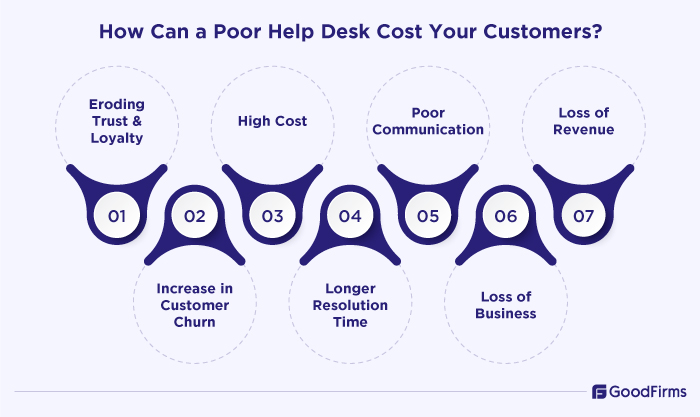
How Can a Poor Help Desk Cost Your Customers?
Resolution of solutions in a faster way, better way, and effective way is the current customer support expectation. Companies should try to break down their approach from siloed applications.
From eroding loyalty to increased churn rates and revenue loss, there are many ways a poor help desk costs your customers. If implemented properly, help desks can improve trust, reduce churn, and drive lifetime value for both customers and business.
However, poor and outdated implementation can lead to slow response, improper communication, and data silos that can cost a business. Some of these are as follows;
Eroding Trust and Loyalty
Customers expect empathy, consistency, and quick resolution of issues from their brands for an enhanced customer experience.
When help desk teams fail in delivering this, customers often feel that their brands don't respect and value them, leading to eroded trust and loyalty.
Additionally, poor data management and protection issues such as lost tickets, no context, mis use of personal info, etc., can also negatively impact the trust and loyalty of customers.
Increase in Customer Churn
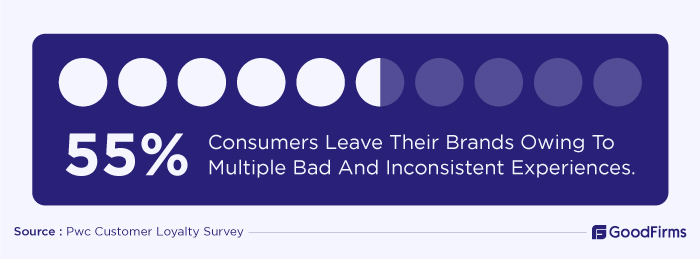
When frustration of customers keeps increasing due to longer wait times, repeating their concerns multiple times, or dealing with unhelpful responses, their chances of shifting to competitors increases manifold, meaning increased churn rate.
High Cost
Poor help desk strategies can also lead to increased cost of customer support. When not implemented or maintained properly, help desks can create financial issues for businesses. Everything, whether follow ups, constant escalations, or agents with inadequate tools, adds to operational costs.
Longer Resolution Time
Another way a help desk can cost your customers is due to slow response and resolution time. Customers expect instant support within minutes. But, fragmented workflows, minimal automation, insufficient documentation, etc., keeps the tickets unresolved for hours or days, creating hurdles in promptly responding to and resolving user queries. The longer times impact both customers and businesses.
Poor Communication
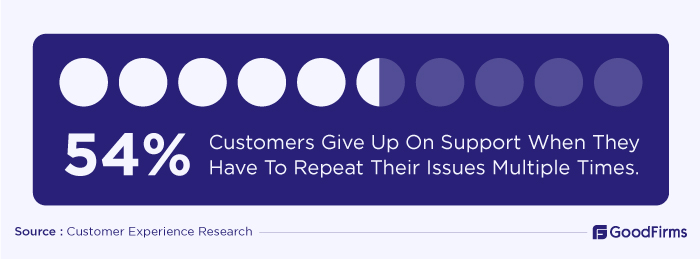
Poor communication caused by inefficient help desk systems can also set customers' moods off. When help desks do not properly integrate all communication channels effectively, customers have to repeat their concerns multiple times to different agents. Additionally, poorly trained agents, lack of context, and silence during ticket handling further worsen the situation and customer frustration.
Loss of Business
Poor help desk systems not only cost customers but also carry a reputational risk. When customers feel dissatisfied with a brand's help desk support, they can share their frustrations on social media platforms, review sites, personal networks, etc. These are among the major sources through which negative experiences of customers spread quickly. This can result in a negative brand image which can deter customers even before they engage with the organization.
Loss of Revenue
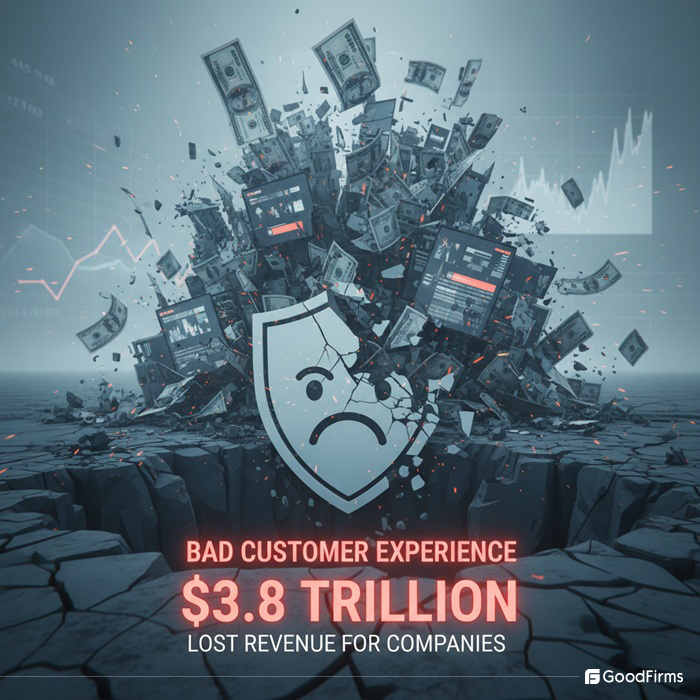
One of the most concerning dangers of poor help desk systems is loss of revenue. The financial consequences of a poor help desk not only impact the operational costs but also influence the company's revenue stream.
When customers leave due to bad service, businesses lose not just sales but also renewals, cross-sell opportunities, upsell potential, etc., meaning loss of revenue.
Loyal customers bring profit for customers, and once they leave, lost income and missed opportunities are inevitable.
Top Help Desk Concerns and How to Fix Them
There are several help desk concerns that are impacting modern businesses and their customers. These help desk concerns could seem inevitable, but so is their solution. With certain practices and considerations, these concerns can be prevented to ensure higher satisfaction and experience of customers. Here are are a few top help desk concerns and ways to fix them;
Weak cybersecurity
With weak cybersecurity, businesses can become the prime targets for hackers to gain unauthorized access to the company's systems.

The most common reasons behind weak cybersecurity postures include human error, weak credentials, outdated help desk platforms, poor authentication protocols, improper access management, etc. One small reason and negligence can lead to a data breach, doing irreparable damage to the customer trust and brand reputation.
To prevent data theft and improve cybersecurity posture, support teams can implement modern help desk systems with the following features;
- Role-based access control
- Multi-factor authentication
- Advanced data encryption
- Improved audit trails
- Automated threat detection
- Automated patch management
Scenario:
A company uses a traditional, outdated ticketing system with poor security and encryption to manage its help desk functions, making its data vulnerable to cyberattacks. This is a serious concern for customers and they can switch brands if proper data integrity and safety are not provided.
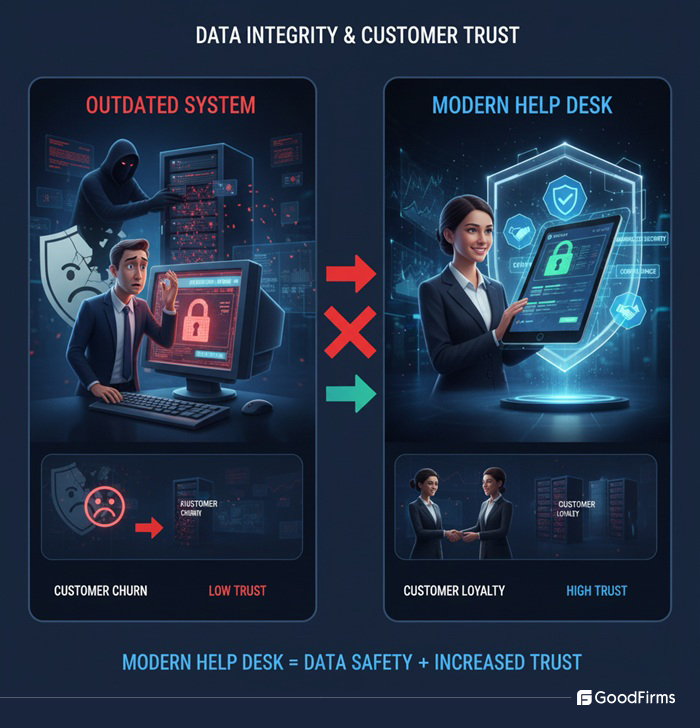
If the company uses a modern help desk tool with advanced security and compliance measures, the theft can be avoided or its impact can be limited to a small extent, thereby ensuring credibility of the company's data and increasing the customer trust.
Outdated knowledge base and self-service options
As per Gartner’s Self-service research, 43% of customers couldn't find the appropriate answers to their questions in self service. The reason can be any, like no dedicated teams, undocumented policy changes, poor search capacity, scattered content across pdf, emails, and notes, etc. As a result, customers face issues in finding relevant and accurate answers on their own for their concerns, which often leads to poor customer experience and satisfaction.
A help desk system can help fix such issues through the following ways;
- Implementing automated knowledge bases and self-service options.
- Assigning responsibility for each KB category to a subject-matter expert.
- Setting automated alerts to flag articles that have not been updated recently.
- Aligning knowledge base articles with product release cycles.
Some AI-powered help desk systems can continuously learn from ticket data, allowing help desk teams to dynamically update the knowledge bases and self service options.
Scenario:
A SaaS company that recently launched an update to its core software forgot to update the knowledge bases and self-service options. In such a scenario, when users look for answers related to the new versions, they find outdated steps and information, which adds up to their frustration.
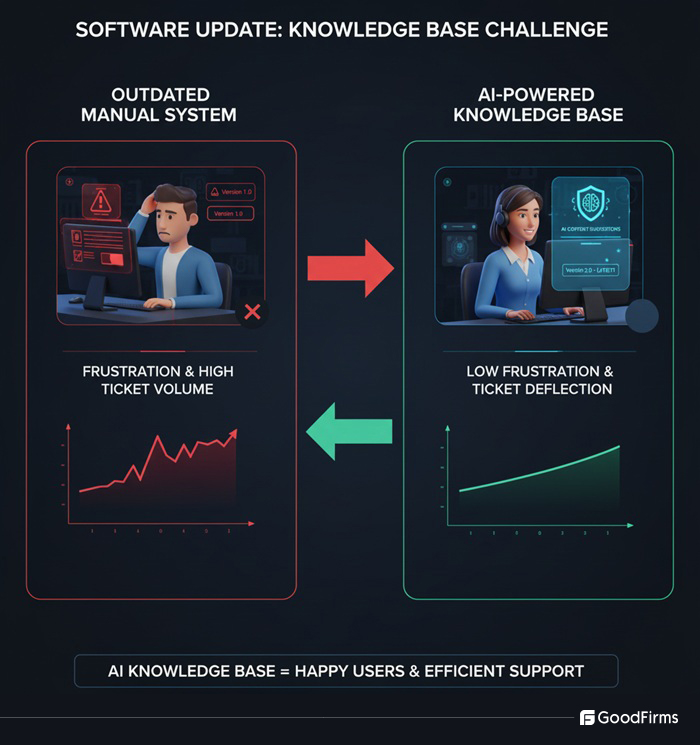
Here, the company can benefit from AI-powered knowledge base management functionalities that can update content suggestions based on the latest tickets. AI can flag the sudden rise of tickers about the new version, helping support teams to create fresh knowledge bases with updated information.
Fragmented customer support channels
Modern customers use an average of 3 channels to engage with a company or its support, forcing businesses to use multiple customer support channels, including email, call, chat, social media, etc., in coordination, to rapidly serve customers. However, sometimes these channels work in silos, leading to inconsistent service, lost context, slower resolution, etc., leading to customer dissatisfaction. Common reasons behind this include legacy systems, decentralized ticket tracking, lack of channel prioritization, data silos, and many more.
Below mentioned are commonly used help desk support channels;
- Call
- Live chat
- Social media
- Chatbots
- In-app support
Help desk teams can fix this problem through the following solutions;
- Implementing omnichannel-powered help desk systems
- Centralizing customer interactions into a single dashboard
- Enforcing unified SLAs across channels
Through these solutions, businesses can eliminate the hassle for both customers and businesses in simultaneously managing the tickets from multiple channels.
For instance, in a case study from Freshdesk, a prominent racking and warehousing solutions provider was struggling from siloed support channels. The company used a combination of emails and tools to handle incoming tickets and escalations which eventually led to inefficiencies. The company shifted to Freshdesk, a popular help desk tool to unify different communication channels.
Scenario:
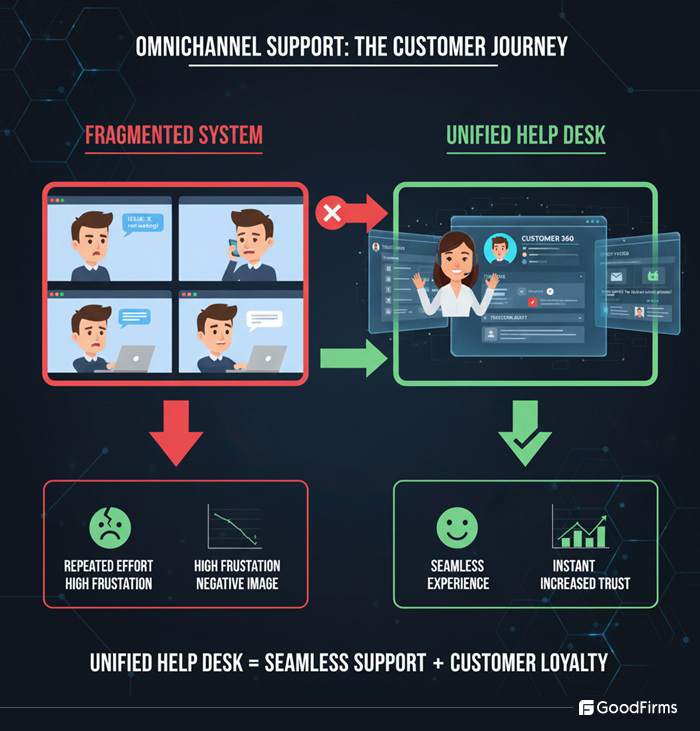
A brand uses multiple channels, such as email, live chat, social media, and phone calls to handle help desk tickets. When encountered with an issue, a customer first raises the query on live chat. But, when the company fails to resolve the issue on live chat, customers follow up on social media.
In such a scenario, the social media team doesn't have the required information into earlier interactions, forcing customers to repeat their entire issue. This contributes to growing frustration and a negative image of the business in front of customers.
Powerful AI-based help desk tools can eliminate these situations as they can automatically merge the queries from different channels under one customer ID. Through the customer ID, support teams can instantly see the chat transcript, pending issue, and other ticket details associated with that particular customer. Some tools can even flag the customer's frustration, allowing teams to prioritize their case to reduce churn risk.
Lack of AI and automation
92% businesses plan to invest in AI in the upcoming years. However, certain help desk challenges, such as unclear strategy, weak MLOps, lack of trained employees, resistance to change, integration issues, poorly trained AI and LLM models, inadequate data foundations, etc., can lead to poor implementation of AI and automation that can negatively influence the customer's mindset.
Also, adopting tools without prior planning and prioritizing cost savings over customer satisfaction can be among the major reasons.
To fix such issues, help desk teams should;
- Develop a clear strategy to use help desk systems
- Focus on easy-to-use UI
- Leverage continuous learning loops
- Train the workforce to adapt to technology
- Train AI and LLM models
- Centralize data
- Blend automation with agent assist tools
Through these, support teams can ensure effortless and easy implementation of AI and automation, allowing faster resolutions and stronger customer retention.
For instance, a leading US university was experiencing issues organizing and structuring their activities due to improper implementation of a help desk tool. The university switched to an AI-powered help desk tool to eliminate the challenges. Through this, the university has reportedly achieved a 70% first call resolution rate.
Scenario:
A company deploys an AI-powered chatbot for instant support. However, they forget to train the chatbot for technical issues, rather it can only handle common queries.
When a customer interacts with it and reports a network outage error, it can only give answers to common queries without understanding the complete context and redirecting users in the right way, leaving the customer dissatisfied.
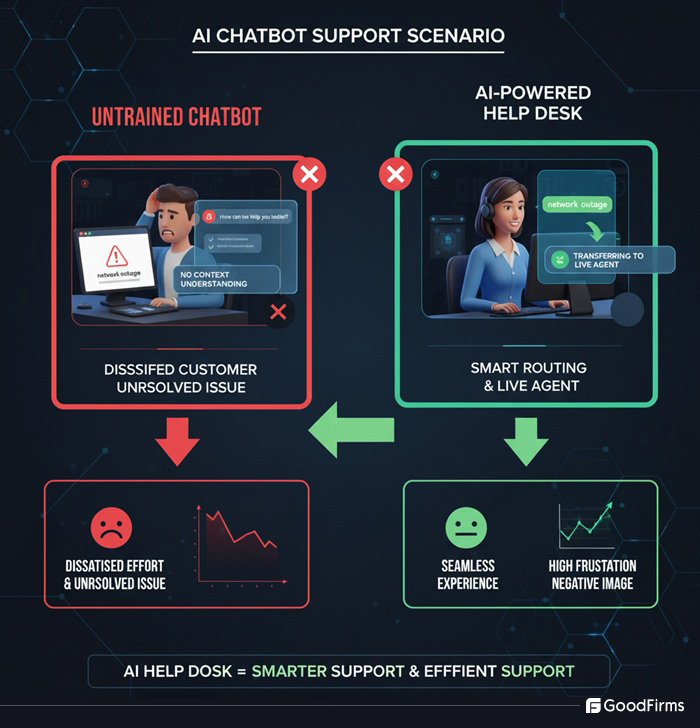
AI-powered help desk tools can help businesses fix such issues as they can detect the network outage keyword and directly bypass the query to live agents instead of showing generic answers.
Lack of personalized support
Businesses have to put personalization in front and center as this matters to the users the most. It is a way to customize experiences to individual needs and requests. When the helpdesk support system acts generic, it may leave an impression that businesses don't value their customers enough. This typically happens due to canned replies, lack of context, data silos, inadequate segmentation, poor insights, overworked agents, etc., that affects the ability of help desk teams in serving personalized support.
Businesses can implement a sophisticated help desk software that includes;
- Centralized data and dashboards
- Predictive analytics
- Seamless integration with existing tools
- Dynamic templates
- Real-time insights into customer behavior
- Highly understandable documentations
- Community forums
- Self service capabilities
Through these features, employees can efficiently leverage analytics for delivering personalized support, sending personalized updates, predicting customer intent, and providing tailored responses to customers.
Scenario:
A loyal and premium customer of a retail company reached out to the help desk for a frequent billing related query that is caused due to accounts issue. Due to poor personalization capabilities, agents treat it as a one time issue without understanding the full context. This lack of awareness makes customers feel that the company is not focusing enough on the resolution of issues, prompting them to cancel the subscription.
If the company has implemented a reliable help desk tool with powerful personalization capabilities, the agents could have access to the customer history showing a constant pattern of billing-related issues. The help desk system could have flagged the query as a systematic issue not an one time problem, allowing agents to serve personalized suggestions to resolve the issue permanently instead of just delivering basic and general support.
Inadequate reporting and analytics
Many organizations suffer from poor reporting and analytics functionalities, which limit a brand's capability to effectively make decisions and deliver enhanced levels of help desk support. Most of the reporting and analytics issues are caused when different metrics, such as support interactions, ticket logs, customer feedback, CRM data, etc., are stored in different systems that haven't been integrated together.
Here are the some leading factors that lead to inadequate reporting and analytics as follows
- Decentralized data storages
- Lack of clear KPI definitions
- Poor data quality
- Duplicate records
- Missing metadata
- No real-time dashboards
- Over-reliance on raw reports
Lack of clear KPI definitions, poor data quality, duplicate records, missing metadata, no real-time dashboards, and over-reliance on raw reports can also lead to inadequate reporting and analytics.
To prevent or fix such types of help desk challenges, help desk teams should;
- Unify different data sources
- Standardize ticket tagging and metadata
- Add custom metrics
- Define meaningful and relevant KPIs
- Leverage real-time dashboards and insights
- Continuously review and iterate the reporting frameworks
Scenario:
An IT company is experiencing an increased churn rate and low CSAT scores, but their weekly reports suggest no discrepancy and show everything is healthy. Due to improper reporting and analytics capabilities, the system failed to capture that agents are continuously reopening old tickets, and many low priority tickets are going unanswered for longer times.
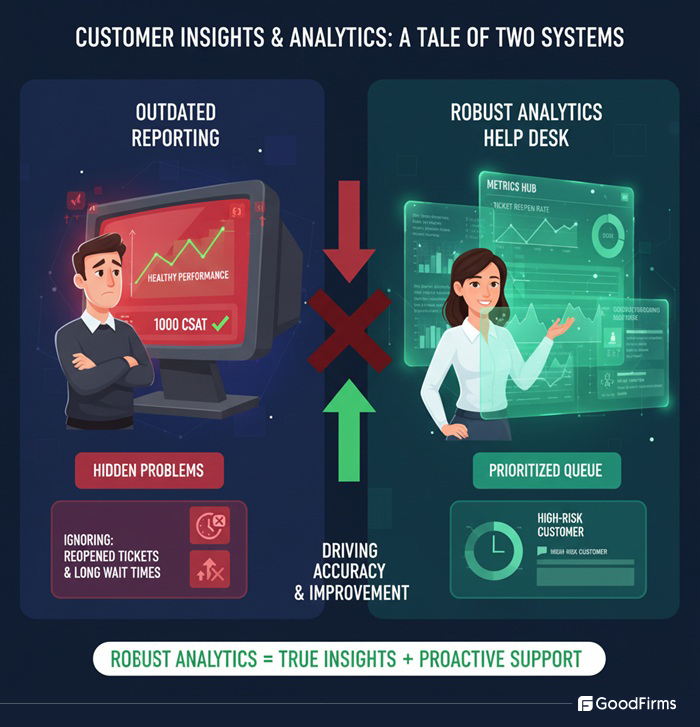
A help desk system with robust reporting and analytics functionalities can prevent such scenarios. It helps support teams configure metrics like ticket reopen rate and CSAT by customer segment to ensure no parameter is left behind in the overall reporting and analysis.
Poorly trained staff and help desk teams
“If we consistently exceed the expectations of employees, they will consistently exceed the expectations of our customers.”
- Shep Hyken, Award Winning Speaker and Author
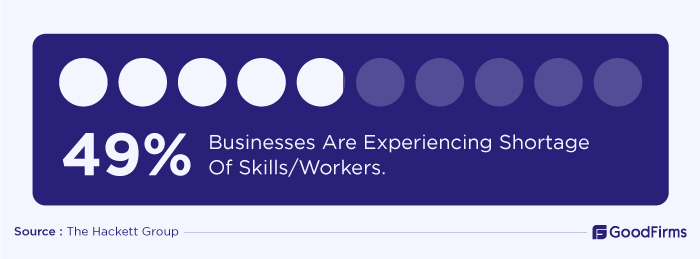
The reasons can be many, such as no particular training given, lack of product knowledge, poor soft skills, issues in adapting to new technology, etc. As a result, employees may not be equipped with the required help desk expertise, meaning they may fail in leveraging the help desk systems optimally and often struggle with basic troubleshooting.
This often contributes to increased customer dissatisfaction.
Fixing these challenges is easy through the following ways;
- Conducting ongoing micro training sessions
- Implementing Agentic AI and AI-powered help desk tools
- Simulating training environments in a sandbox
- Leveraging feedback and coaching loops for everyone
- Forcing employees to explore new technologies
- Providing cross-training and call shadowing sessions
- Tracking training with analytics and agent performance
Scenario:
A startup, who recently saw a growth spike, hired 10 new support representatives. They were provided with training to handle and resolve customer tickets. However, when a customer asks regarding a new feature that has been released recently, agents fail to properly respond to their answer and give outdated instructions from an old knowledge base article. This ends up to be a bad experience for the customer.
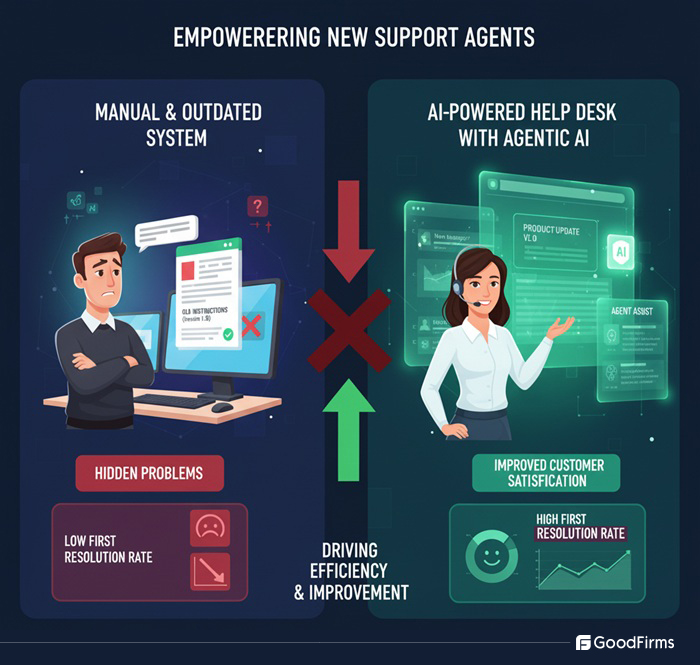
Advanced Agentic AI with product update briefings could help avoid such help desk challenges. In addition, implementing a help desk with agent assist features, robust documentation, community support, progress monitoring, etc., can improve customer experiences.
Longer first response and ticket resolution times
Customers hate waiting and they never hesitate to leave a brand if their time is not valued enough. Still, some businesses struggle with slow response and resolution times due to various high ticket volume, manual triage and assignment, escalation of too many tickets, inefficient workflows, understaffing, and many more reasons. Additionally, no prioritization mechanisms and clogged higher-level queues also leads to longer response times.
For fixing these concerns promptly, support teams should use automated help desk tools that offer the following capabilities;
- Automated ticket triage and routing
- SLA management with alerts
- AI-powered ticket suggestions
- Priority queue configuration
- Real-time monitoring
- Intelligent resource planning
Help desk teams can also slash resolution time by over 50% with AI-backed service/help desk tools.
For instance, FinChoice, a prominent financial service provider was struggling with a huge number of ticket handling, i.e., 60K tickets/queries per month, which led to a higher resolution rate. The company switched to Freshdesk, an automated help desk tool, to efficiently resolve customer issues. As a result, the company achieved a whopping 80% CSAT rating.
Scenario:
A social media platform launches a new UI feature to enhance customer experience. However tickets tripled within a few hours of launch due to some bugs. This results in customers complaining about longer response and resolution times.
Implementation of automated help desk tools could help the platform smartly route the new tickets to a specialized queue. Some automated help desk systems also allow teams to set up auto responders that can state acknowledgement and timeline, deploy AI chatbots that can handle repetitive questions about new features, and temporarily assign agents from other departments to handle the high volume of tickets.
Poor integration capabilities
Help desks need integration with different organizational tools, such as CRM, billing and invoicing, order management, inventory management, remote monitoring and management, etc. Without proper integration capabilities, help desk teams need to jump between multiple tools even if it is only for a single ticket. This slows down the resolution process, resulting in a poor user experience. Legacy help desk systems, poor configurations, compatibility issues, SaaS sprawl, etc., are among the common reasons behind poor integration capabilities.
A help desk system with strong omnichannel integration capabilities can resolve the above mentioned issues. Businesses can also integrate their help desk with AI CRM to know their customers better and to deploy personalized AI chatbots to communicate more effectively and reasonably.
These tools offer native integrations, bi-directional sync, centralized data and dashboards, broken/unused integration monitoring, and many more to ensure a continuous flow of data.
Many help desk tools also support integration with middleware/iPaas solutions to integrate business apps without custom coding.
Scenario:
A retail company's help desk receives a ticket stating a customer was charged twice for a single order. Due to improper integration, the support agent could not verify the billing directly and had to send a request to the finance team. By the time a reply came from the billing side, the customer had already disputed the charge with their bank, resulting in reputational harm.
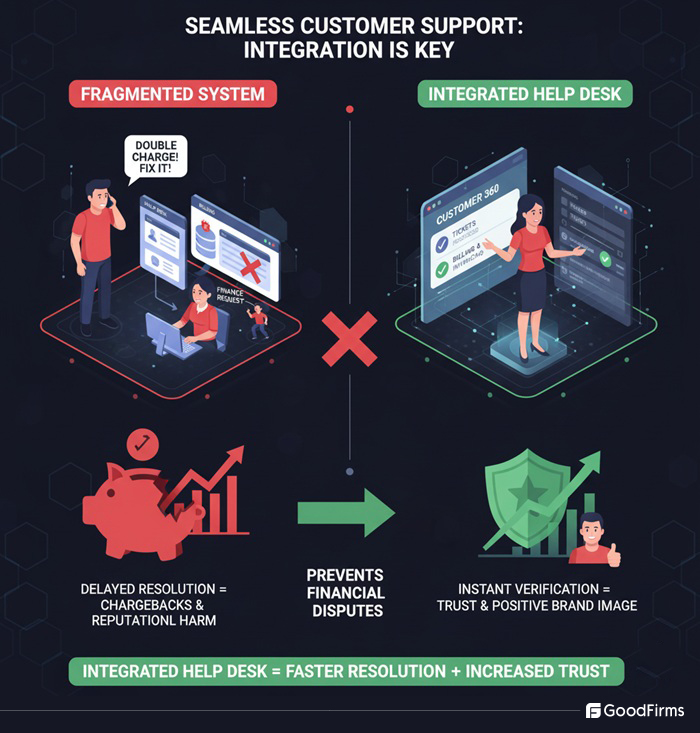
This problem could have been prevented if the help desk system supported integration with billing and invoicing.
How Can AI-powered Help Desk Solutions Improve Customer Support?
Modern customers need instant and personalized support. Traditional help desk systems lack the required functionalities through which instant support can be guaranteed. But, with the emergence of AI-powered help desk solutions, service and support teams can provide guaranteed instant support with enhanced experiences.
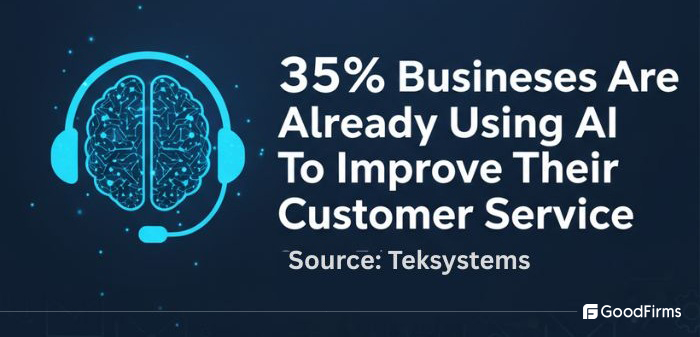
The help desk software market is anticipated to cross $14.3 billion in 2025 and is expected to reach $35 billion in the upcoming years with a CAGR of 9.4%. Behind this immense growth, AI is one of the key drivers that comes with better flexibility, accessibility, and scalability.
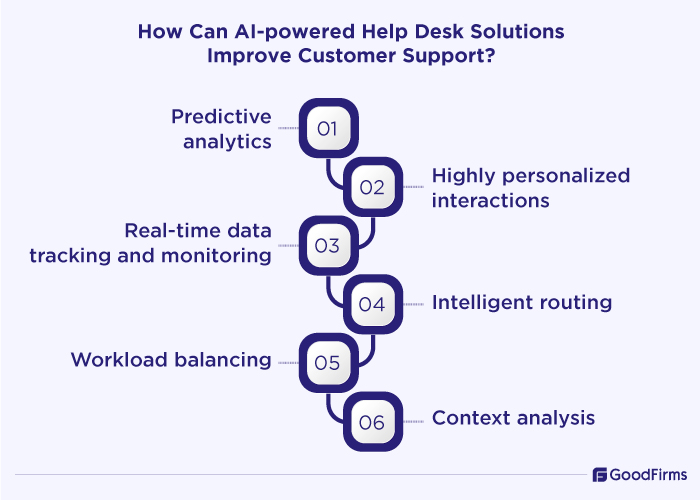
From predictive analytics and highly personalized interactions to real-time data, intelligent routing, and workload balancing, AI-powered tools offer powerful capabilities to efficiently deliver help desk support with ease. Ticketing software in the AI era can deliver smarter support with enhanced efficiency.
AI-powered help desk solutions come equipped with enhanced predictive models and algorithms that can continuously learn from every interaction, past tickets, customer behavior, etc. This knowledge, then can be used to deliver personalized, proactive, and quick support at scale, analyze the complexity of incoming tickets, and automatically categorize and reroute requests to the best available agent based on expertise, availability, workload, and various other factors.
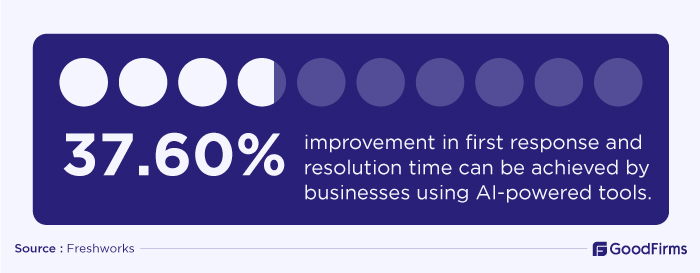
Not only these, but AI-powered help desk solutions can also efficiently interpret the ticket context, tone, emotions, sentiment, intent, etc., in real-time, allowing them to provide human-like interactions. Apart from these, AI can also deeply analyze the comprehensive insights in real time to reveal systematic issues that impact the customer experiences so that the help desk teams can take proper steps to prevent them.
Conclusion
“Happy customers are your biggest advocates and can become your most successful sales team.”
- Lisa Masiello, Author, Advocate, and Entrepreneur
A help desk is one of the few components that can either elevate or demote the brand image of a company. It directly affects the satisfaction and experience level of customers. It holds tremendous potential in streamlining the support functions, ensuring timely resolution of customer issues. But, blindly using and implementing a help desk tool can bring disastrous results, such as unresolved tickets, delayed responses, impersonal interactions, etc.
Businesses lacking proper clarity on the help desk systems can go through this ultimate guide to the cost and feature comparison of the top help desk software systems to get an idea on the features, usage, and cost of modern help desk tools. This guide makes it easy for businesses to select a reliable help desk software while considering each and every critical aspect. Businesses can also opt for free and open source help desk software tools if they are looking for affordable options.