9 Key takeaways
- Just 9.1% of AI SaaS clients were true first-time explorers. The other 90.9% had either already tried AI or arrived knowing exactly what they wanted to build.
- 65.9% have already tried an off-the-shelf tool, an internal build, or a different agency, and it did not work.
- Second-attempt buyers are not retreating. 81.8% of agencies reported growing demand over the past 12 months.
- 93.2% of agencies are already integrating LLMs into client projects.
- 75% of clients rank workflow automation as their top AI priority, ahead of generative AI and chatbots.
- Only 2.3% of projects have reached fully autonomous service models.
- 66% of organizations rate their readiness to adopt fully autonomous AI at 3 or below on a 5-point scale.
- 81.9% of clients achieve measurable ROI within six months, with 36.4% seeing results in one to three months.
- 56.8% of agencies are selling or transitioning toward outcome-based engagements rather than traditional licensing.
Most organizations approaching AI SaaS development agencies are not starting from scratch. Goodfirms found that 65.9% had previously tried an off-the-shelf AI tool, an internal solution or another development provider before approaching their current agency.
The remaining 34.1% had no previous AI implementation. However, this group was divided between organizations arriving with an established AI requirement (25%) and organizations making an exploratory first AI investment (9.1%).
In other words, only 9.1% of clients were completely new to AI investment, while 25% had not implemented AI before but had already defined what they wanted to build.
That gap between growth and first-time buyers tells its own story. Businesses have already spent money on AI once. Now they have clearer expectations and demand measurable results.
Beyond the Headlines: This research captures more than 50 data points from 144 software development companies building AI-powered SaaS products. Below are the headline statistics, followed by a detailed analysis of each finding.
AI SaaS Statistics 2026 at a Glance
Here are the most important AI SaaS statistics and trends uncovered in the research:
| AI SaaS Statistic 2026 | Finding |
|---|---|
| Agencies reporting increased AI SaaS demand | 81.8% |
| Agencies integrating LLMs into client projects | 93.2% |
| Agencies implementing agentic AI frameworks | 81.8% |
| Agencies using RAG architectures | 63.6% |
| Clients requesting AI-powered workflow automation | 75.0% |
| Clients requesting generative AI capabilities | 54.5% |
| Clients requesting intelligent chatbots | 50.0% |
| Clients that previously tried an unsuccessful AI approach | 65.9% |
| AI SaaS projects achieving measurable ROI within six months | 81.9% |
| Projects operating as fully autonomous AI services | 2.3% |
| Organizations scoring 3 or below for autonomous AI readiness | 66.0% |
| Agencies selling or moving toward outcome-based engagements | 56.8% |
| Agencies identifying agentic AI as a fast-growing opportunity | 75.0% |
| Agencies identifying vertical AI SaaS as a fast-growing opportunity | 45.5% |
| Most active industry for AI SaaS demand | Healthcare and life sciences: 65.9% |
These findings suggest that AI SaaS adoption is accelerating, but the market is entering a more demanding phase. Buyers increasingly expect workflow integration, reliable data foundations and measurable business outcomes—not simply access to AI features.
Goodfirms Survey Findings: AI SaaS Trends and Statistics
Here is what the survey reveals about AI SaaS adoption, buyer expectations, project outcomes and the shift toward autonomous services.
1. AI SaaS Adoption Statistics 2026
The Goodfirms survey shows that AI SaaS has moved well beyond experimentation. Among surveyed software development leaders, 81.8% reported growth in AI SaaS demand over the past 12 months.
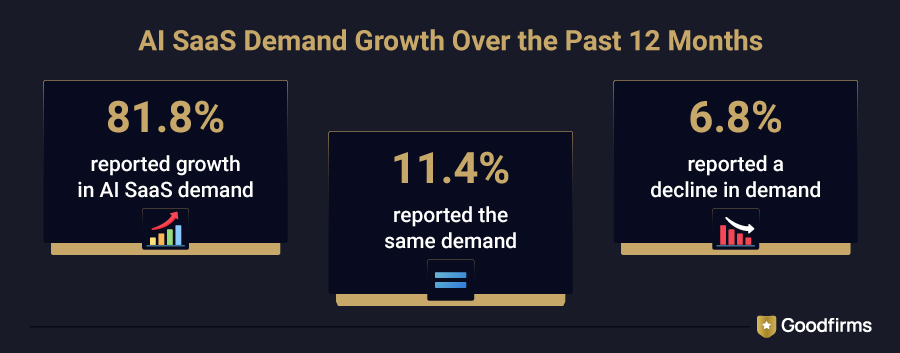
These findings reflect a broader shift taking place across the software industry. AI is increasingly becoming a foundational layer of modern software products and business operations.
Demand growth alone, however, does not indicate market maturity. A stronger signal comes from how much AI SaaS now contributes to agency portfolios.
The survey found that 65.9% of agencies have up to 50% of their project portfolios tied to AI SaaS development, while 34.1% report that AI SaaS accounts for more than 50% of their project work.
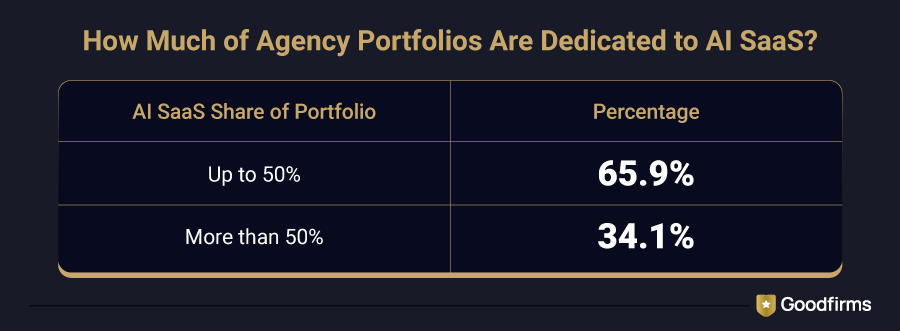
These numbers suggest that AI SaaS is evolving similarly to the way cloud computing transformed software delivery. AI is increasingly becoming an expected capability rather than a differentiator.
An overwhelming 93.2% of respondents integrate Large Language Models (LLMs) such as GPT, Claude, or Gemini into client projects. Meanwhile, 81.8% are already implementing agentic AI frameworks, and 63.6% use Retrieval-Augmented Generation (RAG) architectures to improve contextual accuracy and business relevance.
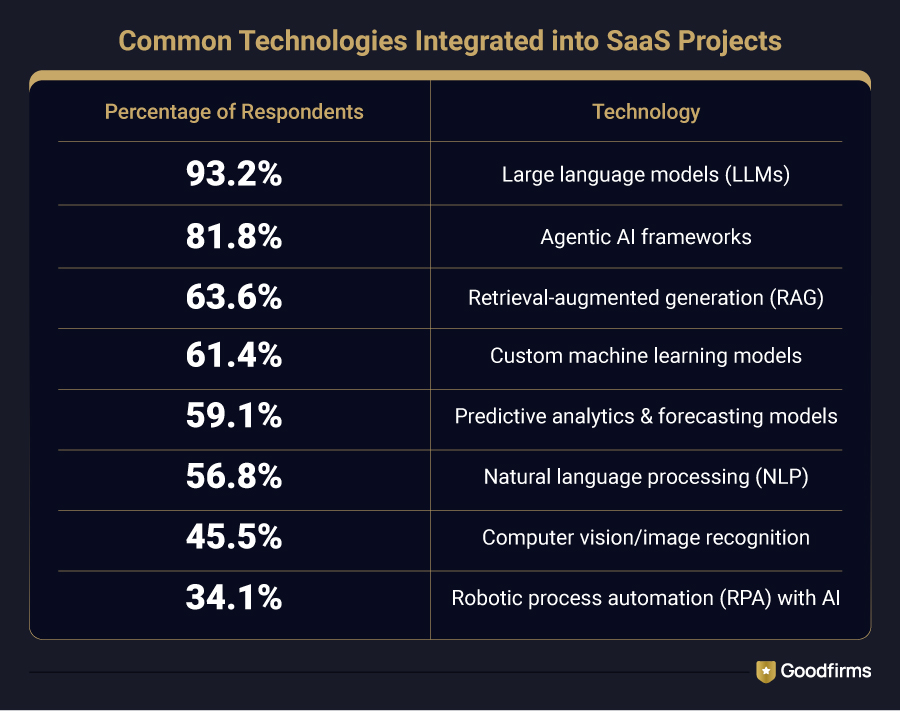
The results make it clear that businesses want software that reduces effort, automates work, and delivers measurable outcomes.
2: Why AI Projects Fail: The Second-Attempt Economy
The survey found that 65.9% of clients had previously tried an off-the-shelf AI tool, an internal solution or another development provider before approaching their current agency. The remaining 34.1% had no previous implementation; however, 25% arrived with a clearly defined requirement, while only 9.1% were exploratory first-time investors.
Hear from industry experts on why AI projects fail, where businesses go wrong, and how to improve the chances of success.
Most AI Buyers Have Already Tried Something Else
When agencies were asked what clients had attempted before hiring them, only 9.1% said their clients were making their first AI investment.
The remaining organizations had already explored AI through other approaches.
|
Previous Attempt |
Percentage |
|---|---|
|
Off-the-shelf AI tool that failed to meet requirements |
27.30% |
|
Internal solution that did not achieve expected outcomes |
25.00% |
|
Different development agency or freelancer |
13.60% |
|
No previous AI implementation but had a clear requirement |
25.00% |
|
First AI investment |
9.10% |
Combined, 65.9% of clients had already tried and abandoned either a commercial AI tool, an internal AI initiative, or another development partner before engaging a new vendor.
This suggests that AI adoption is increasingly becoming a second-attempt market.
Organizations are not asking whether they should invest in AI.
They are asking why their previous investment failed and how to get it right the second time.
Failed AI Projects Are Creating a New Market
The survey uncovered another important trend.
When respondents were asked what percentage of their AI SaaS clients arrive after an unsuccessful project with another vendor or development partner, the results revealed a surprisingly large recovery market.
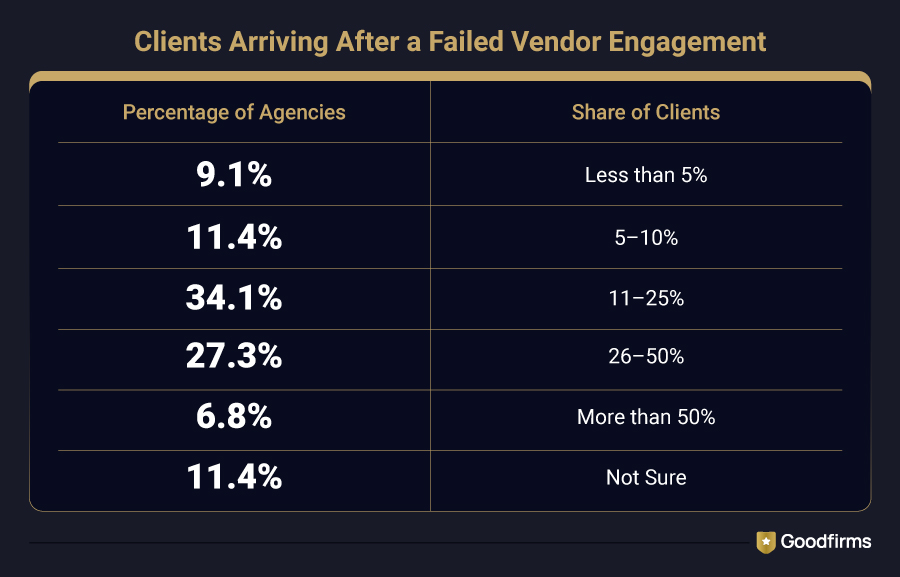
These data points to a significant secondary market driven by first-attempt failures.
For many artificial intelligence companies, fixing unsuccessful AI initiatives is becoming a meaningful source of new business.
Why Are So Many AI Initiatives Falling Short?
The findings do not suggest that AI itself is failing.
The problem appears to be execution rather than technology. The failure patterns are consistent: poor data foundations, insufficient workflow integration, weak governance, and mismatched tools.
Mehtab Fatima shares their sharp observation on failing initiatives:
“Knowing what to build, who it's for, and how you'll get it in front of them-that's the part most businesses still skip.”
- Mehtab Fatima, Tezeract
What the second-attempt data adds is a commercial dimension. Organizations that failed the first time are not stepping back from AI. They are returning with clearer requirements, higher expectations, and less tolerance for vague promises.
The AI Market Is Maturing
The rise of second-attempt buyers is often a sign of market maturity.
The same pattern occurred during the early days of cloud computing, CRM adoption, and enterprise software modernization. Early projects generated enthusiasm, but they also produced costly mistakes that organizations later corrected through better planning and implementation.
AI appears to be entering a similar phase.
Businesses are moving beyond experimentation and becoming more selective about how they invest. Rather than chasing AI for its own sake, they increasingly want solutions tied to specific business outcomes.
This shift may explain why workflow automation, operational efficiency, and measurable ROI emerged as the dominant themes throughout the survey.
3: What AI SaaS Buyers Want in 2026
As AI SaaS adoption matures, buyer expectations are changing.
Organizations are investing because they want measurable business outcomes. The focus is now on eliminating manual work, improving efficiency, and accelerating decision-making.
The survey findings reflect this transition clearly.
When asked which AI capabilities clients request most frequently, 75% of agencies identified AI-powered workflow automation as a top priority, making it the most requested capability by a significant margin.
Generative AI features such as content generation and document creation ranked second at 54.5%.
And the third most common request from clients is intelligent chatbots and conversational AI at 50%.
Most Requested AI SaaS Capabilities |
|
|---|---|
|
75% AI-powered automation of internal business workflows |
75% |
|
54.5% Generative AI features — content, code, or document generation |
54.50% |
|
50% Intelligent chatbots and conversational AI |
50% |
|
31.8% Autonomous AI agents executing multi-step tasks |
31.80% |
|
25% Predictive analytics and AI-driven dashboards |
25% |
|
22.7% Voice AI and speech recognition integration |
22.70% |
|
15.9% AI-powered personalization engines |
15.90% |
|
11.4% Computer vision or image/video intelligence features |
11.40% |
|
4.5% AI-driven compliance and risk monitoring |
4.50% |
The results reveal an important shift in how businesses evaluate AI.
While generative AI continues to attract attention, workflow automation remains the dominant priority. Organizations are increasingly focused on reducing operational friction and automating repetitive processes rather than simply adding AI-powered functionality.
The business motivations behind AI adoption reinforce this pattern.
Among surveyed agencies, 54.5% identified operational cost reduction as the primary driver behind AI SaaS investments, making it the most commonly cited business objective. Improving customer experience ranked second at 43.2%, followed by staying competitive at 36.4%.
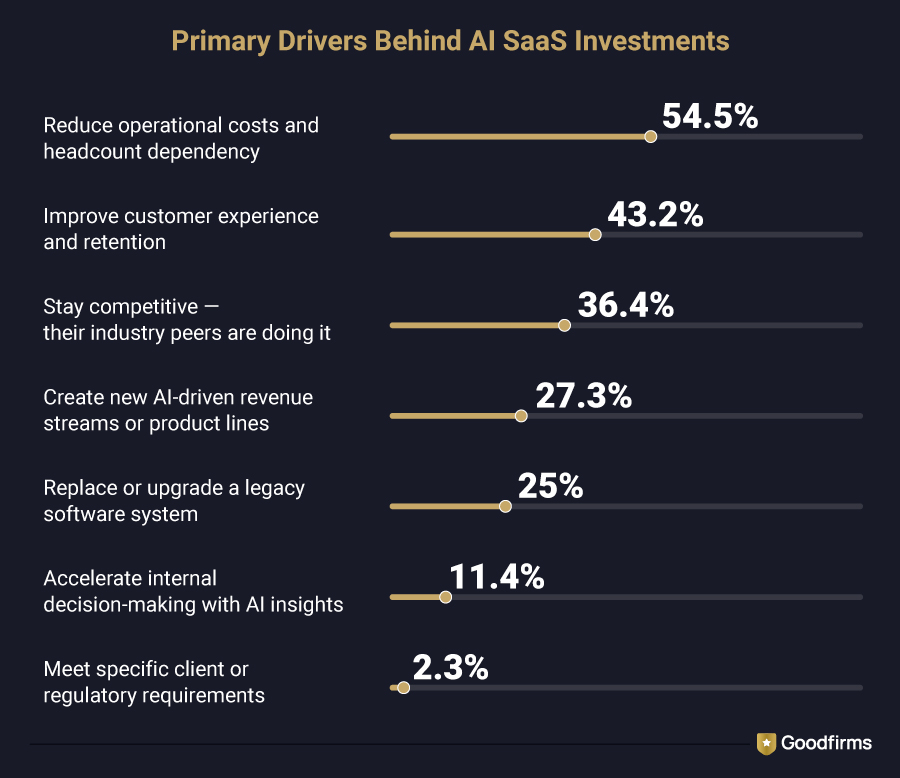
The findings suggest that AI investments are increasingly evaluated through a business lens rather than a technology lens.
Organizations want AI to lower costs, improve efficiency, and strengthen customer relationships. The technology itself is becoming secondary to the value it delivers.
This outcome-oriented mindset is also influencing where businesses deploy AI.
The survey found that organizations most frequently target customer-facing and revenue-generating functions.
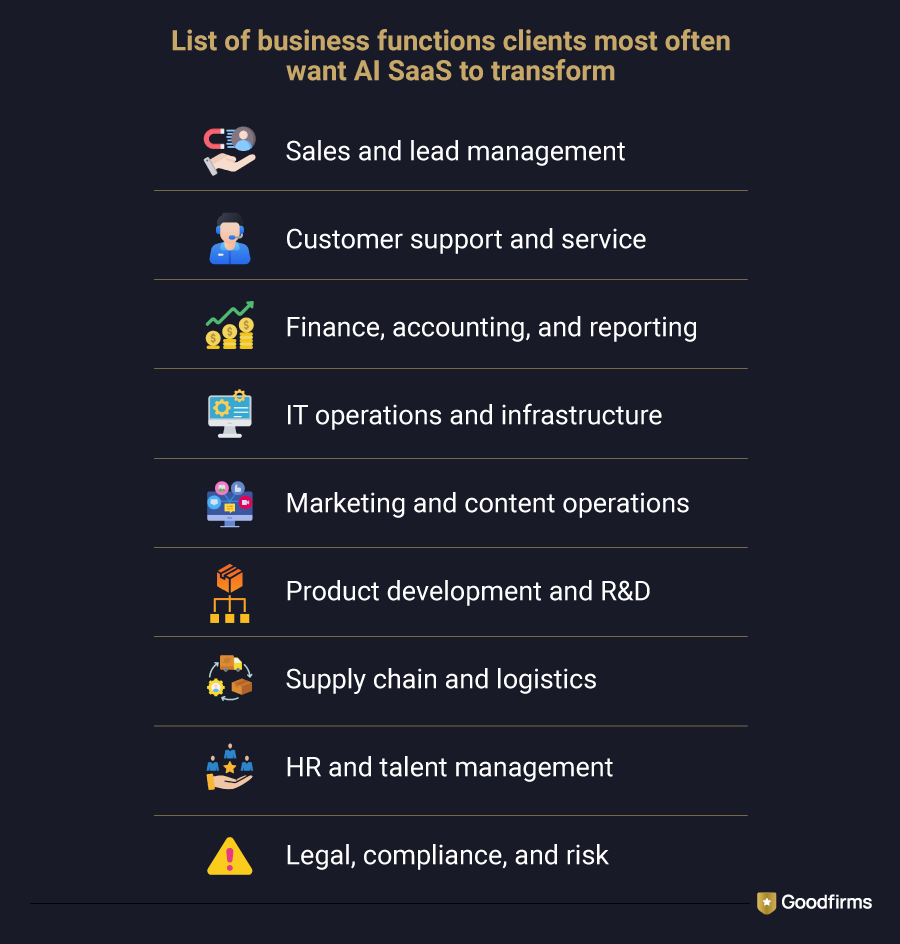
Sales and customer support lead the list because they offer immediate opportunities to improve efficiency and customer engagement. AI can automate lead qualification, personalize outreach, manage customer inquiries, and reduce response times while lowering operational costs.
The growing use of AI across finance, IT operations, product development, and supply chain management indicates that adoption is expanding beyond customer-facing functions and becoming embedded across business operations.
Another notable finding is that many organizations are moving beyond off-the-shelf AI tools.
When asked why clients pursue custom AI SaaS development, the most common response was the need for functionality unavailable in existing products (36.4%). Privacy, security, and compliance concerns followed at 22.7%.
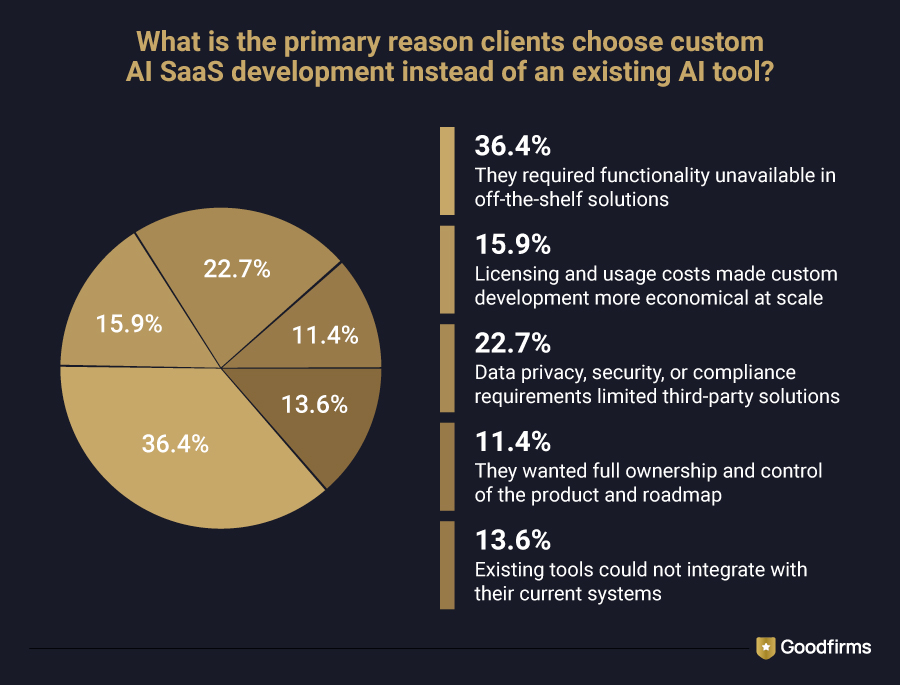
These findings point to a meaningful limitation of off-the-shelf AI tools. Most commercial platforms are built for broad applicability, which means they often fall short. Especially when businesses have specialized workflows, sensitive data requirements, or existing infrastructure that generic tools cannot accommodate.
The gap becomes clearer when you consider the industries generating the highest AI SaaS demand in this survey, particularly healthcare, financial services, and legal services. These are sectors where regulatory constraints, data sensitivity, and workflow complexity make out-of-the-box solutions a poor fit almost by definition.
Kiryl Atrokhau, Project Manager at InData Labs, believes the growing demand for custom AI solutions reflects the limitations of one-size-fits-all development approaches.
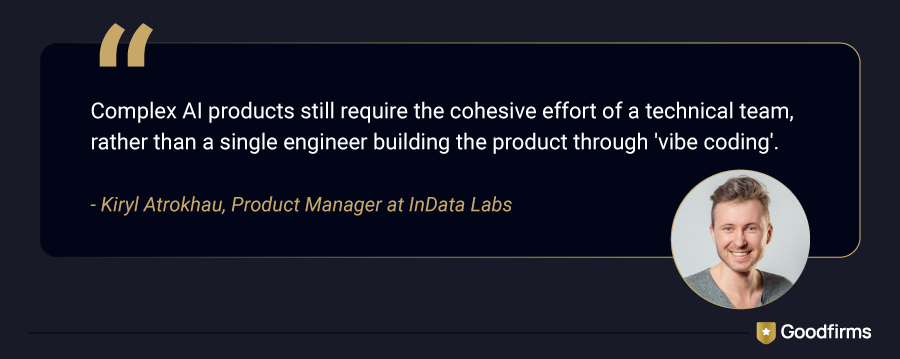
This suggests that businesses are becoming more sophisticated in their AI strategies. They want systems tailored to their workflows and operational goals.
The shift has important implications for the future of SaaS.
That demand is creating the conditions for the next major evolution of software: Autonomous Agentic AI systems capable of coordinating actions, managing workflows, and delivering outcomes.
Despite growing interest in autonomous systems, the survey reveals that fully autonomous AI remains rare.
When respondents were asked where most client projects currently sit on the autonomy spectrum, the majority reported projects focused on assistance and augmentation rather than full autonomy.
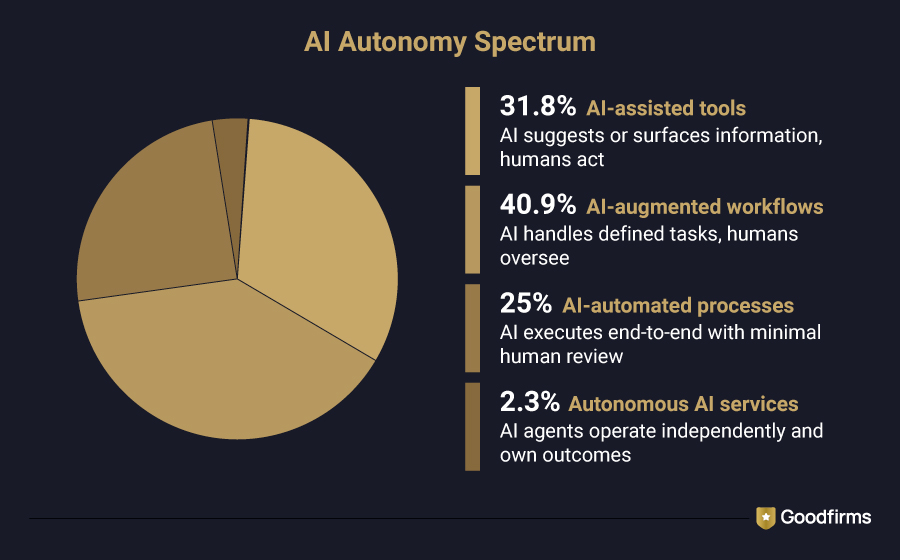
Only 2.3% have reached fully autonomous service models.
This is an important reality check.
While discussions around autonomous AI often dominate headlines, most organizations are still focused on improving workflows rather than replacing them entirely.
Organizations increasingly want systems that can:
- Complete tasks
- Manage processes
- Coordinate actions
- Interact with business applications
- Deliver measurable outcomes
The focus is shifting from generation to execution.
4: Agentic AI Statistics 2026
The first phase of generative AI adoption created competitive advantages through access to advanced models.
That advantage is rapidly disappearing.
Today, most organizations can access similar foundation models, cloud infrastructure, and development frameworks.
As a result, differentiation is moving elsewhere.
Michael Gaizutis, CEO of RNO1, captured this shift succinctly:
"The model isn't the moat. The experience is. In 2026, foundation-model capability is increasingly commoditized. What actually differentiates an AI SaaS product is how legible, trustworthy, and fast-to-value it feels to a buyer overwhelmed by AI options."
- Michael Gaizutis, RNO1
His observation reflects a broader trend emerging across the AI SaaS market.
The most successful AI agent development companies will not necessarily be those with access to the most powerful models, but those that combine AI with proprietary workflows, industry expertise, and trustworthy execution.
They are the companies that combine AI with:
- Proprietary workflows
- Industry expertise
- Contextual business knowledge
- Trustworthy execution
- Measurable outcomes
This shift helps explain why Vertical AI SaaS emerged as the second-fastest-growing category in the survey.
As AI capabilities become increasingly commoditized, context becomes the differentiator.
The Bridge Between SaaS and Autonomous Services
The rise of Agentic AI represents more than a technology trend.
It represents a new operating model for software.
- Traditional SaaS platforms provided access to tools.
- AI-assisted SaaS platforms provided recommendations.
- Agentic SaaS platforms increasingly perform work.
This progression creates a bridge between today's software applications and tomorrow's autonomous AI services.
The direction of travel is becoming increasingly clear. The challenge is that many organizations are not yet fully prepared for that future.
And that readiness gap may become the single biggest factor influencing how quickly autonomous AI services are adopted.
5: AI Readiness Statistics 2026
While respondents overwhelmingly expect demand for Agentic AI to grow, many believe their clients lack the foundations required to deploy autonomous systems at scale. The challenge is organizational readiness.
When asked to assess how prepared their clients are for fully autonomous AI adoption, 66% of respondents rated readiness at three or below on a five-point scale.
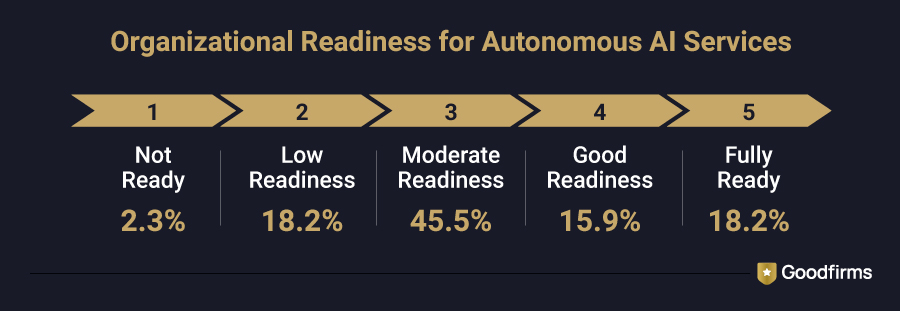
Only 34.1% believe their clients are highly prepared to support autonomous AI systems.
This creates a significant gap between ambition and execution.
Earlier in the research, 75% of respondents identified Agentic AI as the fastest-growing opportunity over the next 12 months. Yet fewer than four in ten believe organizations have the operational maturity required to adopt these systems successfully.
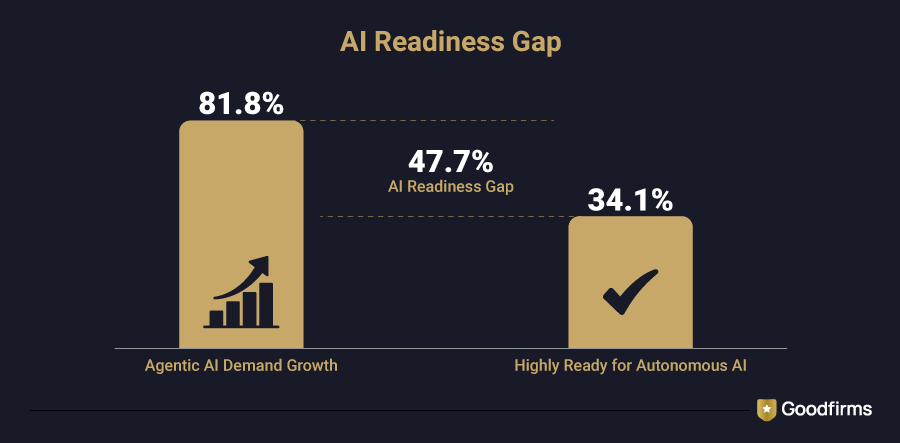
The message is clear.
Demand is accelerating faster than readiness.
And the biggest barrier is data.
Respondents consistently emphasized that organizations often underestimate the importance of data quality, accessibility, governance, and structure when launching AI initiatives.
Oliver Mackereth of High Digital summarized the issue directly:
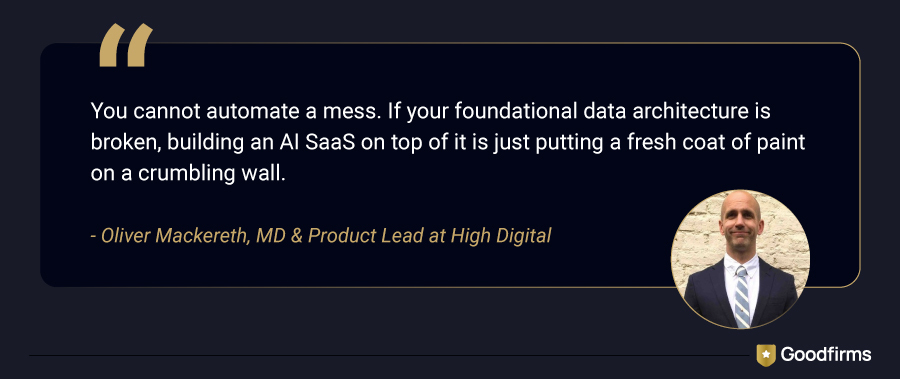
AI systems depend on reliable, accessible, and well-governed data. Without it, even the most advanced models struggle to deliver consistent outcomes.
IBM research found that while 81% of Chief Data Officers are prioritizing AI investments, only 26% are confident in their ability to effectively use their data to create business value.
Organizations are investing aggressively in AI, but many are still building the data foundations needed to support it.
Organizational readiness often determines whether AI initiatives succeed or fail.
Julia Melnyk of Gecko Dynamics highlighted this distinction:
"Organizational readiness matters more than technical readiness. The biggest bottleneck is often not the AI itself, but the business around it."
- Julia Melnyk, Gecko Dynamics
Governance Is Becoming a Competitive Requirement
Agentic systems can make decisions, trigger actions, and interact with multiple business applications. This introduces new challenges around accountability, compliance, security, and risk management.
Industry research highlights how early many organizations remain in this journey.
IBM reports that:
- 79% of organizations are still defining how AI agents should be governed and scaled
- 63% lack mature AI governance policies or are still developing them
- 13% have already experienced AI-related security incidents
Organizations that establish clear oversight, accountability, and risk management frameworks will be better positioned to scale autonomous AI safely.
The value of that investment is measurable. IBM found that organizations using AI and automation extensively within security operations reduced breach costs by an average of $1.9 million while cutting response times by approximately 80 days.
The Readiness Gap Is Also a Growth Opportunity
Many organizations focus heavily on selecting models, platforms, and vendors.
Far fewer invest in process redesign, employee training, governance structures, and change management.
Yet these factors often determine whether AI becomes embedded into day-to-day operations.
The organizations seeing the greatest success with AI are those that view adoption as a business transformation initiative rather than a technology deployment project.
While readiness challenges slow adoption, they also create significant opportunities.
The survey findings point to growing demand for:
- Data modernization
- AI governance frameworks
- Implementation consulting
- Workflow redesign
- Industry-specific AI solutions
- Trust and risk management systems
As businesses move toward autonomous AI services, these capabilities will become increasingly valuable.
The future of SaaS may be autonomous, but the path to autonomy will be built on data quality, governance, and operational maturity.
Organizations that invest in those foundations today will be best positioned to capture the value of autonomous AI tomorrow.
The encouraging news is that despite these readiness challenges, AI initiatives are already delivering measurable business results.
6: AI SaaS ROI Statistics 2026
The strongest proof that AI has already moved beyond experimentation and into value creation comes from ROI.
Among respondents:
- 36.4% reported measurable ROI within 1–3 months
- 45.5% reported ROI within 3–6 months
- 18.2% reported ROI within 6–12 months
Combined, 81.9% of respondents reported that clients achieve ROI within six months.
This rapid time-to-value is one of the key factors driving continued investment in AI SaaS. Unlike large-scale transformation projects that often take years to produce measurable benefits, many AI initiatives are delivering outcomes within a single business cycle.
Operational Efficiency Delivers the Greatest Impact
The most common AI benefits reported by respondents were closely aligned with the business drivers identified earlier in the research.
The leading outcome was a reduction in manual and repetitive work.
Organizations are investing in AI to automate workflows and remove operational friction. The strongest results are occurring in exactly those areas where businesses are prioritizing AI adoption.
Decision-making improvements ranked second, highlighting AI's growing role in helping organizations process information, identify patterns, and act more quickly.
Together, these findings suggest that AI is creating value not by replacing entire business functions, but by improving how work is performed across them.
Although use cases vary across industries, the underlying pattern remains consistent.
Organizations generate the greatest value when AI is integrated directly into workflows and operational processes rather than deployed as a standalone technology initiative.
This observation also helps explain why readiness remains such an important factor.
Strong outcomes are often tied to strong foundations.
Organizations with better data, governance, and operational alignment are more likely to achieve meaningful returns from AI investments.
AI Success Is Changing Buyer Expectations
As AI adoption matures, expectations are evolving.
Businesses are increasingly evaluating AI initiatives using traditional performance metrics:
- Cost savings
- Efficiency gains
- Productivity improvements
- Customer outcomes
- Revenue impact
- Decision quality
The market is becoming less interested in AI capabilities for their own sake.
Instead, buyers want evidence that AI can improve business performance.
This shift is pushing software vendors and service providers to focus less on feature announcements and more on measurable outcomes.
The organizations that can clearly demonstrate value will be best positioned to win in an increasingly competitive market.
And as AI systems become more capable of executing work directly, the definition of value itself may begin to change.
7: AI SaaS Pricing & Business Model Trends 2026
For decades, SaaS companies have sold access to software.
Customers paid for licenses, subscriptions, seats, or usage. The software provided tools, and users performed the work required to generate results.
Artificial intelligence is beginning to change that model.
As AI systems become capable of executing workflows, coordinating actions, and completing tasks with limited human intervention, the value of software is shifting. Increasingly, businesses are not buying software because they want features. They are buying software because they want outcomes.
The Goodfirms survey suggests this transition is already underway.
When asked how AI is influencing client engagement models, 56.8% of respondents reported that they are either already selling outcomes or actively transitioning toward outcome-based engagements.
Among them:
- 25% are already delivering outcome-based AI engagements
- 31.8% are actively transitioning toward outcome-driven models
- 43.2% continue to operate under traditional delivery structures
This finding may be one of the most important indicators of where the SaaS industry is heading.
Organizations are increasingly evaluating AI investments based on business impact rather than software functionality. The conversation is shifting from what software can do to what results it can deliver.
Analysts Are Seeing the Same Shift
The survey findings align with broader industry research.
Gartner advises product leaders to adopt outcome-based pricing and messaging for AI products as customers increasingly evaluate solutions based on measurable business value rather than feature sets.
Similarly, Forrester's research highlights the growing importance of outcome-based experiences that help organizations achieve objectives rather than simply complete individual tasks.
These AI SaaS trends suggest that AI is not only changing how software works. It is changing how software creates and captures value.
Amr Saafan of Nile Bits summarized this shift clearly:
"Users don't want your AI feature. They want the outcome that feature creates."
- Amr Saafan, Nile Bits
This observation reflects a growing reality across the SaaS market.
Businesses are investing in AI because they want:
- Lower costs
- Faster processes
- Better customer experiences
- Higher productivity
- Increased revenue
The technology is valuable only when it produces measurable business results.
What the Future Might Look Like
Many SaaS companies today sell access to software.
AI-native companies may increasingly sell:
- Qualified leads
- Support resolutions
- Processed claims
- Approved applications
- Generated content
- Completed workflows
In this model, software becomes infrastructure.
Outcomes become the product.
This does not mean traditional SaaS disappears. It means SaaS evolves.
The most successful platforms will likely combine software, AI, workflows, and domain expertise into systems that consistently produce measurable business value.
The survey findings suggest that this transition has already begun. And the industries leading AI adoption today are providing early clues about where that future will emerge first.
8: AI SaaS Demand by Industry 2026
AI adoption is accelerating across nearly every industry, but demand is not evenly distributed.
The Goodfirms survey reveals that sectors with large volumes of data, complex workflows, regulatory requirements, and strong automation opportunities are leading investment in AI SaaS solutions.
Here is what the survey said about the industries generating the highest AI SaaS demand when respondents were asked to select the industries with the most demand.
|
Industry |
Percentage |
|---|---|
|
Healthcare & Life Sciences |
65.90% |
|
Financial Services & FinTech |
40.90% |
|
E-commerce & Retail |
43.20% |
|
Education & eLearning |
27.30% |
|
Marketing Technology |
22.70% |
|
Logistics & Transportation |
11.40% |
|
Manufacturing & Supply Chain |
20.50% |
|
Legal Services |
20.50% |
|
HR and Recruitment |
15.90% |
|
Real Estate |
13.60% |
Guy Doron of moblers captured this challenge directly:
"What unique value will remain if everyone has access to the same AI models?"
- Guy Doron, moblers
The answer is increasingly found in industry specialization.
Organizations are looking for AI systems that understand their business, their regulations, their workflows, and their customers.
9: AI SaaS Trends Predictions 2026: The Road to Autonomous AI Services
These AI SaaS trends, drawn from survey data, analyst forecasts, and expert insight, point to five shifts likely to define the next phase of SaaS evolution.
Prediction 1: Agentic AI Will Become a Core Layer of Enterprise Software
Agentic AI emerged as the strongest future AI SaaS trend in the survey, with 75% of respondents identifying Agentic AI and autonomous workflow systems as the fastest-growing category over the next 12 months.
What This Means
The next generation of SaaS platforms will increasingly include embedded agents capable of handling operational tasks independently.
Prediction 2: Vertical AI SaaS Will Outpace Generic AI Platforms
While generative AI platforms continue to grow, the survey points toward increasing demand for industry-specific solutions.
45.5% of respondents identified Vertical AI SaaS as one of the fastest-growing opportunities heading into 2026.
What This Means
The strongest growth opportunities may come from AI platforms designed for specific industries rather than general-purpose AI products.
Prediction 3: Outcome-Based Pricing Will Expand
One of the most significant findings in this research is that 56.8% of agencies are already selling or transitioning toward outcome-based engagements.
This suggests that SaaS monetization models are beginning to evolve alongside AI capabilities.
What This Means
Future SaaS offerings may increasingly be priced around:
- Tasks completed
- Leads generated
- Cases resolved
- Outcomes achieved
- Productivity delivered
The future of SaaS may look increasingly like Outcome-as-a-Service.
Prediction 4: Second-Attempt Buyers Will Drive the Next Growth Wave
The survey found that 65.9% of current AI SaaS clients had already tried and moved on from either an off-the-shelf tool, an internal build, or another vendor. For 36.6% of agencies, more than a quarter of their client base came through a failed first attempt somewhere else.
This is not a fringe pattern. It reflects a maturing market where early adopters have accumulated experience, tested the limits of generic solutions, and returned with much sharper requirements.
What This Means
The next growth wave will not come primarily from organizations discovering AI for the first time. It will come from organizations that tried AI, hit a wall, and are now investing more deliberately. Agencies that can clearly articulate why previous implementations fail, and demonstrate a track record of rescuing or replacing them, are well-positioned to capture this demand.
Prediction 5: Data Readiness Will Separate Leaders from Laggards
The strongest barrier identified throughout this research was not technology.
It was readiness.
Despite strong demand for autonomous AI, 66% of respondents rated organizational readiness at three or below on a five-point scale.
This finding suggests that competitive advantage will increasingly depend on an organization's ability to prepare its data, governance, and operations for AI-driven workflows.
What This Means
The companies that invest in readiness today will be the first to unlock the full value of autonomous AI services tomorrow.
Beyond Goodfirms: AI SaaS Market Statistics at a Glance
Goodfirms’ survey findings form part of a rapidly expanding market. The global AI SaaS market is projected to grow from $30.33 billion in 2026 to $367.60 billion by 2034, at a CAGR of 36.59%, according to Fortune Business Insights. The following statistics provide additional context on AI spending, software growth, and enterprise adoption.
| Key Statistic | Source |
|---|---|
|
Worldwide AI spending is forecast to reach $2.52 trillion in 2026, representing 44% year-over-year growth. |
Gartner, 2026 |
| AI software spending is projected to reach approximately $283 billion in 2026. | Gartner, 2026 |
| Worldwide spending on AI models and platforms is expected to reach $64 billion in 2026, up 63.4% from 2025. | Gartner, 2026 |
| Spending on generative AI models is forecast to grow by 117% in 2026. | Gartner, 2026 |
| Worldwide software spending is expected to exceed $1.4 trillion in 2026. | Gartner, 2026 |
| 42% of surveyed enterprise-scale organizations had actively deployed AI, while another 40% were exploring or experimenting with it. | IBM, 2024 |
| 61% of surveyed CEOs said their organizations were adopting AI agents and preparing to implement them at scale. | IBM, 2025 |
| Only 11% of surveyed technology leaders believed their organizations were fully prepared for the anticipated scale of AI-agent deployment. |
IBM, 20 |
FAQs: AI SaaS Trends & Statistics 2026
1. Why do AI SaaS projects fail the first time?
65.9% of AI SaaS buyers had already tried and abandoned another approach before succeeding — most commonly an off-the-shelf tool (27.3%) or an internal build (25%) that didn't meet expectations, according to Goodfirms' 2026 survey of 144 software development companies.
2. Are AI SaaS companies actually using LLMs like GPT or Claude?
Yes — 93.2% of surveyed software development agencies report integrating Large Language Models (such as GPT, Claude, or Gemini) into client SaaS projects in 2026.
3. What AI features do SaaS customers want most?
Workflow automation is the most requested AI capability, cited by 75% of agencies — ahead of generative AI features (54.5%) and intelligent chatbots (50%).
4. How long does it take to see ROI from AI SaaS investments?
81.9% of clients achieve measurable ROI within six months of an AI SaaS investment, with 36.4% seeing results in as little as one to three months.
5. Are AI SaaS products fully autonomous yet?
Not yet, for the most part — only 2.3% of AI SaaS projects have reached fully autonomous service models as of 2026. Most remain focused on assistance and augmentation rather than full autonomy.
6. How ready are organizations for autonomous AI adoption?
66% of organizations rate their readiness for fully autonomous AI adoption at 3 or below on a 5-point scale, indicating a significant gap between demand and operational readiness.
7. Which industries have the highest demand for AI SaaS?
Healthcare & Life Sciences leads AI SaaS demand at 65.9%, followed by E-commerce & Retail (43.2%) and Financial Services & FinTech (40.9%).
8. Is AI SaaS pricing moving away from per-seat licensing?
Yes — 56.8% of agencies are either already selling outcome-based AI engagements or actively transitioning toward that model, rather than traditional licensing or seat-based pricing.
9. What is Vertical AI SaaS, and how fast is it growing?
Vertical AI SaaS refers to AI-native software built for specific industries rather than general-purpose use. 45.5% of surveyed agencies identify it as one of the fastest-growing AI SaaS opportunities heading into 2026.
10. Why do businesses choose custom AI SaaS development over off-the-shelf tools?
36.4% cite the need for functionality unavailable in existing products as their top reason, followed by privacy, security, and compliance concerns (22.7%).
The Future of SaaS Is Autonomous AI Services
The SaaS industry is entering a new phase of evolution.
The first generation of software automated individual tasks. Cloud computing made those tools available to any organization, at any scale, without infrastructure overhead. Artificial intelligence is now changing what software actually does: not just enabling work, but performing it.
The Goodfirms survey reveals AI SaaS trends moving steadily toward automation, execution, and outcomes. Demand for AI SaaS continues to grow, businesses are prioritizing workflow automation over standalone features, and Agentic AI is emerging as the most important AI SaaS trend shaping the future of software.
The findings also reveal an important tension.
Organizations increasingly want autonomous AI systems, but many still lack the data, governance, and operational maturity required to deploy them effectively. Closing this readiness gap may become one of the defining business challenges of the next several years.
The transition from software tools to autonomous AI services has already begun. The organizations that invest in readiness, governance, and AI-driven innovation today will be best positioned to lead the next generation of software tomorrow.
We sincerely thank all our research partners, participating vendors, and industry professionals who contributed their time and insights to make this research possible.
Research Methodology
Goodfirms surveyed 44 representatives from AI SaaS development companies between May 28 and June 24, 2026. The survey explored client demand, technologies, requested capabilities, project failures, ROI, pricing, organizational readiness, and future AI SaaS opportunities.
Respondents represented companies of different sizes, regions, and professional roles. The survey included single-select, multiple-select, rating-scale, and open-ended questions. Percentages were calculated from valid responses and may exceed 100% for questions allowing multiple selections.
The findings reflect the experiences of participating development companies and should be interpreted as directional industry insights.
| Sr. No. | Research Partners |
| 1 | Yotomations LLC |
| 2 | Sitka Ai Technologies LLC |
| 3 | High Digital |
| 4 | Nile Bits, LLC. |
| 5 | Silent Infotech |
| 6 | Zobi Web Solutions Private Limited |
| 7 | Ortem Technologies LLC |
| 8 | Seasia Infotech |
| 9 | Dashbouquet Development |
| 10 | Acquaint Softtech Private Limited |
| 11 | Agicent Technologies Pvt. ltd. |
| 12 | Matiyas Solutions |
| 13 | Octos Global Solutions |
| 14 | Tezeract |
| 15 | Dualboot Partners |
| 16 | JAMstack Vietnam |
| 17 | Nextgensoft Technologies LLP |
| 18 | Xceed Bangladesh Ltd. |
| 19 | ORIL |
| 20 | MindInventory |
| 21 | Boston Technology Corporation |
| 22 | Timspark |
| 23 | OTAKOYI |
| 24 | Octal IT Solution |
| 25 | Appventurez |
| 26 | Bravado Solutions |
| 27 | Uran Company |
| 28 | Kanerika Inc. |
| 29 | Jelvix |
| 30 | DigitalSuits |
| 31 | Offshore Development Center |
| 32 | Pieoneers |
| 33 | InfinityBits |
| 34 | moblers |
| 35 | Gecko Dynamics |
| 36 | InData Labs |
| 37 | Foundrex |
| 38 | Webisoft |
| 39 | deltAlyz Corp. |
| 40 | RNO1 |
| 41 | Diffco |
| 42 | Pixlogix Infotech |
| 43 | Fora Soft |
| 44 | Solar Digital |