ABSTRACT:
Artificial intelligence, or AI, is a promising technological evolution for every industry today, and healthcare is no exception. Gone are the days when AI’s potential had to be proved with demos and abstract information. Today, the market is seeing pragmatic and tested AI applications in healthcare that work well and are gaining traction.
Healthcare systems and hospitals are now becoming familiar with AI-powered solutions that can help them in several decision-making activities, automate mundane day-to-day operations, fill the gap during staffing shortages and clinician burnout, and reduce costs and patient bottlenecks. AI solutions have the potential to directly address several issues. Because of these benefits, more and more healthcare businesses and hospital systems are looking for AI tools or are ready to invest in AI app developers to reduce the documentation burden for physicians and nurses. Large language models and Natural language processing (NLP) solutions can significantly generate clinical notes and free up time for specialists to care for patients. Similarly, predictive analytics can bring efficiency to operational workflows and improve throughput.
Goodfirms initiated this survey to find out the future of health management and patient care as the medical field is rapidly adapting AI-driven approaches.
What Is AI in Healthcare?
AI in healthcare is a process of leveraging data algorithms, large language models, and machine learning techniques to analyze and interpret medical research, improve drug development, clinical diagnosis, and patient care. The convergence of artificial intelligence and healthcare is a promising trend as it is opening up new avenues and opportunities for efficient clinical care, access to quick medical facilities, and medical assistance. AI in healthcare can augment patient care capabilities. The market for AI in healthcare [1] is likely to touch $187 billion by 2030.
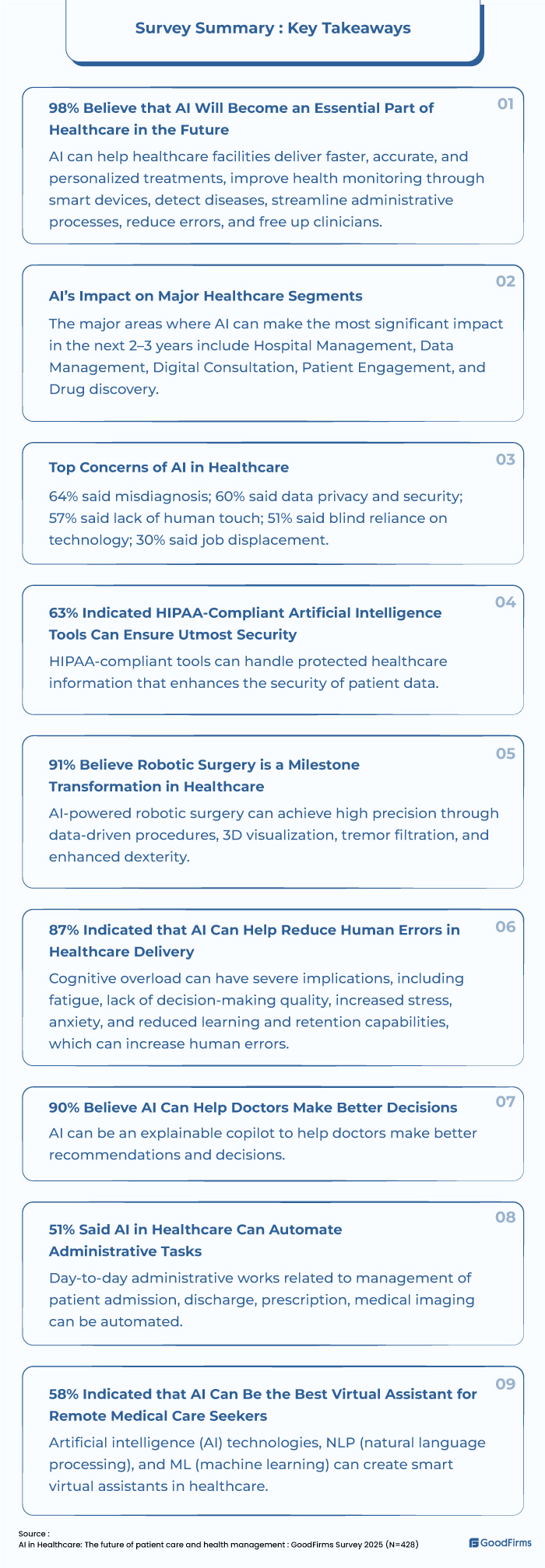
Key Takeaways of this Survey:
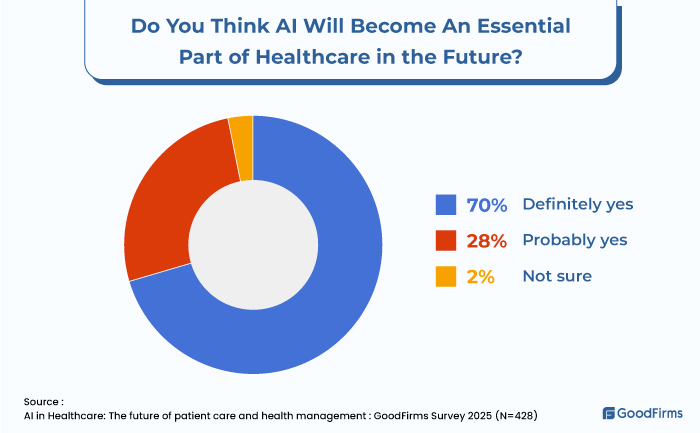
- 98% Believe that AI Will Become an Essential Part of Healthcare in the Future
- AI’s Impact on Major Healthcare Segments in the next 2-3 years include Hospital Management, Data Management, Digital Consultation, Patient Engagement, and Drug discovery.
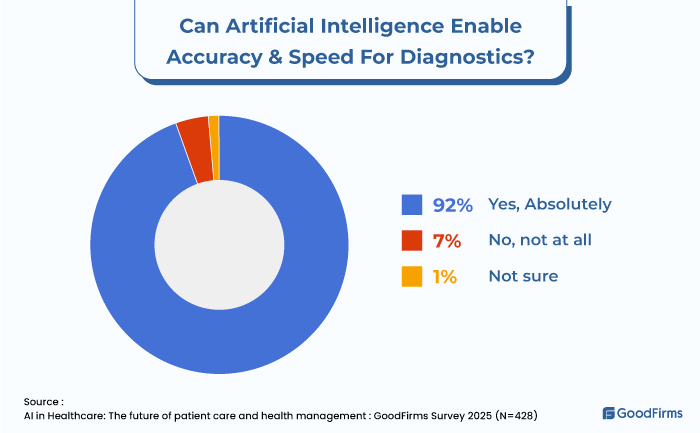
- 92% Indicated Artificial Intelligence Can Enable Accuracy And Speed For Diagnostics
- 51% said AI in Healthcare Can Automate Administrative Tasks.
- 63% Indicated HIPAA-Compliant Artificial Intelligence Tools Can Ensure Utmost Security.
- 91% Believe Robotic Surgery as a Milestone Transformation in Healthcare
- 87% Indicated that AI Can Help Reduce Human Errors in Healthcare Delivery
- 90% Believe AI Can Help Doctors Make Better Decisions
- 58% Indicated that AI Can Be the Best Virtual Assistant for Remote Medical Care Seekers
- Top Concerns of AI in Healthcare include misdiagnosis; data privacy and security; lack of human touch; blind reliance on technology; job displacement.
Survey Methodology:
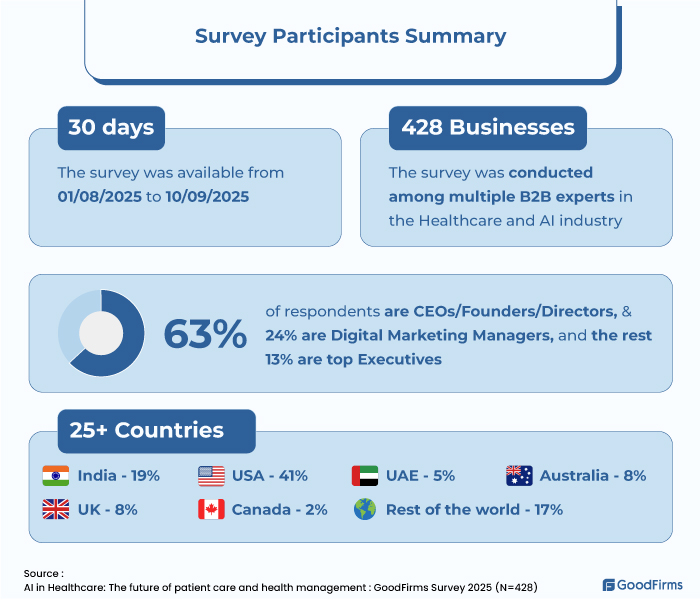
This survey on “AI in Healthcare,” was open from 11/08/2025 to 10/09/2025. The survey was participated by four hundred and twenty eight B2B experts and industry leaders. Among the survey respondents, 63% were CEOs/ Founders / Directors, 24% Vice Presidents, and the rest 13% were top Executives. The survey saw participation from experts spread across 25+ countries with 42% responses from the USA, 19% from India, 8% from Australia, 8% from the UK, 5% from the UAE, 2% from Canada, and 17% from the rest of the world.
Intro: Can Responsible AI Technologies Accelerate Equitable Health For All?
There is no denial that during the COVID-19 pandemic in 2021, essential services were disrupted in 92% of countries [2]. Shortage of skills, resource constraints, service disruption, and unattended critical care brought-in huge social and economic losses. It exposed severe vulnerabilities in healthcare systems worldwide.
Precisely, the pandemic revealed the fragility of our health infrastructure, and why investment in resilient, AI-enabled healthcare systems should now be a priority.
Although natural calamities and unpredictable disasters that put a halt in the regular medical care is one major reason that we need smart technology to help predict and perform proactively, there are reports that indicate that approximately 4.5 billion people globally [3] are lacking access to essential healthcare services on a normal basis. Additionally, healthcare systems, medical facilities, and hospitals in over-populated countries globally are over burdened.
Artificial Intelligence (AI) holds huge potential to improve early disease detection, enable equitable healthcare, enhance patient experiences, and bring efficiency in resource distribution.
To further understand the combined force of artificial intelligence and healthcare, Goodfirms initiated this survey on AI’s role in Healthcare. Here are the valuable responses from our expert B2B partners:
# Are You Familiar With How AI Is Used In Healthcare Today?
The Healthcare AI market is getting more traction these days. To just check its popularity and awareness, Goodfirms initiated this survey with the first question on how familiar are the participants with AI in healthcare. 78% participants are aware of how AI is used in healthcare, 20% said they are somewhat familiar with it; and a small 2% indicated that they are not sure about AI’s role in healthcare.
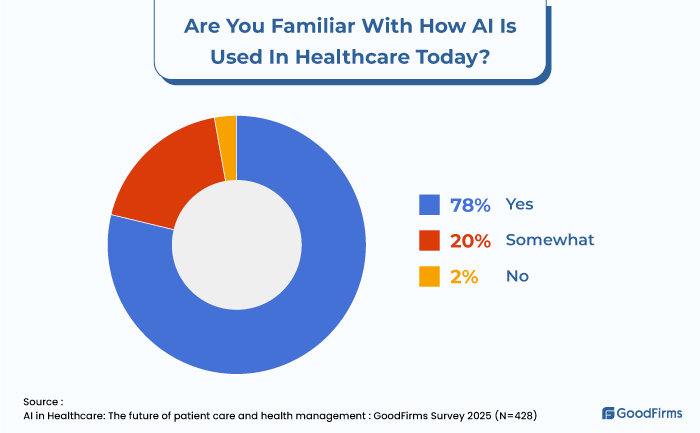
Goodfirms’ Take: Almost 3/4 of the survey respondents are familiar with AI’s role in healthcare which clearly indicates that the market is getting ready for patient care transformation.
Artificial Intelligence in Healthcare - Key Applications
Artificial Intelligence and large language models have the potential to play a prominent role in health diagnosis, proactive patient care, drug development, strategizing predictively, and in the automation of several tasks. The technology can help in addressing the pressing challenges including shortage in resources and skills. This could be a driving force for equity healthcare.
Standards, governance, policies, and guidance on the ethical usage of AI in healthcare should be framed by the authorities at national and international level. Sustainable models of AI programs and responsible artificial intelligence should be implemented.
Imperial College Healthcare NHS trust has come up with an AI tool to help predict type 2 diabetes [4] up to 10 years in advance. The tool was developed based on the data analysis on the subtle changes in EGC readings during routine heart scans. The tool is said to be accurate around 70% of the time.
AI software can now read the brain scans [5] of patients who have had a stroke, to understand the timing of the stroke which is an eye opener for treating the patients.
Greater Manchester trusts are set to utilise AI imaging to help detect lung cancer [6].
A study in Yorkshire found that AI could correctly predict [7] the patients that needed immediate hospitalization in 80% of the ambulance request cases.
A new AI machine learning model, MILTON [8], can detect the presence of certain diseases before the patient is even aware of any symptoms, according to its maker AstraZeneca.
These are a very few points that underscores the potential of AI in the healthcare industry.
In this survey, Goodfirms attempted to understand the awareness of AI’s application in the healthcare [9] arena. Here we go;
# Which AI Applications In Healthcare Are You Aware Of?
- Virtual health assistants
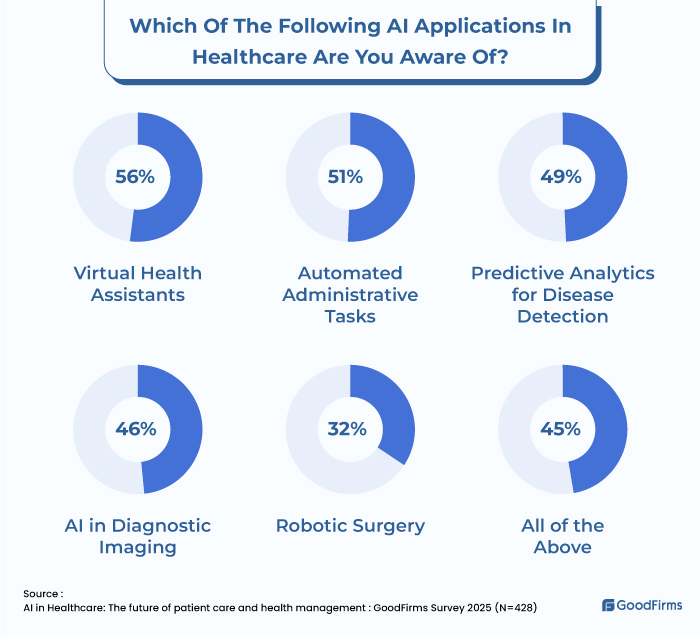
AI’s intervention in telemedicine, patient monitoring, and paramedics has been a tremendous success. They can offer valuable suggestions and guidance to paramedics. Such tips can overall help them to deliver effective treatment and prevent clinical errors. AI’s smart assistants can improve response times and improve efficiency in patient care. 56% of the survey respondents are familiar with virtual health assistants.
- Predictive analytics for disease detection
By leveraging data, statistics, disease patterns and models, today AI can predict the likelihood of diseases through predictive analytics, and machine learning techniques. Risk factors are identified much before the actual arrival and warnings are automatically sent out. 49% of this survey participants are aware of AI’s application in proactively detecting diseases.
- AI in diagnostic imaging
Artificial intelligence in gaining momentum in diagnostic imaging. Here, with the help of machine learning and deep learning techniques, the AI tools can read medical images including X-rays, MRIs, CT scans, and ultrasounds and analyze them. It can detect anomalies quickly and accurately. 46% of this survey participants are aware of AI’s role in diagnostic imaging.
- Robotic surgery
Robotic surgery leverages intelligent robotic systems that are coded to assist surgeons in minimally invasive surgical procedures. The AI-powered robots can perform such procedures with utmost precision and control. 32% are already aware of robotic surgeries and the role of artificial intelligence in automatically performing minimally invasive surgeries.
- Automated administrative tasks
The integration of Artificial Intelligence applications and its advanced algorithms based on the data is very valuable in the prehospital settings and emergency medical care as it can improve patient care and optimize resource allocation. Depending upon the condition of the patients, it can recommend appropriate interventions on the most prioritised basis. 51% respondents of this survey indicated that they are aware of this facility.
- Interestingly, 45% of the survey respondents are aware of all of AI’s applications in healthcare that are practiced currently.
“AI can advance patient care by enabling faster and more accurate diagnoses, personalizing treatment plans, predicting risks through data analysis, automating routine tasks to free up doctors’ time, and improving remote monitoring with wearables and virtual assistants.” Meraki RCM Solutions, LLC , Metizsoft Solutions, MoogleLabs, Nagar Software Solution
AI in Clinical Decision Support (Helping Doctors):
By reading various types of patient case history, diagnosis data, and treatment protocols, AI systems analyse different patterns and recommendations. Enhanced Accuracy: Reduces diagnostic errors and provides second opinions. This type of understanding is done so quickly and thereby saves a lot of time for the doctors. The analysis supports precision treatment, enhances decision-making for the doctors by delivering evidence-based data. Doctors are able to deliver exceptional and zero-error patient care quickly and timely due to reduced workload. Thus AI systems function as a copilot for doctors.
Goodfirms, in this survey, checked with its participants on what they think about the role of AI in helping doctors make better decisions.
# Do You Think AI Can Help Doctors To Make Better Decisions?
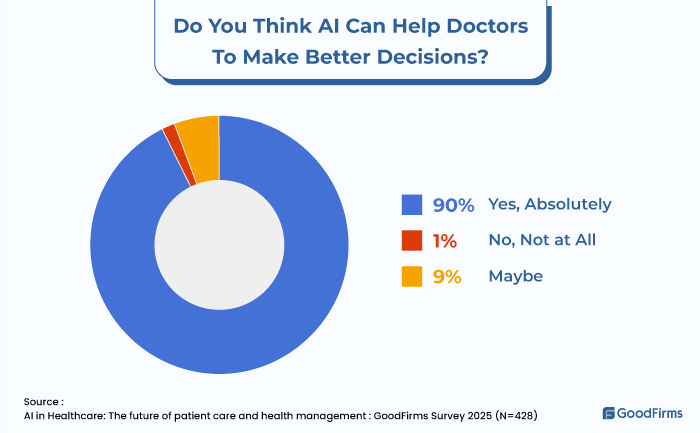
Data Quality of AI depends on the data it reads to analyze. Models that are trained with limitations cannot bring accuracy and trust. Advanced AI models available today can act as explainable AI to help doctors make better recommendations and decisions.
# Does Artificial Intelligence Enable Accuracy And Speed For Diagnostics?
Human Errors In Healthcare Delivery
Cognitive overload [10] has proved to have severe implications, including fatigue, lack of decision-making quality, increased stress, anxiety, and reduced learning and retention capabilities. Moreover, stress due to system complexity, poor communication, administrative work, time pressure, and excessive patient intake can lead to human errors.
The consequences include transactional errors, poor patient care, and increased patient readmissions, which results in reduced trust in hospitals. By automating a few administrative processes and integrating advanced technologies like AI, healthcare systems can significantly reduce errors and improve patient safety.
Here are the valuable thoughts shared by the survey participants;
# Do You Believe AI Can Help Reduce Human Errors In Healthcare Delivery?
Reducing medical errors due to human intervention has become one of the serious concerns of the healthcare industry, and AI is believed to bring significant accuracy and efficiency in diagnostics and treatment protocols.
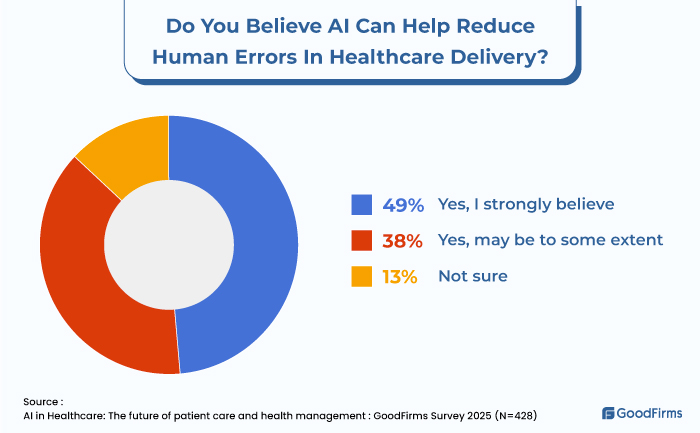
Upon checking the same with the research participants, 49% strongly agreed that AI can help reduce human errors in healthcare delivery, 38% said it can to some extent, and 13% were unsure.
“By providing decision support to physicians and automating data review, AI reduces diagnostic and treatment errors that can arise from fatigue or information overload.” Amri Systems
# What Is Your Take On Robot-Assisted Surgery?
The growing demand for minimizing medical errors has created a huge market for automation and robot-assisted surgery. Moreover, there is also a prevailing demand for precise surgical interventions and minimally invasive surgeries. The advantages of robotic assistance in surgeries are evident in this reference.
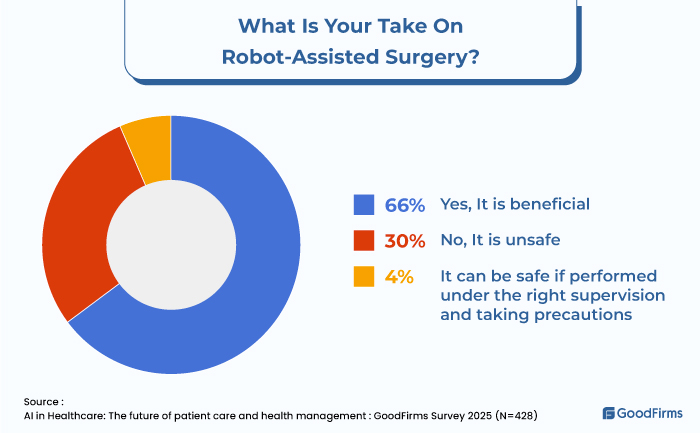
Upon checking the same with the research participants, 66% survey participants indicated robot-assisted surgery as beneficial. 30% remarked it as unsafe to allow robots to take charge. 4% mentioned that robot-assisted surgery can be more beneficial if performed under the proper supervision and by taking all precautions.
“Robot-assisted surgery is sure to scale under surgeon supervision in the coming years.” OM SOFTWARE PVT LTD
# Do You Think AI And Robotics Can Transform Healthcare?
Artificial intelligence and automation have already brought a significant transformation in healthcare, and the future of healthcare has a greater scope with AI and robotics. Several areas including surgery, rehabilitation, diagnostics, telemedicine, hospital logistics will have high influence of AI and robotics.
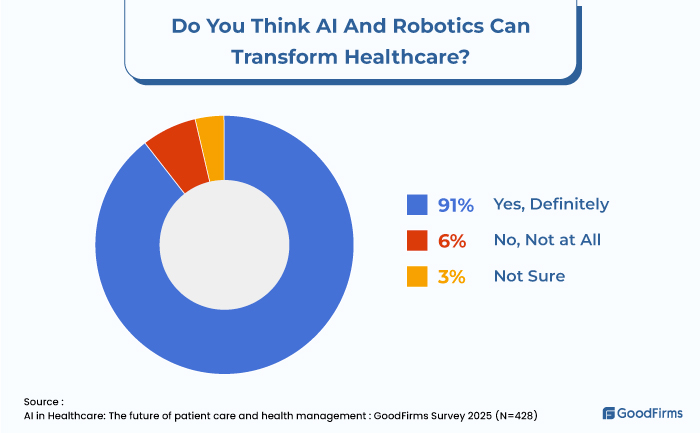
Almost 91% mentioned AI and robotics can transform healthcare, 6% disagreed with this and felt AI will not have much of a role due to their unreliable nature, and 3% said they are still unsure about this.
“Hospitals might rely more on AI to streamline operations and reduce clinician workload.” Pagepro
# Do You Think Using HIPAA-Compliant Artificial Intelligence Tools Can Ensure Utmost Security?
AI in healthcare means that AI must deal with large-scale data sets involving patient history information. However, using AI tools for such applications should comply with the HIPAA privacy and security regulations.
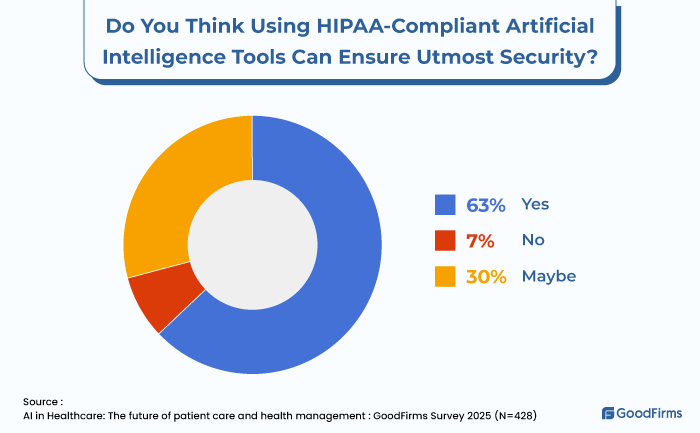
63% were of the opinion that using HIPAA-compliant artificial intelligence tools can ensure utmost security. 30% were unsure as they believed that the combination of HIPAA and AI can bring both opportunities and challenges, and 7% clearly indicated that there are no such HIPAA-compliant AI tools, so they disagree with the data security AI tools can provide for patient information.
“The providers that succeed will be those who balance innovation with trust, adopting AI in a way that aligns with local regulations and existing clinical systems.” Blue Crystal Solutions
What Are The Challenges Of AI In Healthcare?
As medical facilities and hospitals have slowly started understanding the impact of AI in healthcare, there are several talks about the challenges of AI in healthcare. Trust, transparency; legal and ethical issues; integration are some of the major challenges of AI in healthcare. In this line, Goodfirms aimed to gather more inputs from its research partners. Here is a related question and the responses for the same;
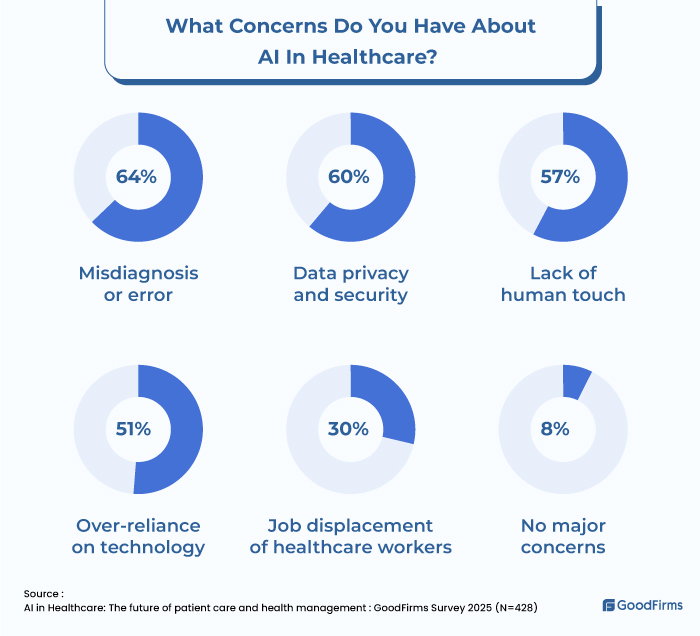
# What Concerns Do You Have About AI In Healthcare?
Although AI is proving to be beneficial for every industry, the healthcare industry is a bit skeptical as there is always a risk of overseeing mechanisms, data security, and the need to train medical staff regarding the usage and limitations of AI tools.
- Misdiagnosis or error:
AI systems are trained on a set of data. The data fed could be inaccurate or outdated. Based on the trained data, AI can interpret symptoms, which could lead to wrong diagnoses. Moreover, several cases fail to fit into the predefined data models. LLMs read a vast set of data. What remains opaque is how data are correlated and inferred. 64% of the survey respondents opted for this factor as a major concern of AI in healthcare. Unless the technology evolves and can capture real-time data, depending on AI to diagnose diseases will be a significant challenge, and it could lead to serious consequences. A doctor's approval of AI's interpretation should work currently.
- Data privacy and security:
Patient data is sensitive. Feeding these data to AI applications can attract vulnerabilities. Data breaches, identity theft, and misuse of insurance details can lead to complications and a lack of trust. 60% of the B2B experts who participated in this survey were of the opinion that AI in healthcare can affect data privacy and security. HIPAA and GDPR compliance should help maintain data safety and security.
- Lack of human touch:
AI-driven robotics, agentic AIs, chatbots, diagnostic systems, and virtual assistants are only transactional, and they lack human touch. This will not go well where people value empathy and personal touch. 57% of the survey respondents were of the opinion that AI in healthcare will lack human touch.
“They can be a complement and not a replacement for professional medical advice.” Leobit
- Over-reliance on technology:
Reliance on AI can completely reduce critical thinking by medical service providers, doctors, and healthcare providers. The black box myth is still keeping things speculative. How AI arrives at a solution is still a myth, as the data fed is vast, and how it derives is a bit complicated. If there is a system crash, decision-making will be a significant challenge. 51% of the survey participants agreed to this point as the major challenge of AI in healthcare.
- Job displacement of healthcare workers:
Artificial intelligence can be applied to automate a few day-to-day operations, including administrative, reports, analysis, and several other patient service-related tasks. This can reduce employment opportunities in these areas, although it may create opportunities for AI-trained experts. 30% survey participants mentioned this as the major concern.
“AI models should be trained in a non-biased, holistic manner. Otherwise it will be challenging.” Right Path Global Services Private Limited
What Types Of AI Will Be Used In Healthcare?
#1 Machine Learning (ML) and deep learning can be used to predict diseases, discover drugs, and assess risks.
#2 Natural Language Processing (NLP) can interpret clinical notes, medical imaging, patient history, doctor’s conversations, analyze medical journals, and other latest innovations creating medical history. Such type of extraction of insights helps in creating structured data to help doctors in diagnosis assistance, and make informed decisions.
#3 Automation with Robotics and Artificial Intelligence
Robotics in healthcare includes a wide range of applications enabling doctors and medical professionals to deliver accurate, efficient, and minimally invasive care. The global medical robotics market [11] is likely to touch $57.0 billion by 2032.
#4 Generative AI
Artificial intelligence (AI), especially generative AI, is poised to be a transformative tool in healthcare, with the capabilities to revolutionize clinical decision-making and improve patient care. Right from drug discovery, personalized treatment plans, and creating synthetic medical data for clinical trials, Generative AI has a wide role to play.
#5 Predictive & Prescriptive Analytics
Predictive analytics in healthcare is a process where AI analyzes data patterns based on history and delivers proactive care and tips, enabling healthcare organizations to optimize their overall operational efficiency. Forecasting disease and predicting patient health deterioration are a few examples of predictive analytics in healthcare. On the other hand, prescriptive analytics in healthcare recommends specific actions, enabling medical staff to deliver improved patient care and outcomes. Resource allocation and planned treatment protocols are a few examples of prescriptive analytics in healthcare.
#6 Conversational AI (Chatbots & Virtual Health Assistants)
AI conversational chatbots and medical agentic assistants have the potential to help patients with appointment scheduling, personalized health advice, medication reminders, mental health support, exercise suggestions, and more.
“Agentic AI systems will enable autonomous health management assistants, expanding accessibility.” LeewayHertz
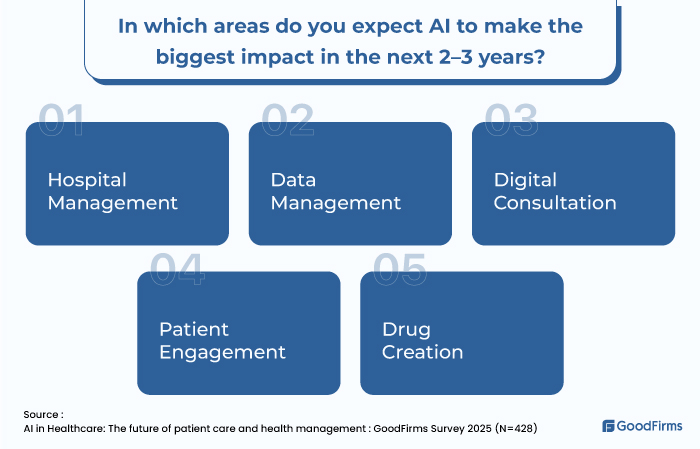
# In Which Areas Do You Expect AI To Make The Biggest Impact In The Next 2–3 Years?
Five major areas where the healthcare industry will witness a major impact of AI as indicated by Goodfirms’ research partners are;
- Hospital Management:
AI can automate and streamline various medical and healthcare operations, including priority-based appointment scheduling, resource allocation, ambulance allocation, staff management, report generation, inventory, supply chain management, and more, thereby reducing costs and improving efficiency. In this survey, Hospital management stood as the top-most area where AI can bring a huge transformation in the next 2-3 years.
- Data Management:
With large language models (LLMs), artificial intelligence can efficiently analyze and organize a massive set of patient data. Not only patient history but also diagnoses, imaging data, clinical notes, advice, treatment protocols, etc. can be securely organized, allowing the AI models to proactively advise and help medical staff make better decisions. AI-based Data management is the 2nd most opted choice by the survey participants that is noted to create an impact in the healthcare industry in the next few years.
- Digital Consultation:
Although healthcare lags a bit in AI adoption due to trust and other factors, a few AI-driven telemedicine applications are proving to be worthy. These applications can enable remote digital diagnosis, symptom checking, and patient monitoring, making healthcare more accessible and convenient. The survey respondents chose this as the 3rd most important applications of AI in healthcare.
- Patient Engagement:
AI-powered bots, Agentic-AI in patient care and service, health reminders, virtual assistants, and other treatment support activities allow patients to enjoy a better experience and make informed decisions. In this survey conducted by Goodfirms, Patient engagement with AI stood at the 4th position that is likely to make the biggest impact in the healthcare industry in the coming years.
“Telemedicine, powered by AI chatbots and virtual assistants, will expand access to care, especially in remote or underserved areas.” Promatics Technologies
- Drug Discovery:
The capability of AI to analyze massive datasets has paved the way for discovering drugs quickly and in a shorter span. Vancouver-based startup Variational AI recently signed a deal worth up to US$349 million with Merck & Co. to leverage generative artificial intelligence for creating new therapeutic drugs. Reportedly, the deal will likely bring promising medication for those challenging therapeutic targets. Several pharmaceutical companies are also joining the AI race by investing in AI platforms trained with LLM that can accelerate drug discovery.
“The drive to integrate AI into healthcare is gaining serious momentum. Hospitals and clinics across the UK and Ireland are running pilot programmes to trial AI tools in diagnostics, administration, and patient care. Collaborations include public health trusts, universities, tech startups, and established providers, with projects aimed at both improving clinical outcomes and operational efficiency.” ProfileTree
“AI in healthcare is not just about innovation, but also about creating real world impact by improving patient care and reducing practitioner burnout.” CodesClue Technologies
“If managed properly, this is an opportunity that can bring many benefits to both practitioners and patients.” LimaRank | Agencia de Marketing Digital
“AI will continue to transform healthcare with precision medicine.” ProweSolution
# Have You Personally Used Or Interacted With Any AI-Based Healthcare Tools (Symptom Checkers, Chatbots, Wearable Health Monitors)? If Yes, Do Share Your Experiences.
Here are a few responses that caught our attention;
“Yes, they are helpful for immediate support when it comes to questions and concerns. It is helpful to delineate between an emergency/worries and things that can wait for a PCP appointment.” Dualboot Partners
“Yes, I’ve researched and tested an AI tool that listens during consultations and provides structured guidance to GPs. The speed and clarity were impressive.” Creative Navy
“Yes, I’ve used wearable health monitors and symptom checker chatbots. They provide helpful insights, though I see them more as supportive tools rather than replacements for professional care” - 1artifactware LLC
“Yes - I’ve tried AI-driven symptom checkers and wearable monitors. They offer valuable insights and convenience, but in my experience they lack integration with wider clinical systems (EHRs/EPRs)” 6B Digital
“Yes, I’ve used AI-powered health chatbots and wearable monitors. They’re useful for tracking wellbeing and getting quick guidance” - AIWise
“Yes, we built a software for doctors to check patient symptoms and suggest drugs accordingly. Also our software will suggest medicines based on patients’ input and pictures of skin disease, or any other infection pictures” - Alian Software
“Your watch can flag heart issues early, a chatbot can track your meds, and doctors get time back from paperwork to focus on patients. It can amplify patient care.” Altamira
“One of the most significant benefits we've observed is the reduction in administrative burden on healthcare professionals.” Amdrodd Technologies
“One platform I know helps detect cataract and glaucoma, in patients' eyes using AI. It has a probability rate of 70% for now but it appears to be an eyeopener and interesting project.” Ayata Inc.
“Yes I've used various tools that are mostly AI operated. The whole process is done online. It creates skepticism but I think with the right balance and way it engages with consumers, it can work.”Beehive Software
“Yes, I have interacted with AI-based healthcare tools. I’ve used symptom checker apps and wearable health monitors. The symptom checkers are helpful in providing quick guidance and suggesting professional care.” BlackRevo
“AI-powered Ergonomic Risk Assessments is one notable application I found interesting.” BrandBrew Creations LLC
“Yes, a few AI-based healthcare tools, which were useful for quick guidance but often gave very broad results.” smoothsync innovations
“Yes, I have interacted with AI-driven healthcare tools such as symptom checkers, wearable monitors, and virtual health assistants. These highlighted how AI simplifies health management through real-time insights, personalized recommendations, and continuous monitoring.” Indoqubix Cloudtech Private Limited
“Wearable health monitors like CGMs help patients to monitor glucose levels, manage diet and track success daily.” Katalysts.net
“I use a smartwatch that tracks my heart rate, sleep, and activity. It noticed irregular sleep patterns that I hadn’t realized were affecting my energy levels. When I adjusted my routine based on the suggestions, I genuinely felt a difference.” KickrTechnology
“I’ve also tried an AI symptom checker a few times when I felt unwell or had mild symptoms. It was convenient because I could quickly get an idea of what might be wrong and whether it was something I could manage at home or if I needed to consult a doctor.” LBM Solutions
“Yes, we’ve actively developed and worked with several AI-based healthcare tools like; Cell Segmentation, Chatbot, COVID Strip Detection, NLP-based ATS,AI models to detect and count RBCs, WBCs, and platelets, computer vision pipelines for chromosome detection and classification, Lung cancer detection, and more.” Neuramonks
“YES. We have been actively developing GenAi Bots for Triage, Agentic AI in Sales, Remote health monitoring etc.” Prologic Technologies
“In the context of writing medical content - I and my team have used AI effectively, for gathering up studies or research papers, to help with writing clinically accurate healthcare content.” The Links Guy
“AI Symptom Checkers & Virtual Health Assistants. It was pretty accurate.” Repbase, Sabir.dev
“Yes, the wearable health monitor that tracks several key metrics like my heart rate, daily steps, sleep patterns, and even blood oxygen levels.” SHIFT ASIA
“We have worked on the AI based Radiology report reviewer through which we identified it has great importance to generate draft reports more easily and accurately.” StudioKrew
“Yes, we work directly with AI technologies in healthcare. One of our key projects is an AI assistant for doctors that automatically structures and fills out medical documentation during consultations. Another example is an AI-based tool for diabetic retinopathy screening. This solution is already being used in clinics in Ukraine and the EU to analyze retinal images.” R&D Center Winstars.AI
# How Can AI Technology Advance Patient Care And Health Management?
“AI + predictive analytics can start to identify preventative interventions.” High Digital
“Faster and More Accurate Diagnostics. AI algorithms, particularly those based on deep learning, have demonstrated remarkable accuracy in medical imaging interpretation.” AgileTech Vietnam
“AI can advance patient care and health management by enabling early diagnosis through predictive analytics, personalized treatment plans, and continuous monitoring.” Kevych Solutions
“AI has the potential to make healthcare more proactive, personalized, and efficient, empowering both patients and providers with reliable insights for better health outcomes.” AIVEDA
“AI can improve outcome and efficiency.” Brand Activator
“If applied in the right ways, with a proper focus on patient confidentiality, data sovereignty and compliance, AI can be a powerful tool to streamline a lot of manual processes.” Code Squirrel
“AI can sort through data quickly and spot patterns that might take humans longer to catch. That means earlier diagnoses.” e intelligence
“Overall, my experience has been that these tools don’t replace doctors, but they fill important gaps: giving reassurance, supporting daily health management, and in some cases, catching problems early enough to make a real difference.” Fx31 Labs
“With AI, patients will be able to monitor their health from home, and new medicines will be discovered faster.” Hobo.Video
“AI will allow doctors to analyze large datasets in realtime.” Idea Maker
“AI will help better analyse the data and give detailed output.” IIH Global
“AI can definitely speed up research in critical areas such as cancer and antibiotic resistance.” Innovantes IT Solutions LLP
“AI will drive smarter hospital management, drug discovery, and wider access to instant patient care.” Intellectyx, Inc
“AI will make patient care more accessible and data-driven globally.” Invimatic Technologies Pvt. Ltd., Saivra Technologies
“ AI can predict risk.” Lateral
“AI is poised to reshape the healthcare landscape in remote case management, clinical trial optimization.” Smart Minds World
“AI in healthcare isn’t just another tech upgrade anymore. It’s changing the way healthcare can operate in the coming years.” Mallow Technologies
“Several intake forms can be auto filled by AI by connecting with EHR or EMR systems.” Markovate
“From what I see in our tech work, AI's biggest win will be catching problems early.” Software Chains
“Remote Monitoring & Chronic Disease Management and Virtual Health Assistants & Chatbots.” Neuronimbus
What Is The Future Of AI In Healthcare?
The future of healthcare is undoubtedly AI-augmented [12]. Advancing and evolving AI applications can help medical fraternities to deliver ultra-fast, efficient, reliable, secured, and priority-based proactive, intelligent medical services. Healthcare with medical holograms [13] is going to grow a big way in the future of medical care. Moreover, with the other technological improvements like faster internet, 6G or more, and large language models can bring more revolutions. AI Hologram [14] can bring more growth to quality healthcare by reducing staff constraints as it is a combination of digital personas and artificial intelligence to bring realistic avatars that can provide engaging, multi-dimentional services to patients from remote locations.
Here is a related survey question that Goodfirms asked its research participants, along with the responses:
# Do You Think AI Will Become An Essential Part Of Healthcare In The Future?
“AI technology will enhance efficiency, reduce errors, and empower proactive health management.” Lunar Web Solution Technologies Private Limited
“Some time needs to pass for the market to recognize the good ones and reject the bad ones. This is why it is critical to adopt AI only with human supervision at this stage. My biggest concern is security, as some tools are using publicly available models which pose a major security risk.” Takeaway Reality
“The key will be balancing these innovations with data privacy, transparency, and trust to ensure safe and equitable adoption.” VentureDive
Where Can AI Take The Healthcare Segment In The Next Few Years?
Gone are the days where the healthcare sector relied on manual efforts to complete all those complex and repetitive tasks. Today, machines are equipped with vast amounts of data and trained to identify patterns, solve problems, and provide recommendations. Tasks are automated with built-in software applications. Artificial Intelligence (AI) is one technology that has been evolving rapidly and is widely used by every industry. The Patient care and Healthcare segment is also seeing a huge transformation with AI. Where can this intelligent technology take the healthcare segment in the next few years?
Here are a few responses from the survey participants:
“Hospitals will run with AI-driven systems that optimize everything from patient flow to staff scheduling. Think “smart hospitals” where operations are seamless, wait times are shorter, and resources are used more efficiently.” Lumitech
“In the coming years, AI is expected to drive the healthcare sector toward more precise diagnostics, personalized therapies.” Timspark
“AI can take healthcare toward more predictive, personalized, and efficient care—enabling earlier disease detection, tailored therapies, automation of routine tasks, and expanded remote treatment worldwide in the next few years." Appquipo LLP
“AI can undertake simple mundane, but essential, tasks.” Appwapp
“We’ll see more hospitals using AI for early detection, remote monitoring, and even tailoring medicines to each person’s needs.” Ateam Soft Solutions
“In the next few years, AI will shift healthcare from reactive treatment to proactive care.” Bamboo Manchester
“In the next few years, it will improve efficiency, reduce costs, support remote care, and make healthcare more accessible and patient-centric.” Bizople Solutions Pvt. Ltd.
“In the coming years, AI will move from assistive tools to true collaborative partners in healthcare. Advances like retrieval-augmented generation (RAG) will allow AI systems to follow trusted medical guidelines in real time, ensuring recommendations are accurate and current.”Code Particle
“I believe it can provide extremely bespoke diagnosis and treatment, truly treating patients like individuals instead of relying on general statistics and common knowledge.” Delta AI
“With predictive analytics, healthcare will shift from treating illness to proactively preventing it.” DesignDiverso
“AI will boost efficiency through automation, reducing costs and administrative burden.” Digiteon
“While they can’t replace a doctor’s expertise, they are extremely useful for proactive health management and improving patient engagement.” Digitly
“In the next few years, AI will shift healthcare from isolated tools to a fully AI-driven ecosystem.” DOTCOM
“AI is also expected to help develop and discover new medical cures.” EonixTech Solutions
“AI will help reduce pressure on already overburdened healthcare systems.” Exolnet
“24/7 Virtual Health Support – Offering instant AI-assisted consultations and follow-ups, improving access and reducing pressure on healthcare systems.” Vakoms
“Within the next 5 years, AI will be partners of doctors.” Fospertise
“Only 15% of countries have AI-specific healthcare legislation. I think we can expect more communities to develop their local regulations.” FreshCode
“AI will drive faster diagnoses, personalized treatments, and proactive patient care.” WDesigna Agency, WP Creative
“Healthcare is shifting beyond hospital walls. With AI-driven monitoring and decision tools, more conditions can be managed safely at home.” GEM CORPORATION
“AI will reduce administrative work so providers can focus on care.” Halyard Consulting
“AI will improve access to consolidated healthcare data.” ZANEFFI SRL
“Healthcare will shift toward proactive, continuous, and more patient-centered management.” Hashlogics
“In the next few years, AI is poised to revolutionize healthcare by enabling fully integrated, real-time health monitoring.” i-Qode
“AI can enable more accessible and affordable healthcare to more people.” SmartLinks
“AI-powered virtual health coaches will become more advanced, offering personalized lifestyle guidance based on an individual's unique data.” Interactive Warriors Studio Private Limited
“If we look at the next few years through the lens of AI maturity, market adoption, and clinical/operational ROI, the biggest momentum and beneficial impact will be seen in the categories of Oncology, Radiology, Drug Creation and Disease Resistance.” Kalpita Technologies
“Healthcare will become more affordable, faster.” Kynet Web Solutions Pvt Ltd
“AI can reduce burnout among medical staff.” Saritasa
“In the coming years, AI will drive predictive, personalized, and preventive healthcare.” Savvy brains Private Limited, SharePoint Designs, Technology Rivers, TechQware Technologies, The App Founders
“AI will empower our health care providers to do more with less.” Tepia
“The real change won’t just be better treatment. It’ll be health systems that keep people healthy rather than just treating them when sick.” Nexios Technologies LLP
“The future of AI in healthcare will enable complete digitization, there will be no need for manual registration or payment, reporting, or follow up.” Quad One Technologies
“In 5-10 years we will see ambient intelligence, robotics-assisted therapies, and expanded use of synthetic biology.” Ranks On Fire, LLC
“Accelerating research in complex diseases, precision in complex robotic surgeries, advancing automation in health management.” ThiriSoft Consultancy Services
“We’re moving toward a future where healthcare doesn’t just react to illness—it anticipates it, adapts to you, and walks alongside you. That’s not just progress—it’s about experiences.” viewebit
“The market presents an opportunity for B2Bs to invest in the future of health-tech innovation, especially in AI integration.” Technosys IT Management Pvt. Ltd.
Summarizing the survey:
Wrapping Up: Will the Reality Of AI in Healthcare Live Up To Current Hype?
Hospitals and medical facilities are already investing in artificial intelligence technology, and its applications to easily complete repetitive tasks with minimal human intervention. For example, AI can help read X-rays and MRI result images more accurately. AI-powered healthcare management and patient care allow faster treatment, speedy recovery, and diagnosis identification. AI is leveraged for various healthcare applications, supporting everything from early screenings to accurate diagnosis and effective treatment. But, as we all know, AI technology is still evolving.
Transparency is essential in patient care and healthcare. Currently, the AI models for medical and healthcare are evolving, and several aspects of the logic remain opaque. Moreover, hospitals and healthcare management systems are still unaware of how quickly an AI software [15] can pay returns, how much time will be saved, what type of resources will be required to manage AI tools, and what tasks can be automated. Without clarity on these, the adoption rate will not be as quick as it is hyped.
Solution developers should work and align their products with regulatory and compliance requirements. Only those AI models will have a scope that complies with HIPAA, data privacy, guidelines, etc.
After all, it is not just about technological evolution; the healthcare industry requires more than that, relating to the complexities of clinical efficacy, care, and healthcare operations.
Only those expert AI companies delivering value with AI can help with advanced AI applications. The focus should be on proving results, providing seamless integration and transparency, and solving real health problems. Undoubtedly, patient satisfaction, zero medical errors, quick clinical admission and care, lower cost, seamless experience, and improved efficiency are healthcare's measurable values and KPIs. AI has already started assisting in these, creating a benchmark achievement for the healthcare industry.
In the future, AI will further evolve from merely a tool into a collaborator and even a smart copilot in the healthcare arena.
As the medical industry navigates various artificial intelligence implementations, and as the adoption of AI in the healthcare curve grows, we will have more demand for the AI tools and AI developers.
We appreciate and sincerely thank our research partners for their valuable inputs and thoughtful suggestions. Their inputs have made this study truly remarkable. We are grateful for their support and look forward to future opportunities to collaborate with them again.
References:
- https://www.theresearchinsights.com/reports/ai-in-healthcare-market-6261
- https://www.who.int/news-room/fact-sheets/detail/universal-health-coverage-(uhc)
- https://www.who.int/news-room/fact-sheets/detail/universal-health-coverage-(uhc)
- https://www.imperial.nhs.uk/about-us/news/ai-could-predict-type-2-diabetes-up-to-10-years-in-advance
- https://www.bmj.com/content/390/bmj.r1856
- https://mft.nhs.uk/2024/11/06/greater-manchester-leads-national-roll-out-of-a-new-ai-solution-to-help-accelerate-lung-cancer-diagnosis/
- https://www.sciencedirect.com/science/article/abs/pii/S1755599X23001246
- https://www.astrazeneca.com/media-centre/medical-releases/astrazeneca-new-ai-technology-milton-predicts-more-than-1000-diseases-before-diagnosis.html
- https://www.openxcell.com/ai-healthcare-solutions/
- https://www.sciencedirect.com/science/article/abs/pii/S0306457323002194
- https://www.snsinsider.com/reports/medical-robots-market-4755
- https://www.sciencedirect.com/science/article/abs/pii/S2542660525002586
- https://www.holoconnects.com/sectors/telehealth/
- https://www.holoconnects.com/products/ai-hologram/
- https://www.goodfirms.co/generative-ai-software/